Studia musicologica upsaliensia nova series – serie
Visar alla böcker i serien Studia musicologica upsaliensia nova series. Handla med fri frakt och snabb leverans.
3 produkter
3 produkter
Del 29 - Studia musicologica upsaliensia nova series
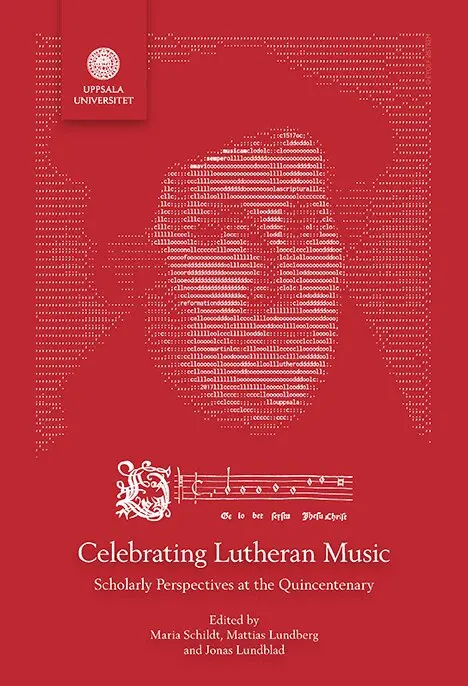
Celebrating Lutheran Music: Scholarly Perspectives at the Quincentenary
Häftad, Engelska, 2019
326 kr
Skickas inom 5-8 vardagar
The year 2017 provided an impetus to study anew the mutual influence between Lutheranism and music throughout the 500 years since the Reformation. To provide a scholarly arena for such discussions, the Department of Musicology at Uppsala University organised the Lutheran Music Culture conference, 14–16 September 2017. From a rich body of proposals, 47 contributions were included in the programme. Together with keynote lectures, evening concerts and a concluding panel discussion, presentations by contributing scholars from five continents helped to stimulate intensive days of vibrant discussion. This volume of proceedings is the first of two anthologies documenting the variety of conference papers. A second anthology will provide deeper theoretical discussions, as well as perspectives on Luther’s own musical thought and practice. The constellation of articles presented in this first anthology celebrates a rich diversity of material and approaches. The nature of the theme demands interdisciplinary breadth, and the contributors work from a wide range of disciplines within theology and the humanities.
Del 25 - Studia Musicologica Upsaliensia Nova Series
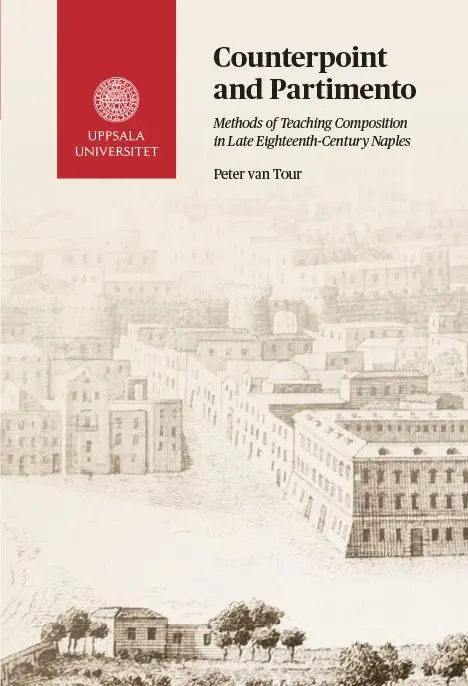
Counterpoint and Partimento: Methods of Teaching Composition in Late Eighteenth-Century Naples
Häftad, Engelska, 2015
326 kr
Skickas inom 5-8 vardagar
During the second half of the eighteenth century, the city of Naples had three music conservatories: the Conservatorio di Santa Maria di Onofrio, the Conservatorio di Santa Maria di Loreto, and the Conservatorio di Santa Maria della Pietà de’ Turchini. Through disciplines such as solfeggio, partimento, and counterpoint, the students at these institutions received highly professional training in singing, instrumental playing, and composition. This study reveals new evidence that partimenti were used not only as exercises in keyboard playing, but also as exercises in written counterpoint. As counterpoint exercises, partimenti were used either as bass lines over which students wrote one or several contrapuntal parts, or as notational devices that facilitated the sketching of fugues. Musicologists have previously encountered considerable difficulties in identifying and describing differences between the schools of Leonardo Leo and Francesco Durante, represented by the terms Leisti and Durantisti. This study shows that these schools are primarily defined through different methods of teaching counterpoint. Contemporary counterpoint notebooks show that the maestri at Sant’Onofrio and Santa Maria di Loreto followed Durante’s teaching methods, while the maestri at La Pietà followed Leo’s teaching methods. The school of Durante emphasized the writing of melodic lines over a hexachordal scale or a partimento bass, using different methods, such as the moti del basso and prescribed conditions. The school of Leo favored the use of invertible counterpoint, emphasizing skills in sketching and writing choral fugues from subjects and countersubjects. For the first time, the partimento and solfeggio repertoire used at the Neapolitan conservatories has been systematically investigated through the creation of two research tools, the databases UUPart: The Uppsala Partimento Database and UUSolf: The Uppsala Solfeggio Database, published online on two companion websites.
Del 28 - Studia musicologica Upsaliensia Nova Series
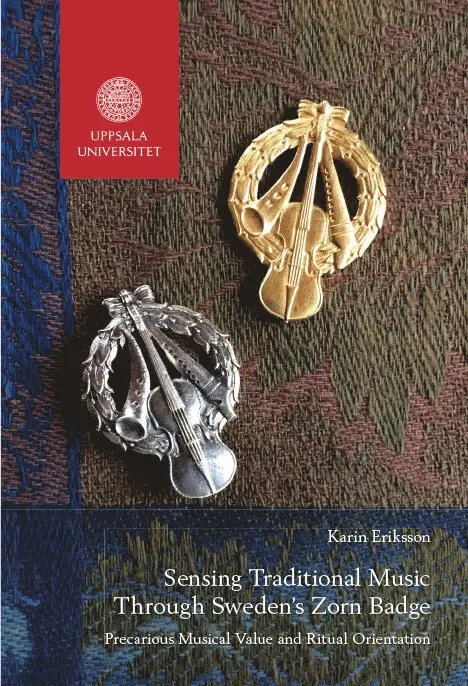
Sensing Traditional Music Through Sweden's Zorn Badge: Precarious Musical Value and Ritual Orientation
Häftad, Engelska, 2017
326 kr
Skickas inom 5-8 vardagar
This thesis investigates the multiple and contested spaces of belonging that may be evoked by ritualised musical performance. It makes an ethnographic case study of the Zorn Badge Auditions in Sweden, in which musicians play before a jury in the hope of being awarded a Zorn Badge and a prestigious but also contested title: Riksspelman. Building on theories of ritual and performance in combination with Sara Ahmed’s theorisation of orientation, the thesis attends to sensory ways of experiencing and knowing music while tracing the various ways in which Swedish traditional music is performed, felt, heard, sensed and understood in audition spaces. It draws on interviews with players and jury members, participant observations of music auditions and the jury’s deliberations, showing how musical value is negotiated through processes of inclusion and exclusion of repertoires, instruments and performance practices. The study also illuminates how anxiety and uncertainties are felt on both sides of the adjudication table. The auditions trigger feelings of belonging and harmony, but also rupture and distance. A brimming of felt qualities contributes to the sensing of history, tradition, memory, place and geography, as well as close emotional connections between music and individual performers. The thesis reveals how gradual adaptation, and the lived experiences of time within tradition, allow the Zorn institution to negotiate change and thereby maintain its position within Swedish society.