Studies in Early Modern German History – serie
Visar alla böcker i serien Studies in Early Modern German History. Handla med fri frakt och snabb leverans.
20 produkter
20 produkter
Häftad, Engelska, 1996
272 kr
Skickas inom 10-15 vardagar
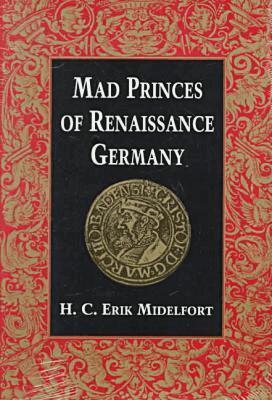
During the 16th century close to 30 German dukes, landgraves, margraves and counts, plus one Holy Roman emperor, were known as mad - so mentally disordered that serious steps had to be taken to remove them from office or to obtain medical care for them. This book is the first to study these princes, and a few princesses, as a group and in context. The result is a flood of new light on the history of Renaissance medicine and of psychiatry, on German politics in the century of Reformation, and on the shifting Renaissance definitions of madness.
Inbunden, Engelska, 1996
509 kr
Skickas inom 10-15 vardagar
The publication of ""Lost Worlds"" introduces to English-speaking readers one of the most original and engaging historians in Germany today. Known for his work in historical demography, Arthur E. Imhof here branches out into folklore, religion, anthropology, psychology and the history of art. Originally published in Germany in 1984, ""Lost Worlds"" is similar in approach to Natalie Davis's ""The Return of Martin Guerre"" and Carlo Ginzburg's ""Cheese and the Worms"". Imhof begins by reconstructing the world and worldview of Johannes Hooss, a farmer in a remote Hessian village. The everyday life of such a man was particular to his region; he spoke a local dialect and shared a regional culture. By exploring the various systems that made sense out of this circumscribed existence - astrology, the folklore of the seasons, and Christian interpretations of birth, confirmation, marriage and death - Imhof expands the book into a speculation on why life in the late 20th century can seem meaningless and difficult.
Häftad, Engelska, 1998
352 kr
Skickas inom 10-15 vardagar
This is the story of a 16th-century mountain village caught in a panic of its own making. Four hundred years ago, the Bavarian alpine town of Oberstdorf, surrounded by the towering peaks of the Vorarlberg, was awash in legends and rumours of prophets and healers, of spirits and spectres, of witches and soothsayers. The book focuses on the life of a horse wrangler named Chonrad Stoeckhlin (1549-1587), whose extraordinary visions of the afterlife and enthusiastic practice of the occult eventually led to his death - and to the death of a number of village women - for crimes of witchcraft. In addition to recounting Stoeckhlin's tale, this book examines the larger world of alpine myths concerning ghosts and other spirits of the night, documenting how these myths have been abused by German political movements over the years.
Inbunden, Engelska, 2001
841 kr
Skickas inom 10-15 vardagar
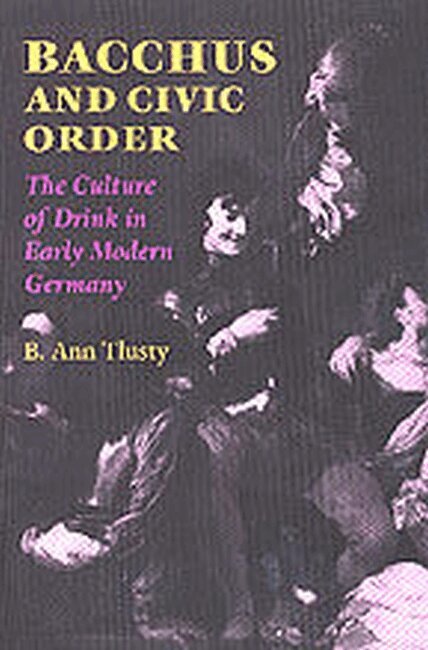
Lining the streets inside the city's gates, clustered in its centre, and thinly scattered among its back quarters were Augsberg's taverns and drinking rooms. These institutions ranged from the poorly lit rooms of backstreet wine sellers to the elaborate marble halls frequented by society's most privileged members. Urban drinking rooms provided more than food, drink and lodging for their guests. They also conferred upon their visitors a sense of social identity commensurate with their status. Like all German cities, Augsberg during the 16th and 17th centuries had a history shaped by the political events attending the Reformation, the post-Reformation and the Thirty Years' War; its social and political character was also reflected and supported by its public and private drinking rooms. In ""Bacchus and Civic Order: The Culture of Drink in Early Modern Germany"", Ann Tlusty examines the social and cultural functions served by drinking and tavern life in Germany between 1500 and 1700, and she challenges existing theories about urban identity, sociability and power. Through her reconstruction of the social history of Augsberg, from beggars to council members, Tlusty also sheds light on such diverse topics as social ritual, gender and household relations, medical practice, and the concerns of civic leaders with public health and poverty. Drunkenness, duelling and other forms of tavern comportment that may appear ""disorderly"" to us today turn out to be the inevitable, even desirable result of a society functioning according to its own rules.
Inbunden, Engelska, 2003
741 kr
Skickas inom 5-8 vardagar
In 1631, at the epicentre of the worst excesses of the European witch-hunts, Friedrich Spee, a Jesuit priest, published the ""Cautio Criminalis"", a book speaking out against the trials that were sending thousands of innocent people to gruesome deaths. Spee, who had himself ministered to women accused of witchcraft in Germany, had witnessed firsthand the twisted logic and brutal torture used by judges and inquisitors. Combined, these harsh prosecutorial measures led inevitably not only to a confession but to denunciations of supposed accomplices, spreading the circle of torture and execution ever wider. Driven by his priestly charge of enacting Christian charity, or love, Spee sought to expose the flawed arguments and methods used by the witch-hunters. His logic is relentless as he reveals the contradictions inherent in their arguments, showing there is no way for an innocent person to prove her innocence. And, he questions, if the condemned witches truly are guilty, how could the testimony of these servants and allies of Satan be reliable? Spee's insistence that suspects, no matter how heinous the crimes of which they are accused, possess certain inalienable rights is a timeless reminder for the present day. The ""Cautio Criminalis"" is an important and moving work in the history of witch trials and a revealing documentation of one man's unexpected humanity in a brutal age.
Häftad, Engelska, 2003
286 kr
Skickas inom 5-8 vardagar
In 1631, at the epicentre of the worst excesses of the European witch-hunts, Friedrich Spee, a Jesuit priest, published the ""Cautio Criminalis"", a book speaking out against the trials that were sending thousands of innocent people to gruesome deaths. Spee, who had himself ministered to women accused of witchcraft in Germany, had witnessed firsthand the twisted logic and brutal torture used by judges and inquisitors. Combined, these harsh prosecutorial measures led inevitably not only to a confession but to denunciations of supposed accomplices, spreading the circle of torture and execution ever wider. Driven by his priestly charge of enacting Christian charity, or love, Spee sought to expose the flawed arguments and methods used by the witch-hunters. His logic is relentless as he reveals the contradictions inherent in their arguments, showing there is no way for an innocent person to prove her innocence. And, he questions, if the condemned witches truly are guilty, how could the testimony of these servants and allies of Satan be reliable? Spee's insistence that suspects, no matter how heinous the crimes of which they are accused, possess certain inalienable rights is a timeless reminder for the present day. The ""Cautio Criminalis"" is an important and moving work in the history of witch trials and a revealing documentation of one man's unexpected humanity in a brutal age.
Häftad, Engelska, 2009
309 kr
Skickas inom 5-8 vardagar
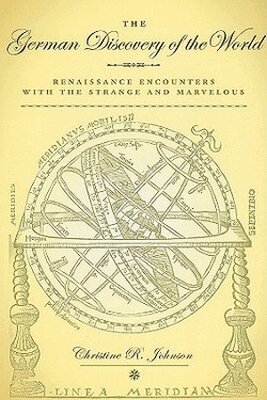
Current historiography suggests that European nations regarded the New World as an inassimilable 'other' that posed fundamental challenges to the accepted ideas of Renaissance culture. ""The German Discovery of the World"" presents a new interpretation that emphasizes the ways in which the new lands and peoples in Africa, Asia, and the Americas were imagined as comprehensible and familiar. In chapters dedicated to travel narratives, cosmography, commerce, and medical botany, Johnson examines how existing ideas and methods were deployed to make German commentators experts in the overseas world, and how this incorporation established the discoveries as new and important intellectual, commercial, and scientific developments. Written in an engaging and accessible style, this book brings to light the dynamic world of the German Renaissance, in which humanists, cartographers, reformers, politicians, botanists, and merchants appropriated the Portuguese and Spanish expeditions to the East and West Indies for their own purposes and, in so doing, reshaped their world.
Inbunden, Engelska, 2014
567 kr
Skickas inom 5-8 vardagar
In early modern Germany, religious conversion was a profoundly social and political phenomenon rather than purely an act of private conscience. Because social norms and legal requirements demanded that every subject declare membership in one of the state-sanctioned Christian churches, the act of religious conversion regularly tested the geographical and political boundaries separating Catholics and Protestants. In a period when church and state cooperated to impose religious conformity, regulate confessional difference, and promote moral and social order, the choice to convert was seen as a disruptive act of disobedience. Investigating the tensions inherent in the creation of religious communities and the fashioning of religious identities in Germany after the Thirty Years' War, Duane Corpis examines the complex social interactions, political implications, and cultural meanings of conversion in this moment of German history. In Crossing the Boundaries of Belief, Corpis assesses how conversion destabilized the rigid political, social, and cultural boundaries that separated one Christian faith from another and that normally tied individuals to their local communities of belief. Those who changed their faiths directly challenged the efforts of ecclesiastical and secular authorities to use religious orthodoxy as a tool of social discipline and control. In its examination of religious conversion, this study thus offers a unique opportunity to explore how women and men questioned and redefined their relationships to local institutions of power and authority, including the parish clergy, the city government, and the family.
Häftad, Engelska, 2016
323 kr
Skickas inom 10-15 vardagar
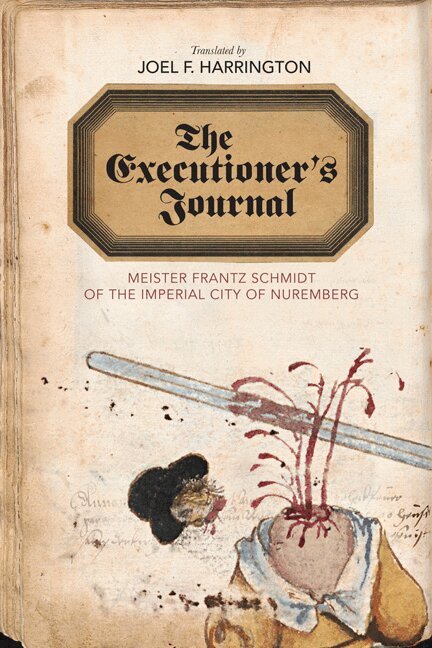
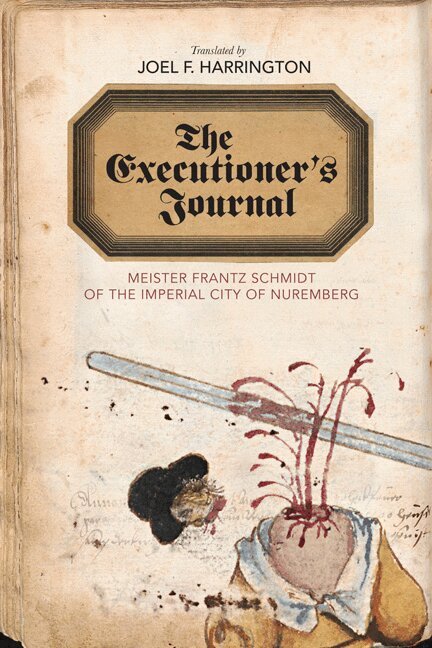
During a career lasting nearly half a century, Meister Frantz Schmidt (1554-1634) personally put to death 392 individuals and tortured, flogged, or disfigured hundreds more. The remarkable number of victims, as well as the officially sanctioned context in which they suffered at Schmidt’s hands, was the story of Joel Harrington’s much-discussed book The Faithful Executioner. The foundation of that celebrated work was Schmidt‘s own journal--notable not only for the shocking story it told but, in an age when people rarely kept diaries, for its mere existence.Available now in Harrington’s new translation, this fascinating document provides the modern reader with a rare firsthand perspective on the thoughts and experiences of an executioner who routinely carried out acts of state brutality yet remained a revered member of the local community and was widely respected for his piety, steadfastness, and popular healing. Based on a long-lost manuscript thought to be the most faithful to the original journal, this modern English translation is fully annotated and includes an introduction providing historical context as well as a biographical portrait of Schmidt himself. The executioner appears to us not as the frightening brute we might expect but as a surprisingly thoughtful, complex person with a unique voice, and in these pages his world emerges as vivid and unforgettable.
Inbunden, Engelska, 2020
461 kr
Skickas inom 5-8 vardagar
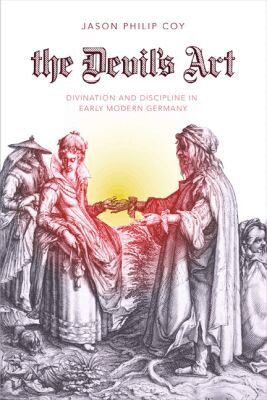
In early modern Germany, soothsayers known as wise women and men roamed the countryside. Fixtures of village life, they identified thieves and witches, read palms, and cast horoscopes. German villagers regularly consulted these fortune-tellers and practiced divination in their everyday lives. Jason Phillip Coy brings their enchanted world to life by examining theological discourse alongside archival records of prosecution for popular divination in Thuringia, a diverse region in central Germany divided into a patchwork of princely territories, imperial cities, small towns, and rural villages. Popular divination faced centuries of elite condemnation, as the Lutheran clergy attempted to suppress these practices in the wake of the Reformation and learned elites sought to eradicate them during the Enlightenment. As Coy finds, both of these reform efforts failed, and divination remained a prominent feature of rural life in Thuringia until well into the nineteenth century.The century after 1550 saw intense confessional conflict accompanied by widespread censure and disciplinary measures, with prominent Lutheran theologians and demonologists preaching that divination was a demonic threat to the Christian community and that soothsayers deserved the death penalty. Rulers, however, refused to treat divination as a capital crime, and the populace continued to embrace it alongside official Christianity in troubled times. The Devil's Art highlights the limits of Reformation-era disciplinary efforts and demonstrates the extent to which reformers' efforts to inculcate new cultural norms relied upon the support of secular authorities and the acquiescence of parishioners. Negotiation, accommodation, and local resistance blunted official reform efforts and ensured that occult activities persisted and even flourished in Germany into the modern era, surviving Reformation-era preaching and Enlightenment-era ridicule alike.
Inbunden, Engelska, 2020
730 kr
Skickas inom 5-8 vardagar
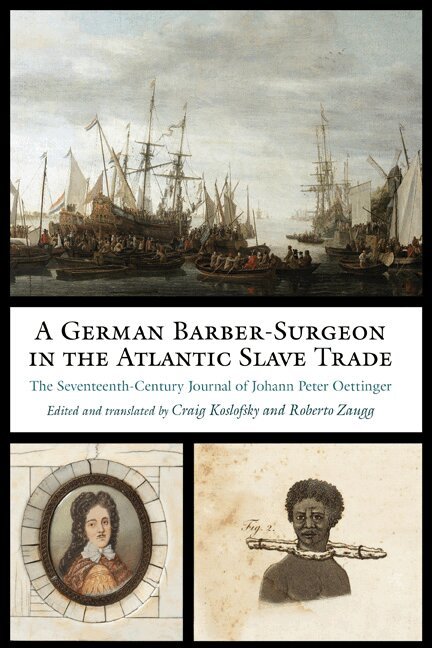
As he traveled across Germany and the Netherlands and sailed on Dutch and Brandenburg slave ships to the Caribbean and Africa from 1682 to 1696, the young German barber-surgeon Johann Peter Oettinger (1666-1746) recorded his experiences in a detailed journal, discovered by Roberto Zaugg and Craig Koslofsky in a Berlin archive. Oettinger's journal describes shipboard life, trade in Africa, the horrors of the Middle Passage, and the sale of enslaved captives in the Caribbean. Translated here for the first time, A German Barber-Surgeon in the Atlantic Slave Trade documents Oettinger's journeys across the Atlantic, his work as a surgeon, his role in the purchase and branding of enslaved Africans, and his experiences in France and the Netherlands. His descriptions of Amsterdam, Curaçao, St. Thomas, and Suriname, as well as his account of societies along the coast of West Africa, from Mauritania to Gabon, contain rare insights into all aspects of Europeans' burgeoning trade in African captives in the late seventeenth century. This journeyman's eyewitness account of all three routes of the triangle trade will be invaluable to scholars of the early modern world on both sides of the Atlantic.
Inbunden, Engelska, 2022
502 kr
Skickas inom 5-8 vardagar
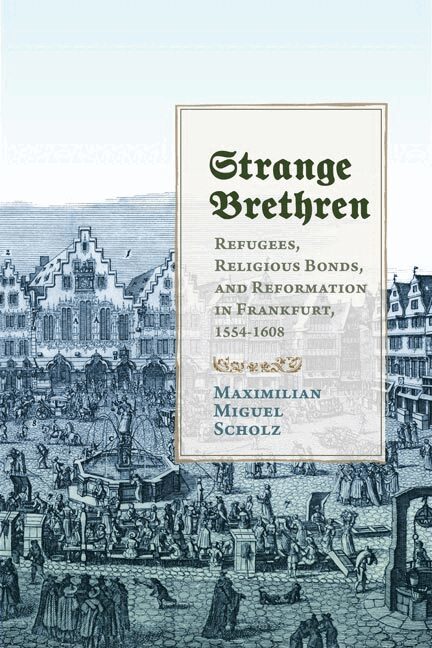
In the sixteenth century, German cities and territories welcomed thousands of refugees fleeing the religious persecution sparked by the Reformation. As Strange Brethren reveals, these Reformation refugees had a profound impact on the societies they entered. Exploring one major destination for refugees—the city of Frankfurt am Main—Maximilian Miguel Scholz finds that these forced migrants inspired new religious bonds, new religious animosities, and new religious institutions, playing a critical role in the course of the Reformation in Frankfurt and beyond.Strange Brethren traces the first half century of refugee life in Frankfurt, beginning in 1554 when the city granted twenty-four families of foreign Protestants housing, workspace, and their own church. Soon thousands more refugees arrived. While the city’s ruling oligarchs were happy to support these foreigners, the city’s clergy resented and feared the refugees. A religious fissure emerged, and Frankfurt’s Protestants divided into two competing camps—Lutheran natives and Reformed (Calvinist) foreigners. Both groups began to rethink and reinforce their religious institutions. The religious and civic impact was substantial and enduring. As Strange Brethren shows, many of the hallmarks of modern Protestantism—its confessional divides and its disciplinary structures—resulted from the encounter between refugees and their hosts.
Inbunden, Engelska, 2022
557 kr
Skickas inom 5-8 vardagar
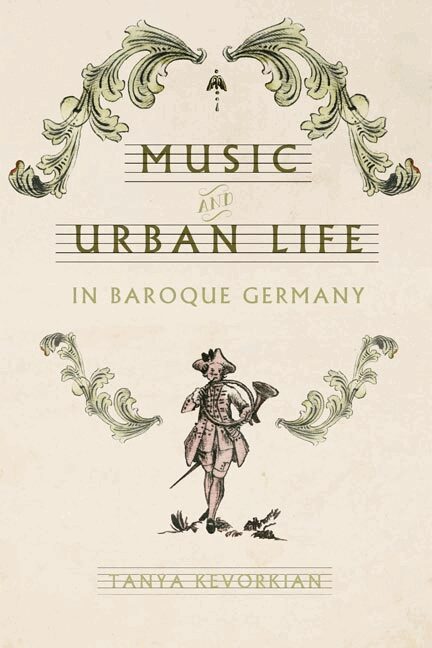
Music and Urban Life in Baroque Germany offers a new narrative of Baroque music, accessible to non-music specialists, in which Tanya Kevorkian defines the era in terms of social dynamics rather than style and genre development. Towns were crucial sites of music-making. Kevorkian explores how performance was integrated into and indispensable to everyday routines, celebrations such as weddings, and political culture. Training and funding likewise emerged from and were integrated into urban life. Ordinary artisans, students, and musical tower guards as well as powerful city councilors contributed to the production and reception of music. This book illuminates the processes at play in fascinating ways.Challenging ideas of "elite" and "popular" culture, Kevorkian examines five central and southern German towns—Augsburg, Munich, Erfurt, Gotha, and Leipzig—to reconstruct a vibrant urban musical culture held in common by townspeople of all ranks. Outdoor acoustic communication, often hovering between musical and nonmusical sound, was essential to the functioning of these towns. As Kevorkian shows, that sonic communication was linked to the music and musicians heard in homes, taverns, and churches. Early modern urban environments and dynamics produced both the giants of the Baroque era, such as Johann Sebastian Bach and Georg Philipp Telemann, and the music that townspeople heard daily. This book offers a significant rediscovery of a rich, unique, and understudied musical culture.
Inbunden, Engelska, 2023
392 kr
Skickas inom 5-8 vardagar
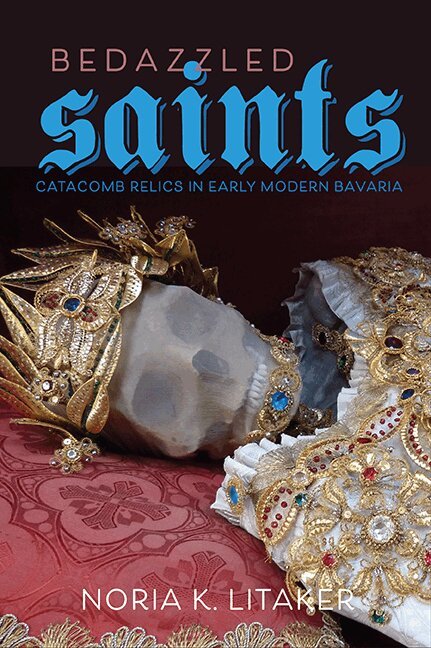
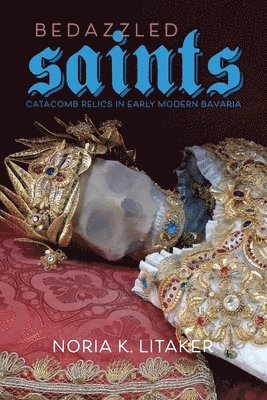
The defense of the cult of saints and relics was an essential element of the Catholic Counter-Reformation in Europe. Facing attacks from Protestant denominations of all kinds, the Roman church redoubled its efforts to promote the veneration of its holy figures and to house their earthly remains in dramatic style. Bedazzled Saints chronicles the transfer, distribution, and display of nearly four hundred "holy bodies" of ancient Christian martyrs, some of the church’s most prestigious relics, sent from the Roman catacombs to the Electorate of Bavaria between 1590 and 1803. Local communities, both religious and secular, broke with medieval tradition and spent immense amounts of time and money to fuse incomplete skeletons into lavishly decorated whole-body saints.By examining these ornamented skeletons--painstakingly enhanced with jewels and fine clothing and still on display atop church altars to this day--Noria Litaker elucidates the interplay between local religious practice and universal church doctrine, shedding new light on the negotiated nature of sanctity in early modern Catholicism. In so doing, she challenges the dominant narrative of the Bavarian Catholic Reformation as a top-down process and provides new insights into the role relics and their innovative presentation played in the development of Catholic identity in early modern German lands.
Häftad, Engelska, 2024
382 kr
Skickas inom 10-15 vardagar
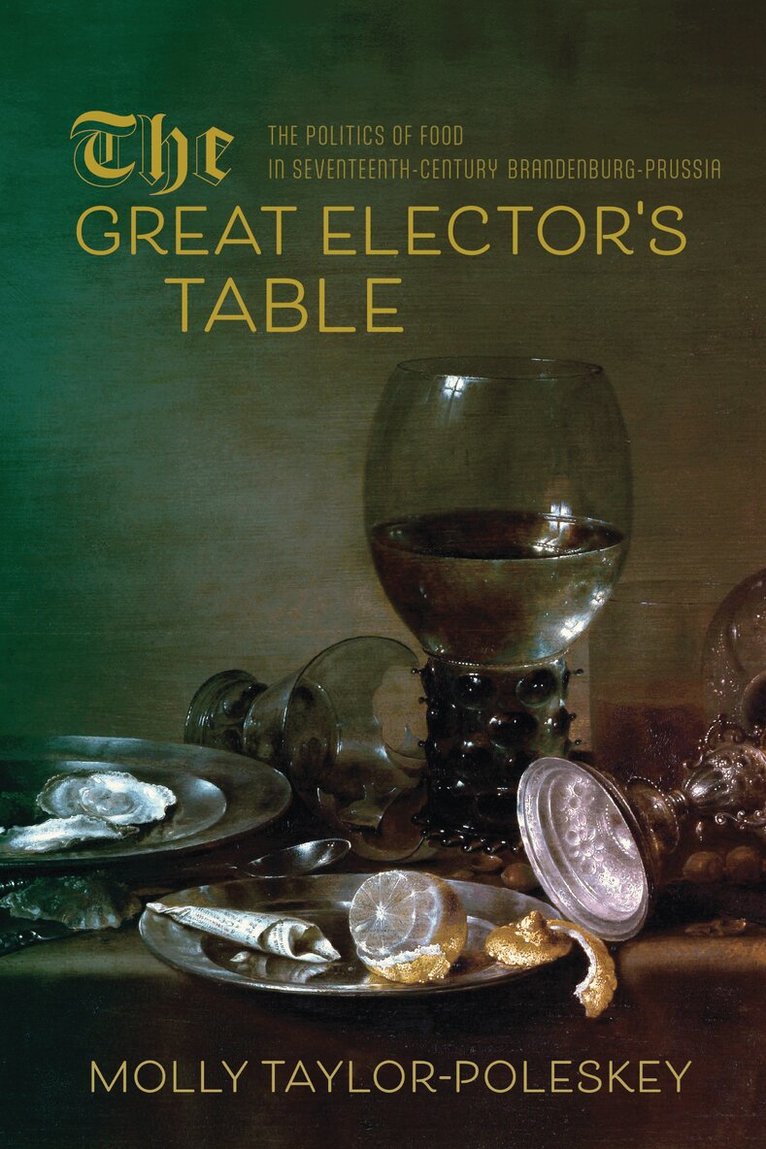
What food production, presentation, and consumption reveals about the exercise of power in early modern GermanyIn politics, as with food, presentation is everything. At the court of Elector Friedrich Wilhelm in Brandenburg-Prussia, the two combined in a way that illuminates the social and cultural dynamics of seventeenth-century German life. In this remarkable book, the first of its kind, Molly Taylor-Poleskey offers an innovative critical approach to understanding how a particular dynasty and an unexceptional German state rose to their eminent position on the Central European stage following the devastation of the Thirty Years’ War. Food, she shows, functioned both as a tool of self-aggrandizement for rulers and as a means of coercion and leverage in power negotiations. From bakers to botanists, court servants up and down the social ladder each had a role to play in the political life of this court. Moving beyond dusty bureaucratic narratives, this colorful and inviting book offers readers a new way of appreciating how culture, politics, the natural environment, and science intertwined in early modern German statecraft.
Inbunden, Engelska, 2024
1 286 kr
Skickas inom 10-15 vardagar
What food production, presentation, and consumption reveals about the exercise of power in early modern GermanyIn politics, as with food, presentation is everything. At the court of Elector Friedrich Wilhelm in Brandenburg-Prussia, the two combined in a way that illuminates the social and cultural dynamics of seventeenth-century German life. In this remarkable book, the first of its kind, Molly Taylor-Poleskey offers an innovative critical approach to understanding how a particular dynasty and an unexceptional German state rose to their eminent position on the Central European stage following the devastation of the Thirty Years’ War. Food, she shows, functioned both as a tool of self-aggrandizement for rulers and as a means of coercion and leverage in power negotiations. From bakers to botanists, court servants up and down the social ladder each had a role to play in the political life of this court. Moving beyond dusty bureaucratic narratives, this colorful and inviting book offers readers a new way of appreciating how culture, politics, the natural environment, and science intertwined in early modern German statecraft.
Inbunden, Engelska, 2025
1 303 kr
Skickas inom 10-15 vardagar
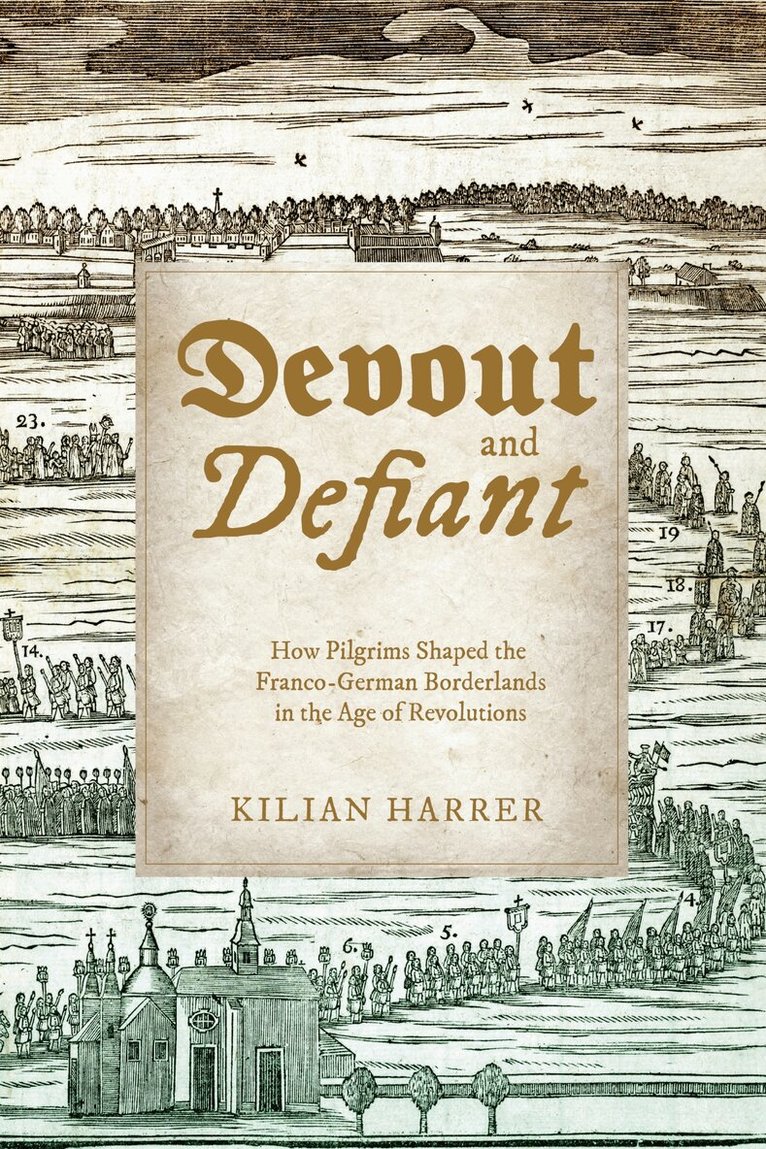
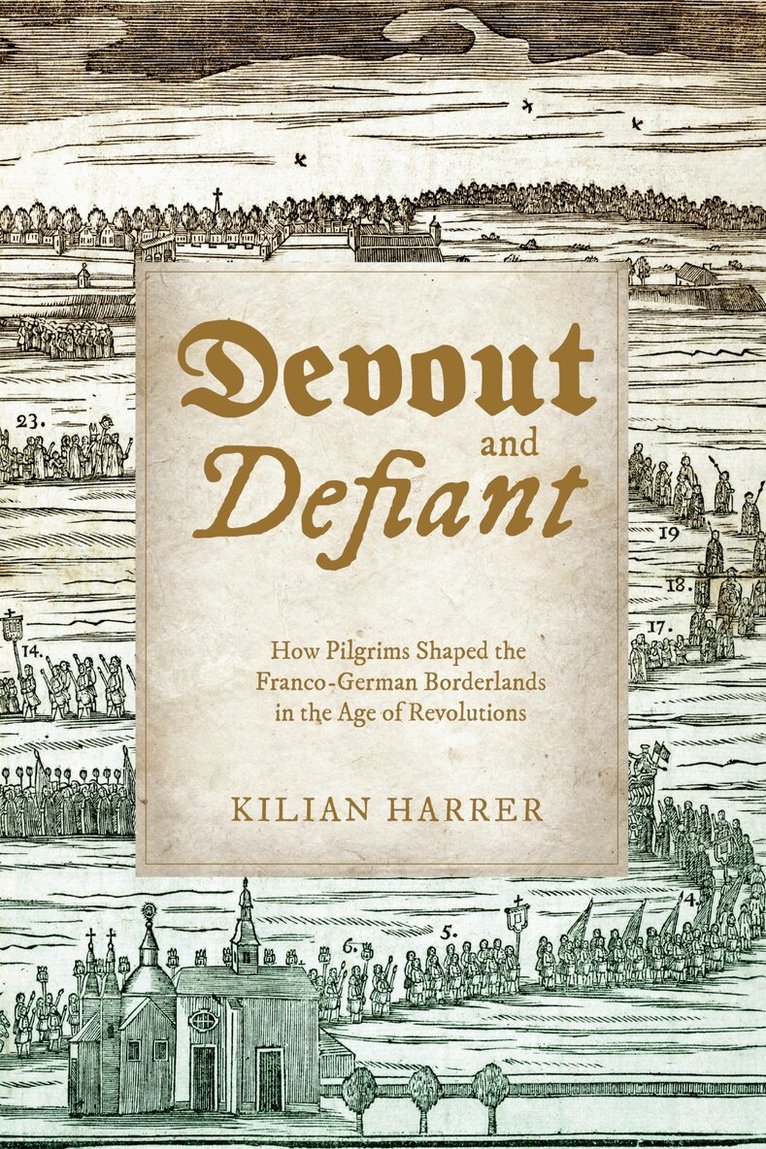
How Catholic pilgrims in an era of revolution challenged state authority and redefined the practice of their faith In the days of the French Revolution, as zealous government officials sought to sweep away the vestiges of a less enlightened age, they made a concerted effort to clamp down on religious 'superstition' and to fix modern territorial boundaries. Catholic pilgrims on the western edge of German-speaking Europe, however, refused to let worldly barriers stand in the way of their devotional practices. As Kilian Harrer reveals in this groundbreaking book, pilgrimage became a form of transgressive devotion that spurred religious renewal. By the hundreds of thousands, pilgrims exposed the limits of state authority as they traveled to shrines and holy sites across the borderlands that stretched from Luxembourg in the north to Alsace and Switzerland in the south. These Catholics evaded passport controls, crossed provocatively into Protestant territories, and went abroad to visit shrines beyond the reach of anticlerical officials. Pilgrims and pilgrimage organizers reshaped the politics of religion by grappling with shifting borders, dramatic regime change, and police repression. In the end, they reoriented Catholicism itself as they boldly confronted the state-led policing of borders and worship.
Häftad, Engelska, 2025
413 kr
Skickas inom 10-15 vardagar
How Catholic pilgrims in an era of revolution challenged state authority and redefined the practice of their faith In the days of the French Revolution, as zealous government officials sought to sweep away the vestiges of a less enlightened age, they made a concerted effort to clamp down on religious 'superstition' and to fix modern territorial boundaries. Catholic pilgrims on the western edge of German-speaking Europe, however, refused to let worldly barriers stand in the way of their devotional practices. As Kilian Harrer reveals in this groundbreaking book, pilgrimage became a form of transgressive devotion that spurred religious renewal. By the hundreds of thousands, pilgrims exposed the limits of state authority as they traveled to shrines and holy sites across the borderlands that stretched from Luxembourg in the north to Alsace and Switzerland in the south. These Catholics evaded passport controls, crossed provocatively into Protestant territories, and went abroad to visit shrines beyond the reach of anticlerical officials. Pilgrims and pilgrimage organizers reshaped the politics of religion by grappling with shifting borders, dramatic regime change, and police repression. In the end, they reoriented Catholicism itself as they boldly confronted the state-led policing of borders and worship.
Häftad, Engelska, 2025
314 kr
Skickas inom 10-15 vardagar
Winner of the Sixteenth Century Society Gerald Strauss Book Award Shortlisted for the Ecclesiastical History Society Book Award The defense of the cult of saints and relics was an essential element of the Catholic Counter-Reformation in Europe. Facing attacks from Protestant denominations of all kinds, the Roman church redoubled its efforts to promote the veneration of its holy figures and to house their earthly remains in dramatic style. Bedazzled Saints chronicles the transfer, distribution, and display of nearly four hundred " holy bodies" of ancient Christian martyrs, some of the church's most prestigious relics, sent from the Roman catacombs to the Electorate of Bavaria between 1590 and 1803. Local communities, both religious and secular, broke with medieval tradition and spent immense amounts of time and money to fuse incomplete skeletons into lavishly decorated whole-body saints.By examining these ornamented skeletons— painstakingly enhanced with jewels and fine clothing and still on display atop church altars to this day - Noria Litaker elucidates the interplay between local religious practice and universal church doctrine, shedding new light on the negotiated nature of sanctity in early modern Catholicism. In so doing, she challenges the dominant narrative of the Bavarian Catholic Reformation as a top-down process and provides new insights into the role relics and their innovative presentation played in the development of Catholic identity in early modern German lands.
Häftad, Engelska, 2026
327 kr
Kommande
Music and Urban Life in Baroque Germany offers a new narrative of Baroque music, accessible to non-music specialists, in which Tanya Kevorkian defines the era in terms of social dynamics rather than style and genre development. Towns were crucial sites of music-making. Kevorkian explores how performance was integrated into and indispensable to everyday routines, celebrations such as weddings, and political culture. Training and funding likewise emerged from and were integrated into urban life. Ordinary artisans, students, and musical tower guards as well as powerful city councilors contributed to the production and reception of music. This book illuminates the processes at play in fascinating ways.Challenging ideas of "elite" and "popular" culture, Kevorkian examines five central and southern German towns—Augsburg, Munich, Erfurt, Gotha, and Leipzig—to reconstruct a vibrant urban musical culture held in common by townspeople of all ranks. Outdoor acoustic communication, often hovering between musical and nonmusical sound, was essential to the functioning of these towns. As Kevorkian shows, that sonic communication was linked to the music and musicians heard in homes, taverns, and churches. Early modern urban environments and dynamics produced both the giants of the Baroque era, such as Johann Sebastian Bach and Georg Philipp Telemann, and the music that townspeople heard daily. This book offers a significant rediscovery of a rich, unique, and understudied musical culture.Received a subvention award from the Margarita M. Hanson Fund and the Donna Cardamone Jackson Fund of the American Musicological Society.