Studies in the Legal History of the South Series – serie
1 999 kr
Läs direkt efter köp
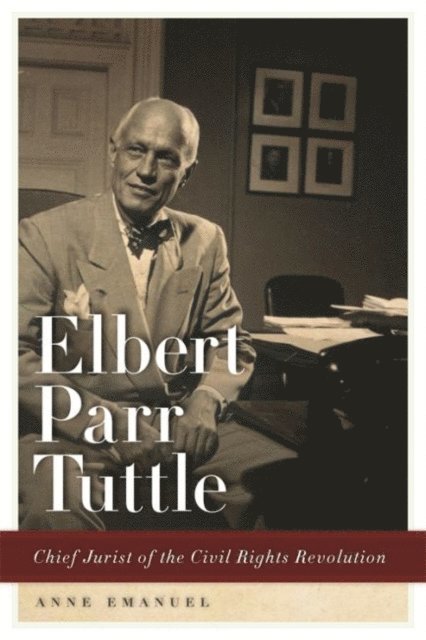
This is the first—and the only authorized—biography of Elbert Parr Tuttle (1897–1996), the judge who led the federal court with jurisdiction over most of the Deep South through the most tumultuous years of the civil rights revolution. By the time Tuttle became chief judge of the United States Court of Appeals for the Fifth Circuit, he had already led an exceptional life. He had cofounded a prestigious law firm, earned a Purple Heart in the battle for Okinawa in World War II, and led Republican Party efforts in the early 1950s to establish a viable presence in the South. But it was the intersection of Tuttle’s judicial career with the civil rights movement that thrust him onto history’s stage.When Tuttle assumed the mantle of chief judge in 1960, six years had passed since Brown v. Board of Education had been decided but little had changed for black southerners. In landmark cases relating to voter registration, school desegregation, access to public transportation, and other basic civil liberties, Tuttle’s determination to render justice and his swift, decisive rulings neutralized the delaying tactics of diehard segregationists—including voter registrars, school board members, and governors—who were determined to preserve Jim Crow laws throughout the South.Author Anne Emanuel maintains that without the support of the federal courts of the Fifth Circuit, the promise of Brown might have gone unrealized. Moreover, without the leadership of Elbert Tuttle and the moral authority he commanded, the courts of the Fifth Circuit might not have met the challenge.
450 kr
Läs direkt efter köp
504 kr
Läs direkt efter köp
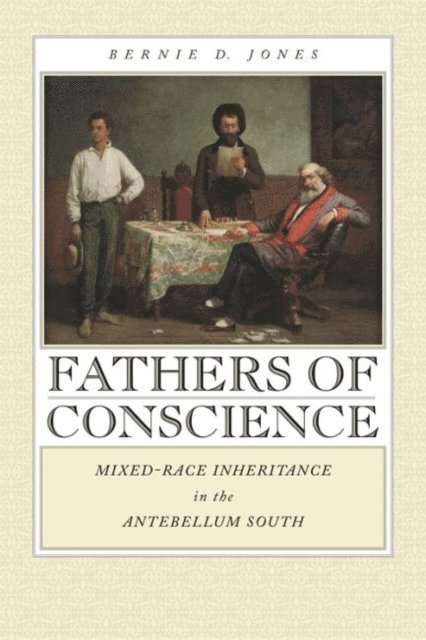
Fathers of Conscience examines high-court decisions in the antebellum South that involved wills in which white male planters bequeathed property, freedom, or both to women of color and their mixed-race children. These men, whose wills were contested by their white relatives, had used trusts and estates law to give their slave partners and children official recognition and thus circumvent the law of slavery. The will contests that followed determined whether that elevated status would be approved or denied by courts of law.Bernie D. Jones argues that these will contests indicated a struggle within the elite over race, gender, and class issues—over questions of social mores and who was truly family. Judges thus acted as umpires after a man''s death, deciding whether to permit his attempts to provide for his slave partner and family. Her analysis of these differing judicial opinions on inheritance rights for slave partners makes an important contribution to the literature on the law of slavery in the United States.
825 kr
Läs direkt efter köp
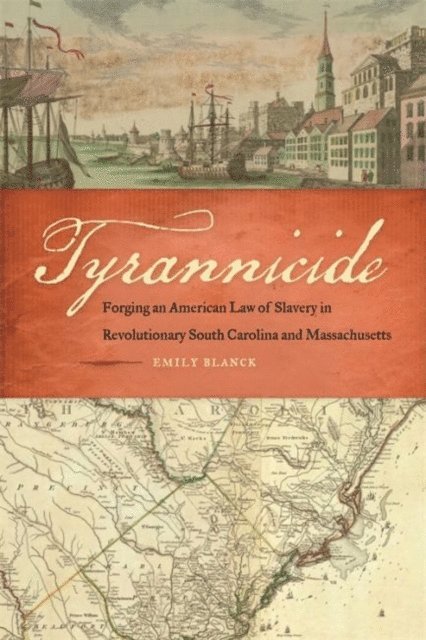
Tyrannicide uses a captivating narrative to unpack the experiences of slavery and slave law in South Carolina and Massachusetts during the Revolutionary Era. In 1779, during the midst of the American Revolution, thirty-four South Carolina slaves escaped aboard a British privateer and survived several naval battles until the Massachusetts brig Tyrannicide led them to Massachusetts. Over the next four years, the slaves became the center of a legal dispute between the two states. The case affected slave law and highlighted the profound differences between how the “terrible institution” was practiced in the North and the South, in ways that would foreground issues eventually leading to the Civil War.Emily Blanck uses the Tyrannicide affair and the slaves involved as a lens through which to view contrasting slaveholding cultures and ideas of African American democracy. Blanck’s examination of the debate analyzes crucial questions: How could the colonies unify when they viewed one of America’s foundational institutions in fundamentally different ways? How would fugitive slaves be handled legally and ethically? Blanck shows how the legal and political battles that resulted from the affair reveal much about revolutionary ideals and states’ rights at a time when notions of the New Republic—and philosophies about the unity of American states—were being created.
1 008 kr
Läs direkt efter köp
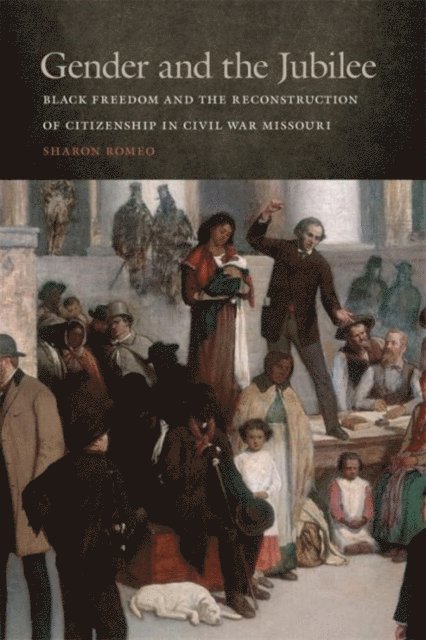
Gender and the Jubilee is a bold reconceptualization of black freedom during the Civil War that uncovers the political and constitutional claims made by African American women. By analyzing the actions of women in the urban environment of St. Louis and the surrounding areas of rural Missouri, Romeo uncovers the confluence of military events, policy changes, and black agency that shaped the gendered paths to freedom and citizenship.During the turbulent years of the Civil War crisis, African American women asserted their vision of freedom through a multitude of strategies. They took concerns ordinarily under the jurisdiction of civil courts, such as assault and child custody, and transformed them into military matters. African American women petitioned military police for “free papers”; testified against former owners; fled to contraband camps; and “joined the army” with their male relatives, serving as cooks, laundresses, and nurses.Freedwomen, and even enslaved women, used military courts to lodge complaints against employers and former masters, sought legal recognition of their marriages, and claimed pensions as the widows of war veterans. Through military venues, African American women in a state where the institution of slavery remained unmolested by the Emancipation Proclamation, demonstrated a claim on citizenship rights well before they would be guaranteed through the establishment of the Fourteenth Amendment. The litigating slave women of antebellum St. Louis, and the female activists of the Civil War period, left a rich legal heritage to those who would continue the struggle for civil rights in the postbellum era.