TankCraft – serie
Visar alla böcker i serien TankCraft. Handla med fri frakt och snabb leverans.
3 produkter
3 produkter
Häftad, Engelska, 2024
195 kr
Skickas
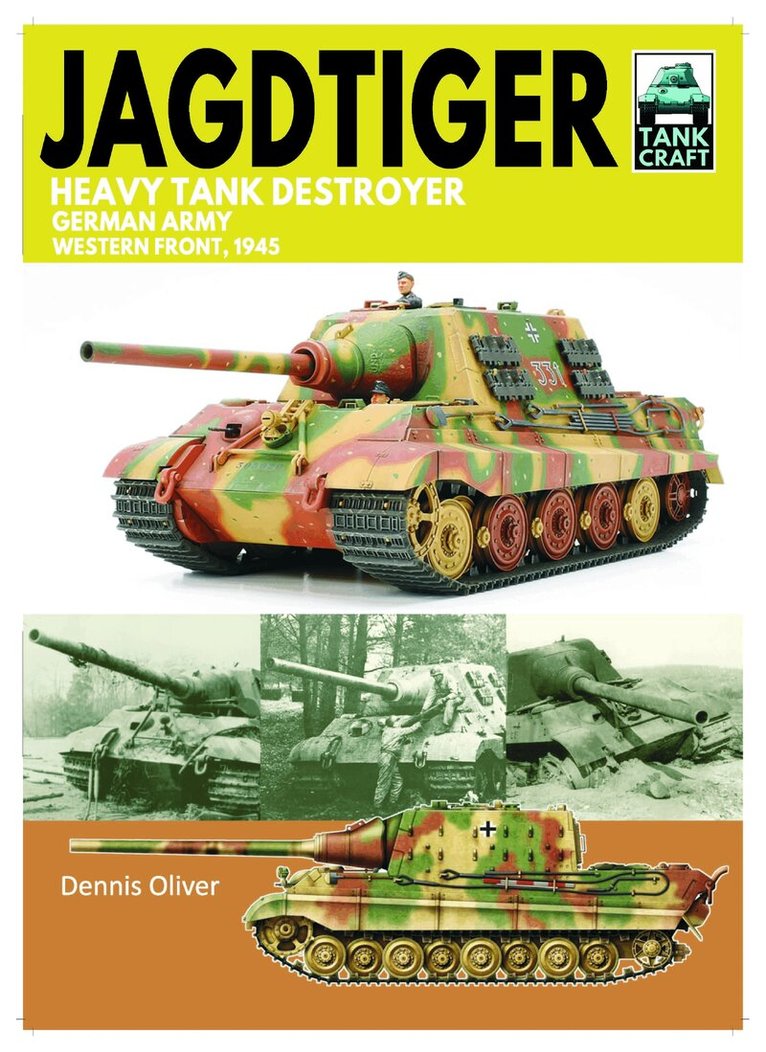
By 1943, confronted by heavier enemy tanks in increasing numbers, German field commanders were asking for a more potent tank destroyer, building on the success of the Sturmgeschütz programme. Coincidentally, at this time the Tiger II was well into the development stage and experiments were being undertaking with the huge 12.8cm L/55 gun, originally designed as an anti-aircraft weapon, and the two were eventually combined as the Panzerjäger Tiger ausf B, better known as the Jagdtiger. Going into combat for the first time in January 1945 these massive vehicles were almost impervious to any anti-tank gun in service at the time and the 12.8cm weapon could penetrate the thickest armour. It was the largest armoured fighting vehicle to see action during the Second World War and Hitler was so impressed with these gigantic tank killers that he was briefed on the progress of individual vehicles on a daily basis. Drawing on official documentation and unit histories Dennis Oliver investigates the formations that operated these deservedly famous vehicles and uses archive photos and extensively researched colour illustrations to examine the markings, camouflage and technical aspects of the Jagdtigers that fought in the last battles of the war. A key section of his book displays available model kits and aftermarket products, complemented by a gallery of beautifully constructed and painted models in various scales. Technical details as well as modifications introduced during production and in the field are also examined, providing everything the modeller needs to recreate an accurate representation of these historic vehicles.
Häftad, Engelska, 2025
201 kr
Skickas
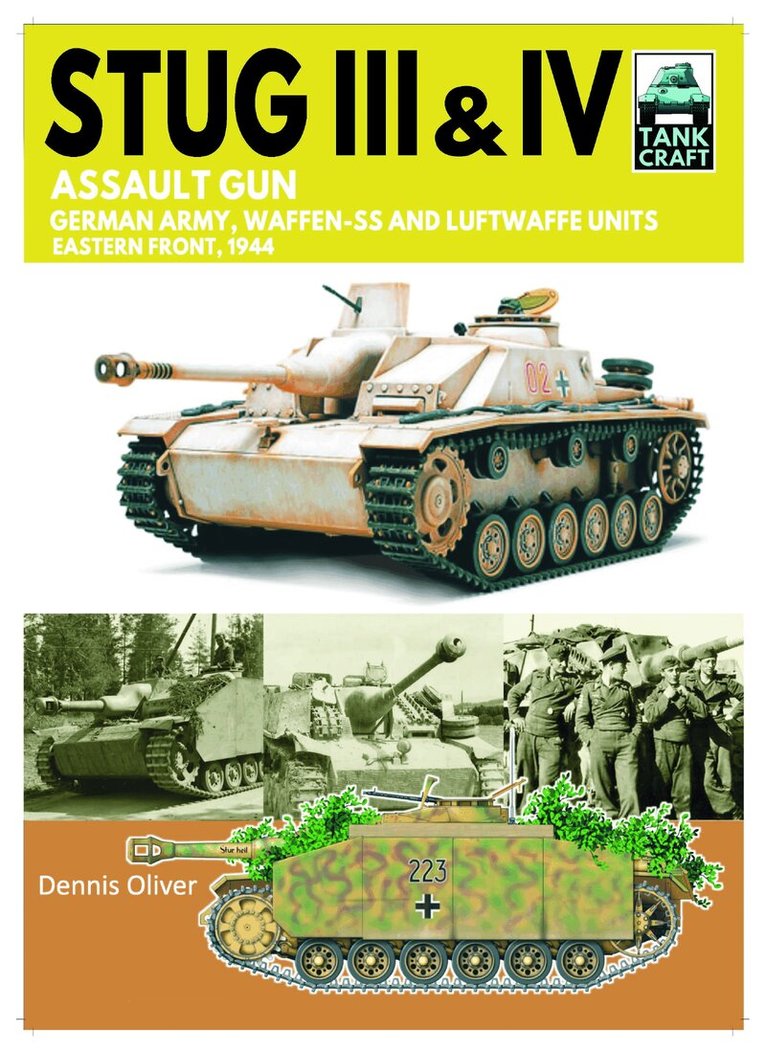
From their introduction in 1940, the German army's Sturmgeschütz assault guns played a vital role in the campaigns of the Blitzkrieg era, the gargantuan struggles in Russia and the final defensive battles. Evolving from a mobile bunker-buster, armed with a short-barrelled howitzer, the Sturmgeschütz III was up-armoured and up-gunned and by 1943 its tank killing abilities were widely recognised. In 1944, largely as an emergency quick-fix, the Sturmgeschütz IV entered service and over 10,000 examples of both versions had been built by the end of the war. Although not as well known as the Tiger or Panther tanks, they were among the most frequently encountered German armoured vehicles and as the Wehrmacht’s resources continued to decline, the assault guns were thrown into every operation and increasingly substituted for gun tanks in official unit establishments. In the second volume in the TankCraft series to examine the Sturmgeschütz, Dennis Oliver employs official documentation and unit histories to investigate the formations that operated these vehicles and uses archive photos and extensively researched colour illustrations to examine the markings, camouflage and technical aspects of the Sturmgeschütz III and Sturmgeschütz IV that served on the Eastern Fronts during what was almost certainly the pivotal year of the campaign. A key section of his book displays available model kits and aftermarket products, complemented by a gallery of beautifully constructed and painted models in various scales. Technical details as well as modifications introduced during production and in the field are also examined, providing everything the modeller needs to recreate an accurate representation of these historic vehicles.
Häftad, Engelska, 2025
242 kr
Skickas
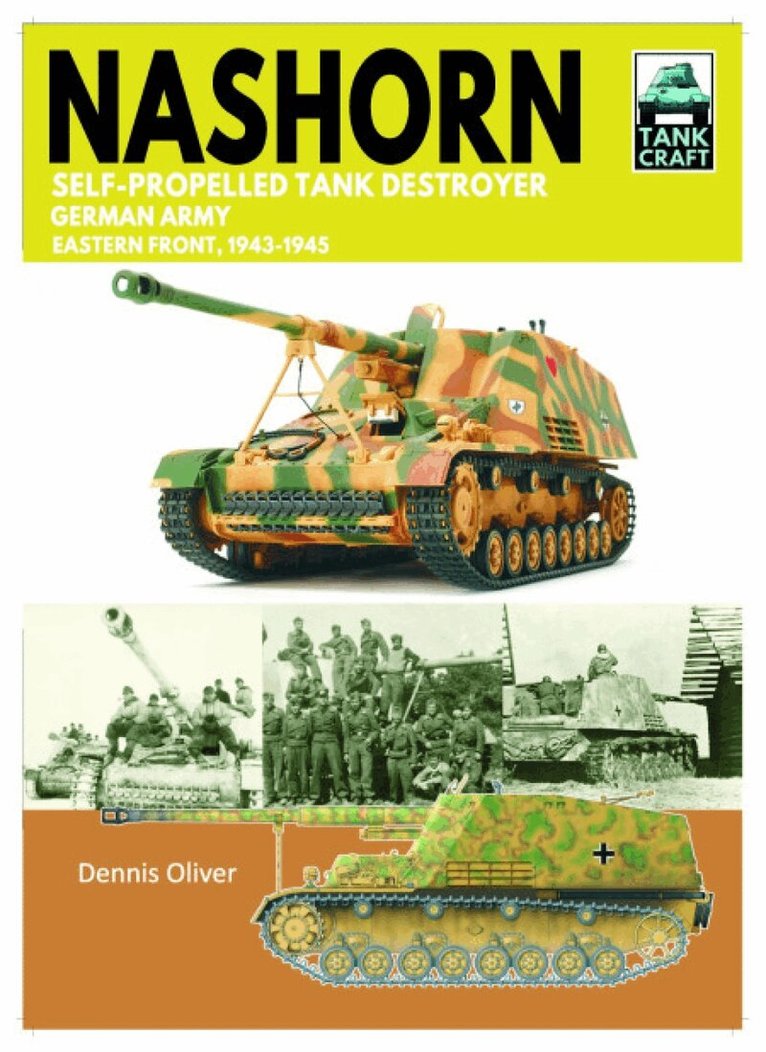
Combining the destructive firepower of the famous 8.8cm gun with the mobility of the Pzkpfw IV medium tank, the Panzerjäger Nashorn, or rhinoceros, was quite possibly one of the most effective tank destroyers of the Second World War, although less than 500 were built. Issued to specially created heavy anti-tank battalions the Nashorn went into action for the first time during Operation Citadel, the battles around Kursk on the Eastern Front, in mid-1943 where it was immediately hailed as a success. Initial doubts about the vehicle's lack of thick armour, or even a roof for the superstructure, were forgotten when it was found that the 8.8cm gun, backed by superior gun sights and range-findering optics, could destroy the heaviest Soviet tanks while the Nashorn remained out of range. Examples also found their way to Italy and the Western Front but it was really on the open fields of eastern Europe that the Nashorn excelled. In his latest book in the TankCraft series, Dennis Oliver uses contemporary photographs and meticulously researched, superbly presented colour and monochrome illustrations to tell the story of these self-propelled anti-tank weapons and the units which operated them in the German defence of the Eastern Front. As with all the books in the TankCraft series, a large part of this work showcases available model kits and aftermarket products, complemented by a gallery of expertly constructed and painted models. Technical details as well as modifications introduced during production and in the field are also explained giving the modeller all the information and knowledge required.