Teaching Ethics: Material for Practitioner Education - Böcker
Visar alla böcker i serien Teaching Ethics: Material for Practitioner Education. Handla med fri frakt och snabb leverans.
3 produkter
3 produkter
2 014 kr
Skickas inom 3-6 vardagar
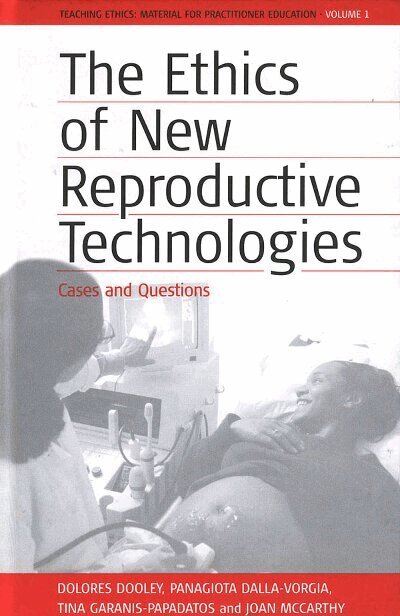
The new reproductive technologies (NRTs) have given rise to new ethical questions that are widely debated. This book, the outcome of a European Union-wide collaborative process, draws on the experience and expertise of ethicists, lawyers, and clinical practitioners and focuses on some of the "burning issues" in different European countries. These include: donor insemination; surrogacy; preimplantation genetic diagnosis; embryo research; access to IVF treatment; and parental, professional and social responsibility. Familiar notions such as quality of life, parenthood, mothering, responsibility and personal identity surface at many points throughout the book and are refashioned to accommodate new questions.This book introduces and probes ethical questions and challenges in a hands-on way by working through relevant case studies with key commentaries and activities. It engages the reader directly in ethical reasoning and decision-making and provides clear explanations, insightful commentaries and informed debate on NRTs.
2 014 kr
Skickas inom 3-6 vardagar
Genetic information plays an increasingly important role in ourlives. As a result of the Human Genome Project, knowledge ofthe genetic basis of various diseases is growing, withimportant consequences for the role of genetics in clinicalpractice, health care systems and for society at large. In theclinical setting genetic testing may result in a better insightinto susceptibility for inheritable diseases, not only before orafter birth, but also at later stages in life. Besides prenataltesting and pre-conceptional testing, predictive testing hasresulted in new possibilities for the early detection, treatmentand prevention of inheritable diseases.However, not all inheritable diseases that can be predicted onthe basis of genetic information can be treated or cured.Should we offer genetic tests to people for untreatablediseases? Should we test every individual who wants to knowhis or her genetic status? Should we inform family membersabout the results of genetic tests of individuals, even whenthere are no possibilities for treatment? What, in such cases,is the role of the "right-not-to-know"? Should we informfamily members when there is only an increased risk of adisease? This book deals with the ethical issues of clinicalgenetics, as well as ethical issues that arise in geneticscreening, the research of populations, and the use of geneticinformation for access to insurance and the workplace.
2 014 kr
Skickas inom 3-6 vardagar
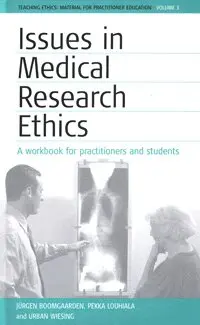
With the advances of medicine, questions of medical ethics have become more urgent and are now considered of great social and political significance. An innovatively designed, activity-based workbook, this text was prepared using papers and case studies collected from several countries in the European Union. It reflects the issues and concerns that confront clinical practitioners throughout Europe and elsewhere today and presents varying national responses in law and policy to these concerns, as identified by ethicists, lawyers, theologians and practitioners. The problems they examine include the relationship between medical research and medical practice, elementary regulations of medical research, the complexity of informed consent, and the role of the sponsor or scientific community.