Southwestern & Mexican Photography Series, the Wittliff Collections at Texas State University – serie
Visar alla böcker i serien Southwestern & Mexican Photography Series, the Wittliff Collections at Texas State University. Handla med fri frakt och snabb leverans.
4 produkter
4 produkter
553 kr
Skickas inom 5-8 vardagar
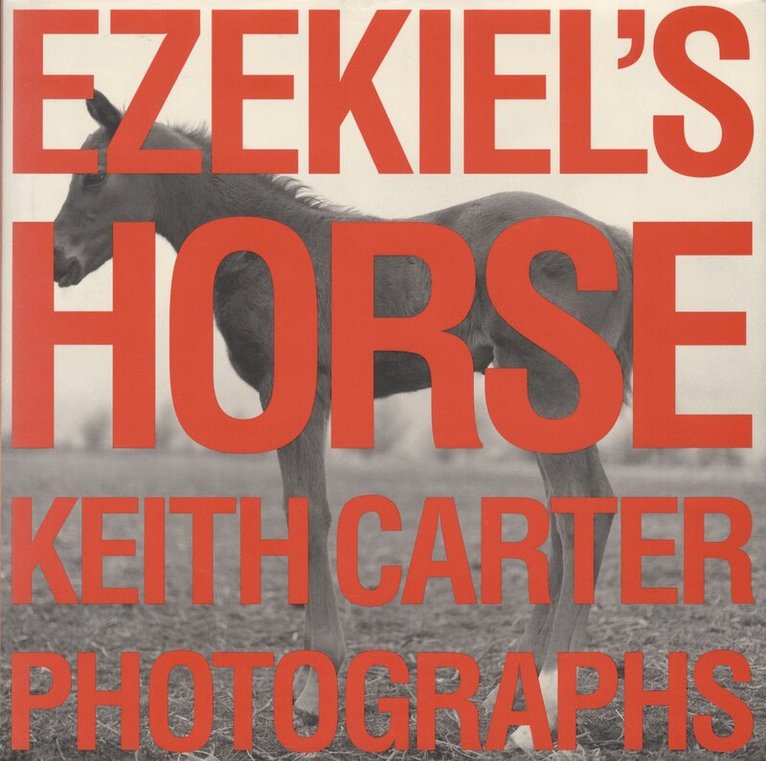
Winner, Jury selection, American Institute of Graphic Arts, 2001Communication Arts 2001 Design Annual, 2001Featured title in Print A-Z, 2001Haunting in their mystery and beauty, Keith Carter's horses fill the frame like spirits in a dream-but without ever ceasing to be real horses. Whether he's photographing thoroughbreds preparing for the elaborate maneuvers of dressage or a farm nag grazing in a field, Carter meets horses on their terms, not his. Looking into their enigmatic eyes in these photographs, you wonder, "What are these creatures thinking?" until you realize that Keith Carter's horses never really give up their secrets.This volume collects some 75 duotone images of horses and riders, most of them never before published. Accompanying the pictures is a photographer's statement, in which Keith Carter describes the genesis of this project and muses on what it is about horses that draws him to them as photographic subjects. Distinguished art and photography critic John Wood places Carter's equine photos within the wider Western tradition of painting and photographing animals, while praising Carter's rare ability to portray animal subjects without producing kitsch. In his words, "Carter is probably photography's first truly great master of the animal photograph, and none of his other animal photographs are more powerful than his photographs of horses."
662 kr
Skickas inom 5-8 vardagar
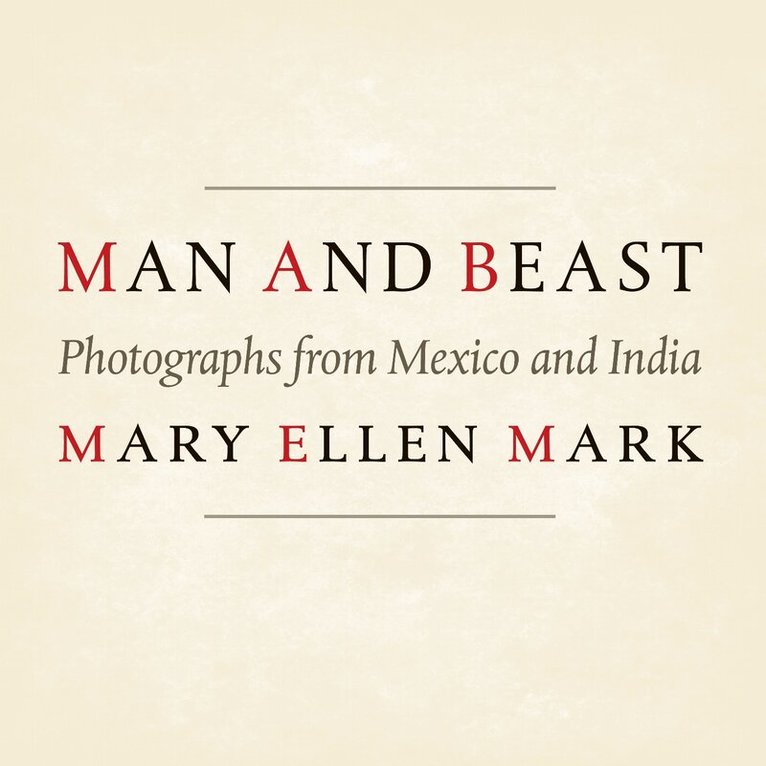
Mary Ellen Mark is an internationally acclaimed photographer who has long been fascinated by the complex relationships between people and animals-as she puts it, “the anthropomorphic quality of animals, and the animalistic quality of man.” This fascination has lured her again and again to Mexico and India, two countries that, despite their many differences, share “a primal force . . . that makes the relationship between man and beast even more obvious. There is a more fundamental and intimate working relationship between the people and animals, and this relationship is something I am drawn too and try to convey in many of my photographs.”Man and Beast presents an extended photo essay comprising images from Mexico and India that span some forty years. Many of the Indian images were taken while Mark was working on her classic book Indian Circus (1983), but most of the photographs have never been previously published. Infused with an unsentimental poignancy and a fully intentional anthropomorphism, Mark’s photographs of animals, circus performers, children, and others are sometimes ironic, occasionally unsettling, but always remarkably engaging. Accompanying the images are a photographer’s statement and a conversation between Mark and Melissa Harris, editor-in-chief of Aperture Foundation, covering Mark’s lifelong passion for animals, her experiences photographing them in circuses with their trainers, and her efforts to portray the humanity of animals and the lurking beast within humans.
662 kr
Skickas inom 5-8 vardagar
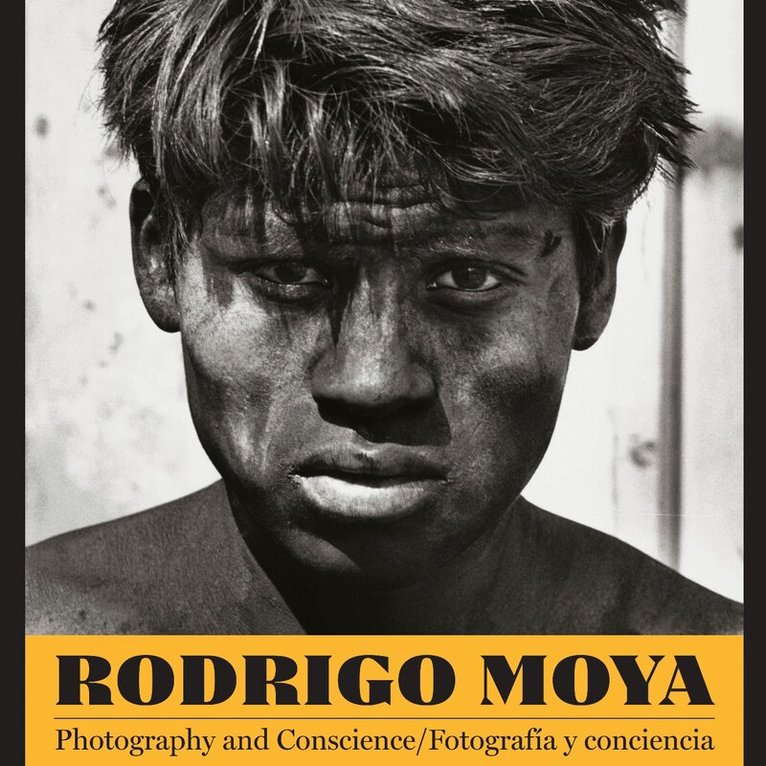
Rodrigo Moya is a prominent Mexican documentary photographer who began as a photojournalist in 1955. He covered the convulsive period that shook Latin America during the 1950s and 1960s, including the guerrilla movement in Guatemala, the invasion of Santo Domingo, and the Cuban Revolution, producing the iconic images “Guerillas in the Mist” and “Melancholy Che.” Since the 1960s, Moya’s work has broadened to encompass more of Mexico and Latin America-the land and sea, people both famous and anonymous, religious processions, the streets of Mexico, laborers, and cultural events involving theatre and dance. Moya’s photography is receiving renewed attention and acclaim in the twenty-first century, including the Espejo de Luz for his photographic career at the VI Bienal Mexicana de Fotoperiodismo and the Medal of Photography Merit from the Sistema Nacional de Fototecas (Instituto Nacional de AntropologÍa y Historia).Rodrigo Moya: Photography and Conscience/FotografÍa y conciencia is the first English-Spanish bilingual retrospective of the photographer’s career. It presents over one hundred striking images grouped into seven thematic suites, each briefly introduced by Moya. Distinguished historian Ariel Arnal provides an essay describing Moya’s impact as a documentary photographer, while Moya writes about his journey to become a photographer in the volume’s introduction, “El nacimiento de las imÁgenes/The Origin of the Images.” Including photographs that have never been published before, Rodrigo Moya adds an important new chapter to the history of twentieth-century Mexican photography.
553 kr
Skickas inom 5-8 vardagar
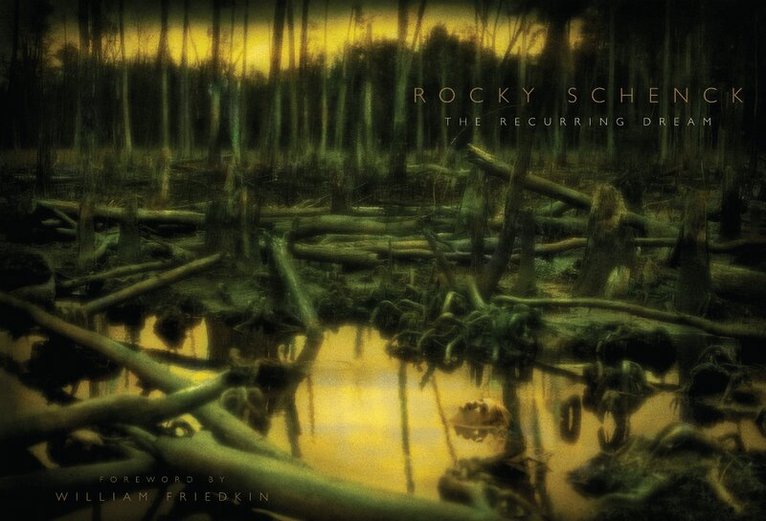
Emotionally evocative and painterly in execution, Rocky Schenck’s photographs invite viewers to enter an otherworldly realm where reality becomes a dream landscape haunted by paranoia, isolation, longing, beauty, betrayal, fear, humor, and death. The author John Berendt describes Schenck’s photographs as stills “taken from a movie that exists not on film but rather in one’s memory, with all the fuzziness typical of remembered impressions.” Photo District News proclaims, “It is a measure of the curious strength and unity of vision of the photographs that after you’ve examined all of them, you feel that there is no other way of seeing the world than his, that there is no other photography you’d rather be looking at.”The Recurring Dream presents new work by Rocky Schenck. In addition to his signature black-and-white dreamscapes, the book introduces color images that Schenck creates by hand tinting black-and-white prints with color oil paint-a practice dating back to the Victorian era that makes each individual print unique. Schenck explores psychological, metaphysical, and pictorial worlds, ranging from suggestive landscapes to scenes of people dwelling in various “found realities” and the occasional manufactured reality. Inspired by his rich dream life, the images insinuate subtle narratives that entice viewers to create stories in their own imaginations. A foreword by the director William Friedkin, who has used Schenck’s photographs as sets for several operas, and an afterword in which Schenck describes his creative process complete the volume.