ThinkCities - Böcker
Visar alla böcker i serien ThinkCities. Handla med fri frakt och snabb leverans.
4 produkter
4 produkter
194 kr
Skickas inom 5-8 vardagar
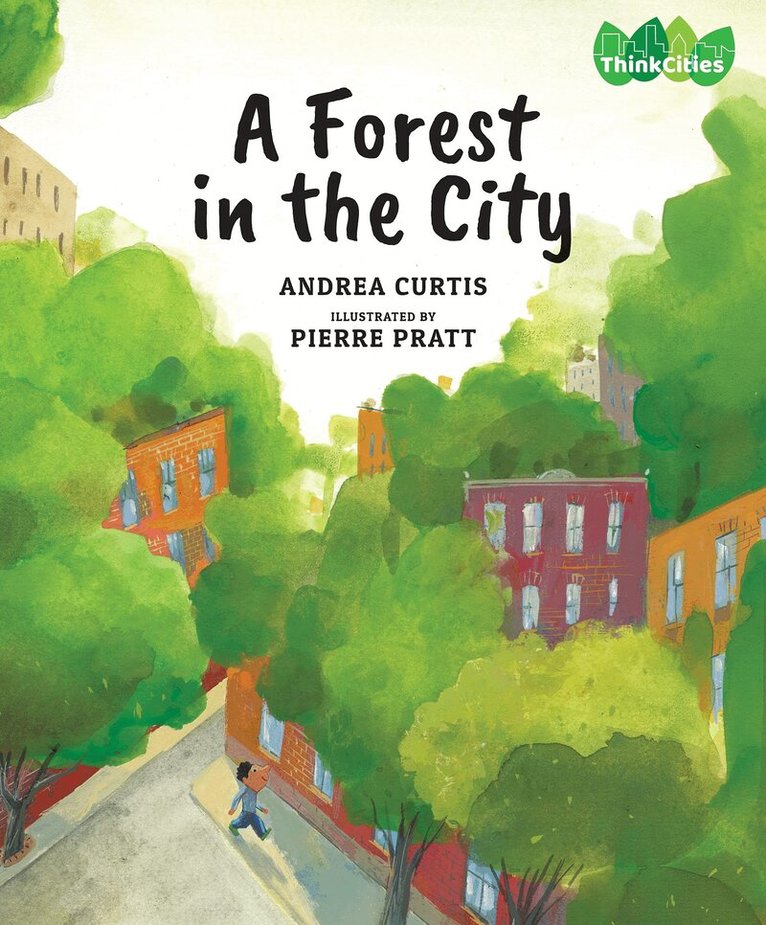
This beautiful book of narrative non-fiction looks at the urban forest and dives into the question of how we can live in harmony with city trees.“Imagine a city draped in a blanket of green … Is this the city you know?”A Forest in the City looks at the urban forest, starting with a bird’s-eye view of the tree canopy, then swooping down to street level, digging deep into the ground, then moving up through a tree’s trunk, back into the leaves and branches.Trees make our cities more beautiful and provide shade but they also fight climate change and pollution, benefit our health and connections to one another, provide food and shelter for wildlife, and much more. Yet city trees face an abundance of problems, such as the abundance of concrete, poor soil and challenging light conditions.So how can we create a healthy environment for city trees? Urban foresters are trying to create better growing conditions, plant diverse species, and maintain trees as they age. These strategies, and more, reveal that the urban forest is a complex system—A Forest in the City shows readers we are a part of it.Includes a list of activities to help the urban forest and a glossary.The ThinkCities series is inspired by the urgency for new approaches to city life as a result of climate change, population growth and increased density. It highlights the challenges and risks cities face, but also offers hope for building resilience, sustainability and quality of life as young people act as advocates for themselves and their communities.Key Text Featuresdiagramsauthor's noteglossarysourcesdefinitionsCorrelates to the Common Core State Standards in English Language Arts:CCSS.ELA-LITERACY.RI.4.7Interpret information presented visually, orally, or quantitatively (e.g., in charts, graphs, diagrams, time lines, animations, or interactive elements on Web pages) and explain how the information contributes to an understanding of the text in which it appears.
202 kr
Skickas inom 11-20 vardagar
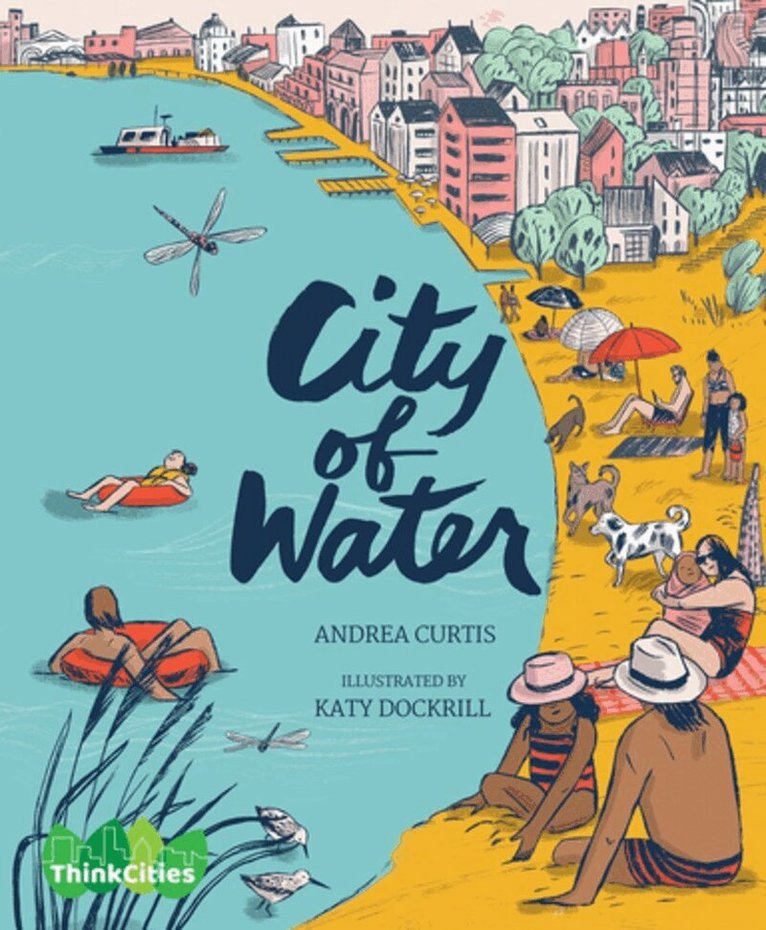
The second book in the ThinkCities series explores water as a precious, finite resource, tracing its journey from source, through the city, and back again. Living in cities where water flows effortlessly from our taps and fountains, it’s easy to take it for granted. City of Water, the second book in the ThinkCities series, shines a light on the water system that is vital for our health and well-being. The narrative traces the journey of water from the forests, mountains, lakes, rivers and wetlands that form the watershed, through pipes and treatment facilities, into our taps, fire hydrants and toilets, then out through storm and sewer systems toward wastewater treatment plants and back into the watershed.Along the way we discover that some of the earliest cities with water systems date back to the Indus Valley in 2500 BC; that in 1920 only 1 percent of the US population had indoor plumbing; that if groundwater is used up too quickly, the land can actually sink; and more. The text is sprinkled with fun and surprising facts — some water fountains in Paris offer sparkling water, and scientists are working to extract microscopic particles of precious metals found in sewage.Readers are encouraged to think about water as a finite resource, and to take action to prevent our cities and watersheds from becoming more polluted. More than 2 billion people in the world are without access to safe, fresh water at home. As the world’s population grows, along with pollution and climate change, access to clean water is becoming an urgent issue.Includes practical steps that kids can take to help conserve water.The ThinkCities series is inspired by the urgency for new approaches to city life as a result of climate change, population growth and increased density. It highlights the challenges and risks cities face, but also offers hope for building resilience, sustainability and quality of life as young people advocate for themselves and their communities.Correlates to the Common Core State Standards in English Language Arts:CCSS.ELA-LITERACY.RL.3.3Describe the relationship between a series of historical events, scientific ideas or concepts, or steps in technical procedures in a text, using language that pertains to time, sequence, and cause/effect.
194 kr
Skickas inom 5-8 vardagar
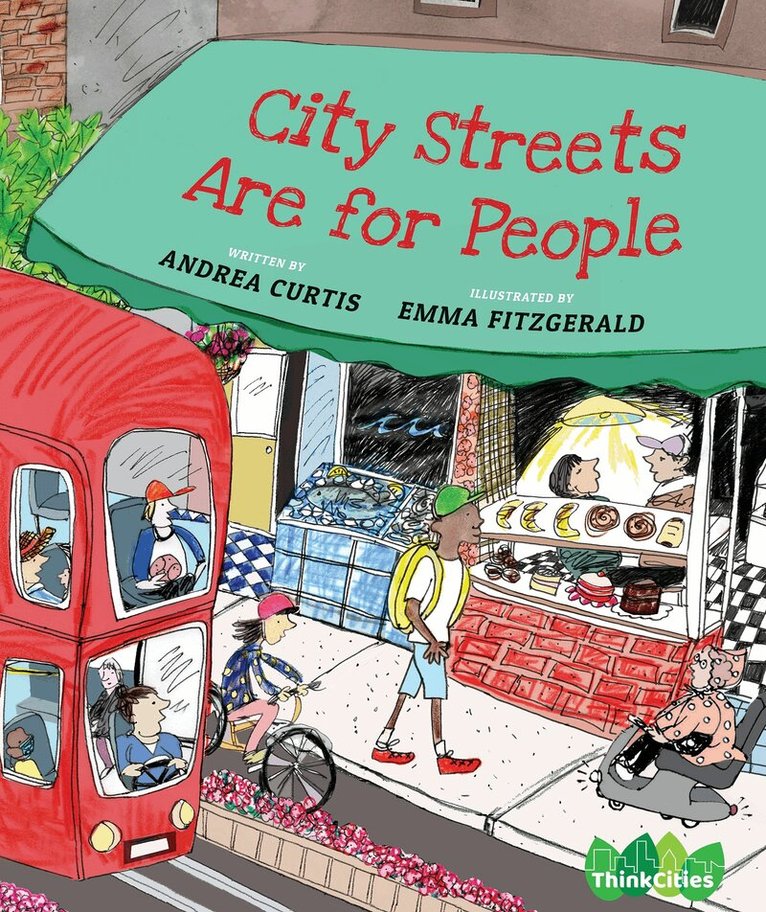
Congested city streets are noisy and thick with cars and trucks, while pedestrians and cyclists are squeezed to the dangerous edges—but does it have to be this way? Imagine a city where we aren’t stuck in cars, where clean air makes it easier to breathe, and where transit is easy to access—and on time. Imagine a city where streets are for people! This fun, accessible and ultimately hopeful book explores sustainable transportation around the globe, including electric vehicles, public transit, bicycles, walking and more. It invites us to conjure up a city of the future, where these modes are all used together to create a place that is sustainable, healthy, accessible and safe. Includes a list of ideas for children to promote green transportation in their communities, along with a glossary and sources for further reading. The ThinkCities series is inspired by the urgency for new approaches to city life as a result of climate change, population growth and increased density. It highlights the challenges and risks cities face, but also offers hope for building resilience, sustainability and quality of life as young people advocate for themselves and their communities. Key Text Featuresdiagramsfactsfurther informationfurther readingglossaryhistorical contextillustrationslabelsresourcesreferences Correlates to the Common Core State Standards in English Language Arts:CCSS.ELA-LITERACY.RI.4.7Interpret information presented visually, orally, or quantitatively (e.g., in charts, graphs, diagrams, time lines, animations, or interactive elements on Web pages) and explain how the information contributes to an understanding of the text in which it appears.CCSS.ELA-LITERACY.RI.5.3Explain the relationships or interactions between two or more individuals, events, ideas, or concepts in a historical, scientific, or technical text based on specific information in the text.CCSS.ELA-LITERACY.RI.6.6Determine an author's point of view or purpose in a text and explain how it is conveyed in the text.
194 kr
Tillfälligt slut
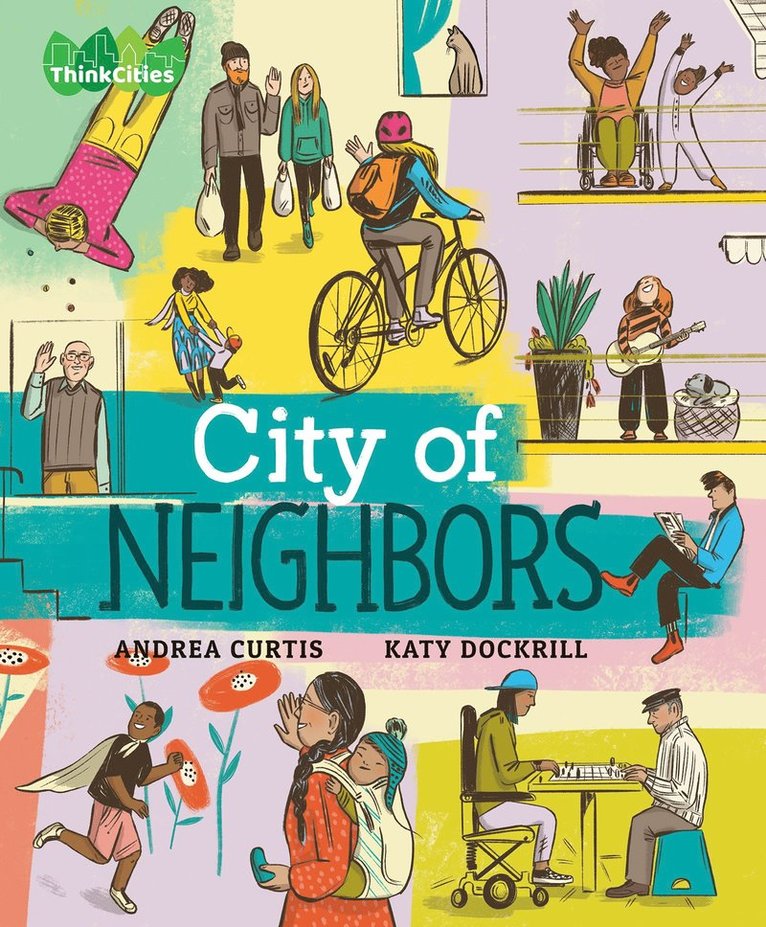
A splash of paint, a place to sit, a popup park or playground bring life and a sense of fun to our cities.Neighborhoods where people look out for each other, eat together, make art and build community are healthier, happier, greener and cleaner. Journey around the world to discover how people have been dreaming up new ways to ensure their cities and neighbourhoods are creative, inclusive and environmentally sustainable.These placemaking ideas can be big — like the skateboard park built on the grounds of an orphanage in Nairobi, Kenya — or small — like the painted rock snake that winds along a beach in Toronto, Ontario. Together, we can create public spaces where everyone belongs. Includes a list of ideas for children to get involved in their neighborhoods, along with a glossary and sources for further reading. The ThinkCities series is inspired by the urgency for new approaches to city life as a result of climate change, population growth and increased density. It highlights the challenges and risks cities face, but also offers hope for building resilience, sustainability and quality of life as young people advocate for themselves and their communities.Key Text Featuresfactfurther informationfurther readingglossaryhistorical contextillustrationsresourcesreferencesCorrelates to the Common Core State Standards in English Language Arts:CCSS.ELA-LITERACY.RI.6.1Cite textual evidence to support analysis of what the text says explicitly as well as inferences drawn from the text.CCSS.ELA-LITERACY.RI.6.6Determine an author's point of view or purpose in a text and explain how it is conveyed in the text.