Topics in Renal Medicine - Böcker
Visar alla böcker i serien Topics in Renal Medicine. Handla med fri frakt och snabb leverans.
19 produkter
19 produkter
3 266 kr
Skickas inom 10-15 vardagar
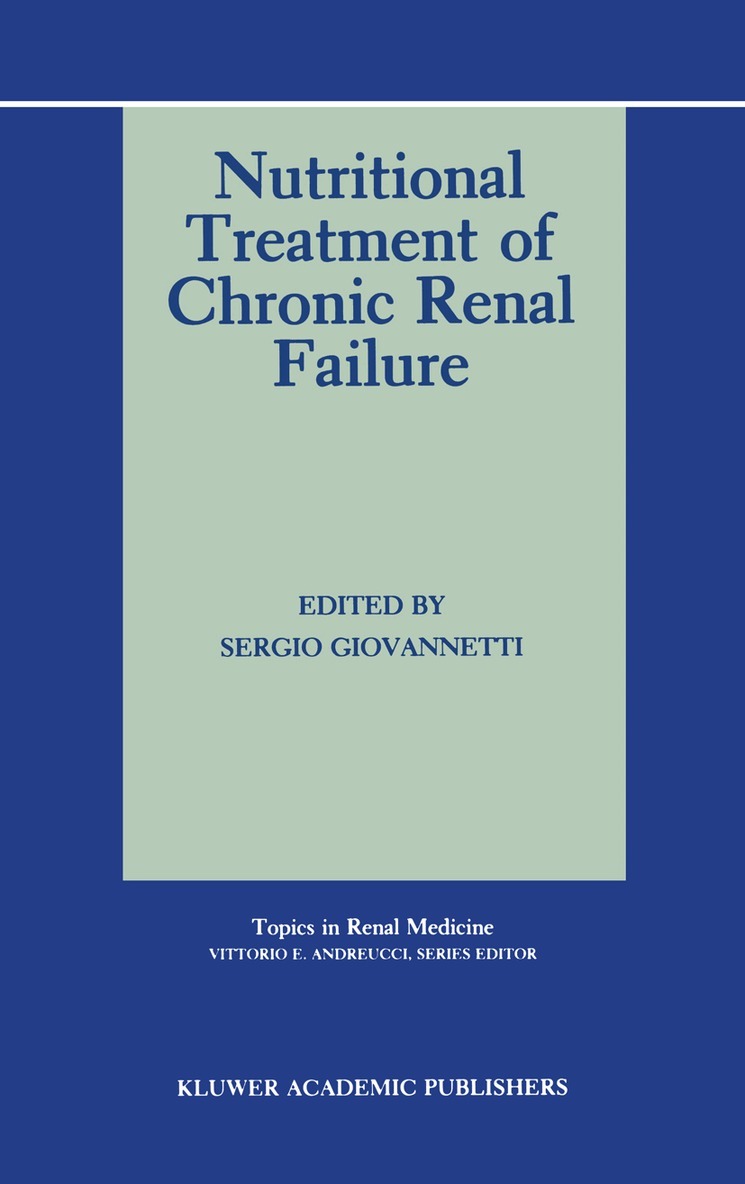
Enormous progress has been made in the treatment of chronic renal failure over the last decades. Until the 1950s, chronic renal failure was considered to be an inexorably lethal condition. This is no longer the case. In addition, the disease, severe uremic syndrome, is now extremely rare, if existent at all, in industrialized countries. Physicians of my generation who saw patients hospitalized with hemor raghes, pericarditis, severe anemia, cardiac failure, "malignant hypertension," pruritus, vomiting, generalized edema, and convulsions are particularly grate ful for this progress. I well remember seeing such patients hospitalized in the last days or weeks of their lives and also remember the sense of impotence I suffered for the com plete lack of efficient measures I had at my disposal to manage their condition. Nowadays, hemodialysis, peritoneal dialysis, and kidney transplantation allow patients with chronic renal failure to survive for very long periods of time in a satisfactory condition. Why then is there still a sense of dissatisfaction and why should we study dietary management? The drawbacks of dialysis and transplantation are the main reasons, but the certainty that dietary therapy is complementary to dialysis and even better than dialysis in certain conditions, is also very important.
3 266 kr
Skickas inom 10-15 vardagar
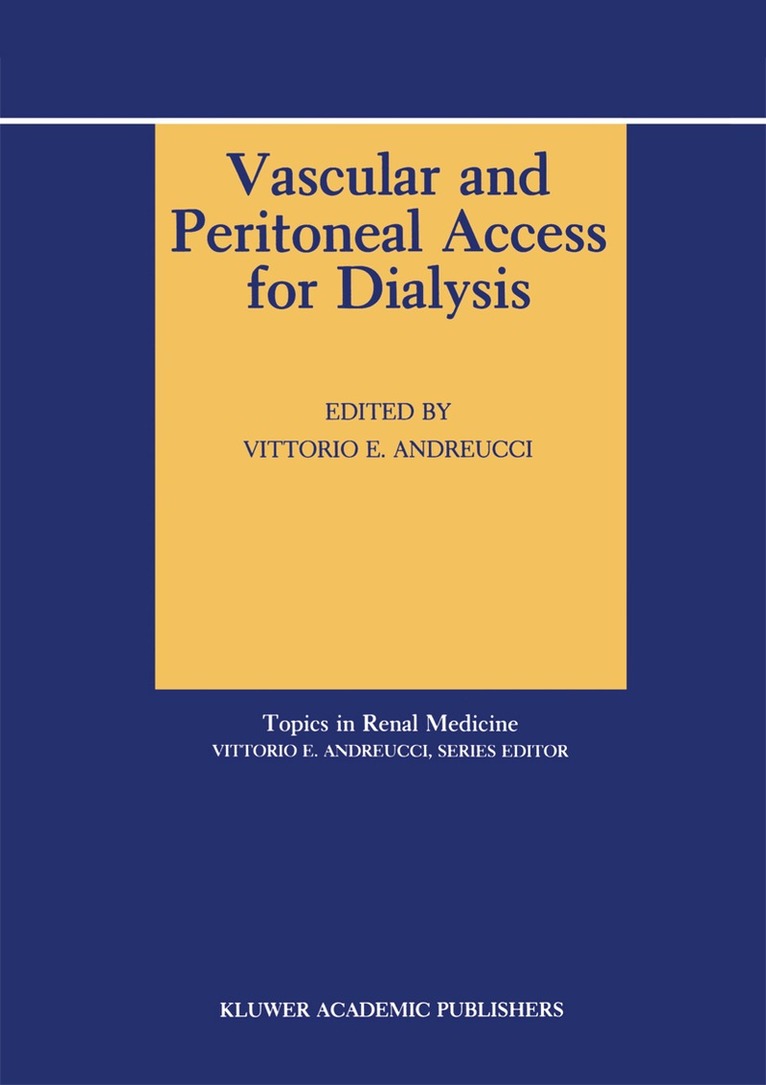
When the external Quinton-Scribner arteriovenous shunt was developed in 1960, and, a little later, the internal Brescia-Cimino arteriovenous fistula was developed as a vascular access for hemodialysis, thereby making possible regular dialysis therapy of chronic uremic patients, many nephrologists became surgeons, having learned the type of vascular surgery related to hemodialysis quite well. The same series of events occurred with regards to peritoneal dialysis with the introduction of the Tenckhoff catheter and the need for gaining a permanent access to the peritoneum for chronic ambulatory peritoneal dialysis (CAPD) therapy. With time, however, problems relating to vascular and peritoneal access have forced many nephrologists to give up their surgery; meanwhile, many surgeons have become quite expert in some sophisticated techniques relating to dial ysis (e. g., vessel grafting, prosthesis implantation, etc.). Today, whether or not involved in this type of surgery, both nephrologists and surgeons remain interested in knowing all available access devices for dialysis as well as the surgical techniques involved. However, all nephrologists involved in dialysis must know how to prevent or treat complications related to dialysis access. Thus, it appeared to me to be quite advisable to have a book in my series, Topics in Renal Medicine, dealing with vascular and peritoneal access for dialysis.
Del 9 - Topics in Renal Medicine
Inheritance of Kidney and Urinary Tract Diseases
Inbunden, Engelska, 1990
2 180 kr
Skickas inom 10-15 vardagar
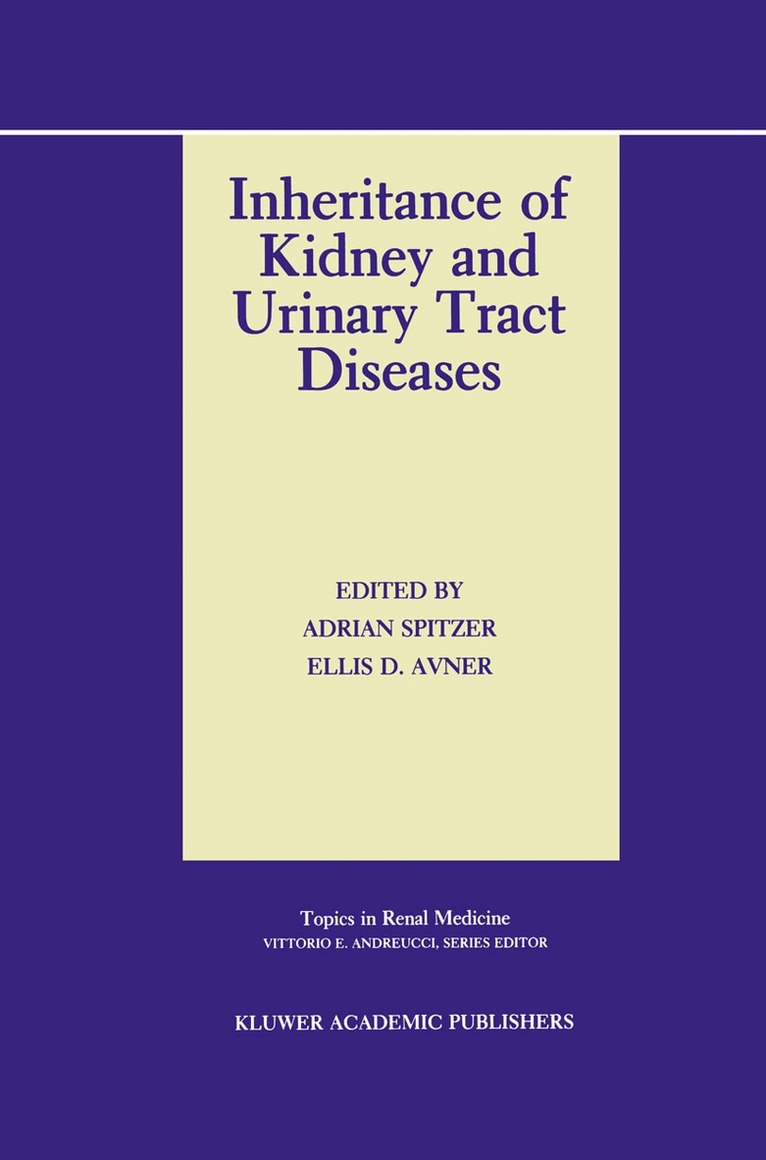
Genetic disorders have emerged as a prominent cause of morbidity and mor tality among infants and adults. As many as 10% to 20% of hospital admis sions and at least 10% of the mortality in this age group are due to inherited diseases. There are at least two factors that have brought genetic disorders into the forefront of pediatrics. One is a great reduction in childhood mortality due to infections and nutritional deficiency states, and the other is the rapid progress made in the identification of genetic defects. Amniocentesis, chorionic villus sampling, and recombinant DNA technology have already had a tremendous impact on the practice of medicine. This is why the first two chapters of this volume are dedicated to general principles of molecular genetics and to a description of the techniques used to diagnose genetic disorders at the DNA level. The relevance of this new area of science to the study of inherited renal diseases is reflected in the large body of knowledge that has been generated regarding the association between various glomerular nephritides and genetic markers such as the HLA system, and even more impressively in the direct or indirect identification of abnormal genes or gene products in Alport's syn drome, autosomal dominant polycystic kidney disease, and Lowe's syndrome. These discoveries figure prominently in the pages of this book. Yet, the progress we have made has barely scratched the surface of the problem.
2 180 kr
Skickas inom 10-15 vardagar
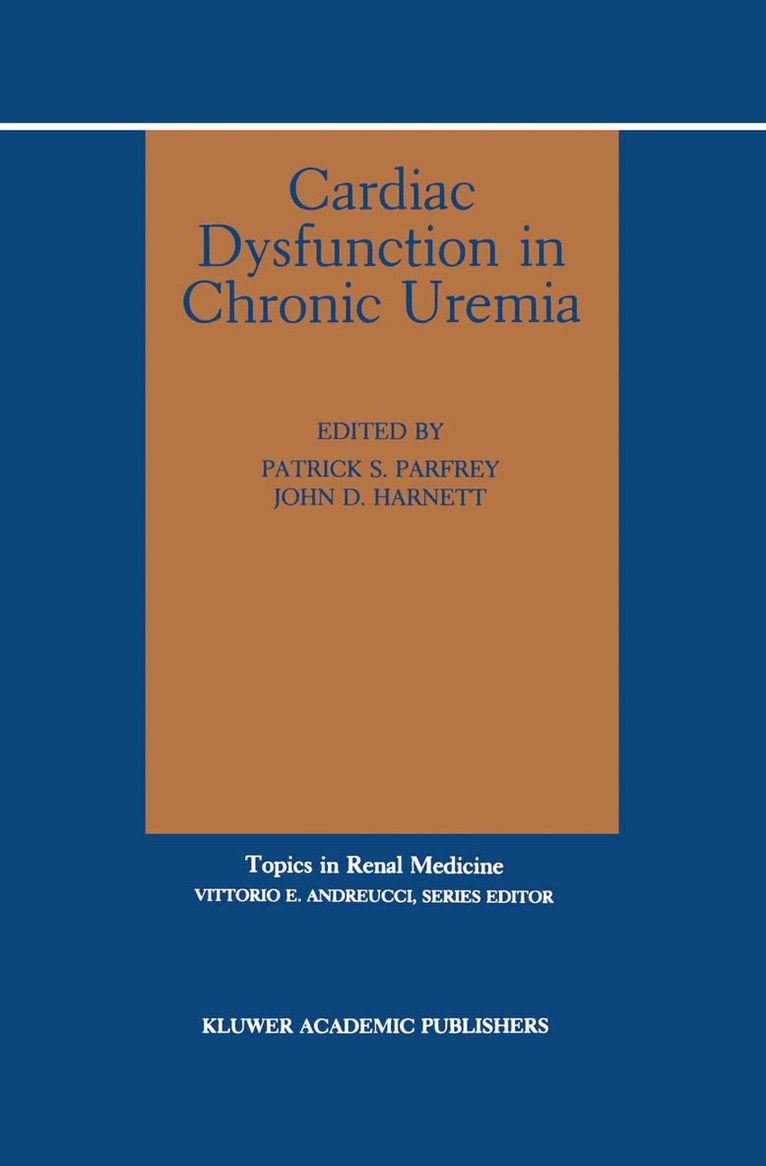
Cardiac disease is the major cause of death in dialysis patients, accounting for over one third of deaths. This book focuses on myocardial function and dysfunction in chronic uremia. It is aimed at practicing and training nephrologists, cardiologists, and internists, and at research workers in the field. We have tried to produce an up-to-date, in-depth review of the subject by inviting experts in clinical epidemiology, pathophysiology, and thera peutics to write the 18 chapters. The book is divided into three sections. The first section comprises five chapters that provide an overview of the burden of illness associated with cardiac disease in end-stage renal disease and a review of clinical epidemi ological aspects of various cardiac diseases that occur in renal patients. The second section discusses abnormalities of left ventricular contractility and mass, and the factors that predispose to both systolic and diastolic disorders. The importance of hypertension, anemia, hyperparathyroidism, hyper lipidemia, and diabetes mellitus in predisposing to these abnormalities is reviewed splendidly by researchers active in these areas. The final section concentrates on therapeutics. Data and opinion on management of congestive heart failure, cardiomyopathy, coronary artery disease, hypertension, and arrhythmias are provided. In editing this book, we have reviewed an extensive literature, but un fortunately we have become more aware that substantial gaps in our knowl edge exist. Insufficient high-quality clinical research has been undertaken xiii xiv Preface regarding the various cardiac diseases that occur in end-stage renal disease.
1 637 kr
Skickas inom 10-15 vardagar
The behavior of the kidney in normal pregnancy, as well as in complicated pregnancy, is a very interesting, but still in many ways an unknown topic in renal medicine. It is undoubtedly difficult to determine, even in normal women, the behavior of renal hemodynamics throughout gestation, since the fear of impairing a new life (i.e., the fetus's life) will limit, for ethical reasons, the use or the frequent repetition of diagnostic tests on the mother. On the other hand, the study of complicated pregnancy even for diagnostic purposes (for planning adequate treatment), except in a few countries that are known for the advanced health education of the population, has to face serious difficulties. First of all, pregnant women usually seek the help of an obstetrician when gestation is already in an advanced stage. This makes it difficult to determine when and how asymptomatic signs of any disease discovered during pregnancy have first occurred. A second difficulty is that frequently the patient does not know whether a given disease has preceded pregnancy. Pregnancy is a condition of young women, and a young woman frequently has never seen a physician; thus, no urine analysis or blood tests have been performed before the gestation. Not infrequently, even blood pressure has never been measured. This will make it difficult to classify hypertension discovered in late pregnancy as pregnancy-induced hypertension or as chronic hypertension in pregnancy.
2 180 kr
Skickas inom 10-15 vardagar
IgA nephropathy has, in the course of two decades, become one of the most important renal diseases. Not only is it the most common form of glo merulonephritis seen in many countries, its increasing recognition by renal biopsy in this time has allowed sufficient study to conclude that it is also one of the most frequent causes of end-stage renal failure. The clinical features are diverse, and only in a minority do recurrent macroscopic hematuric episodes associated with an upper respiratory tract infection allow a confident clinical diagnosis. All clinicians, from community practitioners to general and specialist internists and surgeons, should be aware of its manifestations in patients of all ages. Its relationship with Henoch-Sch6nlein purpura is especially interesting. The discovery of IgA nephropathy has caused an explosion of interest and research. The disease itself (if indeed it can be regarded as a single entity rather than a syndrome) has been studied extensively by many groups and a synopsis is presented by several of the leaders in this clinical field. Parallel with the increased understanding of the renal disease, there has occurred similar incremental knowledge in such diverse fields as the structure and function of the glomerular mesangium, the biology of mucosal immu nity, and the IgA immune response. This book has collected essays on these topics that emphasize their importance in the rclation to the study of IgA nephropathy.
2 180 kr
Skickas inom 10-15 vardagar
Vittorio E. Andreucci of keeping alive patients in terminal chronic Initially created with the purpose renal failure, dialysis has undergone improvements in methodology, and its final goal has become complete health rehabilitation and optimization of the quality of life of chronic dialysis patients. To achieve this, many investigators have attempted to increase dialysis efficiency and at the same time shorten dialysis time. Their main concern was, obviously, patient safety: the Latin proverb 'primum non nocere' is still valid all over the world. Thus, when clinical observations of the first patients on regular dialysis therapy suggested an inverse relationship between duration of dialysis sessions and severity of peripheral neuropathy, long and frequent dialysis sessions were considered the only way to prevent the catastrophic consequences of nerve damage and underdialysis syndrome. It was then, in 1971, when dialysis duration was 8- 12 hours per session, that Vincenzo Cambi started a 'short dialysis' trial, i. e. , 4 hours 3 times weekly or 3 hours every second day. For the first time, dialysis was shortened from 24-36 hours weekly to 10. 5-12 hours weekly [1, 2]. In 1971 I was still at the Parma University Hospital. We had both just returned from the United States, and Dr. Cambi was responsible for the dia lysis unit.
Chronic Ambulatory Peritoneal Dialysis (CAPD) and Chronic Cycling Peritoneal Dialysis (CCPD) in Children
Inbunden, Engelska, 1987
1 637 kr
Skickas inom 10-15 vardagar
During the past decade, there has been a renaissance of interest in the use of peritoneal dialysis as a primary dialytic modality for the treatment of children with end stage renal disease (ESRD). The development of the technique of continuous ambulatory peritoneal dialysis (CAPD) and continuous cycling peritoneal dialysis (CCPD) has markedly changed the approach to children requiring dialytic therapy. The availability of these techniques has facilitated prolonged dialysis in infants and has for the first time given pediatric nephro logists in many areas of the world an opportunity to consider dialysis in chil dren afflicted with ESRD. I have enlisted the collaboration of colleagues from Europe, South America, Canada, and the United States in compiling this multidisciplinary text, which hopefully contains the most up-to-date, comprehensive information regarding the use of CAPD/CCPD in children. It is my hope that every nephrologist (pediatric and adult); nephrology nurse (pediatric and adult); nephrology tech nician, or allied health professional dealing with children who require these therapeutic modalities will be able to resolve immediately any confounding clinical or technical issues that arise by using the information contained in this text. Demographic data on the use of CAPD/CCPD in children in Europe is provided from the EDTA Registry and in the United States from the National Peritoneal Dialysis Registry. The particular problems encountered in the use xiii xiv Preface of CAPD in children in developing countries is detailed by Dr. Grunberg and his colleagues in Uruguay.
2 180 kr
Skickas inom 10-15 vardagar
CHARLES Y. c. PAK Major progress has been made in the pathophysiologic elucidation and management of nephrolithiasis during the past two decades. It is now possible to detect the cause of stone disease in more than 95% of patients, to prevent recurrent formation of stones in the majority of patients, and to remove most existing stones less invasively. The assumption of editorship of this book permits me to indulge in the discussion of this progress from my personal perspective. Three somewhat fortuitous events in my academic career dictated my directing major efforts in stone research. The first event occurred in 1963 when, after having completed medical training, I was faced with two years of military service as a participant of the Berry plan. Choices were limited and disconcerting for someone interested in a research career: a staff physician at a military installation or an indian reservation, or a member of a research team in a state penitentiary. An interesting article by Norman Gershfeld on phospholi pid monolayers prompted me to write him seeking a position in his laboratory of Health (NIH) in Bethesda, MD. Partly because of at the National Institutes my rudimentary exposure and publication in surface chemistry, I was offered a position as a staff scientist and a position in the Public Health Service which satisfied the requirements of a military service.
3 809 kr
Skickas inom 10-15 vardagar
The first sporadic observations describing renal abnormalities in diabetes were published late in the 19th century, but systematic studies of the kidney in diabetes started only half a century ago after the paper by Cambier in 1934 and the much more famous study by Kimmelstiel and Wilson in 1936.
3 266 kr
Skickas inom 10-15 vardagar
Enormous progress has been made in the treatment of chronic renal failure over the last decades. Until the 1950s, chronic renal failure was considered to be an inexorably lethal condition. This is no longer the case. In addition, the disease, severe uremic syndrome, is now extremely rare, if existent at all, in industrialized countries. Physicians of my generation who saw patients hospitalized with hemor raghes, pericarditis, severe anemia, cardiac failure, "malignant hypertension," pruritus, vomiting, generalized edema, and convulsions are particularly grate ful for this progress. I well remember seeing such patients hospitalized in the last days or weeks of their lives and also remember the sense of impotence I suffered for the com plete lack of efficient measures I had at my disposal to manage their condition. Nowadays, hemodialysis, peritoneal dialysis, and kidney transplantation allow patients with chronic renal failure to survive for very long periods of time in a satisfactory condition. Why then is there still a sense of dissatisfaction and why should we study dietary management? The drawbacks of dialysis and transplantation are the main reasons, but the certainty that dietary therapy is complementary to dialysis and even better than dialysis in certain conditions, is also very important.
2 180 kr
Skickas inom 10-15 vardagar
When the external Quinton-Scribner arteriovenous shunt was developed in 1960, and, a little later, the internal Brescia-Cimino arteriovenous fistula was developed as a vascular access for hemodialysis, thereby making possible regular dialysis therapy of chronic uremic patients, many nephrologists became surgeons, having learned the type of vascular surgery related to hemodialysis quite well. The same series of events occurred with regards to peritoneal dialysis with the introduction of the Tenckhoff catheter and the need for gaining a permanent access to the peritoneum for chronic ambulatory peritoneal dialysis (CAPD) therapy. With time, however, problems relating to vascular and peritoneal access have forced many nephrologists to give up their surgery; meanwhile, many surgeons have become quite expert in some sophisticated techniques relating to dial ysis (e. g., vessel grafting, prosthesis implantation, etc.). Today, whether or not involved in this type of surgery, both nephrologists and surgeons remain interested in knowing all available access devices for dialysis as well as the surgical techniques involved. However, all nephrologists involved in dialysis must know how to prevent or treat complications related to dialysis access. Thus, it appeared to me to be quite advisable to have a book in my series, Topics in Renal Medicine, dealing with vascular and peritoneal access for dialysis.
2 180 kr
Skickas inom 10-15 vardagar
Genetic disorders have emerged as a prominent cause of morbidity and mor tality among infants and adults. As many as 10% to 20% of hospital admis sions and at least 10% of the mortality in this age group are due to inherited diseases. There are at least two factors that have brought genetic disorders into the forefront of pediatrics. One is a great reduction in childhood mortality due to infections and nutritional deficiency states, and the other is the rapid progress made in the identification of genetic defects. Amniocentesis, chorionic villus sampling, and recombinant DNA technology have already had a tremendous impact on the practice of medicine. This is why the first two chapters of this volume are dedicated to general principles of molecular genetics and to a description of the techniques used to diagnose genetic disorders at the DNA level. The relevance of this new area of science to the study of inherited renal diseases is reflected in the large body of knowledge that has been generated regarding the association between various glomerular nephritides and genetic markers such as the HLA system, and even more impressively in the direct or indirect identification of abnormal genes or gene products in Alport's syn drome, autosomal dominant polycystic kidney disease, and Lowe's syndrome. These discoveries figure prominently in the pages of this book. Yet, the progress we have made has barely scratched the surface of the problem.
2 180 kr
Skickas inom 10-15 vardagar
Vittorio E. Andreucci of keeping alive patients in terminal chronic Initially created with the purpose renal failure, dialysis has undergone improvements in methodology, and its final goal has become complete health rehabilitation and optimization of the quality of life of chronic dialysis patients. To achieve this, many investigators have attempted to increase dialysis efficiency and at the same time shorten dialysis time. Their main concern was, obviously, patient safety: the Latin proverb 'primum non nocere' is still valid all over the world. Thus, when clinical observations of the first patients on regular dialysis therapy suggested an inverse relationship between duration of dialysis sessions and severity of peripheral neuropathy, long and frequent dialysis sessions were considered the only way to prevent the catastrophic consequences of nerve damage and underdialysis syndrome. It was then, in 1971, when dialysis duration was 8- 12 hours per session, that Vincenzo Cambi started a 'short dialysis' trial, i. e. , 4 hours 3 times weekly or 3 hours every second day. For the first time, dialysis was shortened from 24-36 hours weekly to 10. 5-12 hours weekly [1, 2]. In 1971 I was still at the Parma University Hospital. We had both just returned from the United States, and Dr. Cambi was responsible for the dia lysis unit.
Chronic Ambulatory Peritoneal Dialysis (CAPD) and Chronic Cycling Peritoneal Dialysis (CCPD) in Children
Häftad, Engelska, 2011
1 637 kr
Skickas inom 10-15 vardagar
During the past decade, there has been a renaissance of interest in the use of peritoneal dialysis as a primary dialytic modality for the treatment of children with end stage renal disease (ESRD).
2 180 kr
Skickas inom 10-15 vardagar
CHARLES Y. c. PAK Major progress has been made in the pathophysiologic elucidation and management of nephrolithiasis during the past two decades. It is now possible to detect the cause of stone disease in more than 95% of patients, to prevent recurrent formation of stones in the majority of patients, and to remove most existing stones less invasively. The assumption of editorship of this book permits me to indulge in the discussion of this progress from my personal perspective. Three somewhat fortuitous events in my academic career dictated my directing major efforts in stone research. The first event occurred in 1963 when, after having completed medical training, I was faced with two years of military service as a participant of the Berry plan. Choices were limited and disconcerting for someone interested in a research career: a staff physician at a military installation or an indian reservation, or a member of a research team in a state penitentiary. An interesting article by Norman Gershfeld on phospholi pid monolayers prompted me to write him seeking a position in his laboratory of Health (NIH) in Bethesda, MD. Partly because of at the National Institutes my rudimentary exposure and publication in surface chemistry, I was offered a position as a staff scientist and a position in the Public Health Service which satisfied the requirements of a military service.
1 637 kr
Skickas inom 10-15 vardagar
The behavior of the kidney in normal pregnancy, as well as in complicated pregnancy, is a very interesting, but still in many ways an unknown topic in renal medicine. It is undoubtedly difficult to determine, even in normal women, the behavior of renal hemodynamics throughout gestation, since the fear of impairing a new life (i.e., the fetus's life) will limit, for ethical reasons, the use or the frequent repetition of diagnostic tests on the mother. On the other hand, the study of complicated pregnancy even for diagnostic purposes (for planning adequate treatment), except in a few countries that are known for the advanced health education of the population, has to face serious difficulties. First of all, pregnant women usually seek the help of an obstetrician when gestation is already in an advanced stage. This makes it difficult to determine when and how asymptomatic signs of any disease discovered during pregnancy have first occurred. A second difficulty is that frequently the patient does not know whether a given disease has preceded pregnancy. Pregnancy is a condition of young women, and a young woman frequently has never seen a physician; thus, no urine analysis or blood tests have been performed before the gestation. Not infrequently, even blood pressure has never been measured. This will make it difficult to classify hypertension discovered in late pregnancy as pregnancy-induced hypertension or as chronic hypertension in pregnancy.
2 180 kr
Skickas inom 10-15 vardagar
Cardiac disease is the major cause of death in dialysis patients, accounting for over one third of deaths. This book focuses on myocardial function and dysfunction in chronic uremia. It is aimed at practicing and training nephrologists, cardiologists, and internists, and at research workers in the field. We have tried to produce an up-to-date, in-depth review of the subject by inviting experts in clinical epidemiology, pathophysiology, and thera peutics to write the 18 chapters. The book is divided into three sections. The first section comprises five chapters that provide an overview of the burden of illness associated with cardiac disease in end-stage renal disease and a review of clinical epidemi ological aspects of various cardiac diseases that occur in renal patients. The second section discusses abnormalities of left ventricular contractility and mass, and the factors that predispose to both systolic and diastolic disorders. The importance of hypertension, anemia, hyperparathyroidism, hyper lipidemia, and diabetes mellitus in predisposing to these abnormalities is reviewed splendidly by researchers active in these areas. The final section concentrates on therapeutics. Data and opinion on management of congestive heart failure, cardiomyopathy, coronary artery disease, hypertension, and arrhythmias are provided. In editing this book, we have reviewed an extensive literature, but un fortunately we have become more aware that substantial gaps in our knowl edge exist. Insufficient high-quality clinical research has been undertaken xiii xiv Preface regarding the various cardiac diseases that occur in end-stage renal disease.
3 809 kr
Skickas inom 10-15 vardagar
The first sporadic observations describing renal abnormalities in diabetes were published late in the 19th century, but systematic studies of the kidney in diabetes started only half a century ago after the paper by Cambier in 1934 and the much more famous study by Kimmelstiel and Wilson in 1936. These authors described two distinct features of renal involvement in diabetes: early hyperfiltration and late nephropathy. Diabetic nephropathy is, despite half a century of studies, still a very pertinent problem, renal disease in diabetes now being a very common cause of end-stage renal failure in Europe and North America and probably throughout the world. It is a very important part of the generalized vascular disease found in long-term diabetes as described by Knud Lundbaek in his mono graph Long-term Diabetes in 1953, published by Munks gaard, Copenhagen. Surprisingly, there has not been a comprehensive volume describing all aspects of renal involvement in diabetes, and the time is now ripe for such a volume summarizing the very considerable research activity within this field during the last decade and especially during the last few years. This book attempts to cover practically all aspects of renal involvement in diabetes. It is written by colleagues who are themselves active in the many fields of medical research covered in this volume: epidemiology, physiology and pathophysiology, laboratory methodology, and renal pathology. New studies deal with the dia gnosis and treatment of both incipient and overt nephropathy by metabolie, antihypertensive, and dietary invention.