Weyerhaeuser Cycle of Fire – serie
Visar alla böcker i serien Weyerhaeuser Cycle of Fire. Handla med fri frakt och snabb leverans.
3 produkter
3 produkter
Inbunden, Engelska, 2026
1 693 kr
Kommande
Europe’s unquenchable flames, from hearth to Pyrocene, reveal a civilization’s combustible coreThis work offers a sweeping history of Europe told through flame—and a history of fire refracted through Europe’s landscapes, sciences, and empires. Drawing on and substantially updating his classic Vestal Fire, Stephen J. Pyne’s incisive new volume follows fire from Iceland’s oceanic fringes to the Siberian taiga and the Mediterranean’s blaze-prone rim, showing how Europe’s peculiar geography, history, and culture forged a singular pact with combustion. Organized in three sections, it moves from the elements of practice and ideas that make up Europe’s core fire narrative to vivid portraits of five fire provinces (Mediterranean, Central, Boreal, Eurasian, and Atlantic) before turning to the global consequences of European expansion.Tracking millennia of human-made fire, Pyne reveals a relationship in which Europe’s elites sought to keep fire a servant, ever more tightly controlled. The transition to a fossil-fueled modernity, however, led to a paradox in which Europe lost its mastery as land use, climate, and flame turned feral and the Earth pivoted toward a Pyrocene in which humanity’s binge burning created a fire age to rival the ice ages.The result is both a lucid synthesis and a provocation: what Europe’s global expansion set into motion has returned to kindle a resurgence of wildfire across the continent, starkly visible in the heat-dome summers of the 2020s. As tool, ecological process, threat, and symbol, fire illuminates Europe’s past—and its environmental futures.
Häftad, Engelska, 2026
380 kr
Kommande
Europe’s unquenchable flames, from hearth to Pyrocene, reveal a civilization’s combustible coreThis work offers a sweeping history of Europe told through flame—and a history of fire refracted through Europe’s landscapes, sciences, and empires. Drawing on and substantially updating his classic Vestal Fire, Stephen J. Pyne’s incisive new volume follows fire from Iceland’s oceanic fringes to the Siberian taiga and the Mediterranean’s blaze-prone rim, showing how Europe’s peculiar geography, history, and culture forged a singular pact with combustion. Organized in three sections, it moves from the elements of practice and ideas that make up Europe’s core fire narrative to vivid portraits of five fire provinces (Mediterranean, Central, Boreal, Eurasian, and Atlantic) before turning to the global consequences of European expansion.Tracking millennia of human-made fire, Pyne reveals a relationship in which Europe’s elites sought to keep fire a servant, ever more tightly controlled. The transition to a fossil-fueled modernity, however, led to a paradox in which Europe lost its mastery as land use, climate, and flame turned feral and the Earth pivoted toward a Pyrocene in which humanity’s binge burning created a fire age to rival the ice ages.The result is both a lucid synthesis and a provocation: what Europe’s global expansion set into motion has returned to kindle a resurgence of wildfire across the continent, starkly visible in the heat-dome summers of the 2020s. As tool, ecological process, threat, and symbol, fire illuminates Europe’s past—and its environmental futures.
Häftad, Engelska, 2000
621 kr
Skickas inom 3-6 vardagar
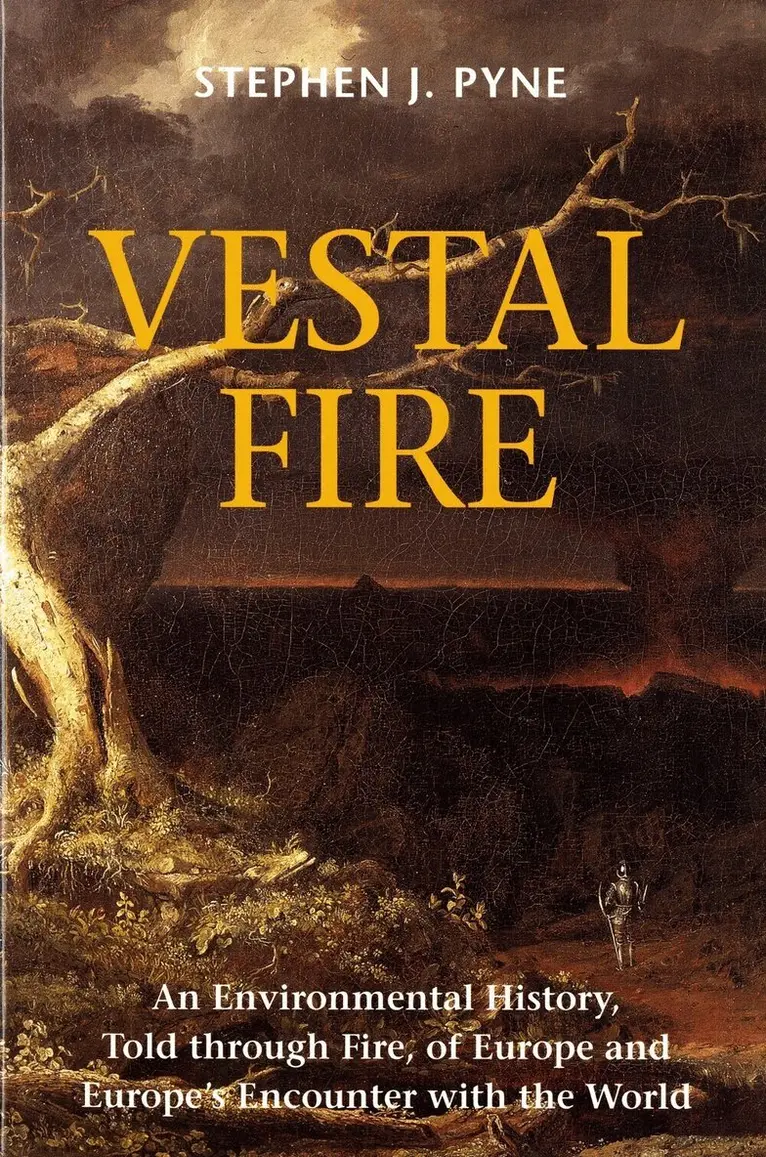
Stephen Pyne has been described as having a consciousness "composed of equal parts historian, ecologist, philosopher, critic, poet, and sociologist." At this time in history when many people are trying to understand their true relationship with the natural environment, this book offers a remarkable contribution--breathtaking in the scope of its research and exhilarating to read.Pyne takes the reader on a journey through time, exploring the terrain of Europe and the uses and abuses of its lands as well as, through migration and conquest, many parts of the rest of the world. Whether he is discussing the Mediterranean region, Russia, Scandinavia, the British Isles, central Europe, or colonized islands; whether he is considering the impact of agriculture, forestry, or Enlightenment thinking, the author brings an unmatched insight to his subject.Vestal Fire takes its title from Vesta, Roman goddess of the hearth and keeper of the sacred fire on Mount Olympus. But the book's title also suggests the strengths and limitations of Europe's peculiar conception of fire, and through fire, of its relationship to nature. Between the untamed fire of the wilderness and the tended fire of the hearth lies a never-ending dialectic in which human beings struggle to control natural forces and processes that in fact can sometimes be directed but never wholly dominated or contained.