Beskrivning
Produktinformation
- Utgivningsdatum:2014-11-11
- Mått:100 x 100 x 100 mm
- Vikt:100 g
- Format:Häftad
- Språk:Engelska
- Antal sidor:1 264
- Upplaga:2
- Förlag:Pearson Education (US)
- ISBN:9780134053325
Utforska kategorier
Mer om författaren
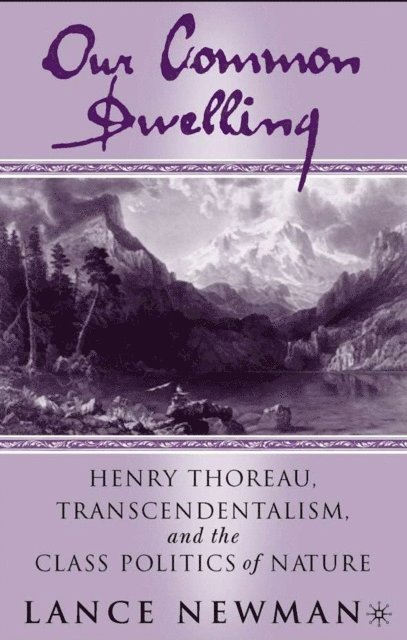
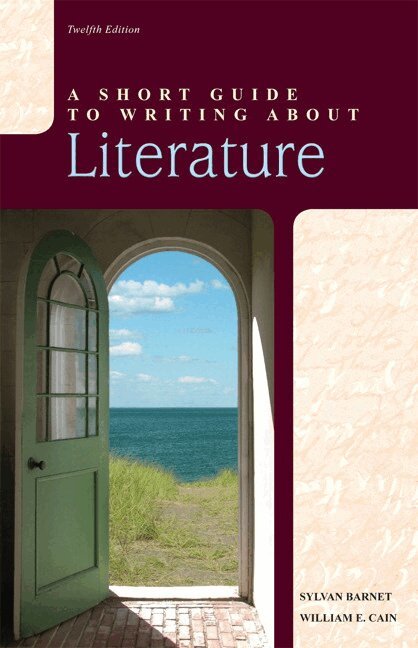
William E. Cain is Mary Jewett Gaiser Professor of English at Wellesley College. Among his many publications is a monograph on American literary and cultural criticism, 1900-1945, in The Cambridge History of American Literature, Vol. 5 (2003). He is a co-editor of the Norton Anthology of Literary Theory and Criticism (2nd ed., 2010), and, with Sylvan Barnet, he has co-authored a number of books on literature and composition. His recent publications include essays on Ralph Ellison, Ernest Hemingway, George Orwell, Shakespeare, Edith Wharton, and the painter Mark Rothko. Alice McDermott is the author of the forthcoming novel Someone and six previous novels, including After This; Child of My Heart; Charming Billy, winner of the 1998 National Book Award; and At Weddings and Wakes, all published by Farrar, Straus and Giroux. That Night, At Weddings and Wakes, and After This were all finalists for the Pulitzer Prize. McDermott lives with her family outside Washington, D.C. Lance E. Newman is Professor of English and Environmental Studies at Westminster College in Salt Lake City, where he teaches Early American Literature, Environmental Literature, and Creative Writing. He has also worked as a river guide for more than two decades, leading rafting trips in Southeastern Utah and in Grand Canyon. He is the author of The Grand Canyon Reader (University of California Press, 2011) and Our Common Dwelling: Henry Thoreau, Transcendentalism, and the Class Politics of Nature (Palgrave, 2005). With Joel Pace and Chris Keonig-Woodyard, he co-edited Transatlantic Romanticism: An Anthology of British, American, and Canadian Literature, 1767-1867 (Longman, 2006). He co-produced the documentary film Canyonlands: Edward Abbey and the Great American Desert (2011) with Roderick Coover. Newman’s poems have appeared in many print and web magazines, and he is the author of two poetry chapbooks, Come Kanab (Dusi-e/chaps Kollectiv, 2007) and 3by3by3 (Beard of Bees, 2010), both available free on the Web. Hilary E. Wyss is Hargis Professor of American Literature at Auburn University, where she teaches courses in early American literature, American studies, and Native American studies. She is the author of over a dozen articles and book chapters as well as three books, including English Letters and Indian Literacies: Reading, Writing, and New England Missionary Schools, 1750-1830 (University of Pennsylvania Press, 2012); Early Native Literacies in New England: a Documentary and Critical Anthology (University of Massachusetts Press, 2008, co-edited with Kristina Bross); and Writing Indians: Literacy, Christianity, and Native Community in Early America (University of Massachusetts Press, 2000). She has won teaching awards at Auburn University as well as national research grants to support her work. She has served on the editorial board of the journal Early American Literature and was most recently the President of the Society of Early Americanists.
Innehållsförteckning
- Part One: Exploration and Colonization (1492-1700)To The Reader David Cusick (Tuscarora) (c.1780-c.1831) A Tale of the Foundation of the Great Island, Now North America Thin Leather/Comalk Hawkih (Akimel O’odham, or Pima) (Dates TK). Translated by Edward H. Wood (Akimel O’odham, or Pima) and written down by J. William LloydThe Story of the Creation Context and Response: King James Bible (1611), Genesis 1-3 Christopher Columbus (1451-1506), Letter to Luis de Santangel Regarding the First VoyageFrom Letter to Ferdinand and Isabella Regarding the Fourth Voyage Gallery 1: Spanish Narratives of Exploration and ColonizationBartolome de las Casas (1484-1566), From The Devastation of the Indies: Hispaniola Bernal Díaz del Castillo (1492-1585), From The Truthful History of the Conquest of New SpainNahuatl Elegies (1523), Epic Description of the Besieged City” and “Flowers and Songs of Sorrow”Isabel de Guevara, “Letter to Princess Juana, from Paraguay, 1556”Catalina de Erauso (1585-1650), From Memoir of a Basque Lieutenant NunSor Juana Ines de la Cruz (1648-1695), “Prologue to the Reader” John Smith (1580-1631)From The Generall Historie Context and Responses: Woodcuts by Theodor de Bry from A Briefe and True Report of the New Found Land of Virginia from the Letter of John Rolfe to Sir Thomas Dale, 1614 William Bradford (1590-1657) From Of Plymouth Plantation Context and Response: from Thomas Morton, New English Canaan John Winthrop (1588-1672) A Modell of Christian Charityfrom Journal Context and Response: from Massachusetts General Court (1637), Examination of Mrs. Anne Hutchinson at the Court at Newton Anne Bradstreet (1612-1672)The PrologueThe Author to her BookIn Honor of that High and Mighty Princess Queen Elizabeth of Happy MemoryBefore the Birth of One of Her ChildrenTo My Dear and Loving HusbandIn Memory of the Dear Grandchild Elizabeth Bradstreet, Who Deceased August 1665, Being a Year and a Half OldIn Memory of My Dear Grandchild Anne Bradstreet, Who Deceased June 20, 1669, Being Three Years and Seven Months OldHere Follows Some Verses Upon the Burning of Our HouseTo My Dear Children Context and Response: Edward Taylor (c. 1642-1729), Huswifery Gallery 2: Vernacular Writing and the IndividualRichard Frethorne, Letters to his parents, Virginia 1623Confessions of Praying IndiansSamuel Sewell (1652-1730), from DiaryWilliam Byrd (1674-1744), from Secret DiaryRebekah Chamblit (ca.1706-1733), The Declaration, Dying Warning and AdviceEliza Lucas Pinckney (1723–1793), Letters Mary Rowlandson (1637-1711)A True History of the Captivity and Restoration of Mrs. Mary Rowlandson Context and Response: Ransom letters Cotton Mather (1663-1728)from Wonders of the Invisible World Context and Response: Tituba Trial Transcript *****Part Two: Enlightenment and Revolution (1700-1830)To the Reader Sarah Kemble Knight (1666-1727), Private Journal of a Journey from Boston to New York Jonathan Edwards (1703-1758)Personal Narrative Sinners in the Hands of an Angry God Benjamin Franklin (1706-1790)The Way to WealthRemarks Concerning the Savages of North AmericaFrom The Autobiography Samson Occom (1723-1792)A Short Narrative of My LifePetition for the Montaukett People Context and Response: Selected letters, Eleazar Wheelock J. Hector St. John de Crevecoeur (1735-1813)From Letters from an American Farmer Gallery 3: Declarations of IndependenceSignatures on Declaration of IndependenceThomas Paine (1737-1809), From Common Sense and The American Crisis, No. 1John Adams (1735-1826) and Abigail Adams (1744-1818), “Remember the Ladies”Thomas Jefferson (1743-1826), The Declaration of Independence Benjamin Banneker (1731-1806), Letter to Thomas JeffersonPrince Hall (1735-1807), Petition, January 13, 1777 Phillip Freneau (1752-1832)On the Emigration to America and Peopling the Western CountryThe Indian Burying GroundOn the Religion of Nature Phillis Wheatley (1753-1784)On the Death of the Rev. Mr. George Whitefield, 1770To Maecenas On Being Brought from Africa to AmericaTo S.M., a Young African Painter, on Seeing His WorksTo His Excellency General WashingtonTo the Right Honorable William, Earl of DartmouthTo the University of Cambridge in New EnglandLetter to Samson Occom Context and Response: Thomas Jefferson, from Query XIV, Notes on the State of Virginia John Marrant (1755-1791)A Narrative of the Lord’s Wonderful Dealings with John Marrant, a Black Washington Irving (1783-1859)Rip Van Winkle Context and Response: James Kirke Paulding (1779-1860), from National Literature David Walker (1785–1830)From Appeal to the Colored Citizens of the World Lydia Howard Huntley Sigourney (1791-1865)The African Mother at Her Daughter’s GraveThe Deaf, Dumb and Blind Girl of the American Asylum at Hartford, ConnecticutTo a Shred of LinenIndian NamesScience and ReligionNiagara William Cullen Bryant (1794-1878)ThanatopsisThe Prairies Gallery 4: Indian Removal and Resistance Cherokee AlphabetHandsome Lake (1735-1815), How the White Race Came to America and Why the Gaiwiio Became a NecessityDavid Brown (1802? - 1829), from Address of Dewi Brown, A Cherokee IndianMemorial of the Cherokee Citizens, December 18, 1829Andrew Jackson, Message to Congress, December 7, 1830Clark Mills, Statue of Andrew Jackson William Apess (1798-1839), An Indian’s Looking-Glass for the White Man (1833)Jane Johnston Schoolcraft (1800-1841), Invocation ***** Part Three: Literature in a Divided Nation (1830-1865)To the Reader Lydia Maria Child (1802–1880)Chocorua’s CurseSlavery’s Pleasant Homes Ralph Waldo Emerson (1803-1882)Nature The American ScholarSelf-Reliance Concord HymnThe Rhodora Context and Responses: George Ripley (1802-1880) and Ralph Waldo Emerson (1803-1882), Correspondence Nathaniel Hawthorne (1804-1864)Young Goodman BrownThe Minister's Black VeilThe Birth-Mark Context and Response: Herman Melville (1819-1891), Hawthorne and His Mosses Henry Wadsworth Longfellow (1807-1882)A Psalm of LifeThe Village BlacksmithThe Slave’s DreamThe Arsenal at Springfield The Jewish Cemetery at Newport John Greenleaf Whittier (1807-1892)The Hunters of MenToussaint L’OuvertureThe Yankee GirlLinesThe Ship-Builders Edgar Allan Poe (1809-1849)The RavenAnnabel LeeThe Fall of the House of UsherLigeiaThe Philosophy of Composition Margaret Fuller (1810-1850)The Great Lawsuit. Man versus Men. Woman versus Women. Context and Response: Elizabeth Cady Stanton (1815–1902), The Declaration of Sentiments Gallery 5: Women, Domesticity, and Publication Judith Sargent Murray (1751–1820), Desultory Thoughts upon the Utility of Encouraging a Degree of Self-Complacency, especially in Female BosomsEliza Lee Follen (1787-1860), Women’s WorkSarah Josepha Hale (1788-1879), BooksPlate from Godey’s Lady’s BookHarriet Beecher Stowe (1811-1896), FeelingSarah Willis Parton (1811-1872), A Chapter on Literary WomenPhoebe Cary (1824-1871), Advice Gratis to Certain Women Harriet Jacobs (1813-1897)from Incidents in the Life of a Slave Girl: Written by Herself Henry David Thoreau (1817-1862)WalkingCivil DisobedienceLife Without Principle Frederick Douglass (1818-1895)Narrative of the Life of Frederick Douglass, an American SlaveThe Meaning of July Fourth for the Negro Gallery 6: Slavery and AbolitionJohn Woolman (1720-1772), from Some Considerations on the Keeping of NegroesPeter Osborne (fl. 1832), AddressWilliam Lloyd Garrison (1805–1879), To the PublicVignettes from Poems Written During the Progress of the Abolition Question in the United States (1837)Fannie Kemble (1809-1893), from Journal of a Residence on a Georgian PlantationHenry Highland Garnet, from An Address to the Slaves of the United States of AmericaAdvertising poster for Uncle Tom’s Cabin Herman Melville (1819-1891)Bartleby the Scrivener Context and Response: Orestes Brownson (1803-1876), from The Laboring Classes Walt Whitman (1819-1892)Song of MyselfCrossing Brooklyn FerryWhen I Heard at the Close of DayI Saw in Louisiana a Live-Oak GrowingVigil Strange I Kept on the Field One NightA Sight in Camp in the Daybreak Gray and DimThe Wound-DresserReconciliationWhen Lilacs Last in the Door-yard Bloom'dFrom Democratic Vistas Frances Ellen Watkins Harper (1825–1911)The Slave Mother Eliza HarrisThe Slave AuctionThe Colored People in AmericaLearning to ReadBury Me in a Free Land Emily Dickinson (1830-1886)130 (“These are the days when Birds come back—”)199 (“I'm 'wife'—I've finished that—”)214 (“I taste a liquor never brewed—”)216 (“Safe in their Alabaster Chambers—”)241 (“I like a look of Agony”)249 (“Wild Nights—Wild Nights!”)258 (“There's a certain Slant of light”)280 (“I felt a Funeral, in my Brain”)303 (“The Soul selects her own Society—”)324 (“Some keep the Sabbath going to Church—”)341 (“After great pain, a formal feeling comes—”)348 (“I dreaded that first Robin, so”)441 (“This is my letter to the World”)448 (“This was a Poet—It is That”)465 (“I heard a Fly buzz—when I died—”)501 (“This World is not Conclusion”)520 (“I started Early—Took my Dog—”)632 (“The Brain—is wider than the Sky—”)650 (“Pain—has an Element of Blank—”)709 (“Publication—is the Auction”)712 (“Because I could not stop for Death—”)754 (“My Life had stood—a Loaded Gun—”)986 (“A narrow Fellow in the Grass")1129 (“Tell all the Truth but tell it slant—”)1545 (“The Bible is an antique Volume—”)1732 (“My life closed twice before its close;")from Letters of Emily DickinsonApril 15, 1862April 25, 1862 Rebecca Harding Davis (1831-1910)Life in the Iron-Mills ChronologyCredits Index Map of the United States