Inbunden, Engelska, 2027
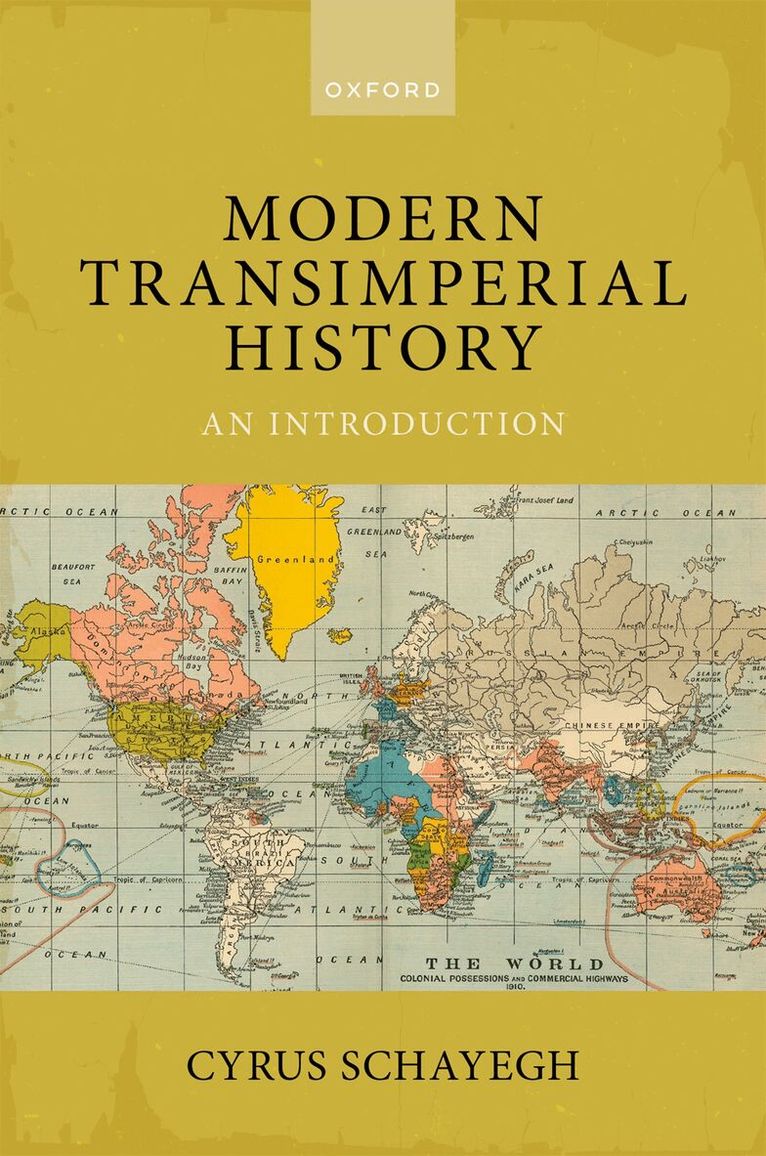
Modern Transimperial History
1853 kr
Kommande
Beskrivning
A novel approach to the study of the past has been crystallizing in the last decade. Its practitioners are revisiting themes as varied as war, race, and trade by focusing on state and non-state relationships between actors from several empires, as opposed to studying empires in isolation. Just as nation-state studies have been balanced by global and transnational histories, transimperial history is now transforming the history of empires.This is the first book-length introduction to the fast-growing sub-field. Combining conceptual reflections with a historiographic state of the art, it bears on relations across empires around the modern world, from Africa and Asia to Europe and the Americas. Covering both societal and governmental actors, and arguing that power differences and their negotiations are central to transimperial relations, this work presents a comprehensive framework for doing modern transimperial history.It argues that this field has multiple genealogies, including global history, early modern connected history, and what one could call revisionist methodological imperialism. It identifies four overlapping facets of transimperial relationships: coexistence, intervention/counter-intervention, cooperation, and competition. It reflects on how imperial actors made historical and contemporary comparisons to construct identities and legitimize power. A chapter on power in and across empires offers reflections on despotic, infrastructural, bio-power, framing power, and counter-power. In chapters on spaces and times, the book analyses spatial fixity and/versus mobility and reflects on transimperial infrastructures, places, borderlands, and maritime spaces; explores how empires helped drive and exhibited multiple competing temporalities; and argues that a truly interconnected transimperial world crystallized around the 1860s/70s. A final chapter, on methods, explains why transimperial history requires strategic navigation of multiple historiographies, linguistic competencies, and sources. The book concludes that its scholarly interest aside, transimperial history is timely: it helps us reflect on our emerging multipolar world.An open access title available under the terms of a CC BY-NC-ND 4.0 licence.
Produktinformation
- Utgivningsdatum: 2027-01-07
- Mått: 156 x 234 x undefined mm
- Format: Inbunden
- Språk: Engelska
- Antal sidor: 272
- Förlag: OUP OXFORD
- ISBN: 9780197905135
Utforska kategorier
Betyg & recensioner
0 recensioner
Inga recensioner tillgängliga.