- Signerad!
- Nyhet
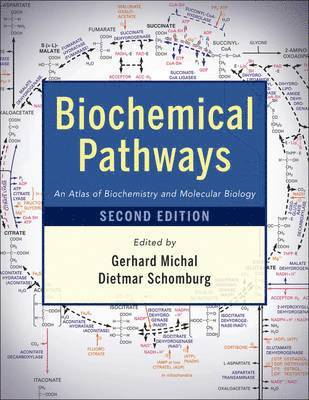
Biochemical Pathways
An Atlas of Biochemistry and Molecular Biology
AvGerhard Michal,Dietmar Schomburg
1 451 kr
. Fri frakt över 249 kr.
Beskrivning
Produktinformation
- Utgivningsdatum:2012-09-28
- Mått:221 x 282 x 20 mm
- Vikt:1 134 g
- Format:Inbunden
- Språk:Engelska
- Antal sidor:416
- Upplaga:2
- Förlag:John Wiley & Sons Inc
- ISBN:9780470146842
Utforska kategorier
Mer om författaren
GERHARD MICHAL, PhD, has retired from research at Boehringer Mannheim GmbH (now Roche Diagnostics). He is internationally acclaimed for developing the "Biochemical Pathways" wall chart. The first edition, which was published some forty years ago, has been continuously updated and is used in many biochemistry laboratories around the world.DIETMAR SCHOMBURG, PhD, is a Full Professor and Head of the Department of Bioinformatics and Biochemistry at the Technische Universität Carolo-Wilhelmina in Braunschweig. His research interests include protein structure and function, structural biochemistry, bioinformatics, and enzyme information/metabolic networks. Dr. Schomburg has been widely praised for establishing BRENDA, the principal source of enzyme function and property data.
Recensioner i media
“Michal and Schomburg (Technische Univ. Carolo-Whilhelmina, Germany) have reorganized, updated, and greatly expanded (over 100 pages of new content) this unique resource, keeping it an essential biochemical reference. Summing Up: Essential. Biochemistry collections, upper-division undergraduates through professionals.” (Choice, 1 August 2013)“Biochemical Pathways, Second Edition is recommended for all students and researchers in such fields as biochemistry, molecular biology, medicine, organic chemistry, and pharmacology. The book's illustrated pathways aids the reader in understanding the complex set of biochemical reactions that occur in biological systems.” (Kingbook73.blogspot, 23 April 2013)“This book, not too scary to read thanks to its compact size, served as a great reading for the incoming graduate students from the biology department and the chemical engineering department alike.” (Biotechnology Journal, 1 January 2013)
Innehållsförteckning
- Preface to the Second Edition ixFrom the Preface to the First Edition xContributors xi1 Introduction and General Aspects 1Gerhard Michal and Dietmar Schomburg1.1 Organization of This Book 11.1.1 Conventions Used in This Book 31.1.2 Common Abbreviations 31.2 Carbohydrate Chemistry and Structure 41.2.1 Structure and Classification 41.2.2 Glycosidic Bonds 51.3 Amino Acid Chemistry and Structure 51.3.1 Structure and Classification 61.3.2 Peptide Bonds 61.4 Lipid Chemistry and Structure 61.4.1 Fatty acids 61.4.2 Acylglycerols and Derivatives 71.4.3 Waxes 71.4.4 Glycerophospholipids 71.4.5 Plasmalogens 71.4.6 Sphingolipids 71.4.7 Steroids 81.4.8 Lipoproteins 81.5 Physico-Chemical Aspects of Biochemical Processess 81.5.1 Energetics of Chemical Reactions 81.5.2 Redox Reactions 91.5.3 Transport Through Membranes 91.5.4 Enzyme Kinetics 102 The Cell and Its Contents 14Gerhard Michal and Dietmar Schomburg2.1 Classification of Living Organisms 142.2 Structure of Cells 142.2.1 Prokaryotic Cells 142.2.2 General Characteristics of Eukaryotic Cells 152.2.3 Special Structures of Plant Cells 172.2.4 Special Structures of Animal Cells 182.3 Protein Structure and Function 182.3.1 Levels of Organization 192.3.2 Protein Function 212.4 Enzymes 212.4.1 Catalytic Mechanism 212.4.2 Isoenzymes 232.4.3 Multienzyme Complexes 232.4.4 Reaction Rate 232.4.5 Classification of Enzymes 232.5 Regulation of the Enzyme Activity 242.5.1 Regulation of the Quantity of Enzymes 242.5.2 Regulation of the Activity of Enzymes 242.5.3 Site of Regulation 262.6 Nucleic Acid Structure 262.6.1 Components of Nucleic Acids 262.6.2 Properties of RNA Chains 272.6.3 Properties of DNA Chains 272.6.4 Compaction Levels of DNA Chains 282.7 Genetic Code and the Flow of Information 302.7.1 From DNA to RNA 302.7.2 From Nucleic Acids to Proteins – The Genetic Code 302.7.3 Influence of Errors 312.8 Polymeric Carbohydrates 312.8.1 Polymeric Carbohydrates in Energy Storage 312.8.2 Polymeric Carbohydrates as Structural Elements 322.9 Glycosylated Proteins and Peptides 322.9.1 Glycoproteins 332.9.2 Proteoglycans 332.9.3 Peptidoglycans 352.10 Lipid Aggregates and Membranes 353 Metabolism 373.1 Carbohydrate Metabolism and Citrate Cycle 37Röbbe Wünschiers3.1.1 Glycolysis and Gluconeogenesis 373.1.2 Polysaccharide Metabolism 423.1.3 Pyruvate Turnover and Acetyl-Coenzyme A 463.1.4 Di- and Oligosaccharides 483.1.5 Metabolism of Hexose Derivatives 483.1.6 Pentose Metabolism 513.1.7 Amino Sugars 543.1.8 Citrate Cycle 553.1.9 Glyoxylate Metabolism 573.2 Amino Acids and Derivatives 58Röbbe Wünschiers3.2.1 Nitrogen Fixation and Metabolism 583.2.2 Glutamate, Glutamine, Alanine, Aspartate, Asparagine and Ammonia Turnover 593.2.3 Proline and Hydroxyproline 623.2.4 Serine and Glycine 623.2.5 Lysine, Threonine, Methionine, Cysteine and Sulfur Metabolism 653.2.6 Leucine, Isoleucine and Valine 723.2.7 Phenylalanine, Tyrosine, Tryptophan and Derivatives 743.2.8 Histidine 793.2.9 Urea Cycle, Arginine and Associated Reactions 803.3 Tetrapyrroles 82Martina Jahn and Dieter Jahn3.3.1 Pathways for the Biosynthesis of Tetrapyrroles 823.3.2 Heme and Cytochrome Biosynthesis 863.3.3 Linear Tetrapyrroles 873.3.4 Biosynthesis of Chlorophylls 903.3.5 Biosynthesis of Cobalamins 913.3.6 Siroheme Biosynthesis 913.4 Lipids and Glycolipids 93Röbbe Wünschiers3.4.1 Fatty Acids and Acyl-CoA 933.4.2 Triacylglycerols (Triglycerides) 983.4.3 Phospholipids 1003.4.4 Glycolipids 1043.5 Steroids and Isoprenoids 107Röbbe Wünschiers3.5.1 Cholesterol 1073.5.2 Hopanoids, Steroids of Plants and Insects 1103.5.3 Isoprenoids 1113.5.4 Steroid Hormones 1143.5.5 Gestagen 1153.5.6 Androgens 1163.5.7 Estrogens 1173.5.8 Corticosteroids 1193.5.9 Bile Acids 1213.6 Nucleotides and Nucleosides 124Röbbe Wünschiers3.6.1 Purine Nucleotides and Nucleosides 1243.6.2 Pyrimidine Nucleotides and Nucleosides 1303.7 Cofactors and Vitamins 133Ida Schomburg3.7.1 Retinol (Vitamin A) 1333.7.2 Thiamin (Vitamin B 1) 1343.7.3 Riboflavin (Vitamin B 2), FMN and FAD 1353.7.4 Pyridoxine (Vitamin B 6) 1363.7.5 Cobalamin (Coenzyme B 12, Vitamin B 12) 1373.7.6 Folate and Pterines 1383.7.7 Pantothenate, Coenzyme A and Acyl Carrier Protein (ACP) 1413.7.8 Biotin 1413.7.9 Nicotinate, NAD + and NADP + 1433.7.10 Ascorbate (Vitamin C) 1453.7.11 Calciferol (Vitamin D) 1463.7.12 Tocopherol (Vitamin E) 1483.7.13 Phylloquinone and Menaquinone (Vitamin K) 1483.7.14 Other Compounds 1493.8 Nucleic Acid Metabolism in Bacteria 149Susanne Peifer and Elmar Heinzle3.8.1 Bacterial DNA Replication 1493.8.2 Bacterial DNA Repair 1513.8.3 Degradation of Nucleic Acids 1563.9 Nucleic Acid Metabolism in Eukarya 157Helmut Burtscher3.9.1 Eukaryotic DNA Replication 1573.9.2 Eukaryotic DNA Repair 1623.10 Special Bacterial Metabolism and Biosynthesis of Antimicrobials 164Julia Garbe, Annika Steen and Max Schobert3.10.1 Bacterial Envelope 1643.10.2 Bacterial Protein Export across the Cytoplasmic Membrane 1663.10.3 Protein Transport across the Outer Membrane of Gram-Negative Bacteria 1673.10.4 Bacterial Transport Systems 1683.10.5 Bacterial Fermentations 1693.10.6 Anaerobic Respiration 1733.10.7 Chemolithotrophy 1753.10.8 Quinoenzymes, Alkane and Methane Oxidation 1783.10.9 Antibiotics 1793.11 Electron Transfer Reactions and Oxidative Phosphorylation 183Martina Jahn and Dieter Jahn3.11.1 General Principles 1833.11.2 Different types of electron transport chains 1833.11.3 The Energetic Basis of the Oxidative Phosphorylation 1833.11.4 Electron Transport System in Mitochondria and Bacteria 1843.12 Photosynthesis 188Dieter Oesterhelt and Josef Wachtveitl3.12.1 Light Reaction 1883.12.2 Dark Reactions 1923.13 Plant Secondary Metabolism 193Antje Chang3.13.1 Phenolics 1943.13.2 Terpenoids 1983.13.3 Nitrogen-containing Secondary Metabolites 2014 Protein Biosynthesis, Modifications and Degradation 2104.1 Protein Synthesis in Bacteria 210Martina Jahn and Dieter Jahn4.1.1 Bacterial Transcription 2104.1.2 Regulation of Bacterial Gene Expression 2124.1.3 Bacterial Protein Synthesis 2144.1.4 Degradation of Nucleic Acids 2174.2 Protein Biosynthesis in Eukarya 219Röbbe Wünschiers4.2.1 Eukaryotic Transcription 2194.2.2 Regulation of Eukaryotic Transcription 2264.2.3 Eukaryotic Translation 2284.2.4 Translational Regulation 2314.2.5 mRNA Degradation 2314.3 Cell Cycle in Eukarya 232Stefan Ries4.3.1 Core Components of the Cell Cycle Machinery 2324.3.2 Cell Cycle Regulation in Yeast 2344.3.3 G 1 to S Transition in Mammalian Cells 2344.3.4 G 2 to M Transition in Mammalian Cells 2354.3.5 Mitosis in Mammalian Cells 2354.3.6 Cell Cycle Checkpoints 2364.4 Posttranslational Modification of Proteins 238Röbbe Wünschiers4.4.1 Protein Processing in the Endoplasmic Reticulum 2384.4.2 Glycosylation Reactions in the Golgi Apparatus 2414.4.3 Terminal Carbohydrate Structures of Glycoconjugates 2434.5 Protein Folding, Transport / Targeting and Degradation 244Petra Dersch4.5.1 Folding of Proteins 2444.5.2 Vesicular Transport and Secretion of Proteins 2484.5.3 Protein Transport into the Nucleus 2494.5.4 Protein Transport into Mitochondria 2524.5.5 Protein Transport into Chloroplasts 2544.5.6 Protein Degradation 2564.5.7 Protein Degradation by the Ubiquitin-Proteasome System 2585 Viruses 261Klaus Klumpp5.1 General Characteristics of Viruses 2615.1.1 Genomic Characteristics of Viruses 2615.1.2 Structure 2635.2 DNA Viruses 2645.2.1 Papillomavirus 2645.3 RNA Viruses 2675.3.1 Hepatitis C Virus 2675.4 Retroviruses 2685.4.1 Human Immunodeficiency Virus (HIV) 2686 Transport 2726.1 Transport Through Membranes 272Wilhelm Just6.1.1 Systems of Eukaryotic Membrane Passage 2726.1.2 Channels / Pores 2726.1.3 Solute Carriers 2766.1.4 Primary Active Transport Systems 2776.1.5 Import by Endocytosis and Pinocytosis 2786.1.6 The Cytoskeleton as Means for Intracellular Transport and Cellular Movements in Eukarya 2786.2 Transport of Lipids in Plasma 279Horst Klima6.2.1 Apolipoproteins (Apo) 2796.2.2 Plasma Lipoprotein Metabolism 2796.2.3 Lipid Transport Proteins 2816.2.4 Lipoprotein Receptors 2816.2.5 Lipid Metabolic Disorders 2826.3 Oxygen Transport by Hemoglobin 282Gerhard Michal6.3.1 Biosynthesis and Properties of Hemoglobin and Myoglobin 2826.3.2 Oxygen Binding to Hemo- and Myoglobin 2836.3.3 Hemoglobin Diseases in Humans 2857 Signal Transduction and Cellular Communication 286Gerhard Niederfellner7.1 Intercellular Signal Transmission by Hormones 2867.1.1 General Characteristics of Hormones 2867.1.2 General Characteristics of Receptors 2867.1.3 Insulin and Glucagon 2877.1.4 Epinephrine and Norepinephrine (Catecholamines) 2877.1.5 Hypothalamus-Anterior Pituitary Hormone System 2877.1.6 Placental Hormones 2917.1.7 Hormones Regulating the Extracellular Ca ++, Mg ++ and Phosphate Concentrations 2927.1.8 Hormones Regulating the Na + Concentration and the Water Balance 2927.1.9 Hormones of the Gastrointestinal Tract 2937.2 Nerve Conduction and Synaptic Transmission 2947.2.1 Membrane Potential 2947.2.2 Conduction of the Action Potential along the Axon 2947.2.3 Transmitter Gated Signalling at the Synapse 2947.2.4 Voltage Gated Signalling at the Synapse 2967.2.5 Postsynaptic Receptors 2967.2.6 Axonal Transport 2967.3 Principles of Intracellular Communication 2967.4 Receptors Coupled to Heterotrimeric G-Proteins 2997.4.1 Mechanism of Heterotrimeric G-Protein Action 3007.4.2 cAMP Metabolism, Activation of Adenylate Cyclase and Protein Kinase A 3027.4.3 Activation of Phospholipase c and Protein Kinase c 3027.4.4 Metabolic Role of Inositol Phosphates and Ca ++ 3037.4.5 Muscle Contraction 3057.4.6 Visual Process 3077.4.7 Olfactory and Gustatory Processes 3087.4.8 Arachidonate Metabolism and Eicosanoids 3097.5 Receptors Acting Through Tyrosine Kinases 3117.5.1 Regulatory Factors for Cell Growth and Function 3117.5.2 Components of the Signal Cascades 3117.5.3 Receptor Tyrosine Kinases 3127.5.4. Tyrosine Kinase-Associated Receptors (TKaR) 3157.6 Programmed Cell Death (Apoptosis) 3197.7 Receptors for Steroid and Thyroid Hormones, for Retinoids and Vitamin D 3217.8 Cyclic GMP Dependent Pathways and Effects of Nitric Oxide (NO) 3227.8.1 Membrane Bound Guanylate Cyclases 3237.8.2 Soluble Guanylate Cyclases and Their Activation by Nitric Oxide (NO) 3237.8.3 Protein Kinase G 3238 Immune System 325Ernst Peter Rieber8.1 Components of the Immune System 3258.1.1 Innate, Non Adaptive Immune System 3258.1.2 Specific, Adaptive Immune System 3288.1.3 Development and Maturation of the Cellular Components 3288.1.4 Antigen Receptor of B Lymphocytes, Antibodies 3308.1.5 Complement System 3348.1.6 Antigen Receptor of T Lymphocytes 3368.1.7 Antigen Presentation by MHC Molecules 3378.1.8 Cytokines, Chemokines and Receptors 3388.2 Generation of a Specific Immune Response 3438.2.1 Activation of T Cells 3438.2.2 CD4 + T Effector Cells, Regulation of the Immune Response 3448.2.3 Activation of B Cells 3458.2.4 Lymphocyte Circulation and Generation of Cellular and Humoral Immune Responses in Lymphoid Tissue 3458.2.5 Cellular Cytotoxicity and Apoptosis 3478.2.6 Interactions between the Immune System and the Neuroendocrine System 3508.2.7 Immunological Tolerance 3508.2.8 Induction of Specific Immune Responses against Pathogens 3518.3 Pathologic Immune responses 3528.3.1 IgE-Mediated Hypersensitivity of the Immediate Type 3528.3.2 Autoimmunity 3538.4 Adhesion of Leukocytes 354Anton Haselbeck9 Blood Coagulation and Fibrinolysis 357Peter Müller9.1 Hemostasis 3579.2 Initial Reactions 3589.2.1 Reactions Initiated by the Tissue Factor 3589.2.2 Contact Activation 3589.2.3 Generation of Binding Surfaces 3589.3 Coagulation Propagation and Control 3599.3.1 Requirements for Protease Activity 3599.3.2 Pathways Leading to Thrombin 3599.3.3 Key Events 3599.3.4 Controlled Propagation 3609.3.5 Generation of Fibrin 3619.4 Platelets (Thrombocytes) 3629.5 Fibrinolysis 3649.5.1 Pathways of Plasminogen Activation 3649.5.2 Control of Fibrinolysis 36510 Biochemical Networks, Bioinformatics and Systems Biology 366Dietmar Schomburg10.1 Systems Biology and Networks 36610.2 Modeling of Metabolic Fluxes 36610.3 Biochemical Pathways Information Resources 36610.3.1 Overview 36610.3.2 Detailed Description of Some Databases 367Index 374
Betyg & recensioner
0/5
Betyg & recensioner
Du kanske också är intresserad av
- Signerad!
- Nyhet
- Nyhet
"Öppna era hjärtan" : berättelsen om hur islam blev Sveriges näst största religion och Sverigedemokraterna landets näst största parti
Simon Sorgenfrei
239 kr279 kr
- Signerad!
- Nyhet
- Nyhet
- Signerad!
- Nyhet
- Nyhet
- Nyhet
- Nyhet
Burgare : så gör du världens bästa burgare hemma
Linus Josephson, Toby Lee, Selin Safer
279 kr