• Fri frakt över 249 kr
  • •
  • Snabba leveranser
  • •
  • Billiga böcker
Kundservice

Du är på sajten för privatpersoner.

Företag, bibliotek eller offentlig verksamhet?

Du handlar på classic.bokus.com, där alla dina funktioner finns intakta.
Till classic.bokus.com
Bokus logotyp. Gå till startsidan.
  • Erbjudanden
  • Student
  • Topplistor
  • Barn & ungdom
  • Bokus Play
  • E-böcker
  • Ljudböcker
  • Pocketböcker
  • Spel och pussel

Pocketfynda! Hundratals böcker för 49 kr/st →

Sidfot

Mina sidor

    Hjälp

    • Kundservice
    • Vanliga frågor och svar
    • Frakt och leverans
    • Retur vid ångerrätt
    • Reklamera vara
    • Betalning
    • Köpvillkor
    • Allmänna villkor
    • Information om webbplatsens tillgänglighet

    Om Bokus

    • Om oss
    • Pressrum
    • För studenter
    • För företag
    • För bibliotek och offentlig verksamhet
    • För leverantörer
    • Hållbarhet

    Populärt

    • Aktuella erbjudanden
    • Presentkort
    • Studentlitteratur
    • Nya böcker
    • Topplistor
    • Signerade böcker
    • Engelska böcker

    Inspiration

    • Boktips
    • BookTok
    • Barnbokskaraktärer
    • Populära författare
    Logotyp för Bokus
    Följ oss på Facebook (extern länk)Följ oss på Instagram (extern länk)Följ oss på YouTube (extern länk)Följ oss på TikTok (extern länk)
    bokus @ CookiesAnpassa cookiesIntegritetspolicyKöpvillkor
    Till Citymail hemsida (extern länk)Till Budbee hemsida (extern länk)Till Postnord hemsida (extern länk)Till Schenker hemsida (extern länk)Till Early Bird hemsida (extern länk)Till Walleys hemsida (extern länk)
    1. Samhälle och politik
    2. Politik och statsskick
    3. Internationella relationer

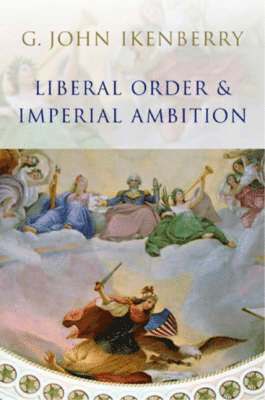
    Liberal Order and Imperial Ambition

    Essays on American Power and International Order

    AvG. John Ikenberry

    Häftad, Engelska, 2006

    252 kr

    Beställningsvara. Skickas inom 5-8 vardagar. Fri frakt över 249 kr.

    Fler format och utgåvor

    Inbunden

    813 kr

    Beskrivning

    This book of essays by the a leading figure in the new generation of American IR theorists explores the theoretical, historical, and foreign policy implications of American power and postwar order. The first part of the book focuses on the origins and foundational logic of America’s post-war order-building project – advancing ideas about ‘liberal hegemony’ and ‘constitutional order’. The second part reflects on its evolving character and fate in the aftermath of the Cold War, the rise of unipolarity, and the post-9/11 threat of global terrorism.In this unique study of a superpower, Ikenberry argues that though the American world order is now in upheaval, in the end, the United States still has powerful incentive to sponsor and operate within a liberal rules-based system.

    Produktinformation

    • Utgivningsdatum:2006-08-10
    • Mått:153 x 230 x 22 mm
    • Vikt:463 g
    • Format:Häftad
    • Språk:Engelska
    • Antal sidor:312
    • Förlag:John Wiley and Sons Ltd
    • ISBN:9780745636504

    Utforska kategorier

    • Internationella relationer inom Samhälle och politik

    Mer om författaren

    John Ikenberry is Professor of Politics and International Affairs at Princeton University.

    Recensioner i media

    “In this masterful work covering a decade of scholarship, John Ikenberry explains how American power has not been so much constrained by international institutions as embedded in them. The Bush administration’s attempt to break out of perceived international straightjackets in fact misunderstands the nature of hegemonic power and represents an important break with earlier traditions of US foreign policy.”Francis Fukuyama "The essays, taken one by one, constitute a fascinating journey carrying the reader step by step through a scientific analysis of the origin, nature and evolution of American power."International Spectator“Ikenberry’s arguments are the product of deep reflection and built through a structure that produces a clarity and crispness often lacking in such literature ... these essays will stand out as a fine articulation of this particular interpretation of US policy and one that is likely to have considerable influence in the coming years.”International Affairs“While he ranges over a number of topics, Ikenberry produces a powerful critique of the view that the post-war order rested solely on material power. [His] assessment rests on intellectual foundations that are marked by historical depth and philosophical acuity.”Political Studies Review“G. John Ikenberry is America's poet laureate of liberal internationalism and the most gifted international relations scholar of his generation.”Martin Walker, Editor, United Press International; World Policy Institute at New York’s New School University“This is a splendid collections of essays, remarkable for the sure-footed way they have mapped both the normative and explanatory challenges at the heart of the troubled American engagement with the world.”Michael W. Doyle, Columbia University“No other writer on international politics has done more to advance our understanding of American power under conditions of unipolarity than John Ikenberry. Never dull and always challenging, he has carved out an intellectual niche that has become uniquely his own over the past few years. With a clarity that is commendable, and an intelligence that is obvious, he makes the case in these essays for something that has been too readily forgotten in our insecure age of terror: that for the United States, cooperation with others is not merely the nice thing to do but the smart thing to do as well. A tour de force by one American we simply cannot afford to ignore.”Michael Cox, London School of Economics

    Innehållsförteckning

    • AcknowledgementsIntroductionPart One: Constitutionalism and Liberal HegemonyChapter One: Rethinking the Origins of American HegemonyChapter Two: Socialization and Hegemonic PowerChapter Three: The Nature and Sources of Liberal International OrderChapter Four: Constitutional Politics in International RelationsChapter Five: American Power and the Empire of Capitalist DemocracyPart Two: Unipolarity and MultilateralismChapter Six: The Myth of Post Cold-War ChaosChapter Seven: Getting Hegemony RightChapter Eight: American Grand Strategy in the Age of TerrorChapter Nine: America's Imperial AmbitionChapter Ten: The End of the Neo-Conservative MomentChapter Eleven: Is American Multilateralism in Decline?Index