• Fri frakt över 249 kr
  • •
  • Snabba leveranser
  • •
  • Billiga böcker
Kundservice

Du är på sajten för privatpersoner.

Företag, bibliotek eller offentlig verksamhet?

Du handlar på classic.bokus.com, där alla dina funktioner finns intakta.
Till classic.bokus.com
Bokus logotyp. Gå till startsidan.
  • Erbjudanden
  • Student
  • Topplistor
  • Barn & ungdom
  • Bokus Play
  • E-böcker
  • Ljudböcker
  • Pocketböcker
  • Spel och pussel

Pocketfynda! Hundratals böcker för 49 kr/st →

Sidfot

Mina sidor

    Hjälp

    • Kundservice
    • Vanliga frågor och svar
    • Frakt och leverans
    • Retur vid ångerrätt
    • Reklamera vara
    • Betalning
    • Köpvillkor
    • Allmänna villkor
    • Information om webbplatsens tillgänglighet

    Om Bokus

    • Om oss
    • Pressrum
    • För studenter
    • För företag
    • För bibliotek och offentlig verksamhet
    • För leverantörer
    • Hållbarhet

    Populärt

    • Aktuella erbjudanden
    • Presentkort
    • Studentlitteratur
    • Nya böcker
    • Topplistor
    • Signerade böcker
    • Engelska böcker

    Inspiration

    • Boktips
    • BookTok
    • Barnbokskaraktärer
    • Populära författare
    Logotyp för Bokus
    Följ oss på Facebook (extern länk)Följ oss på Instagram (extern länk)Följ oss på YouTube (extern länk)Följ oss på TikTok (extern länk)
    bokus @ CookiesAnpassa cookiesIntegritetspolicyKöpvillkor
    Till Citymail hemsida (extern länk)Till Budbee hemsida (extern länk)Till Postnord hemsida (extern länk)Till Schenker hemsida (extern länk)Till Early Bird hemsida (extern länk)Till Walleys hemsida (extern länk)
    1. Samhälle och politik
    2. Samhälle och kultur
    3. Sociala grupper och identitet
    4. Genusvetenskap

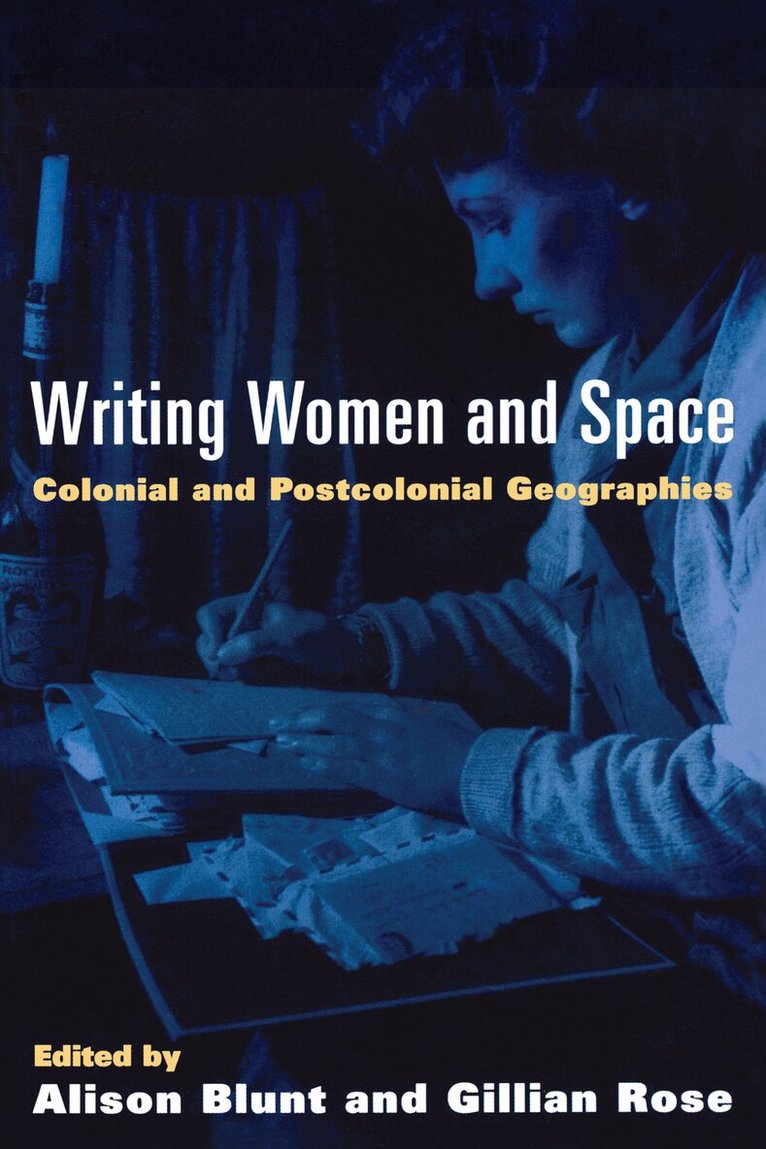
    Writing Women and Space

    Colonial and Postcolonial Geographies

    AvAlison Blunt,Gillian Rose

    Häftad, Engelska, 1994

    Del i serien Mappings: Society/Theory/Space

    356 kr

    Beställningsvara. Skickas inom 5-8 vardagar. Fri frakt över 249 kr.

    Beskrivning

    Drawing lessons from the complex and often contradictory position of white women writing in the colonial period, This unique book explores how feminism and poststructuralism can bring new types of understanding to the production of geographical knowledge. Through a series of colonial and postcolonial case studies, essays address the ways in which white women have written and mapped different geographies, in both the late nineteenth century and today, illustrating the diverse objects (landscapes, spaces, views), the variety of media (letters, travel writing, paintings, sculpture, cartographic maps, political discourse), and the different understandings and representations of people and place.

    Produktinformation

    • Utgivningsdatum:1994-10-31
    • Mått:152 x 229 x 19 mm
    • Vikt:400 g
    • Format:Häftad
    • Språk:Engelska
    • Serie:Mappings: Society/Theory/Space
    • Antal sidor:268
    • Förlag:Guilford Publications
    • ISBN:9780898624984

    Utforska kategorier

    • Genusvetenskap inom Samhälle och politik
    • Geografi inom Naturvetenskap och teknik

    Mer om författaren

    Alison Blunt, M.A., is a Lecturer in the Department of Geography at the University of Southampton in England.

    Recensioner i media

    ...is a useful contribution to the literature on gender perspectives of the colonized world... --Helen Ruth Aspaas, African Studies Review...presents compelling ways of bringing together ideas from poststructuralist and postcolonial theory around geographical questions, and provides much material, both for those working within a similar intellectual territory, and for those grappling with more general methodological questions. I should find its place on many reading lists, if it has not already done so, as it provides an accessible contribution to contemporary debates around identity, space, and power. -- R. Elmhirst, Wye College University of London, Environment and Planning AThis timely collection of essays explores ways in which feminism, space, and the politics of identity, subjectivity, and representation come together in diverse colonial and postcolonial settings....I unhesitatingly invite colleagues and students across disciplines to read this fresh and imaginative collection of essays.... --Karen Morin, Growth and ChangeAs edited volumes go, this is a remarkably coherent (and successful) one.... This book makes an important contribution to feminist geography. --Geraldine Pratt, University of British ColumbiaThis is a superb new contribution to the literature on space, power and difference. In drawing together an exciting range of well-researched essays, it articulates the complex relations between gender, class, race and sexuality in different historical and geographic settings. With an emphasis on diversities among women and the contexts within which they occur, it is particularly effective in highlighting the fragmented, fluid and often contradictory nature of identity and space. --Morag Bell, Ph.D., Loughborough University of TechnologyAlthough I don't always see eye to eye with the authors in this volume, I warmly welcome this set of essays on women's colonial and post-colonial cartographics. For here we have a feisty feminist geography that is theoretically self-critical, empirically vigorous, and morally challenging....One thing is certain: coming to grips with this critique will lay upon readers an obligation; an obligation to expose the pretended innocence of the metaphorical and material maps we have historically produced...and the maps we currently plot. --David N. Livingstone, Professor of Geography, The Queen's University of BelfastThis is an important, path-breaking collection of essays. In highlighting the complicities and resistances of white women to imperial discourses, the book speaks to wider epistemological issues about human subjectivity. In different ways, the chapters demonstrate the inherent partiality, instability, positionality, and situatedness of subjectivity. By extension, conventional notions of space are unsettled in a powerful acknowledgment of our gendered imaginaries. This leads us to re-imagine space and mapping in fresh ways. --Kay Anderson, Ph.D., Senior Lecturer in Geography, University of New South Wales and author of the award-winning Vancouver's Chinatown: Racial Discourse in Canada, 1875-1980This is an important, path-breaking collection of essays. In highlighting the complicities and resistances of white women to imperial discourses, the book speaks to wider epistemological issues about human subjectivity. In different ways, the chapters demonstrate the inherent partiality, instability, positionality, and situatedness of subjectivity. By extension, notions of transcendent, coherent space are unsettled in a powerful acknowledgment of our gendered imaginaries. This leads us to reimagine space and mappings in fresh ways. --Kay Anderson, Ph.D., Senior Lecturer in Geography, University of New South Wales and author of the award-winning Vancouver's Chinatown: Racial Discourses in Canada, 1875-1980 - This timely collection of essays explores ways in which feminism, space, and the politics of identity, subjectivity, and representation come together in diverse colonial and postcolonial settings....I unhesitatingly invite colleagues and students across disciplines to read this fresh and imaginative collection of essays.... --Growth and Change, 8/21/1994

    Innehållsförteckning

    • 1. Introduction: Women's Colonial and Postcolonial Geographies PART I: DRAWING THE MAP Knowledge, Gender, and Empire 3. Mapping Authorship and Authority: Reading Mary Kingsley's Landscape Descriptions 4. Encounters with West African Women: Textual Representations of Difference by White Women Abroad Colonizing Gender in Colonial Australia: The Eliza Fraser Story Gender, War, and Imagined Geographies: United States Women and the "Far-Flung" Fronts of World War II PART II: RETHINKING MAPPING 7. Occupying the Suburban Frontier: Accommodating Difference on Melbourne's Urban Fringe 8 Earth Honoring: Western Desires and Indigenous Knowledges 9. White Women Researching/Representing "Others": From Antiapartheid to Postcolonialism? 10. Remapping the Body/Land: New Cartographies of Identity, Gender, and Landscape in Ireland Index