• Fri frakt över 249 kr
  • •
  • Snabba leveranser
  • •
  • Billiga böcker
Kundservice

Du är på sajten för privatpersoner.

Företag, bibliotek eller offentlig verksamhet?

Du handlar på classic.bokus.com, där alla dina funktioner finns intakta.
Till classic.bokus.com
Bokus logotyp. Gå till startsidan.
  • Erbjudanden
  • Nyheter
  • Student
  • Topplistor
  • Barn & ungdom
  • Bokus Play
  • E-böcker
  • Pocketböcker
  • Spel & pussel

10% studentrabatt med kod TERM26

Sidfot

Mina sidor

    Hjälp

    • Kundservice
    • Vanliga frågor och svar
    • Frakt och leverans
    • Retur vid ångerrätt
    • Reklamera vara
    • Betalning
    • Köpvillkor
    • Allmänna villkor
    • Information om webbplatsens tillgänglighet

    Om Bokus

    • Om oss
    • Pressrum
    • För studenter
    • För företag
    • För bibliotek och offentlig verksamhet
    • För leverantörer
    • Hållbarhet

    Populärt

    • Aktuella erbjudanden
    • Presentkort
    • Studentlitteratur
    • Nya böcker
    • Topplistor
    • Signerade böcker
    • Engelska böcker

    Inspiration

    • Boktips
    • BookTok
    • Populära bokserier
    • Barnbokskaraktärer
    • Populära författare
    Logotyp för Bokus
    Följ oss på Facebook (extern länk)Följ oss på Instagram (extern länk)Följ oss på YouTube (extern länk)Följ oss på TikTok (extern länk)
    bokus @ CookiesAnpassa cookiesIntegritetspolicyKöpvillkor
    Till Citymail hemsida (extern länk)Till Budbee hemsida (extern länk)Till Postnord hemsida (extern länk)Till Schenker hemsida (extern länk)Till Early Bird hemsida (extern länk)Till Walleys hemsida (extern länk)
    1. Ekonomi och Ledarskap
    2. Nationalekonomi
    3. Internationell ekonomi
    • Nyhet

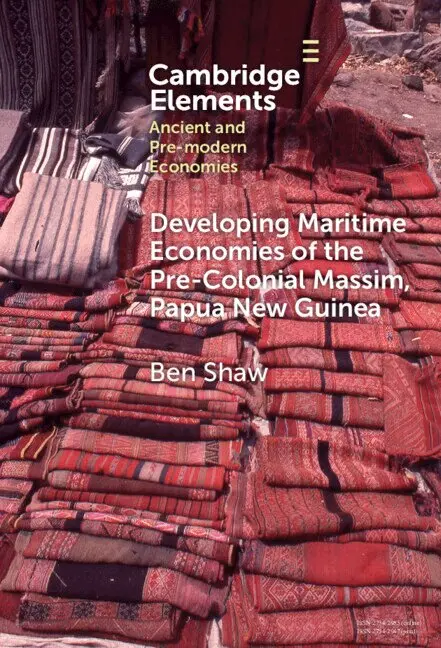
    Developing Maritime Economies of the Pre-Colonial Massim, Papua New Guinea

    The Making of an Island World and the Foundations of Kula

    AvBen Shaw

    Inbunden, Engelska, 2026

    Del i serien Elements in Ancient and Pre-modern Economies

    789 kr

    Beställningsvara. Skickas inom 10-15 vardagar. Fri frakt över 249 kr.

    Fler format och utgåvor

    E-bok

    285 kr

    E-bok

    285 kr

    Häftad

    245 kr

    Beskrivning

    The Massim region of Papua New Guinea has been the focus of intensive ethnographic interest for over a century because of sociocultural practices and maritime economies that connect island populations, including the famed Kula ring. Ethnographic models of Kula have been critiqued as ahistorical and heavily influenced by colonial interventions. This volume explores the long-term history of Massim maritime economies from a predominantly archaeological perspective, but draws on ethnographic, linguistic and biomolecular information. Maritime economies have connected islands for at least 17,000 years, with parallels to historically documented networks emerging over the last 3000 years. The Massim region can be considered as a network of decentralized, micro-world economies that frequently overlapped, were shaped by local value systems, clan affiliations, and defined by strategic advantages of location, natural resources and technologies. Maritime interaction in the Massim shaped cultural and linguistic diversity, providing a comparative case study for maritime economies globally.

    Produktinformation

    • Utgivningsdatum:2026-07-23
    • Mått:152 x 229 x 8 mm
    • Vikt:293 g
    • Format:Inbunden
    • Språk:Engelska
    • Serie:Elements in Ancient and Pre-modern Economies
    • Antal sidor:106
    • Förlag:Cambridge University Press
    • ISBN:9781009529563

    Utforska kategorier

    • Internationell ekonomi inom Ekonomi och Ledarskap
    • Ekonomiska system inom Ekonomi och Ledarskap
    • Sjöfartshistoria inom Historia och arkeologi

    Innehållsförteckning

    • 1. The Massim islands in time and space; 2. Framing the Massim as an economic region; 3. Modelling deep time histories of the Massim; 4. Formative economies on the fringes of the known world (17000 to 8000 years); 5. Frontier economies of a multi-cultural island world (8,000 to 3,000 BP); 6. Fluctuating economies in an island world and the coming of Lapita (3000 to 1200 years) 7. Flourishing economies of opportunity (1200 to 300 years); 8. Flexible economies of war and peace (Past 300 years); 9. Local histories, global narratives, and the next frontier; References.