• Fri frakt över 249 kr
  • •
  • Snabba leveranser
  • •
  • Billiga böcker
Kundservice

Du är på sajten för privatpersoner.

Företag, bibliotek eller offentlig verksamhet?

Du handlar på classic.bokus.com, där alla dina funktioner finns intakta.
Till classic.bokus.com
Bokus logotyp. Gå till startsidan.
  • Erbjudanden
  • Student
  • Topplistor
  • Barn & ungdom
  • Bokus Play
  • E-böcker
  • Ljudböcker
  • Pocketböcker
  • Spel och pussel

Pocketfynda! Hundratals böcker för 49 kr/st →

Sidfot

Mina sidor

    Hjälp

    • Kundservice
    • Vanliga frågor och svar
    • Frakt och leverans
    • Retur vid ångerrätt
    • Reklamera vara
    • Betalning
    • Köpvillkor
    • Allmänna villkor
    • Information om webbplatsens tillgänglighet

    Om Bokus

    • Om oss
    • Pressrum
    • För studenter
    • För företag
    • För bibliotek och offentlig verksamhet
    • För leverantörer
    • Hållbarhet

    Populärt

    • Aktuella erbjudanden
    • Presentkort
    • Studentlitteratur
    • Nya böcker
    • Topplistor
    • Signerade böcker
    • Engelska böcker

    Inspiration

    • Boktips
    • BookTok
    • Barnbokskaraktärer
    • Populära författare
    Logotyp för Bokus
    Följ oss på Facebook (extern länk)Följ oss på Instagram (extern länk)Följ oss på YouTube (extern länk)Följ oss på TikTok (extern länk)
    bokus @ CookiesAnpassa cookiesIntegritetspolicyKöpvillkor
    Till Citymail hemsida (extern länk)Till Budbee hemsida (extern länk)Till Postnord hemsida (extern länk)Till Schenker hemsida (extern länk)Till Early Bird hemsida (extern länk)Till Walleys hemsida (extern länk)
    1. Ekonomi och Ledarskap
    2. Nationalekonomi

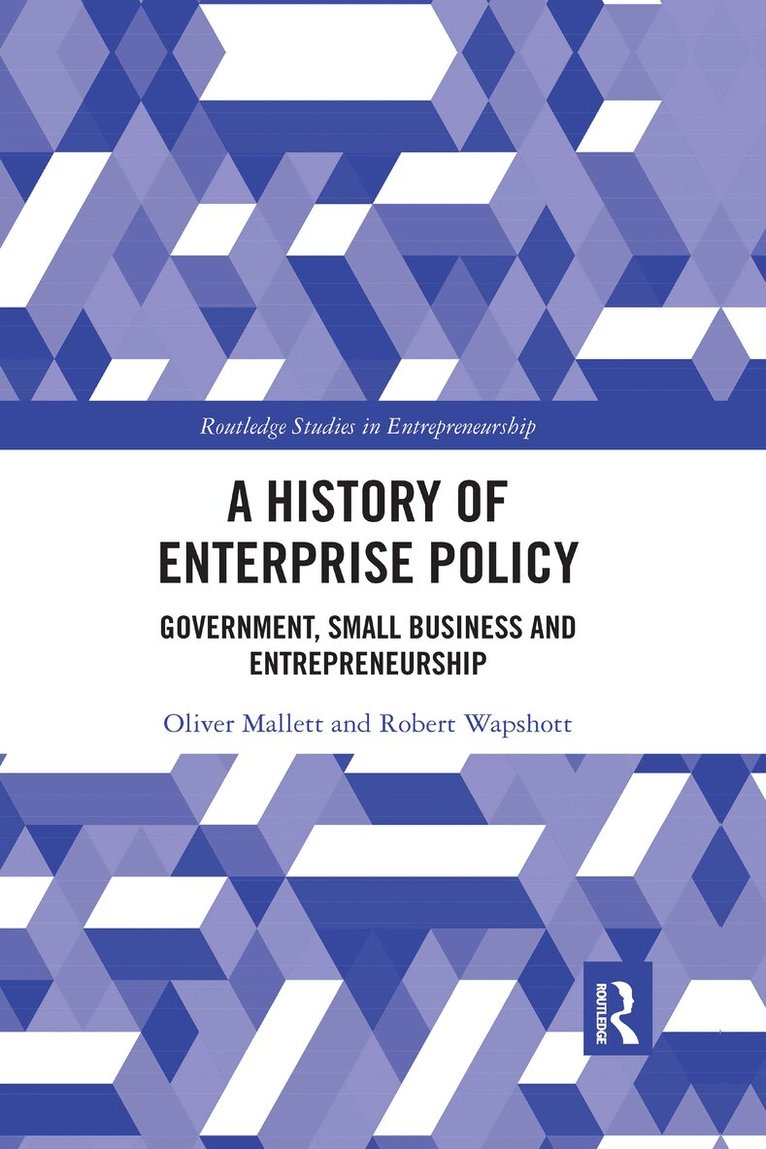
    History of Enterprise Policy

    Government, Small Business and Entrepreneurship

    AvOliver Mallett,Robert Wapshott

    Häftad, Engelska, 2021

    Del i serien Routledge Studies in Entrepreneurship

    664 kr

    Beställningsvara. Skickas inom 10-15 vardagar. Fri frakt över 249 kr.

    Fler format och utgåvor

    Inbunden

    2 410 kr

    Beskrivning

    Governments in developed and developing economies have increasingly turned to entrepreneurship and small businesses for economic growth, dynamism and economic and social inclusion. Policies seeking to encourage, support or otherwise influence these forms of economic activity are varied but virtually omnipresent, recommended by organisations such as the OECD and World Bank and implemented by governments of many political ideologies. With a range of activities across government labelled as enterprise policy, it is vital to unpick the different policies, initiatives and interventions and to understand their development in order to subject them to scrutiny and evaluate the actions taken in the name of enterprise. This book provides the first in-depth, historical analysis of enterprise policy in the United Kingdom. Successive UK governments have been particularly active, with the number of initiatives estimated recently at 3000 and expenditure reaching as high as £12bn, yet facing continuous criticisms for its use, value or relevance. This historical study of UK enterprise policy represents a case study of different forms of enterprise policy and how they have developed, or failed to develop, over time, contributing to understanding of government, small business and entrepreneurship. It will be of value to researchers, academics, policymakers, and students interested in the history of small business and entrepreneurship as well as standing as a history of a specific policy area and the ways in which policies involving many different areas of government develop over time.

    Produktinformation

    • Utgivningsdatum:2021-09-30
    • Mått:152 x 229 x 13 mm
    • Vikt:322 g
    • Format:Häftad
    • Språk:Engelska
    • Serie:Routledge Studies in Entrepreneurship
    • Antal sidor:232
    • Förlag:Taylor & Francis Ltd
    • ISBN:9781032175461

    Utforska kategorier

    • Nationalekonomi inom Ekonomi och Ledarskap
    • Entreprenörskap inom Ekonomi och Ledarskap
    • Affärsförhandlingar inom Ekonomi och Ledarskap

    Mer om författaren

    Oliver Mallett in an Associate Professor in Work and Employment at the University of Stirling, Scotland. Oliver’s research interests relate to employment relationships in small businesses and to government and private sector support for small businesses.Robert Wapshott is a Senior Lecturer in Entrepreneurship at the University of Sheffield, UK, where he is a member of the Centre for Regional Economic and Enterprise Development. Robert's research studies small businesses and entrepreneurship with a particular focus on small business management and on regulation.

    Recensioner i media

    "This book provides a fascinating insight into the evolution of enterprise policy, and draws out how its objectives, forms and functions have altered in different political, economic and social contexts." –Colin C Williams University of Sheffield, UK"This book provides a historical critique of understanding the introduction and development of enterprise policy in the UK over the years. It is a must read for those interested in seeking out a blueprint of enterprise policy because it provides in-depth knowledge and expertise in an area in which governments and academics are seeking to address economic and social challenges." –Norin Arshed, University of Dundee, UK"A book that deserves a wide audience, it will be indispensable for those with an interest in enterprise policy and the interest of the 99% of businesses in the economy that represent enterprise. This book develops a historical approach to assess whether enterprise policy is good for enterprise." –Kevin Mole, University of Warwick, UK

    Innehållsförteckning

    • Acknowledgements 1. What is enterprise policy and why is it important?2. Government, Small Firms and Entrepreneurship in the Nineteenth Century3. Filling the finance gap4. Regional enterprise policy5. Early lobbying and debating the role of government6. Taxation, lobbying and a voice for small business 7. The Europeanisation of enterprise policy 8. Neoliberalism and enterprise culture9. Market liberalisation and deregulation10. Tackling deadweight and displacement through consultancy11. Enterprise policy as an answer to deprivation and exclusion12. ConclusionMethodological AppendixIndex