• Fri frakt över 249 kr
  • •
  • Snabba leveranser
  • •
  • Billiga böcker
Kundservice

Du är på sajten för privatpersoner.

Företag, bibliotek eller offentlig verksamhet?

Du handlar på classic.bokus.com, där alla dina funktioner finns intakta.
Till classic.bokus.com
Bokus logotyp. Gå till startsidan.
  • Erbjudanden
  • Nyheter
  • Student
  • Topplistor
  • Barn & ungdom
  • Bokus Play
  • E-böcker
  • Pocketböcker
  • Spel & pussel

Upp till 20% på populära nyheter →

Sidfot

Mina sidor

    Hjälp

    • Kundservice
    • Vanliga frågor och svar
    • Frakt och leverans
    • Retur vid ångerrätt
    • Reklamera vara
    • Betalning
    • Köpvillkor
    • Allmänna villkor
    • Information om webbplatsens tillgänglighet

    Om Bokus

    • Om oss
    • Pressrum
    • För studenter
    • För företag
    • För bibliotek och offentlig verksamhet
    • För leverantörer
    • Hållbarhet

    Populärt

    • Aktuella erbjudanden
    • Presentkort
    • Studentlitteratur
    • Nya böcker
    • Topplistor
    • Signerade böcker
    • Engelska böcker

    Inspiration

    • Boktips
    • BookTok
    • Populära bokserier
    • Barnbokskaraktärer
    • Populära författare

    Mina sidor

      Hjälp

      • Kundservice
      • Vanliga frågor och svar
      • Frakt och leverans
      • Retur vid ångerrätt
      • Reklamera vara
      • Betalning
      • Köpvillkor
      • Allmänna villkor
      • Information om webbplatsens tillgänglighet

      Om Bokus

      • Om oss
      • Pressrum
      • För studenter
      • För företag
      • För bibliotek och offentlig verksamhet
      • För leverantörer
      • Hållbarhet

      Populärt

      • Aktuella erbjudanden
      • Presentkort
      • Studentlitteratur
      • Nya böcker
      • Topplistor
      • Signerade böcker
      • Engelska böcker

      Inspiration

      • Boktips
      • BookTok
      • Populära bokserier
      • Barnbokskaraktärer
      • Populära författare
      Logotyp för Bokus
      Följ oss på Facebook (extern länk)Följ oss på Instagram (extern länk)Följ oss på YouTube (extern länk)Följ oss på TikTok (extern länk)
      bokus @ CookiesIntegritetspolicyKöpvillkor
      Till Citymail hemsida (extern länk)Till Budbee hemsida (extern länk)Till Postnord hemsida (extern länk)Till Schenker hemsida (extern länk)Till Early Bird hemsida (extern länk)Till Walleys hemsida (extern länk)
      1. Naturvetenskap och teknik
      2. Teknik och industri
      3. Tillverkningsteknik

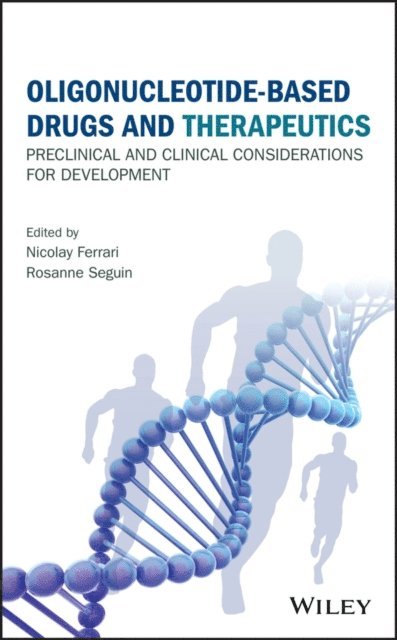
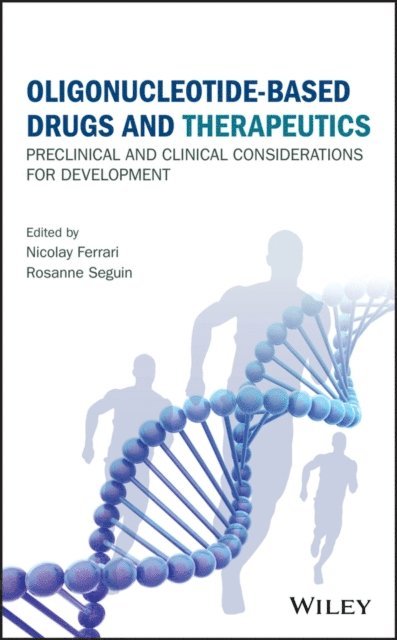
      Oligonucleotide-Based Drugs and Therapeutics

      Preclinical and Clinical Considerations for Development

      AvNicolay Ferrari,Nicolay Ferrari

      Inbunden, Engelska, 2018

      2 428 kr

      Beställningsvara. Skickas inom 5-8 vardagar. Fri frakt över 249 kr.

      Beskrivning

      A comprehensive review of contemporary antisense oligonucleotides drugs and therapeutic principles, methods, applications, and research Oligonucleotide-based drugs, in particular antisense oligonucleotides, are part of a growing number of pharmaceutical and biotech programs progressing to treat a wide range of indications including cancer, cardiovascular, neurodegenerative, neuromuscular, and respiratory diseases, as well as other severe and rare diseases. Reviewing fundamentals and offering guidelines for drug discovery and development, this book is a practical guide covering all key aspects of this increasingly popular area of pharmacology and biotech and pharma research, from the basic science behind antisense oligonucleotides chemistry, toxicology, manufacturing, to safety assessments, the design of therapeutic protocols, to clinical experience.Antisense oligonucleotides are single strands of DNA or RNA that are complementary to a chosen sequence. While the idea of antisense oligonucleotides to target single genes dates back to the 1970's, most advances have taken place in recent years. The increasing number of antisense oligonucleotide programs in clinical development is a testament to the progress and understanding of pharmacologic, pharmacokinetic, and toxicologic properties as well as improvement in the delivery of oligonucleotides. This valuable book reviews the fundamentals of oligonucleotides, with a focus on antisense oligonucleotide drugs, and reports on the latest research underway worldwide.•    Helps readers understand antisense molecules and their targets, biochemistry, and toxicity mechanisms, roles in disease, and applications for safety and therapeutics•    Examines the principles, practices, and tools for scientists in both pre-clinical and clinical settings and how to apply them to antisense oligonucleotides•    Provides guidelines for scientists in drug design and discovery to help improve efficiency, assessment, and the success of drug candidates•    Includes interdisciplinary perspectives, from academia, industry, regulatory and from the fields of pharmacology, toxicology, biology, and medicinal chemistryOligonucleotide-Based Drugs and Therapeutics belongs on the reference shelves of chemists, pharmaceutical scientists, chemical biologists, toxicologists and other scientists working in the pharmaceutical and biotechnology industries. It will also be a valuable resource for regulatory specialists and safety assessment professionals and an important reference for academic researchers and post-graduates interested in therapeutics, antisense therapy, and oligonucleotides.

      Produktinformation

      • Utgivningsdatum:2018-09-07
      • Mått:160 x 231 x 33 mm
      • Vikt:862 g
      • Format:Inbunden
      • Språk:Engelska
      • Antal sidor:576
      • Förlag:John Wiley & Sons Inc
      • ISBN:9781118537336

      Utforska kategorier

      • Tillverkningsteknik inom Naturvetenskap och teknik

      Mer om författaren

      Nicolay Ferrari, PhD, is the Executive Director of the Canadian Critical Care Trials Group, a Canadian investigator-lead research network, Quebec, Canada. A former Director of Research in Pharmacology at Topigen Pharmaceuticals, Inc, over twenty years of research experience, Dr. Ferrari is the co-inventor of six patents. Rosanne Seguin, PhD, is an Academic Associate at the Montreal Neurological Institute of McGill University, Montreal, Quebec, Canada. A former Director of Immunology and Development Support at Topigen Pharmaceuticals, Inc. Dr. Seguin has 20 years of research experience.

      Innehållsförteckning

      • List of Contributors xviiPreface xxiAcknowledgments xxii1 Mechanisms of Oligonucleotide Actions 1Annemieke Aartsma‐Rus, Aimee L. Jackson, and Arthur A. Levin1.1 Introduction1.2 Antisense Oligonucleotide Therapeutics 21.2.1 Antisense Activity Mediated by RNase H 21.2.2 The RNase H Mechanism 21.2.3 Chemical Modifications to Enhance RNase H‐mediated Antisense Activity 31.3 Oligonucleotides that Sterically Block Translation 51.4 Oligonucleotides that Act Through the RNAi Pathway 51.4.1 The RISC Pathway 51.4.2 Mechanisms of RISC‐mediated Gene Silencing 81.5 Chemical Modification of siRNAs and miRNAs 101.5.1 Delivery of Therapeutic siRNAs or miRNAs 121.6 Clinical Use of Oligonucleotides that Act through the RNAi Pathway 141.7 Oligonucleotides that Modulate Splicing 171.7.1 Pre‐mRNA Splicing and Disease 171.7.2 Mechanisms of Oligonucleotide‐mediated Splicing Modulation 171.7.3 Chemical Modifications that Enhance Activity of Oligonucleotidebased Splicing Modulators 211.7.4 Clinical Applications of Splicing Modulators 221.8 Conclusions 22References 222 The Medicinal Chemistry of Antisense Oligonucleotides 39Jonathan K. Watts2.1 Introduction:The Antisense Approach and the Need for Chemical Modification 392.1.1 How Does Medicinal Chemistry Apply to Oligonucleotides? 402.1.2 Chemistry and Toxicity 412.2 Why Chemically Modify an Oligonucleotide? 422.2.1 Medicinal Chemistry Can Increase Nuclease Stability 422.2.2 Medicinal Chemistry Can Tune Binding Affinity and Specificity 432.2.3 Medicinal Chemistry Can Change Interactions with Cellular Factors 442.2.4 Medicinal Chemistry Can Modulate Immunostimulation 452.2.5 Medicinal Chemistry Can Improve RNase H Cleavage Specificity 462.2.6 Medicinal Chemistry Can Improve Cellular Uptake and Subcellular Trafficking 472.3 Chemical Modifications of Current Importance by Structural Class 482.3.1 Sugar Modifications 482.3.1.1 2′‐Modified Ribose Sugars 482.3.1.2 2′‐Modified Arabinose Sugars 502.3.1.3 2′,4′‐Difluorinated Nucleosides 502.3.1.4 Constrained Nucleotides 502.3.1.5 Sugars with Expanded Ring Size 532.3.2 Phosphate Modifications 542.3.2.1 Phosphorothioate 542.3.2.2 Other Charged Phosphate Analogues 582.3.2.3 Neutral Mimics of the Phosphate Linkage 582.3.2.4 Metabolically Stable 5′‐Phosphate Analogues 602.3.3 Total Replacement of the Sugar‐Phosphate Backbone 612.3.4 Nucleobase Modifications 622.3.4.1 Sulfur‐Modified Nucleobases 632.3.4.2 5‐Modified Pyrimidines 632.3.4.3 Nucleobases with Expanded Hydrogen Bonding Networks 652.3.5 Assembly of Oligonucleotides into Multimeric Structures 662.4 Conclusion 67References 693 Cellular Pharmacology of Antisense Oligonucleotides 91Xin Ming3.1 Introduction913.2 Molecular Mechanisms of Antisense Oligonucleotides 923.2.1 Classic Antisense Oligonucleotides 923.2.2 siRNA 943.2.3 Splice Switching Oligonucleotides 943.2.4 microRNA Antagomirs 953.2.5 lncRNAs Antagomirs 953.3 Cellular Pharmacology of Antisense Oligonucleotides 963.3.1 Endocytosis of Free Oligonucleotides 983.3.2 Endocytosis of Oligonucleotide Conjugates 983.3.3 Uptake and Trafficking of Oligonucleotides Incorporated into Nanocarriers 1003.4 Conclusion 101References 1014 Pharmacokinetics and Pharmacodynamics of Antisense Oligonucleotides 107Helen Lightfoot, Anneliese Schneider, and Jonathan Hall4.1 Introduction 1074.2 Pharmacokinetic Properties of Antisense Oligonucleotides 1084.2.1 Protein Binding 1094.2.2 Dose Dependency of ASO Pharmacokinetics 1104.2.3 Absorption 1104.2.4 Distribution 1114.2.5 Metabolism and Excretion 1124.3 Pharmacodynamic Properties of Antisense Oligonucleotides 1134.3.1 ASO Target Selection and Validation 1144.3.2 Mechanisms of Action 1174.3.3 Biomarkers and PD Endpoints 1184.4 PD and PK Results and Strategies of ASOs in Clinical Development 1194.4.1 Genetic Diseases 1224.4.1.1 Mipomersen, Apolipoprotein B‐100, and Hypercholesterolemia 1224.4.1.2 Drisapersen, Dystrophin, and Duchenne Muscular Dystrophy (DMD) 1234.4.2 Infectious Diseases 1254.4.2.1 Miravirsen, miR‐122, and Hepatitis C Virus (HCV) 1254.4.3 Cancer 1264.4.3.1 Custirsen, Clusterin, and Cancer 1264.4.3.2 LY2181308 (ISIS‐23722), Survivin, and Cancer 1274.5 Summary and Conclusions 128References 1305 Tissue Distribution, Metabolism, and Clearance 137Mehrdad Dirin and Johannes Winkler5.1 Introduction1375.2 Tissue Distribution 1385.2.1 Dermal Delivery 1385.2.2 Ocular Delivery 1395.2.3 Oral Administration 1395.2.4 Intrathecal Delivery 1415.2.5 Intravesical Administration 1425.2.6 Pulmonary Administration 1425.2.7 Distribution to Muscular Tissue 1435.2.8 Intravenous Administration 1445.3 Cellular Uptake 1465.4 Metabolism and Clearance 1485.4.1 Phosphorothioates Including 2′‐Modifications 1485.4.2 Phosphorodiamidate Morpholino Oligonucleotides 1495.5 Conclusion 150References 1516 Hybridization‐Independent Effects: Principles and Specific Considerations for Oligonucleotide Drugs 161Nicolay Ferrari6.1 Background 1616.2 Mechanisms of Hybridization‐independent Toxicities 1626.2.1 Effects Related to Oligonucleotide Sequence 1626.2.1.1 Unmethylated CpG Motifs 1626.2.1.2 Poly‐G Sequences 1636.2.1.3 DNA Triplex‐forming Oligonucleotides 1646.2.1.4 Other Motifs 1646.2.2 Effects Related to Oligonucleotide Chemistry 1646.2.2.1 Phosphorothioate Oligonucleotides 1656.2.2.2 Effects of Other Chemical Modifications 1716.3 Hybridization‐independent Effects Following Local Delivery of Oligonucleotides 1716.3.1 Pulmonary Toxicity of Inhaled Oligonucleotides 1716.3.1.1 Specific Considerations for Inhaled Oligonucleotides 1736.3.2 Approaches to Reduce Hybridization‐independent Class Effects of Inhaled Oligonucleotides 1756.3.2.1 Mixed Phosphorothioate/Phosphodiester Oligonucleotides 1756.4 Conclusion 180References 1807 Hybridization‐Dependent Effects: The Prediction, Evaluation,and Consequences of Unintended Target Hybridization 191Jeremy D. A. Kitson, Piotr J. Kamola, and Lauren Kane7.1 Introduction 1917.1.1 Scope of this Review: RNase H1‐dependent ASOs 1927.2 Specificity Studies with ASOs 1927.3 Implications of the Nuclear Site of Action of RNase H1 1947.3.1 Confirmation of Unintended Targets within Introns 1957.4 Mechanism of OTE 1967.5 Determining the Extent that Accessibility, Affinity and, Mismatch Tolerance Contribute to Off‐target Activity 1987.5.1 Accessibility 1987.5.2 Affinity 1997.5.3 The Interaction of RNase H1 with the RNA/ASO Duplex 2007.5.4 Mismatch Tolerance 2027.6 Consequences of Unintended Transcript Knockdown: In Vivo and In Vitro Toxicity 2037.7 Identification and Evaluation of Putative OTEs 2077.7.1 Computational Prediction of Unintended Targeting 2077.7.1.1 Database Creation 2097.7.1.2 Sequence Alignments 2097.7.1.3 Cross‐species Off‐target Homology 2107.7.1.4 Results Filtering and Annotation 2117.7.1.5 RNA Structure and Target Accessibility 2117.7.1.6 ASO–Target Duplex Thermodynamics 2137.7.1.7 Computational Framework for OTEs 2147.7.1.8 In Vitro Screening for OTEs 2147.7.1.9 Methods for Measuring Gene Expression 2167.8 Summary 216Acknowledgments 217References 2188 Class‐Related Proinflammatory Effects 227Rosanne Seguin8.1 Introduction 2278.2 Proinflammatory Effects of ASO for Consideration in Drug Development 2288.2.1 Activation of the Complement Cascade in Monkeys 2288.2.2 Cytokine Release 2298.2.3 Mononuclear Cellular Infiltrate 2328.2.4 Hematological Changes 2368.2.5 Immunogenicity 2378.3 Conclusions 238References 2399 Exaggerated Pharmacology 243Alain Guimond and Doug Kornbrust9.1 Introduction 2439.2 Regulatory Expectations 2449.3 Scope of EP Assessment 2459.3.1 Species Selection 2459.3.2 Determination of Pharmacologic Relevance 2479.4 EP Evaluation Strategies 2489.4.1 Concerns About the Use of Animal‐active Analogues 2489.4.2 Animal‐active Analogues in Reproductive and/or Carcinogenicity Studies 2509.4.3 Other Considerations for Use of Animal Analogues 2509.4.4 The Use of Inactive Analogues as Control Articles 2509.4.5 The Role of Formulations 2519.4.6 Aptamer Oligonucleotides 2519.4.7 Immunostimulatory Oligonucleotides 2529.4.8 MicroRNA 2539.5 Conclusions 254References 25510 Genotoxicity Tests for Novel Oligonucleotide‐Based Therapeutics 257Cindy L. Berman, Scott A. Barros, Sheila M. Galloway, Peter Kasper, Frederick B. Oleson, Catherine C. Priestley, Kevin S. Sweder, Michael J. Schlosser, and Zhanna Sobol10.1 Introduction 25710.1.1 History of Regulatory Guidance on Genotoxicity Testing 25910.1.2 Relevance of the Standard Genotoxicity Test Battery to ONs 26010.2 Experience with ONs in the Standard Battery 26210.2.1 ON Chemical Classes Tested for Genotoxicity 26410.2.2 Conclusions Based on the Database 26510.3 OSWG Recommendation for Genotoxicity Testing of ONs 26610.3.1 Recommended Test Battery 26610.3.2 Requirement for Evidence for Uptake 27010.3.3 Need for Testing of ONs 27110.3.3.1 Nonconjugated ONs in Simple Aqueous Formulations 27110.3.3.2 ONs in Complex Formulations or Conjugates 27210.3.4 Recommended Test Conditions 27310.3.4.1 Top Concentration for In Vitro Tests 27310.3.4.2 Use of S‐9 in In Vitro Tests 27310.3.4.3 In Vivo Tests 27410.4 Triplex Formation 27510.4.1 Biochemical Requirements for Triplex Formation 27510.4.2 Assessment of New ONs for Triplex Formation 27710.5 Impurities 27810.5.1 ON‐Related Impurities 27810.5.2 Potentially Mutagenic Impurities 27810.6 Conclusions 279Acknowledgments 280References 28011 Reproductive and Developmental Toxicity Testing Strategies for Oligonucleotide‐Based Therapeutics 287Tacey E.K. White and Joy Cavagnaro11.1 Introduction 28711.2 General Design of Reproductive and Developmental Toxicity Studies 28911.3 Product Attributes of Oligonucleotide Drugs 29111.4 The Role of Intended Pharmacology in Reproductive and Developmental Effects 29311.5 Selection of Animal Species 29411.5.1 Design and Use of Animal‐active Analogues 29411.6 Justification of Dosing Regimen 29611.7 Exposure Assessment 29711.8 Subclass‐ specific Considerations 29811.8.1 Single‐stranded DNA Antisense Oligonucleotides 29911.8.2 CpG and Immunostimulatory (IS) Oligonucleotides 30011.8.3 microRNA Mimetics/Antagonists and siRNAs 30111.8.4 Aptamer Oligonucleotides 30311.9 Conclusions 304Acknowledgments 305References 30512 Specific Considerations for Preclinical Development of Inhaled Oligonucleotides 311Nicolay Ferrar 12.1 Background 31112.2 Oligonucleotide Delivery Systems 31212.2.1 Inhalation Exposure Systems 31212.2.2 Intratracheal Aerosol Instillation 31312.3 Repeat‐dose Toxicity 31412.3.1 General Principles 31412.3.2 Recovery Phase 31712.4 Toxicokinetics 31912.5 Safety Pharmacology 32212.5.1 Respiratory System 32312.5.2 Cardiovascular and Central Nervous Systems 32412.6 Additional Testing 32612.6.1 Complement Activation 32612.6.2 Proinflammatory Effects 32712.7 Conclusion 328References 32813 Lessons Learned in Oncology Programs 331Cindy Jacobs, Monica Krieger, Patricia S. Stewart, Karen D. Wisont,and Scott Cormack13.1 Introduction 33113.2 Clinical Development of First‐generation ASOs 33213.2.1 Aprinocarsen 33213.2.2 Oblimersen 33413.2.3 Challenges Associated with First‐generation ASOs 33513.3 Clinical Development of Second‐generation ASOs 33613.3.1 Custirsen 33713.3.2 Lessons Learned from Custirsen Clinical Development 34313.3.3 Apatorsen 34413.3.4 Bladder Cancer 34613.3.5 Lung Cancer 34613.3.6 Pancreatic Cancer 34713.3.7 Prostate Cancer 34713.4 Regulatory Considerations 34813.5 Future Opportunities for ASOs as Therapeutic Agents for Cancer Treatment 349References 34914 Inhaled Antisense for Treatment of Respiratory Disease 355Gail M. Gauvreau, Beth E. Davis, and John Paul Oliveria14.1 Introduction 35514.2 Atopic Asthma 35514.2.1 Pharmacotherapy of Asthma 35614.2.2 Anti‐IL‐5 Monoclonal Antibodies 35714.2.3 Anti‐IL‐4/13 Monoclonal Antibodies 35914.3 Antisense Oligonucleotides in Animal Models 36114.3.1 CpG Immunostimulatory Sequences 36114.3.2 Antisense to Receptors on Eosinophils 36614.3.3 Antisense to IL‐4 and IL‐13 Receptors 36814.3.4 Summary of Antisense Oligonucleotides in Animal Models 36814.4 Clinical Data 36914.4.1 Allergen Challenge: A Model of Asthma Exacerbation 36914.4.2 Allergen Challenge for Evaluation of Efficacy 36914.4.3 1018 Immunostimulatory Sequence 37014.4.3.1 Study Design for 1018 ISS 37014.4.3.2 Results for 1018 ISS 37114.4.4 AIR645 37214.4.4.1 Study Design for AIR645 37314.4.4.2 Results for AIR645 37314.4.5 TPI ASM8 37414.4.5.1 Mechanism of TPI ASM8 37414.4.5.2 Study #1 for TPI ASM8 37514.4.5.3 Study #2 for TPI ASM8 37714.5 GeneralConclusion 378References 37815 Antisense Oligonucleotides for Treatment of Neurological Diseases 389Rosanne Seguin15.1 Introduction 38915.1.1 Delivery of ASO to Central Nervous System 38915.2 Potential ASO Therapies in Neurodegenerative Diseases 39015.2.1 Spinal Muscular Atrophy (SMA) 39015.2.2 Amyotrophic Lateral Sclerosis (ALS) 39315.2.3 Huntington’s Disease (HD) 39615.2.4 Muscular Sclerosis (MS) 39915.2.5 Alzheimer’s Disease (AD) 40115.3 Conclusion 403References 40316 Nucleic Acids as Adjuvants 411Kevin Brown, Montserrat Puig, Lydia Haile, Derek Ireland, John Martucci, and Daniela Verthelyi16.1 Introduction 41116.1.1 TLR as Nucleic Acid‐Sensing Pathogen Recognition Receptors (PRR) 41216.2 Categories of Nucleic Acid Adjuvants 41316.2.1 DNA‐Based Adjuvants and Vaccine Studies in Mice 41716.2.2 Classes of CpG ODN that Activate Human TLR9 42116.2.3 Preclinical Studies with Human CpG ODN 42216.2.4 Safety Issues Raised in Animal Models 42416.2.5 Clinical Trial Experience 42516.2.6 Safety Issues from Human Clinical Trials 42716.2.7 Novel Delivery Systems for CpG ODN as Adjuvants 42716.3 Conclusion 429Acknowledgments 429References 43017 Splice‐Switching Oligonucleotides 445Isabella Gazzoli and Annemieke Aartsma‐Rus17.1 Introduction of Splice Switching 44517.1.1 Correct Cryptic Splicing 44617.1.1.1 β‐Thalassemia 44617.1.1.2 Cystic Fibrosis 45017.1.2 Isoform Switching 45117.1.2.1 Anticancer 45117.1.2.2 Tauopathies 45217.1.3 Induce Exon Inclusion 45217.1.3.1 Tumorigenesis 45217.1.3.2 Spinal Muscular Atrophy (SMA) 45317.1.4 Reading Frame Correction 45417.1.4.1 Duchenne Muscular Dystrophy 45417.1.4.2 Dysferlinopathies 45517.1.5 Knockdown 45617.1.5.1 Atherosclerosis 45617.1.5.2 Myostatin‐Related Muscle Hypertrophy 45717.2 Preclinical and Clinical Development of Splice‐switching Oligos 45717.2.1 Introduction to Different Chemistries to be Used for Splice Switching 45717.2.2 AON Targets 45917.2.3 AON Development for DMD 46017.2.4 2′‐O‐Methyl Phosphorothioate AONs 46117.2.4.1 Animal Studies 46117.2.4.2 Human Studies 46317.2.5 Phosphorodiamidate Morpholino Oligos 46617.2.5.1 Animal Studies 46617.2.5.2 Human Studies 46717.2.6 Other Chemistries 46817.2.6.1 Peptide‐Conjugated PMOs 46817.2.7 Preclinical and Clinical Studies for Other Diseases 47017.2.7.1 Spinal Muscular Atrophy (SMA) 47017.2.8 Biomarkers 47217.3 Future Directions 474Conflictof Interest 475Acknowledgments 475References 47518 CMC Aspects for the Clinical Development of Spiegelmers 491Stefan Vonhoff18.1 Introduction 49118.2 Technology (Mirror‐imaged SELEX Process) Selected Pharmaceutical Properties 49218.3 Preclinical Efficacy Data for Spiegelmers 49418.4 Clinical Development 50418.4.1 Emapticap Pegol: NOX‐E36 50418.4.2 Olaptesed Pegol: NOX‐A12 50618.4.3 Lexaptepid Pegol: NOX‐H94 50718.5 CMC Aspects for the Development of Spiegelmers 50818.5.1 Discovery and Early Preclinical Stage 50818.5.2 Generic Manufacturing Process 50918.5.2.1 Solid‐phase Synthesis 51018.5.2.2 Deprotection 51018.5.2.3 Purification of the Intermediate Spiegelmer Prior to Pegylation 51018.5.2.4 Pegylation 51018.5.2.5 Purification of the Pegylated Spiegelmer 51018.5.3 CMC Aspects for the Selection of Development Candidates 51118.5.4 GMP Production of Spiegelmers 51418.5.4.1 Starting Materials 51418.5.4.2 Drug Substance 51618.5.4.3 Drug Product 51618.5.5 Analytical Methods for the Quality Control of Spiegelmers 51718.6 Future Prospects for Spiegelmer Therapeutics 521References 521Index 527
      Hoppa över listan

      Mer från samma författare

      Rosanne Seguin, Nicolay Ferrari - Oligonucleotide-Based Drugs and Therapeutics, E-bok

      Oligonucleotide-Based Drugs and Therapeutics

      Rosanne Seguin, Nicolay Ferrari

      E-bok
      2018

      2 821 kr

      Rosanne Seguin, Nicolay Ferrari - Oligonucleotide-Based Drugs and Therapeutics, E-bok

      Oligonucleotide-Based Drugs and Therapeutics

      Rosanne Seguin, Nicolay Ferrari

      E-bok
      2018

      2 702 kr

      Hoppa över listan

      Du kanske också är intresserad av

      Rosanne Seguin, Nicolay Ferrari - Oligonucleotide-Based Drugs and Therapeutics, E-bok

      Oligonucleotide-Based Drugs and Therapeutics

      Rosanne Seguin, Nicolay Ferrari

      E-bok
      2018

      2 821 kr

      Rosanne Seguin, Nicolay Ferrari - Oligonucleotide-Based Drugs and Therapeutics, E-bok

      Oligonucleotide-Based Drugs and Therapeutics

      Rosanne Seguin, Nicolay Ferrari

      E-bok
      2018

      2 702 kr

      Måns Petter Zelmerlöw - När allt faller, Inbunden
      • -12%

      När allt faller

      Måns Petter Zelmerlöw

      Inbunden, 2026

      229 kr259 kr

      Peter Englund - Om att misslyckas, Inbunden
      • -17%

      Om att misslyckas

      Peter Englund

      Inbunden, 2026

      4,0 utav 5 stjärnor. Totalt antal röster:(9)

      199 kr239 kr

      Roland Paulsen - Avbegåvad : en essäberättelse om arv och miljö, Inbunden
      • -15%

      Avbegåvad : en essäberättelse om arv och miljö

      Roland Paulsen

      Inbunden, 2026

      225 kr265 kr

      Klara Peters Bastin - SIGNERAD - Om julens wälgång, Inbunden
      • Signerad!

      SIGNERAD - Om julens wälgång

      Klara Peters Bastin

      Inbunden, 2026

      249 kr

      Vendela Blomström, Jeanna Wennerberg - Akademiskt läsande och skrivande, Häftad

      Akademiskt läsande och skrivande

      Vendela Blomström, Jeanna Wennerberg

      Häftad, 2026

      421 kr

      Åsa Jonsson - Helt orimligt : en hemmasittares berättelse, Kartonnage
      • Nyhet

      Helt orimligt : en hemmasittares berättelse

      Åsa Jonsson

      Kartonnage, 2026

      249 kr

      Anna Meeuwisse, Hans Swärd, Sune Sunesson, Marcus Knutagård - Socialt arbete : en grundbok, Inbunden

      Socialt arbete : en grundbok

      Anna Meeuwisse, Hans Swärd, Sune Sunesson, Marcus Knutagård

      Inbunden, 2024

      4,0 utav 5 stjärnor. Totalt antal röster:(1)

      581 kr

      Harlan Coben - Se dig inte om, Pocket
      • -30%

      Se dig inte om

      Harlan Coben

      Pocket, 2026

      69 kr99 kr