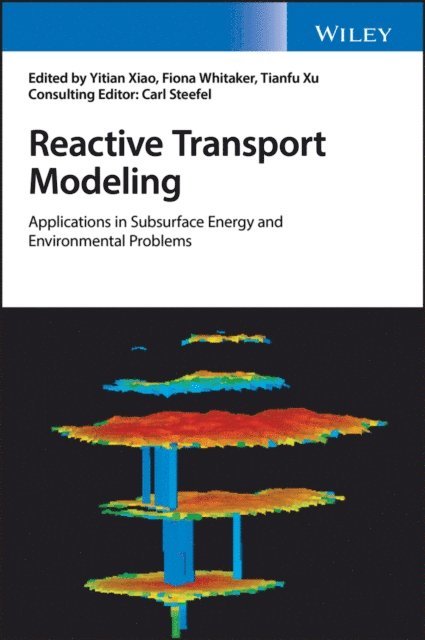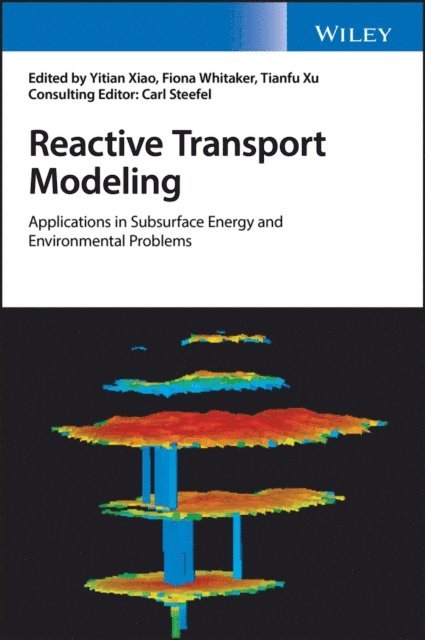
Reactive Transport Modeling
Applications in Subsurface Energy and Environmental Problems
Inbunden, Engelska, 2018
2 291 kr
Skickas . Fri frakt över 249 kr.
Beskrivning
Teaches the application of Reactive Transport Modeling (RTM) for subsurface systems in order to expedite the understanding of the behavior of complex geological systems This book lays out the basic principles and approaches of Reactive Transport Modeling (RTM) for surface and subsurface environments, presenting specific workflows and applications. The techniques discussed are being increasingly commonly used in a wide range of research fields, and the information provided covers fundamental theory, practical issues in running reactive transport models, and how to apply techniques in specific areas. The need for RTM in engineered facilities, such as nuclear waste repositories or CO2 storage sites, is ever increasing, because the prediction of the future evolution of these systems has become a legal obligation. With increasing recognition of the power of these approaches, and their widening adoption, comes responsibility to ensure appropriate application of available tools. This book aims to provide the requisite understanding of key aspects of RTM, and in doing so help identify and thus avoid potential pitfalls.Reactive Transport Modeling covers: the application of RTM for CO2 sequestration and geothermal energy development; reservoir quality prediction; modeling diagenesis; modeling geochemical processes in oil & gas production; modeling gas hydrate production; reactive transport in fractured and porous media; reactive transport studies for nuclear waste disposal; reactive flow modeling in hydrothermal systems; and modeling biogeochemical processes. Key features include: A comprehensive reference for scientists and practitioners entering the area of reactive transport modeling (RTM)Presented by internationally known experts in the fieldCovers fundamental theory, practical issues in running reactive transport models, and hands-on examples for applying techniques in specific areasTeaches readers to appreciate the power of RTM and to stimulate usage and applicationReactive Transport Modeling is written for graduate students and researchers in academia, government laboratories, and industry who are interested in applying reactive transport modeling to the topic of their research. The book will also appeal to geochemists, hydrogeologists, geophysicists, earth scientists, environmental engineers, and environmental chemists.
Produktinformation
- Utgivningsdatum:2018-04-18
- Mått:180 x 246 x 36 mm
- Vikt:1 202 g
- Format:Inbunden
- Språk:Engelska
- Antal sidor:560
- Förlag:John Wiley & Sons Inc
- ISBN:9781119060000
Utforska kategorier
Mer om författaren
Editors: Yitian Xiao, PhD is Senior Geoscience Advisor, ExxonMobil Upstream Research Company, USA. Fiona Whitaker, PhD is Professor of Earth Sciences, University of Bristol, UK. Tianfu Xu, PhD is Director of Key Laboratory of Groundwater Resources and Environment, Jilin University, China. Consulting Editor: Carl Steefel, PhD is Senior Scientist and Geochemistry Department Head, Earth Science Division, Lawrence Berkeley National Laboratory, USA.
Innehållsförteckning
- List of Contributors xvPreface xviiAcknowledgements xxi1 Application of Reactive Transport Modeling to CO 2 Geological Sequestration and Chemical Stimulation of an Enhanced Geothermal Reservoir 1Tianfu Xu, Hailong Tian and Jin Na1.1 Introduction 11.2 Fundamental Theories 21.2.1 Governing Equations for Flow and Transport 21.2.2 Equations for Chemical Reactions 31.2.3 Solution Method for Transport Equations 61.2.4 Solution Method for Mixed Equilibrium‐Kinetics Chemical System 71.3 Application to CO 2 Geological Storage (CGS) 81.3.1 Overview of Applications in CGS 81.3.2 Long‐Term Fate of Injected CO 2 in Deep Saline Aquifers 101.3.2.1 Brief Description of CO 2 Storage Site in the Songliao Basin 101.3.2.2 Conceptual Model 111.3.2.3 Results and Discussion 141.3.2.4 Summary and Conclusions 211.3.3 Evolution of Caprock Sealing Efficiency after the Intrusion of CO 2 261.3.3.1 Introduction 261.3.3.2 Geological Setting 271.3.3.3 Conceptual Model 271.3.3.4 Results and Discussion 321.3.3.5 Concluding Remarks 441.4 Reactive Transport Modeling for Chemical Stimulation of an Enhanced Geothermal Reservoir 451.4.1 General Description 451.4.2 Brief Description of the EGS Site in Songliao Basin 471.4.3 Conceptual Model 471.4.3.1 Geometry and Boundary Conditions 471.4.3.2 Physical Parameters 481.4.3.3 Initial Mineral Composition 481.4.3.4 Water Chemistry 491.4.3.5 Thermodynamic and Kinetic Parameters 491.4.4 Results and Discussion 501.4.4.1 HCl Preflush 501.4.4.2 Mud Acid Main Flush 501.4.5 Concluding Remarks 521.5 Conclusions and Outlook 54Appendix A 55Acknowledgements 56References 562 Modeling Reactive Transport in CO 2 Geological Storage: Applications at the Site Scale and Near‐Well Effects 61Pascal Audigane, Irina Gaus and Fabrizio Gherardi2.1 Introduction 612.2 Short‐ and Long‐term Predictive Simulations of Trapping Mechanisms 652.2.1 Sandy Aquifer: Predictions of Long‐term Effects of Storage in Sleipner, North Sea, Norway 692.2.2 Near‐well Effects in Saline Aquifers in Carbonate Formations: Carbonate Dissolution, Drying, and Salt Crystallization in the Dogger, Paris Basin 722.2.3 Depleted Offshore Gas Field: Mixing with Methane K12B Field 772.3 Studying CO 2 Leakage and Well Integrity by Reactive Transport Modeling 802.3.1 Near‐well Problem in the Paris Basin 812.3.1.1 Weathering of Drilling Cement Prior to Injection 812.3.1.2 Cement–Reservoir–Caprock Interface 842.3.2 The Impact of CO 2 Leakage on Groundwater 902.4 Discussion and Conclusion 92References 983 Process‐based Modelling of Syn‐depositional Diagenesis 107Fiona Whitaker and Miles Frazer3.1 Introduction 1073.2 Fundamentals of Syn‐depositional Carbonate Diagenesis 1083.3 Understanding Syn‐depositional Diagenesis through RTM 1113.3.1 Marine Diagenesis 1113.3.2 Vadose Zone Diagenesis 1133.3.3 Freshwater Lens Diagenesis 1163.3.4 Mixing Zone Diagenesis 1183.4 Challenges in Reactive Transport Modelling of Syn‐depositional Diagenesis 1203.5 Coupled Forward Stratigraphic‐Diagenetic Models 1243.5.1 Stratigraphic Forward Models (SFMs) 1243.5.2 Carbonate Diagenesis and Sequence Stratigraphy 1243.5.3 Integrating Diagenesis into SFMs – 1D and 2D Modelling 1263.5.4 3D Forward Stratigraphic‐Diagenetic Models (FSDMs) 1283.5.5 Application of CARB3D + to Understanding Carbonate Sedimentation and Syn‐sedimentary Diagenesis 1303.5.5.1 Prediction of Sediment Distribution and Platform Architecture using CARB3D + 1313.5.5.2 FSDM – Simulation of Diagenetic Hydrozones 1373.5.5.3 FSDM – Simulation of Diagenetic Processes 1403.6 Discussion and Conclusion 145Acknowledgements 148References 1484 Reactive Transport Modeling and Reservoir Quality Prediction 157Yitian Xiao and Gareth D. Jones4.1 Fundamental Challenges in Reservoir Quality Prediction 1574.2 Reactive Transport Modeling Approach 1644.3 Modeling Dolomitization in Different Hydrogeological Systems 1654.3.1 Dolomitization and Impact on Carbonate Reservoir Quality: From Reservoir to Outcrop Observations 1654.3.2 Conceptual Hydrological Models of Dolomitization 1684.3.3 Geothermal Convection Models 1714.3.4 Mixing Zone Models 1734.3.4.1 Traditional Mixing Zone Model 1734.3.4.2 Ascending Freshwater–Mesohaline Brine Mixing Model: La Molata Miocene Outcrop Case Study 1754.3.5 Reflux Dolomitization Models 1774.3.5.1 2D Simulations of Brine Reflux Dolomitization 1774.3.5.2 3D Simulations of Brine Reflux Dolomitization 1814.3.5.3 Brine Reflux Dolomitization Case Studies 1894.3.6 Fault‐Controlled Hydrothermal Models 1954.3.6.1 2D and 3D Conceptual HTD Models 1964.3.6.2 Fault‐controlled Dolomitization at the Benicassim Outcrop in Maestrat Basin, Spain 1964.3.7 Summary of Dolomite RTM Results 2004.4 Early Diagenesis in Isolated Carbonate Platforms 2004.5 Geothermal Convection and Burial Diagenesis 2014.5.1 Geothermal Convection and Reservoir Quality in Tengiz Field, Kazakhstan 2024.5.2 Geothermal Convection in South Atlantic Pre‐Salt Rift Carbonates 2034.6 Burial Diagenesis: Fault‐Controlled Illitization 2084.6.1 Illitization and Permeability Reduction in Rotliegendes Play, Germany 2084.6.2 1D and 2D Reactive Transport Models 2084.7 Diagenesis and Reservoir Alteration Associated with Oil and Gas Operations 2114.7.1 CO 2 and Acid Gas Injection (AGI) in Siliciclastic and Carbonate Reservoirs 2114.7.2 Reactive Transport Model Setup 2124.7.3 Simulation Results: Injection in Siliciclastic Reservoirs 2124.7.3.1 Feldspar‐Rich Sandstone Reservoir 2124.7.3.2 Quartz‐Dominated Sandstone Reservoir 2124.7.4 Simulation Results: Injection in Carbonate Reservoirs 2134.7.4.1 Limestone Reservoir 2134.7.4.2 Dolomite Reservoir 2154.7.5 Summary of CO 2 and Acid Gas Injection and Reservoir Alteration 2164.7.6 Reservoir Alteration from Steam and Acid Injection 2184.7.6.1 Case Study: RTM of Steam Flood in Eocene Carbonate Reservoir, Wafra Field 2204.8 The Present and Future Role of Reactive Transport Models for Reservoir Quality Prediction 221Acknowledgements 226References 2275 Modeling High‐Temperature, High‐Pressure, High‐Salinity and Highly Reducing Geochemical Systems in Oil and Gas Production 237Guoxiang Zhang, Jeroen Snippe, Esra Inan‐Villegas and Paul Taylor5.1 Introduction 2375.2 Drivers of the Geochemical Reactions in 4‐High Reservoirs During Oil and Gas Production 2385.2.1 High Temperature 2385.2.2 High Pressure 2395.2.3 Salinity, pH and Alkalinity 2405.2.4 Contrast in Redox Potential 2405.3 Typical Geochemical Processes in the 4‐High Reservoir During HC Production and the Impacts on Production 2425.3.1 Scaling of Wells and Near Wellbore Formation Rocks by Carbonate Precipitation 2425.3.2 Well Scaling by Precipitation of Sulfate Minerals 2435.3.3 Scaling Due to Precipitation of Other Minerals 2435.3.4 Scaling Due to Combined Precipitation of Multiple Minerals, Solid Solution and/or Fines Migration 2445.3.5 Souring by Thermochemical Sulfate Reduction (TSR) during HC Production 2455.3.6 Souring by Bacterial Sulfate Reduction (BSR) During HC Production 2475.3.7 Scavenging – An Overview of the Sulfur Mass Balance in the HC Reservoir During TSR or BSR 2485.3.8 Clay Swelling Due to Cation Exchange During Injection of Water 2515.3.9 Wellbore Cement Corrosion by Acid Attack from Formation Water/Brine 2525.4 Modeling Approaches and Numerical Simulators 2555.4.1 Gaps of the Simulators in the Oil and Gas Production Technology Community 2555.4.1.1 Scale Simulators 2555.4.1.2 Souring Simulators 2555.4.2 Clay Swelling Evaluation Approaches 2565.4.3 Reactive Transport Modeling Simulators Applicable to Petroleum Geochemical Systems 2575.4.4 Handling High Temperature 2595.4.5 Handling High Pressure 2615.4.6 Handling High Salinity 2615.4.7 Handling Highly Reducing Conditions 2635.4.8 Numerical Simulators Available for Modeling 4‐High Reservoirs 2645.4.8.1 TOUGHREACT and TOUGHREACT‐PITZER 2645.4.8.2 PHREEQC‐based Simulators 2655.5 Applications of RTM in Evaluating Risks Related to Geochemical Processes in 4‐High Reservoirs 2665.5.1 RTM Evaluation of Well and Reservoir Scaling and Clay Swelling During Waterflood 2665.5.1.1 Geological, Hydrogeological and Geochemical Setting 2665.5.1.2 RTM Setup using TOUGHREACT‐PITZER and Model Calibration 2695.5.1.3 Model‐Predicted Scaling Risk 2725.5.1.4 Model‐Predicted Clay Swelling Risk 2725.5.1.5 Summary and Limitations 2765.5.2 Modeling Reservoir Scaling and Souring by TSR During Waterflood 2855.5.2.1 Geochemical Setting 2865.5.2.2 Formation Brine Composition 2865.5.2.3 Geochemical Reactions Induced by Waterflood 2885.5.2.4 Temperature‐Dependent and Pressure‐Dependent Thermodynamic Data 2895.5.2.5 Handling Solid Reduced Sulfur (Pyrite or Pyrrhotite) Under Reduced Conditions 2895.5.2.6 TOUGHREACT RTM Phase 1: Screening Phase (Risk Screening) 2915.5.2.7 TOUGHREACT Validation Model, Phase 2: Anhydrite Leachability Experiment to Validate the Kinetic Parameters of Anhydrite Dissolution 2935.5.2.8 TOUGHREACT Validation Model, Phase 2: Evaluation Uncertainties in the TSR Rate Constant, Anhydrite Leachability, and Iron‐Chlorite Leachability 2955.5.2.9 TOUGHREACT RTM Phase 3: Prediction 2985.5.3 RTM Evaluation of Wellbore Cement Corrosion of a Legacy Well in CO 2 and CO 2 /Acid Gas Storage 2995.5.3.1 Mineralogical Composition and Water Composition of the Wellbore Intervals 3005.5.3.2 Model Setup 3005.5.3.3 Modeled Wellbore Cement Corrosion Processes 3025.5.3.4 Sensitivity Studies 3095.6 Summary 311Acknowledgements 311References 3126 Multiphase Fluid Flow and Reaction in Heterogeneous Porous Media for Enhanced Heavy Oil Production 319Xinfeng Jia, Xiaohu Dong, Jinze Xu and Zhangxin Chen6.1 Introduction 3196.1.1 Heavy Oil Reserve Distribution 3196.1.2 Current Exploitation Methods 3196.1.3 Potential in the Post‐Steam Injection Era 3216.1.3.1 Hybrid Steam–Solvent Processes 3216.1.3.2 Steam − Solvent − Gas Co‐injection Processes 3226.1.4 Transport Equations 3236.2 Thermal Recovery Processes 3246.2.1 Modeling Assumptions 3246.2.2 Heat Transfer in SAGD 3256.2.2.1 Gravity Drainage in a Transition Zone 3276.2.2.2 Boundary Movement 3276.2.2.3 Boundary Position 3276.2.3 Heat Transfer in CSS 3316.2.4 Conductive and Convective Heat Transfer 3346.2.5 Multiple Phase Flow 3346.3 Hybrid Thermal‐Solvent Process 3366.3.1 Mass Transfer 3366.3.2 Coupled Heat and Mass Transfer 3376.3.3 SAGD vs. ES‐SAGD 3386.4 Thermal–Solvent–Gas Co‐injection Process 3386.4.1 PVT Behaviour 3386.4.2 MTFs Stimulation Process 3416.4.3 MTFs‐Assisted Gravity Drainage Process 3426.4.4 Recovery Mechanisms 3446.5 Uncertainty Analysis for Reservoir Heterogeneity 3446.5.1 Bottom Water 3446.5.2 Shale Barrier 3466.5.3 Lean Zone 3466.6 Conclusions 3486.7 Recommendations 3496.7.1 Effects of Non‐Condensable Gases on Heat and Mass Transfer 3496.7.2 Effects of Reservoir Heterogeneity on Heat and Mass Transfer 349Acknowledgements 349References 3497 Modeling the Potential Impacts of CO 2 Sequestration on Shallow Groundwater: The Fate of Trace Metals and Organics and the Effect of Co‐injected H 2 S 353Liange Zheng and Nicolas Spycher7.1 Introduction 3537.2 The Fate of Trace Metals and Organics in a Shallow Aquifer in Response to a Hypothetical CO 2 and Brine Leakage Scenario 3557.2.1 Simulator 3567.2.2 Model Setup 3567.2.3 Geochemical Model 3597.2.4 Metal Release from CO 2 and/or Brine Leakage 3617.3 Impact of Co‐injected H 2 S on the Quality of a Freshwater Aquifer 3737.3.1 The Simulator 3777.3.2 Model Setup 3787.3.3 Metal Mobilization under CO 2 +H 2 S Leakage 3787.4 Summary and Conclusion 381Appendix A 384Appendix B 387Acknowledgements 388References 3888 Modeling the Long‐term Stability of Multi‐barrier Systems for Nuclear Waste Disposal in Geological Clay Formations 395Francis Claret, Nicolas Marty and Christophe Tournassat8.1 Introduction 3958.1.1 Geological Final Disposal of Radioactive Waste 3958.1.2 The ‘Clay Concept’ 3968.1.3 How a Repository System Evolves in Time and Space 3968.1.4 Modeling How a Repository System Evolves 3978.2 Modeling Physical and Chemical Processes on Repository Scales 4108.2.1 Reactive Transport Modeling Principles 4108.2.1.1 Reactive Transport Constitutive Equations 4108.2.1.2 Geometry and Space Discretization 4108.2.1.3 Where Everything Takes Place: the Pore Space 4118.2.1.4 Kinetic and Thermodynamic Databases 4118.2.1.5 Initial Conditions 4138.2.2 Repository Material Properties 4148.2.2.1 Generalities 4148.2.2.2 Clay Materials 4148.2.2.3 Cement Materials 4208.2.2.4 Iron (Metals) 4228.2.2.5 Glass 4238.3 Literature Review 4238.3.1 Clay/Concrete Interactions 4248.3.2 Iron/Clay Interactions 4268.3.3 Clay/Iron/Atmosphere (O 2) Interactions 4278.3.4 Glass Corrosion and its Interaction with Clay 4288.4 Recent Improvements and Future Challenges in the RTM Approach to Repository Systems 4298.4.1 Necessary Simplifications in the RTM Approach 4298.4.2 Modeling Diffusion in Porous Systems with Consideration of Electrostatic Effects 4298.4.3 Diffusion in Non‐saturated Conditions 4308.4.4 Two‐Phase Flow Models 4318.4.5 Water Consumption and Non‐saturated Conditions 4328.4.6 Reducing Porosity and Coupling with Transport Parameters 4328.4.7 Accounting for Material Heterogeneities 4338.4.8 Kinetics versus Local Equilibrium Calculations 4338.4.9 Modeling Glass Alteration in Clay‐rock Environments 4348.4.10 Coupling Mechanics and Chemistry 435Acknowledgements 436References 4369 Modeling Variably Saturated Water Flow and Multicomponent Reactive Transport in Constructed Wetlands 453Günter Langergraber and Jirka Šimůnek9.1 Introduction 4539.2 The HYDRUS Wetland Module 4559.3 The CW2D and CWM1 Biokinetic Models 4569.3.1 CW2D Biokinetic Model 4599.3.1.1 Stoichiometric Matrix and Reaction Rates 4599.3.1.2 Model Parameters 4599.3.2 CWM1 Biokinetic Model 4639.3.2.1 Stoichiometric Matrix and Reaction Rates 4639.3.2.2 Model Parameters 4669.4 Simulation Results for Vertical Flow Constructed Wetlands Treating Domestic Wastewater 4669.5 Experiences and Challenges using Wetland Models 4749.5.1 Description of Water Flow 4749.5.2 Values of the Biokinetic Model Parameters and Influent Fractionation 4759.5.3 Clogging Model 4779.5.4 Models as CW Design Tools 4799.6 Summary and Conclusions 480References 48110 Reactive Transport Modeling and Biogeochemical Cycling 485Christof Meile and Timothy D. Scheibe10.1 Introduction 48510.2 Reactive Transport Model Formulations 48610.3 The Representation of Microbes 48810.3.1 Implicit Presence of Microbes 48810.3.2 Explicit Representations 48910.3.2.1 Functional Populations 49010.3.2.2 Trait‐based Models 49210.3.2.3 Bottom‐up Approaches 49210.3.2.4 Metabolic Activity as Ecosystem Response 49310.3.2.5 Emerging Patterns 49410.4 Data Integration 49510.5 Linking Models Across Scales 49710.6 Summary and Outlook 501Acknowledgements 502References 50211 Effective Stochastic Model For Reactive Transport 511Alexandre M. Tartakovsky11.1 Introduction 51111.2 Pore and Darcy Models for Transport with Bimolecular Reactions 51511.3 Langevin Advection‐Diffusion‐Reaction Model 52011.4 Parameterization of the Stochastic Model 52111.5 The Langevin Model for Multicomponent Reactive Transport 52311.6 Rayleigh‐Taylor Instability 52811.7 Summary and Conclusions 529Acknowledgement 530References 530Index 533
Hoppa över listan


Du kanske också är intresserad av
- -19%
- -17%
Från Stockholm till Jerusalem : den okända historien om Sveriges Mellanösternpolitik
Daniel Schatz
Inbunden, 2026
5,0 utav 5 stjärnor. Totalt antal röster:(2)
249 kr299 kr
- -23%
- 4 för 3
Del 3
- 4 för 3
Brevbäraren i Lizzanello
Francesca Giannone
Pocket, 2026
4,3 utav 5 stjärnor. Totalt antal röster:(75)
99 kr
- 4 för 3
- 4 för 3
- 4 för 3