• Fri frakt över 249 kr
  • •
  • Snabba leveranser
  • •
  • Billiga böcker
Kundservice

Du är på sajten för privatpersoner.

Företag, bibliotek eller offentlig verksamhet?

Du handlar på classic.bokus.com, där alla dina funktioner finns intakta.
Till classic.bokus.com
Bokus logotyp. Gå till startsidan.
  • Erbjudanden
  • Nyheter
  • Student
  • Topplistor
  • Barn & ungdom
  • Bokus Play
  • E-böcker
  • Pocketböcker
  • Spel & pussel

Upp till 20% på populära nyheter →

Sidfot

Mina sidor

    Hjälp

    • Kundservice
    • Vanliga frågor och svar
    • Frakt och leverans
    • Retur vid ångerrätt
    • Reklamera vara
    • Betalning
    • Köpvillkor
    • Allmänna villkor
    • Information om webbplatsens tillgänglighet

    Om Bokus

    • Om oss
    • Pressrum
    • För studenter
    • För företag
    • För bibliotek och offentlig verksamhet
    • För leverantörer
    • Hållbarhet

    Populärt

    • Aktuella erbjudanden
    • Presentkort
    • Studentlitteratur
    • Nya böcker
    • Topplistor
    • Signerade böcker
    • Engelska böcker

    Inspiration

    • Boktips
    • BookTok
    • Populära bokserier
    • Barnbokskaraktärer
    • Populära författare

    Mina sidor

      Hjälp

      • Kundservice
      • Vanliga frågor och svar
      • Frakt och leverans
      • Retur vid ångerrätt
      • Reklamera vara
      • Betalning
      • Köpvillkor
      • Allmänna villkor
      • Information om webbplatsens tillgänglighet

      Om Bokus

      • Om oss
      • Pressrum
      • För studenter
      • För företag
      • För bibliotek och offentlig verksamhet
      • För leverantörer
      • Hållbarhet

      Populärt

      • Aktuella erbjudanden
      • Presentkort
      • Studentlitteratur
      • Nya böcker
      • Topplistor
      • Signerade böcker
      • Engelska böcker

      Inspiration

      • Boktips
      • BookTok
      • Populära bokserier
      • Barnbokskaraktärer
      • Populära författare
      Logotyp för Bokus
      Följ oss på Facebook (extern länk)Följ oss på Instagram (extern länk)Följ oss på YouTube (extern länk)Följ oss på TikTok (extern länk)
      bokus @ CookiesIntegritetspolicyKöpvillkor
      Till Citymail hemsida (extern länk)Till Budbee hemsida (extern länk)Till Postnord hemsida (extern länk)Till Schenker hemsida (extern länk)Till Early Bird hemsida (extern länk)Till Walleys hemsida (extern länk)
      1. Data och IT
      2. Systemvetenskap och AI
      3. Artificiell intelligens

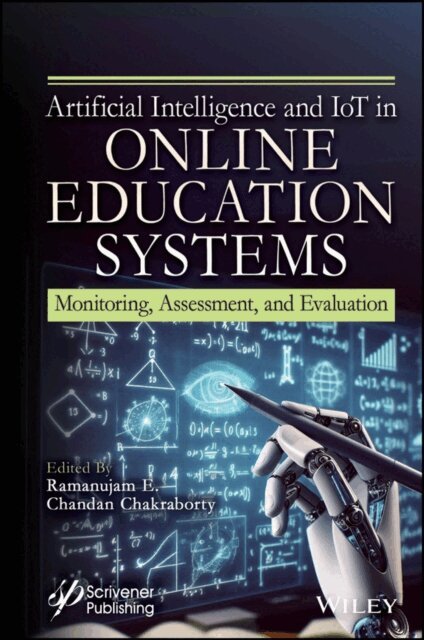
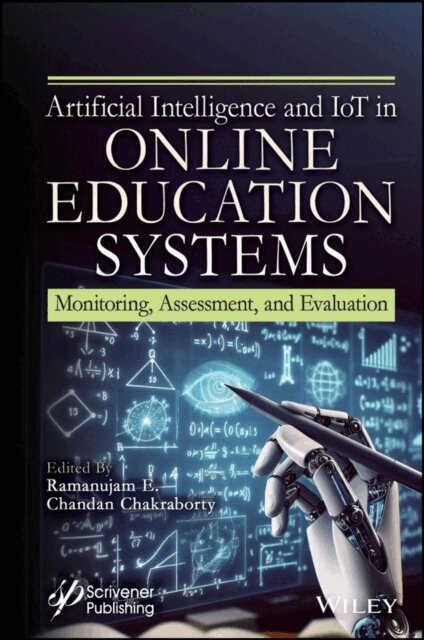
      Artificial Intelligence and IoT in Online Education Systems

      Monitoring, Assessment, and Evaluation

      AvRamanujam E.,Chandan Chakraborty

      Inbunden, Engelska, 2025

      2 740 kr

      Beställningsvara. Skickas inom 5-8 vardagar. Fri frakt över 249 kr.

      Beskrivning

      Design the future of digital education with this essential book that provides a comprehensive guide to leveraging AI and IoT to create dynamic, inclusive virtual learning environments and effectively implement advanced online proctoring solutions. The rapid development of online learning environments and virtual classrooms, coupled with the need for scalable, personalized education systems, has positioned AI as a key enabler of modern education. The advent of these technologies promises to reshape how we deliver, monitor, assess, and evaluate online learning. This book explores these critical intersections of technology and education, emphasizing the potential of AI and IoT not only to optimize outcomes but also to create more dynamic, responsive, and inclusive virtual learning environments. Focusing on problems that can be solved through computer vision, video and audio streaming, class imbalance data, audio-to-text processes, multi-modal and bi-modal aspects, hand-written strokes, text similarity, biomedical ethics, and advancements in machine and deep learning algorithms, this book comprehensively explores the effectiveness of these technologies in online proctoring. This essential guide will equip educators, technologists, administrators, and policymakers with the knowledge and perspective necessary to leverage these technologies effectively. Readers will find the book: Explores various AI tools and techniques adopted for online proctoring examination systems;Covers critical analytical aspects of AI-assisted systems;Describes a variety of experiments leading to uni- and multi-modal systems and IoT-based architecture using computer vision, machine learning, and deep learning algorithms;Discusses the quality assurance and psychological aspects to preserve ethics during examinations.Audience Educational researchers and policymakers, as well as computer scientists working in AI, machine learning, data science, deep learning, computer vision, and statistics.

      Produktinformation

      • Utgivningsdatum:2025-12-12
      • Vikt:998 g
      • Format:Inbunden
      • Språk:Engelska
      • Antal sidor:560
      • Förlag:John Wiley & Sons Inc
      • ISBN:9781394302635

      Utforska kategorier

      • Artificiell intelligens inom Data och IT

      Mer om författaren

      Ramanujam E., PhD is an Assistant Professor in the Department of Computer Science and Engineering at the National Institute of Technology Silchar, Assam, India. He has contributed significantly to human activity recognition, especially online education and examinations, spam detection, and feature engineering across various domains. His areas of expertise include artificial intelligence, machine learning, deep learning, and ambient intelligence. Chandan Chakraborty, PhD is a Professor in the Department of Computer Science and Engineering at the National Institute of Technical Teachers’ Training and Research, Kolkata, West Bengal, India. He has more than 100 peer-reviewed publications in top journals and holds several patents. He specializes in artificial intelligence, machine learning, deep learning, and biomedical engineering.

      Innehållsförteckning

      • Preface xixPart 1: Introduction to AI Tools for Online Proctoring 11 AI Literacy and Online Proctoring: Educational Perspectives and Strategies 3Prihana Vasishta, Gitanjaly Chhabra and Noosha Mehdian1.1 Introduction 41.2 AI in Education — Theoretical Framework 61.3 AI-Assisted Educational Practices 81.3.1 Hyper Sentient Syllabus 81.3.2 Role of AI in Redesigning Assessment Strategies 91.3.3 Framework for Adopting and Implementing AI-Assisted Online Proctoring Systems 111.3.4 Ethical Implications of AI in Online Proctoring 191.4 Strengthening Teacher Preparation for AI Literacy in Higher Education Curricula 191.4.1 Updating Educator’s Knowledge of AI Concepts 191.4.2 Utilizing AI-Enhanced Technologies for Personalized Learning 201.4.3 Integrating AI Literacy Education with the TPACK Framework 201.5 Conclusion and Implications 21References 222 Next-Generation Online Education Integrating AI and IoT for Superior Management and Evaluation 27Aniket Kumar, Rajesh Kumar, Akshay Kumar, Prashant D. Yelpale and Aman Thakur2.1 Introduction 282.2 AI and IoT in Online Education Systems 312.2.1 Overview 312.2.2 Smart Online Education Model 332.2.3 Smart Online Classroom 342.2.4 Smart Online Labs 362.2.5 Smart Online Tutoring 362.2.6 Smart Simulation 372.2.7 Smart Online Evaluation 382.2.8 Smart Online Security and Content Adaptation 382.2.9 Application and Infrastructure Levels 412.3 Functional Structure of IoT System 412.3.1 Online Exam Management 422.3.2 Automated Correction of Exam Papers 432.3.3 Student’s Performance Calculation 442.4 Emerging Technologies in the Online Education System 452.4.1 AI Technologies 452.4.2 AR, VR 482.4.3 Big Data Technology 492.4.4 Robotics and IoT Labs 492.4.5 Cloud Computing Technology 502.4.6 Machine Learning Technology 502.4.7 Deep Learning Technology 512.4.8 IoT Technology 512.4.9 5G Technology 522.4.10 Learning Management System (LMS) 522.5 Challenges of AI and IoT in Online Education System 542.6 The Future Vision of AI and IoT in Online Education Systems 562.6.1 Emerging Trends and Future Applications 572.7 Conclusion 58References 59Part 2: Ethics of Using AI Tools in Education 633 Ethical Integrity in Educational Contexts 65C. Santhiya, Ravi Prasath S., Suriya Navaneetha Krishnan K. and Kannappan R.3.1 Introduction 663.2 Types and Methods of Fake Credentials 673.2.1 Counterfeit Diploma and Degrees 673.2.2 Fake Transcripts 683.2.3 Misrepresentation of Professional Licenses and Certifications 683.2.4 Online Credential Verification Scams 693.2.5 Impersonation of Genuine Graduates 703.2.6 Use of Photoshop and Graphic Design Software 713.3 Consequences of Fake Credentials 723.3.1 Legal Consequences 733.3.2 Educational and Professional Consequences 753.3.3 Financial Consequences 763.3.4 Loss of Trust 773.3.5 Long-Term Implications 803.3.6 Ethical and Psychological Consequences 813.3.7 Public Shame 833.4 Challenges in Detecting and Verifying Fake Credentials 843.5 Role of Technology in Facilitating and Combating Fake Credentials 863.6 Impact on Organizational Reputation and Public Trust 903.7 Multi-Layered Approach to Tackling the Problem 913.8 Innovative Solutions and Technologies 943.9 Promoting Awareness and Education 963.10 Future Trends and Strategies 993.11 Conclusion 99References 1004 Psychological and Ethical Aspects of Using Intelligent Systems in Online Proctoring 103Mukesh Chaware and Sreejith Alathur4.1 Introduction 1044.1.1 Importance of Proctoring in Online Examination 1074.1.2 Briefing on Intelligent Systems (AI, BD, IoT) 1084.1.3 Relevance of Intelligent Systems to Online Proctoring 1114.2 The Advent of AI in Online Proctoring 1124.2.1 The Need for AI in Online Proctoring 1124.2.2 Evolution and Current State of AI Applications in Online Proctoring 1144.3 The Prevailing Situation 1164.4 Psychological Aspects 1194.4.1 User Perceptions of AI-Driven Proctoring 1194.4.2 Impact on Test Taker Stress and Performance 1214.4.3 Privacy Concerns and their Psychological Implications 1224.5 Ethical Aspects 1244.5.1 Ethical Implications of Using AI for Surveillance 1254.5.2 Potential for Bias and Discrimination in AI Proctoring 1264.6 Discussion and Recommendations 1274.6.1 Strategies for Ethically Implementing AI in Online Proctoring 1274.6.2 Recommendations for Addressing Psychological Concerns 1284.7 Conclusion 128Acknowledgments 131References 131Part 3: State-of-the-Art AI Tools and Techniques for Online Proctoring 1375 A Comprehensive Review of Deep Learning Models on Detecting Student Emotions in Online Education 139Thangavel Murugan, A.M. Abirami and P. Karthikeyan5.1 Introduction 1405.1.1 Research Overview 1405.1.2 Importance of Detecting Student Emotions in Online Education 1415.1.3 Purpose of the Literature Review 1415.2 Understanding Student Emotions 1425.2.1 Definition of Emotions 1425.2.2 The Role of Emotions in Learning 1425.2.3 Significance of Detecting Student Emotions in Online Education 1435.3 Overview of Deep Learning 1435.3.1 Definition of Deep Learning 1435.3.2 Benefits of Deep Learning in Educational Research 1435.3.3 Applications of Deep Learning in Detecting Emotions 1445.4 Literature Review 1445.4.1 Studies on Detecting Student Emotions in Online Education 1455.4.1.1 Methods Used for Emotion Detection 1465.4.1.2 Effectiveness of Different Approaches 1475.4.2 Applications of Deep Learning in Emotion Detection 1485.4.2.1 Algorithms Used in Deep Learning for Emotion Recognition 1495.4.2.2 Success Stories and Challenges Faced in Using Deep Learning 1505.4.2.3 Proposed Model for Student Behavior Analysis in Classroom 1515.4.2.4 Literature Summary and Analysis 1535.5 Challenges in Detecting Student Emotions 1535.5.1 Technical Challenges 1565.5.1.1 Data Collection and Processing 1565.5.1.2 Model Accuracy and Reliability 1565.5.2 Ethical Considerations 1575.5.2.1 Privacy Concerns 1575.5.2.2 Bias in Emotion Detection Algorithms 1575.6 Future Directions and Recommendations 1585.7 Conclusion 159References 1606 Deep Learning Models for Monitoring Student’s Emotion During the Class: A Comprehensive Survey 165Vamshi Krishna B., N. Padmavathy and Ajeet Kumar6.1 Introduction 1666.2 Literature Survey 1686.2.1 Deep Learning Approach 1696.2.2 Transfer Learning 1716.3 Research Background 1786.3.1 Computer Vision 1786.3.2 Internet of Things (IoT) 1816.3.3 Deep Learning Architectures 1836.3.3.1 ConvNet 1846.3.3.2 Recurrent Neural Network 1866.3.4 Pre-Trained Models 1896.4 Prediction Models for Tracking and Monitoring Students 1936.4.1 Emotion Recognition Models 1946.4.2 Learning Engagement Models 1966.5 Conclusion 197References 1987 Comparative Analysis of Head Pose Estimation and Eye Gaze Tracking with Machine Learning Classifiers for Proctored Online Examination 203Rajarajeswari P., Shivagangatharani B. and Karthikeyan Jothikumar7.1 Introduction 2047.1.1 Head Pose Estimation 2047.1.2 Eye Gaze Tracking 2047.1.3 Relevance of Head Pose Estimation and Eye Gaze Tracking in Online Proctored Exams 2067.2 Benchmark Datasets for Head Pose and Eye Gaze Tracking 2077.3 Apparatus for Estimating Head Pose and Tracking Eye Gaze 2147.4 Models for Head Pose Estimation and Eye Gaze Tracking 2177.4.1 Geometrical Method Based on Interest Points 2177.4.2 Gradient Boosting Regression 2187.4.3 Genetic Algorithm 2197.4.4 Linear Discriminant Analysis (LDA) and Discrete Wavelet Transform (DWT) 2207.4.5 Aff Net 2217.4.6 FSA-Net 2237.4.7 Multi-Modal Convolutional Neural Network 2237.5 Comparison of Models for Head Pose Estimation and Eye Gaze Tracking 2247.6 Conclusion 226References 2278 Uni- and Multi-Modal Aspects in the Online Proctoring System: Survey 231Diana Moses and Dainty M.8.1 Introduction 2328.1.1 Online Proctoring Techniques 2358.1.2 Concerns in Online Proctoring Systems 2378.2 AI-Based Online Proctoring System 2408.2.1 Online Proctoring Process 2408.2.1.1 Proctoring Prior to Examination 2418.2.1.2 Proctoring During Examination 2438.2.1.2(a) Examinee Behavior Screening 2448.2.1.2(b) Examinee System Screening 2478.2.1.2(c) Examinee Environment Screening 2488.3 Existing AI-Based Online Proctoring Frameworks 2498.4 Challenges in AI-Based Online Proctoring Frameworks 2538.5 Future Scope of AI-Based Proctoring Frameworks 2568.6 Conclusion 259References 2609 Advancing Academic Integrity: AI and IoT in Enhancing Monitoring for Online Examination Systems 265J. Shanthalakshmi Revathy and J. Mangaiyarkkarasi9.1 Introduction 2669.2 Predictive Analysis of Student Performance 2679.2.1 Data Collection 2699.2.2 Data Preprocessing 2699.2.3 Feature Engineering 2709.2.4 Model Selection and Training 2709.2.5 Model Evaluation 2709.2.6 Model Deployment 2719.3 Authentication of Students 2719.4 Supervision of Examination 2729.4.1 Plagiarism Detection 2739.4.2 Fraud Detection and Malpractice Prevention 2759.4.3 Multiple Account Detection 2759.4.4 E-Cheating Intelligence Agents 2769.4.5 Detection of Liveliness Spoofs 2779.4.6 Anomaly Detection 2779.5 Challenges in Monitoring 2799.5.1 Privacy Concerns 2819.5.2 Security Challenges 2819.5.3 Fairness Consideration 2829.6 Conclusion 283References 28410 Optimizing Academic Excellence: Leveraging Advanced AI Tools for Assessment and Evaluation in Modern Online Examination Systems 287Manikandakumar M., Karthikeyan P., Senthamarai Kannan K., Arul V. and Vigneshwaran T.10.1 Introduction 28810.2 Role of AI in Online Examination Systems 28910.2.1 Benefits of AI in Assessments 29010.2.2 Personalization of Assessments 29010.2.3 Efficiency and Time-Saving 29110.2.4 Fairness and Objectivity 29110.2.5 Scalability and Accessibility 29110.2.6 Enhanced Security and Integrity 29110.2.7 Data-Driven Insights 29210.2.8 Continuous Learning and Improvement 29210.3 Advanced AI Tools for Assessment 29310.3.1 Knewton 29310.3.2 DreamBox 29510.3.3 Edpuzzle 29710.3.4 Squirrel AI 30010.3.5 ProctorU 30110.3.6 Smart Sparrow 30310.3.7 MoodleNet 30410.3.8 Canvas by Instructure 30610.4 Implementing AI Tools in Online Examination Systems 30810.4.1 Needs for AI in Online Examination Systems 30810.4.2 Steps for Implementing AI Tools 30910.4.3 Advantages of AI in Online Examinations 30910.4.4 Challenges of Implementing AI 31010.5 Future Trends 31010.6 Conclusion 311References 311Part 4: Case Studies: AI and IoT in Education, Online Proctoring 31511 Evaluation of Web Design Deficiency and Anxiety Constructs, with Computer‐Based Test: Use Case in India 317Juby Thomas, Ashique Ali K.A., Vishnu Achutha Menon, Sateesh Kumar T.K. and Lijo P. Thomas11.1 Introduction 31811.2 Review of Literature 31911.3 Methodology 32511.4 Results 32811.4.1 Structural Model 33111.5 Discussions 33511.6 Conclusion 338Acknowledgment 339References 33912 AI for Learners’ Emotions — A Perspective Approach of Analysis During Online Assessments 343S.J. Sheeba Sharon, R. Mary Sophia Chitra and C. Santhiya12.1 Introduction 34412.2 Literature Survey 34612.3 Role of Emotions in Learning 34912.4 Challenges in Online Assessments 35012.5 The Rise of AI in Education 35112.6 AI Tools for Monitoring Learner Emotions 35112.6.1 Facial Expression Analysis Tools 35112.6.2 Voice Analysis Tools 35212.6.3 Sentiment Analysis and NLP Tools 35212.6.4 Physiological Monitoring Tools 35212.7 Methodology 35312.7.1 Selection of Appropriate Tools 35412.7.2 Data Collection and Consent 35412.7.3 Integration with Assessment Platforms 35412.7.4 Training for Educators and Administrators 35512.7.5 Pilot Testing and Evaluation 35512.7.6 Full Implementation and Ongoing Monitoring 35512.7.7 Addressing Ethical and Privacy Concerns 35512.7.8 Feedback and Continuous Improvement 35612.8 Advantages of Using AI Tools 35612.9 Possible Implementational Risks 35712.10 Demerits and Future Scope 35812.11 Conclusion 359References 35913 Implementing Personalized Adaptive Online Assessments through Deep Learning 365Fawad Naseer, Noreen Sattar, Akhtar Rasool, Kamel Jebreen and Usman Khalid13.1 Introduction 36613.1.1 The Need for Adaptive Assessment Systems 36613.1.2 The Role of DL in Education 36713.1.3 Research Context and Case Studies 36713.2 Literature Review 36813.3 Methodology 37013.3.1 Description of the DL Algorithms and Models 37013.3.1.1 Convolutional Neural Networks (CNNs) 37113.3.1.2 Recurrent Neural Networks (RNNs) 37113.3.1.3 Long Short-Term Memory (LSTM) Networks 37213.3.2 Data Collection and Pre-Processing Methods 37313.3.2.1 Data Collection 37313.3.2.2 Data Pre-Processing 37413.3.3 Steps Involved in Developing and Implementing the Adaptive Assessment System 37513.3.3.1 Model Design and Training 37513.3.3.2 Adaptive Assessment Generation 37613.3.3.3 Real-Time Feedback System 37613.3.3.4 Implementation and Testing 37713.4 Case Studies 37813.4.1 Case Study 1: Beaconhouse International College (bic) 37813.4.1.1 Background and Context 37813.4.1.2 Implementation Process 37813.4.1.3 Key Findings 38013.4.1.4 Challenges and Solutions 38113.4.2 Case Study 2: Government College University Faisalabad (GCUF) 38113.4.2.1 Background and Context 38113.4.2.2 Implementation Process 38213.4.2.3 Key Findings 38213.4.2.4 Challenges and Solutions 38313.5 Results and Discussion 38413.5.1 Improvement in Learning Outcomes 38413.5.2 Increase in Engagement Rates 38613.5.3 Reduction in Exam-Related Anxiety 38813.5.4 Enhanced Overall Performance 39013.5.5 Comparative Analysis of the Case Studies 39213.5.5.1 Similarities 39213.5.5.2 Differences 39213.5.6 Future Research Directions 39413.5.7 Limitations of the Study 39513.6 Conclusion 395References 39614 Generative Artificial Intelligence for Online Education Systems 399Munmi Dutta and Vinay Kumar Goyal14.1 Introduction 40014.2 The Types of GAI Models 40114.3 Working of GAI 40114.3.1 Generative Modeling 40214.3.2 GANs 40314.3.3 Transformer-Based Models 40414.4 Use Cases of GAI 40614.5 The Limitations of GAI 40714.6 Adaptive Learning Platforms 40814.7 GAI and Adaptive Learning Intersection 40914.7.1 Potential Benefits of Integrating GAI and Adaptive Learning 40914.7.2 Some Examples of Successful Integration 40914.7.3 Future Trends of GAI and Adaptive Learning 41014.7.4 Prospective Developments in GAI for the Education Sector 41114.8 Implications for Educators and Learners 41214.9 GAI Effect on Workforce 41214.10 GAI Has Already Transformed Education 41314.11 Effect on the Participation and Performance of Learners 41414.11.1 Develop Their Expressiveness and Creativity 41414.11.2 Develop Their Information Literacy and Research Abilities 41414.11.3 Improve Their Capacity for Self-Control and Metacognition 41514.12 The Education Sector’s Challenges with GAI 41514.12.1 Challenge Cause Due to Plagiarism 41514.12.2 Equity 41514.12.3 Privacy 41614.12.4 Efficacy 41614.12.5 Detection 41714.12.6 Appropriate Use 41714.12.7 Authorship 41714.13 Policymakers and Educators Need to Reconsider the Current Educational Paradigm 41814.14 Access and Equity Comes First 41814.15 United Nations Educational, Scientific and Cultural Organization’s (UNESCO’s) Policy for Reshaping Education by Using GAI 41914.16 Conclusion 420References 42015 Level of Academic Misconduct During Online Unproctored Examination with Perception of Engineering Students in India 423S. Sasikala, G. Vidyasree, C. Selvan and R. Ragunath15.1 Introduction 42415.2 Literature Review 42515.3 Research Methodology 42815.3.1 Sampling 43015.3.2 Data Analysis and Findings 43215.3.3 Relative Importance 43615.4 Conclusion 439References 43916 Student Activity Monitoring Using Hybrid Deep Learning Technique During Online Examinations 443Devi Naveen, Akshitha Katkeri, Manikantha K., A.K. Sreeja and Satish Kumar V.16.1 Introduction 44416.1.1 Motivations 44516.1.2 Objective and Design 44616.1.3 Contributions 44716.2 Related Works 44716.2.1 Image Information Systems (IIS) 44716.2.2 Multi-Modal System (MMS) 44916.2.3 Behavior-Based Analysis 45016.3 Methodology — The Theoretical Foundation of the Proposed Model 45116.3.1 Dataset Collection 45116.4 Experimental Results and Discussion 45616.5 Conclusion and Future Work 460References 46117 Multicue Facial Emotion Expression Using Lightweight Deep Learning Models 465S. Hemaswathi, P. Rajkumar, N. Mohan Prabhu and R. Dhivya17.1 Introduction 46617.1.1 Types of Facial Expression and Its Features 46717.2 Related Works 46917.3 Materials and Method 47217.3.1 Face and Facial Landmark Detection 47417.3.2 Convolution Neural Network (ConvNEt) Architecture 47517.3.3 VGG-16 Architecture 47617.3.4 InceptionV3 Architecture 47717.3.5 ResNet 50 47717.4 Experimental Result Analysis 47817.5 Conclusion 482References 482Part 5: Challenges and Future Scope of AI in Online Proctoring 48518 Machine-Learning-Based Online Assessment of Students’ Academic Performance in Moodle Learning Management System 487Reshma V.K., Nisha A.K., Radhika K. Manjusha, Divya P. and Sundaraselvan S.18.1 Introduction 48818.2 Literature Review 49118.3 Research Methodology 49318.3.1 Dataset Acquisition 49418.3.2 Dataset Pre-Processing 49518.3.3 Data Analysis 49518.3.4 Linear Regression 49618.3.5 Correlation 49618.3.6 Multiple Regression 49618.3.7 Lasso Regression 49618.4 Results and Discussion 49618.4.1 Correlation 49718.4.2 Scatter Plot 49818.4.3 Linear Regression 50018.4.4 Multiple Linear Regression 50418.4.5 Lasso Regression 50818.5 Conclusion 50918.6 Future Research 510References 51119 Issues and Challenges of Using Artificial Intelligence Proctoring Tools 515V. Senthil19.1 Introduction 51519.2 Literature Review 51719.2.1 Features of AI-Based Online Proctoring Tools 52019.3 Issues and Challenges of Using AI Proctoring Tools 52219.4 Case Study 52419.5 Conclusion 527References 529Index 533
      Hoppa över listan

      Du kanske också är intresserad av

      Chandan Chakraborty, Ramanujam E. - Artificial Intelligence and IoT in Online Education Systems, E-bok

      Artificial Intelligence and IoT in Online Education Systems

      Chandan Chakraborty, Ramanujam E.

      E-bok
      2025

      3 447 kr

      Chandan Chakraborty, Ramanujam E. - Artificial Intelligence and IoT in Online Education Systems, E-bok

      Artificial Intelligence and IoT in Online Education Systems

      Chandan Chakraborty, Ramanujam E.

      E-bok
      2025

      3 412 kr

      Måns Petter Zelmerlöw - När allt faller, Inbunden
      • -12%

      När allt faller

      Måns Petter Zelmerlöw

      Inbunden, 2026

      229 kr259 kr

      Peter Englund - Om att misslyckas, Inbunden
      • -17%

      Om att misslyckas

      Peter Englund

      Inbunden, 2026

      4,0 utav 5 stjärnor. Totalt antal röster:(9)

      199 kr239 kr

      Roland Paulsen - Avbegåvad : en essäberättelse om arv och miljö, Inbunden
      • -15%

      Avbegåvad : en essäberättelse om arv och miljö

      Roland Paulsen

      Inbunden, 2026

      225 kr265 kr

      Klara Peters Bastin - SIGNERAD - Om julens wälgång, Inbunden
      • Signerad!

      SIGNERAD - Om julens wälgång

      Klara Peters Bastin

      Inbunden, 2026

      249 kr

      Vendela Blomström, Jeanna Wennerberg - Akademiskt läsande och skrivande, Häftad

      Akademiskt läsande och skrivande

      Vendela Blomström, Jeanna Wennerberg

      Häftad, 2026

      421 kr

      Åsa Jonsson - Helt orimligt : en hemmasittares berättelse, Kartonnage
      • Nyhet

      Helt orimligt : en hemmasittares berättelse

      Åsa Jonsson

      Kartonnage, 2026

      249 kr

      Anna Meeuwisse, Hans Swärd, Sune Sunesson, Marcus Knutagård - Socialt arbete : en grundbok, Inbunden

      Socialt arbete : en grundbok

      Anna Meeuwisse, Hans Swärd, Sune Sunesson, Marcus Knutagård

      Inbunden, 2024

      4,0 utav 5 stjärnor. Totalt antal röster:(1)

      581 kr

      Harlan Coben - Se dig inte om, Pocket
      • -30%

      Se dig inte om

      Harlan Coben

      Pocket, 2026

      69 kr99 kr