• Fri frakt över 249 kr
  • •
  • Snabba leveranser
  • •
  • Billiga böcker
Kundservice

Du är på sajten för privatpersoner.

Företag, bibliotek eller offentlig verksamhet?

Du handlar på classic.bokus.com, där alla dina funktioner finns intakta.
Till classic.bokus.com
Bokus logotyp. Gå till startsidan.
  • Erbjudanden
  • Student
  • Topplistor
  • Barn & ungdom
  • Bokus Play
  • E-böcker
  • Ljudböcker
  • Pocketböcker
  • Spel & pussel

Upp till 25% på utvalda nyheter →

Sidfot

Mina sidor

    Hjälp

    • Kundservice
    • Vanliga frågor och svar
    • Frakt och leverans
    • Retur vid ångerrätt
    • Reklamera vara
    • Betalning
    • Köpvillkor
    • Allmänna villkor
    • Information om webbplatsens tillgänglighet

    Om Bokus

    • Om oss
    • Pressrum
    • För studenter
    • För företag
    • För bibliotek och offentlig verksamhet
    • För leverantörer
    • Hållbarhet

    Populärt

    • Aktuella erbjudanden
    • Presentkort
    • Studentlitteratur
    • Nya böcker
    • Topplistor
    • Signerade böcker
    • Engelska böcker

    Inspiration

    • Boktips
    • BookTok
    • Populära bokserier
    • Barnbokskaraktärer
    • Populära författare
    Logotyp för Bokus
    Följ oss på Facebook (extern länk)Följ oss på Instagram (extern länk)Följ oss på YouTube (extern länk)Följ oss på TikTok (extern länk)
    bokus @ CookiesAnpassa cookiesIntegritetspolicyKöpvillkor
    Till Citymail hemsida (extern länk)Till Budbee hemsida (extern länk)Till Postnord hemsida (extern länk)Till Schenker hemsida (extern länk)Till Early Bird hemsida (extern länk)Till Walleys hemsida (extern länk)
    1. Naturvetenskap och teknik
    2. Teknik och industri
    3. Teknik: allmänt
    • Nyhet

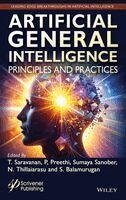
    Artificial General Intelligence

    Principles and Practices

    AvT. Saravanan,P. Preethi

    Inbunden, Engelska, 2026

    2 279 kr

    Beställningsvara. Skickas inom 5-8 vardagar. Fri frakt över 249 kr.

    Beskrivning

    This comprehensive guide provides an extensive overview of the key theories, methodologies, and applied frameworks that enable AGI systems to exhibit aspects of human intelligence. As the role of artificial intelligence grows in our everyday lives, so does the need for AI with greater capabilities. Unlike narrow AI, confined to specific tasks, artificial general intelligence seeks human-like adaptability, reasoning, and learning across domains. Integrating cognitive, mathematical, and computational concepts, it presents multidimensional solutions to create more natural human-AI interactions. This book examines the theoretical foundations, cognitive architectures, and practical methodologies shaping artificial general intelligence. It highlights the significance of human-like emotional intelligence in AI and its potential to create more natural, empathetic, and intuitive human-AI interactions, using techniques such as facial expression analysis, speech emotion recognition, and physiological signal processing. From healthcare to customer service, affective AI is being used to enhance user experiences by tailoring interactions to the emotional states of individuals. The book also discusses the ethical dilemmas posed by affective AI, such as emotional manipulation, bias in emotion detection, and the impact of AI-driven emotional decisions on human behavior. Balancing rigor with practical insight, the volume provides a roadmap for researchers, practitioners, and policymakers to study artificial general intelligence’s evolution and transformative potential. Readers will find the volume: Discusses different applications of affective artificial intelligence across various industries;Introduces the fundamental concepts of reinforcement learning for different applications;Presents the state-of-the-art of transfer learning analysis through contributions from industry and academia.Audience Engineering research scholars, students, IT professionals, network administrators, artificial intelligence and deep learning experts, and government research agencies.

    Produktinformation

    • Utgivningsdatum:2026-07-29
    • Format:Inbunden
    • Språk:Engelska
    • Antal sidor:480
    • Förlag:John Wiley & Sons Inc
    • ISBN:9781394422678

    Utforska kategorier

    • Teknik: allmänt inom Naturvetenskap och teknik

    Mer om författaren

    T. Saravanan, PhD is an Assistant Professor at the Gandhi Institute of Technology and Management, Bengaluru, India with more than ten years of teaching experience. He has published many research papers, book chapters, and Indian patents. His research interests include computer networks, fuzzy logic, and wireless sensor networks. P. Preethi, PhD is an Associate Professor in the Department of Computer Science and Engineering, Kongunadu College of Engineering and Technology, Trichy, Tamil Nadu, India. She has six books and has published 28 articles in international journals and conferences. Her areas of interest include cloud computing, network security, and machine learning. Sumaya Sanober, PhD works in the Computer Science Department at Old Dominion University, Virginia, United States. She has published many articles in national and international journals and conferences, and serves as a reviewer on multiple boards. Her research interests include machine learning, artificial neural networks, pattern recognition, web services, cloud computing, and testing tools. N. Thillaiarasu, PhD is an Associate Professor in the School of Computing and Information Technology, REVA University, Bangalore, India, with more than 12 years of teaching experience. He has more than 75 publications to his credit, including articles, books, and book chapters. His areas of interest include cloud computing, security, IoT, and machine learning. S. Balamurugan, PhD is the Director, Intelligent Research Consultancy Services, Coimbatore, Tamil Nadu, India. He has published 75 books, 300 papers in international journals and conferences, and 300 patents. With 20 years of research on various cutting-edge technologies, he provides expert guidance in technology forecasting and decision-making for leading companies and startups.

    Innehållsförteckning

    • Series Preface xxiPreface xxiiiPart I: Theoretical and Cognitive Foundations of AGI 11 A Unified Framework for Defining Artificial General Intelligence through Cognitive and Theoretical Perspectives 3Latha. P., K. Sivakami, K. Selvavinayaki, V. Devi and Karthick R.1.1 Introduction 41.2 Related Work 51.3 Proposed Methodology 91.4 Evaluation of the Unified AGI Framework 151.5 Conclusion 192 The Role of Theoretical Intelligence in Guiding the Development of Robust Artificial General Intelligence Systems 23R. Mekala, Abiramasundari S., A.S. Narmadha, K. N. Jayapriya, M. Maheswaran and Karthikha Sree J.B.2.1 Introduction 242.2 Related Work 282.3 Proposed Methodology for Developing Theoretically Grounded AGI Systems 332.4 Results 362.5 Conclusion 403 A Comparative Analysis of Cognitive Models Used in Symbolic and Neural Architectures for AGI 43Beaulah David, Vanitha. G., K. Kalpana, P. Gokila, N. Logeshwari and Varnikha Sree J.B.3.1 Introduction 443.2 Related Work 483.3 Proposed Methodology for Developing Explainable AGI through Hybrid Cognitive Architectures 523.4 Results 563.5 Conclusion 59Part II: Cognitive Architectures and Reasoning Mechanisms 634 Exploring the Role of Cognitive Architectures in Building Human-Like Artificial General Intelligence Systems 65Gokilavani A., Abhirami J. S., V. Devi, Gokila Deepa G. and Janani S.4.1 Introduction 664.2 Related Work: Evolution and Divergence in CAs for AGI 694.3 Proposed Methodology 744.4 Results 794.5 Conclusion 835 Symbolic and Subsymbolic Reasoning Integration for Flexible and Context-Aware AGI Cognitive Processes 87Saisuman Singamsetty5.1 Introduction 885.2 Related Work 925.3 Proposed Methodology 965.4 Results 100Contents xi5.5 Conclusion 1036 Developing Common-Sense Reasoning Capabilities in AGI Using Hybrid Neural-Symbolic Learning Approaches 107Arunkumar Medisetty and R. Asokan6.1 Introduction 1086.2 Related Work 1136.3 Proposed Methodology 1176.4 Results 1206.5 Conclusion 1237 Designing Explainable Artificial General Intelligence through Transparent and Interpretable Reasoning Mechanisms 127Sudheer Singamsetty7.1 Introduction 1287.2 Related Work 1317.3 Proposed Methodology 1377.4 Results 1407.5 Conclusion 144Part III: Learning Paradigms for Generalization and Adaptability 1478 Self-Supervised Learning Approaches for Enhancing the Adaptability of Artificial General Intelligence Models 149R. Pushpalakshmi, G. Kalaiarasi, C. P. Thamil Selvi, Nithya C. and D. Satheesh Kumar8.1 Introduction 1508.2 Related Work 1538.3 Proposed Methodology: SSL-Based Framework for AGI Adaptability 1588.4 Results 1608.5 Conclusion 1649 Meta-Learning and Transfer Learning Techniques for Enabling Generalization in AGI Across Multiple Domains 167B. Nagarajan, A. Jayanthi, Wasim Raja A., E. Angel Anna Prathiba, Sika K. and Kiran Kumar Thoti9.1 Introduction 1689.2 Related Work 1729.3 Proposed Methodology 1789.4 Results 1829.5 Conclusion 18610 Human-Level Generalization in AGI through Interactive Meta-Learning and Environmental Adaptation 189Shylaja Chityala10.1 Introduction 19010.2 Related Work 19410.3 Proposed Methodology 19810.4 Results 20310.5 Contextual Adaptation and Robustness under Distributional Shifts 20510.6 Explanation Utility and User Satisfaction in Learning Tasks 20610.7 Conclusion 206Part IV: Decision-Making, Uncertainty, and Reinforcement Learning 20911 Reinforcement Learning for AGI Model–Based versus Model-Free Approaches 211Shivamma D., Shaila S.G., Ramesh Chundi and Monish L.11.1 Introduction 21211.2 Fundamentals of AGI 21411.3 Model-Free Approaches in AGI 21411.4 Model-Based Approaches in AGI 21711.5 Model-Free versus Model-Based Approaches in AGI 22211.6 Conclusion 22312 InvisiDroid: Practical Evasion of ML-Based Black-Box Web Spyware Classifiers 229M. Martinaa, S. Aravindh, S. Gokulraj and M. Tamil Thendral12.1 Introduction 23012.2 Related Work 23212.3 Background 23512.4 Proposed Methodology 23612.5 Simulation Results 24212.6 Conclusions 246Part V: Multimodal Perception and Future Directions 25113 Multimodal Perception Systems for AGI: Integrating Visual, Auditory, and Linguistic Information Sources 253Tayar Yerramsetty13.1 Introduction 25413.2 Related Work 25813.3 Proposed Methodology 26213.4 Summary of Results in Multimodal Perception for AGI 26613.5 Conclusion 26914 Multimodal Learning and Perceptron—Integrating Vision, Language, and Auditory Data 273Sindhu A., Suresh Arumugam, Shaila S.G., Monish L. and Ramesh Chundi14.1 Introduction 27514.2 Fundamentals of Perceptron and Neural Networks 27614.3 Representing Different Modalities 27814.4 Building Intelligent Systems through Multimodal Representation 27914.5 Multimodal Fusion Techniques 28214.6 Architectures and Models for Multimodal Learning 28414.7 Applications of Multimodal AI 28614.8 Challenges in Multimodal Integration 28714.9 Future Directions in Multimodal Learning 28914.10 Conclusion 29115 TransGAN for Visual Anomaly Detection on Imbalanced Industrial Datasets 295Srinivasa Perumal R., Venkatasubramanian A., Premalatha M. and Braveen M.15.1 Introduction 29615.2 Related Works 29715.3 Methodology 31015.4 Experimentation and Results 31515.5 Conclusion and Future Work 32316 Recent Development of Machine Learning Models for Grape Plant Disease Detection: A Review 327M. Anuradha, G. Revathy and M. A. Mohamed Aslam16.1 Introduction 32816.2 Role of AI in Modern Farming 33016.3 An Overview of ML and DL Industry in Agricultural Sector 33216.4 Detection of Grape Leaf Disease with Transfer Learning–Based Technologies 34416.5 Results and Discussion 34816.6 Conclusion 35117 Precision Plant Pathology: Real-Time Disease Detection Using Deep Learning 353M. Martinaa, Pokkuluri Kiran Sree, S. Senthilvadivu and M. Shyamalagowri17.1 Introduction 35417.2 Related Works 35617.3 Proposed Methodology 35917.4 Experimental Results 36817.5 Conclusion 37418 Combining AI and Sensor Fusion Technology for Improving Mobility Solutions Designed for Visually Impaired Users 377M.A. Mohamed Aslam, G. Revathy, A. Gayathri, M. Krithika and B. M. Shruthi18.1 Introduction 37818.2 Various Datasets for Training DL Models 38018.3 Approaches in the Area of Item Detection and Distance Estimation 38318.4 Aids for Visual Object Recognition and Distance Measuring 39518.5 Evaluation Criteria and Comparative Study 39718.6 Object Identification at Varying Distances 39918.7 Conclusion 40019 Future of Artificial General Intelligence: Quantum Computing, Brain–Computer Interfaces, and AGI Evolution 405Youddha Beer Singh, Aditya Dev Mishra and T. Saravanan19.1 Introduction 40619.2 AGI and Quantum Computing 40919.3 AGI and BCIs 41319.4 The Development of General AI 41819.5 Future Research Directions 42319.6 Conclusion 425Abbreviations 426References 426Index 429