Häftad, Engelska, 2023
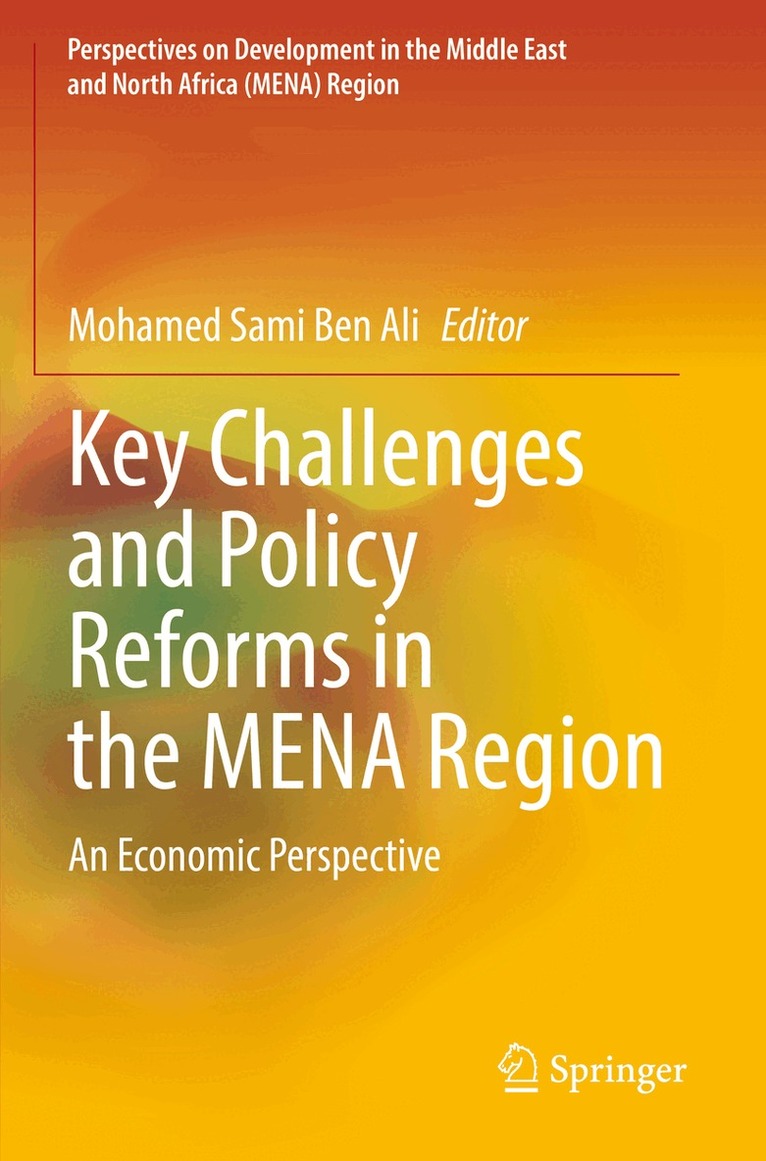
Key Challenges and Policy Reforms in the MENA Region
1800 kr
Beställningsvara. Skickas inom 10-15 vardagar. Fri frakt över 249 kr.
Beskrivning
This volume addresses economic challenges and policy reforms in the Middle East and North Africa (MENA) region. Despite important resources and strategic advantages, the region suffers from a number of economic, social, and political problems that impedes normal economic take-off. The volume contains theoretical and empirical studies covering individual countries and panel studies addressing these economic challenges. Chapters address issues such as economic growth; poverty and inequality; subsidies and public finances policies; external trade and financial liberalization; remittances,corruption, transparency, and institutions; renewable energy, digitalization, terrorism, regional integration, capital flight,money laundering, financial development and brain drain. Providing a comprehensive understanding of the most important and urgent economic challenges in the region, this volume will be a useful reference for researchers and policymakers interested in the MENA region.
Produktinformation
- Utgivningsdatum: 2023-04-23
- Mått: 155 x 235 x 10 mm
- Vikt: 271 g
- Format: Häftad
- Språk: Engelska
- Serie: Perspectives on Development in the Middle East and North Africa (MENA) Region
- Antal sidor: 161
- Förlag: Springer Nature Switzerland AG
- ISBN: 9783030921354
Utforska kategorier
Betyg & recensioner
0 recensioner
Inga recensioner tillgängliga.