Inbunden, Engelska, 2022
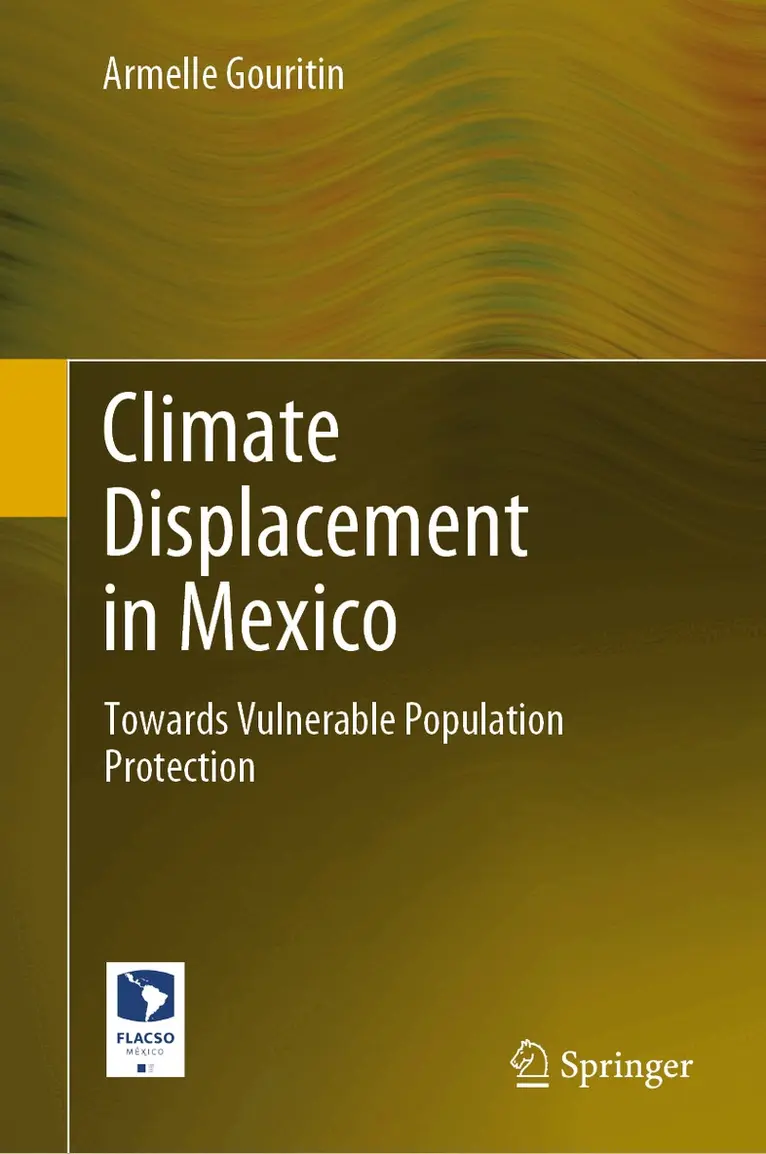
Climate Displacement in Mexico
1201 kr
Beställningsvara. Skickas inom 10-15 vardagar. Fri frakt över 249 kr.
Beskrivning
This book presents the updated results of an investigation carried out in 2019. The National Autonomous University of Mexico’s (UNAM) Climate Change Research Program (PINCC), funded the research coordinated by Armelle Gouritin. The research aims to answer the following questions: Does the Mexican legal framework and public policies address forced internal climate mobility? If not, what could be the elements of a legal framework and public policies to address the phenomenon? As the phenomenon was approached it was clear that it was extremely complex and consisted of numerous tensions that would lead to other questions throughout the research process.Climate forced internal displacement is projected as a huge-scale phenomenon in Mexico. Against this background, the book provides the first critical diagnosis of the current politico-legal Mexican framework and finds it to be lagging behind in terms of prevention and attention. The book analyses the three-level Mexican governance(federal, state and local levels), and identifies serious loopholes according to a rights-based approach that particularly focuses on women, indigenous peoples, and persons and communities with scarce economic resources. The results provide information on up-coming legislative and political processes and provide benchmarks that can be applied in other case-studies, including other national frameworks’ critical analysis.
Produktinformation
- Utgivningsdatum: 2022-11-13
- Mått: 155 x 235 x 18 mm
- Vikt: 524 g
- Format: Inbunden
- Språk: Engelska
- Antal sidor: 217
- Förlag: Springer International Publishing AG
- ISBN: 9783031103346
- Originaltitel: Migrantes climáticos en México
Utforska kategorier
Betyg & recensioner
0 recensioner
Inga recensioner tillgängliga.