• Fri frakt över 249 kr
  • •
  • Snabba leveranser
  • •
  • Billiga böcker
Kundservice

Du är på sajten för privatpersoner.

Företag, bibliotek eller offentlig verksamhet?

Du handlar på classic.bokus.com, där alla dina funktioner finns intakta.
Till classic.bokus.com
Bokus logotyp. Gå till startsidan.
  • Erbjudanden
  • Nyheter
  • Student
  • Topplistor
  • Barn & ungdom
  • Bokus Play
  • E-böcker
  • Pocketböcker
  • Spel & pussel

10% rabatt på allt med kod: NYSTART10 →

Sidfot

Mina sidor

    Hjälp

    • Kundservice
    • Vanliga frågor och svar
    • Frakt och leverans
    • Retur vid ångerrätt
    • Reklamera vara
    • Betalning
    • Köpvillkor
    • Allmänna villkor
    • Information om webbplatsens tillgänglighet

    Om Bokus

    • Om oss
    • Pressrum
    • För studenter
    • För företag
    • För bibliotek och offentlig verksamhet
    • För leverantörer
    • Hållbarhet

    Populärt

    • Aktuella erbjudanden
    • Presentkort
    • Studentlitteratur
    • Nya böcker
    • Topplistor
    • Signerade böcker
    • Engelska böcker

    Inspiration

    • Boktips
    • BookTok
    • Populära bokserier
    • Barnbokskaraktärer
    • Populära författare
    Logotyp för Bokus
    Följ oss på Facebook (extern länk)Följ oss på Instagram (extern länk)Följ oss på YouTube (extern länk)Följ oss på TikTok (extern länk)
    bokus @ CookiesAnpassa cookiesIntegritetspolicyKöpvillkor
    Till Citymail hemsida (extern länk)Till Budbee hemsida (extern länk)Till Postnord hemsida (extern länk)Till Schenker hemsida (extern länk)Till Early Bird hemsida (extern länk)Till Walleys hemsida (extern länk)
    1. Samhälle och politik
    2. Samhälle och kultur
    3. Sociala grupper och identitet

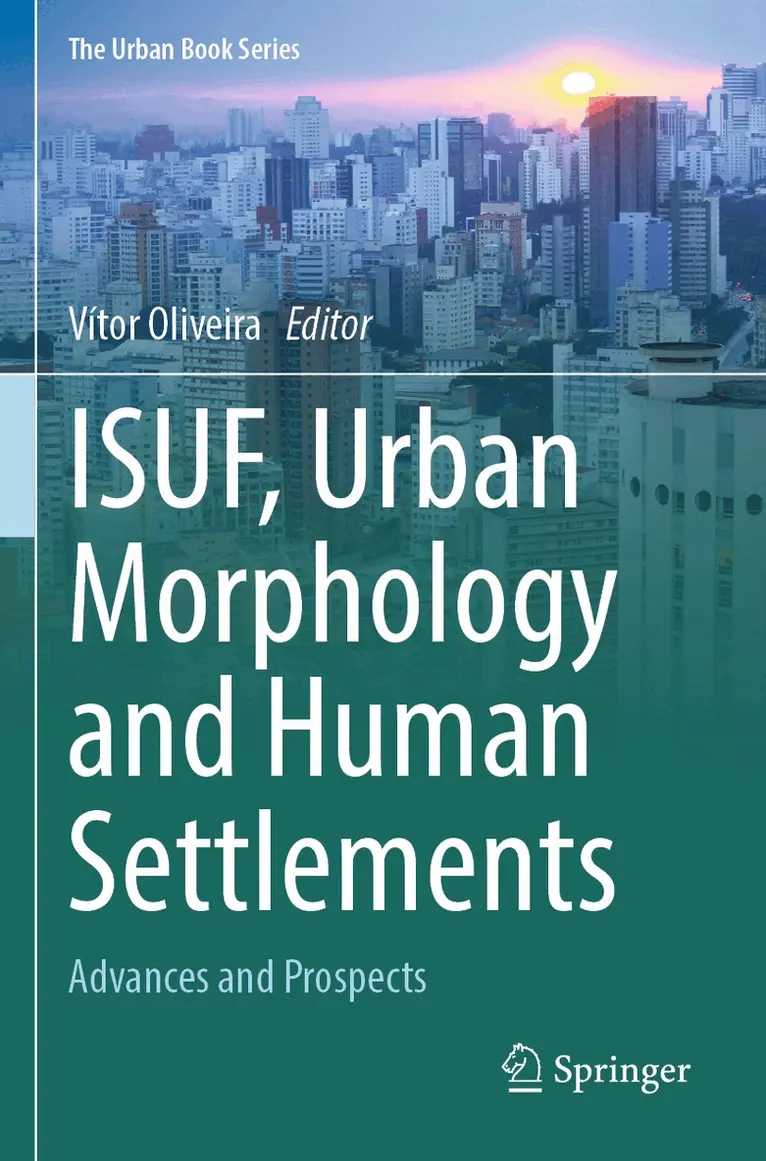
    ISUF, Urban Morphology and Human Settlements

    Advances and Prospects

    AvVítor Oliveira

    Inbunden, Engelska, 2024

    Del i serien Urban Book Series

    1 625 kr

    Beställningsvara. Skickas inom 10-15 vardagar. Fri frakt över 249 kr.

    Beskrivning

    This book offers insight into the most important scientific society on urban morphology worldwide: the International Seminar on Urban Form (ISUF). After addressing the three-decade history of ISUF, the book analyses the present and future of this scientific society, of urban morphology, and of human settlements. This timely and fundamental reflection gathers contributions from present and past leadership of ISUF since its inception in 1994. Over the last three decades, the urban world has undergone major changes: the urban population is now higher than the rural population; more than half of the world's population lives on a single continent—Asia, home to almost three billion people in China and India alone—so geographical imbalance is considerable; and while half of the urban population still lives in small cities of fewer than 300,000 inhabitants, the number of megacities has increased significantly. How does the physical form of cities in different parts of the world respond to these dynamics? Can cities preserve fundamental elements of humankind's urban heritage while accommodating changes driven by the main socioeconomic and environmental needs of today? The field of urban morphology has been continuously adjusting to the essential dynamics of its object of study. While developing and strengthening its most robust theories, concepts, and methods designed after the mid-twentieth century, urban morphology has been able to integrate innovative approaches for describing and explaining the emerging dynamics and patterns of urban form—often incorporating groundbreaking technologies for data collection, analysis, modelling, and simulation. But what is the role of urban morphology in science and society today? How effective is it in communicating a rigorous understanding of the urban landscape both to academics and researchers in other fields and to citizens in general? How successful is it in providing practitioners with relevant and useful knowledge that informs their action on cities' form and structure through spatial planning, urban design, and architecture? This book addresses these fundamental questions, offering academics, researchers, and practitioners comprehensive knowledge on human settlements, the field of urban morphology, and the role of ISUF in promoting groundbreaking morphological thought.

    Produktinformation

    • Utgivningsdatum:2024-07-04
    • Mått:155 x 235 x 21 mm
    • Vikt:672 g
    • Format:Inbunden
    • Språk:Engelska
    • Serie:Urban Book Series
    • Antal sidor:274
    • Upplaga:2024
    • Förlag:Springer International Publishing AG
    • ISBN:9783031581359

    Utforska kategorier

    • Sociala grupper och identitet inom Samhälle och politik
    • Geografi inom Naturvetenskap och teknik

    Mer om författaren

    Vítor Oliveira is President of the International Seminar on Urban Form (ISUF) and President of the Portuguese-Language Network of Urban Morphology (PNUM). He is Principal Researcher at the Research Centre for Territory Transports and Environment (CITTA / FEUP) and Professor of Urban Morphology and Urban Planning at ULP. He is Associate Editor of ‘Urban Morphology', Advisory Editor of ‘The Urban Book Series' (Springer), and Founding Editor of the ‘Revista de Morfologia Urbana' (2013-18). His latest books are ISUF, urban morphology and human settlements: advances and prospects (2024), Urban morphology: an introduction to the study of the physical form of cities (2022, 2016; translated to Chinese, Persian, Portuguese and Turkish), Morphological research in planning, urban design and architecture (2021), JWR Whitehand and the historico-geographical approach to urban morphology (2019) and Teaching urban morphology (2018). He has translated, with Cláudia Monteiro, the classic book Alnwick, Northumberland: a study in town-plan analysis by MRG Conzen.

    Innehållsförteckning

    • Part 1: Past and present.- The history of ISUF and urban morphology.- ISUF – A different type of academic society.- The Journal Urban Morphology and Jeremy Whitehand’s comments.- The historico-geographical approach to urban morphology.- Recent developments in urban morphology in Italy.- Escaping townscape – British architects and urban morphology.- Part 2: Present and future.- Mapping morphological futures – Plan-analysis and its cultural intersections.- Infrastructure and territory – Leaving a trace in the contemporary (urban) archipelago.- A cross-cultural conception of urban morphology.- Working across boundaries in urban morphology.- Social critique and design in the face of multiple crises: Directions for urban morphology.- The present and future of human settlements, urban morphology and ISUF.