Inbunden, Engelska, 2024
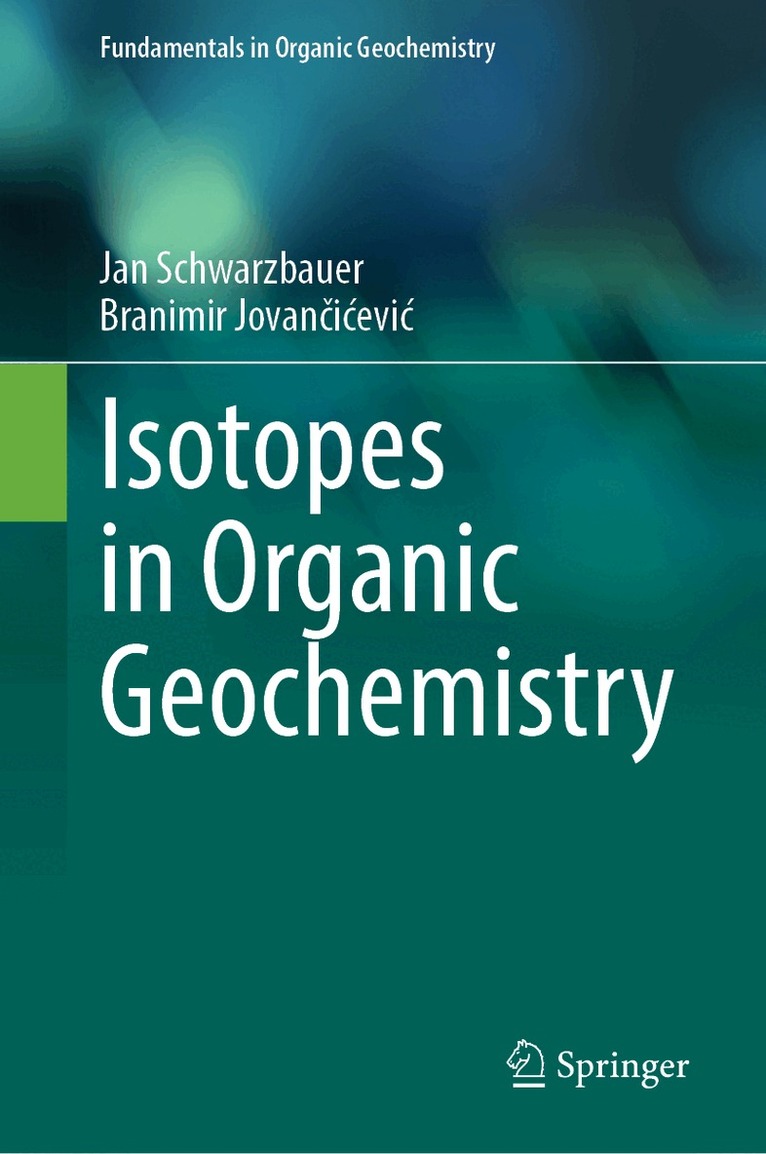
Isotopes in Organic Geochemistry
Av Jan Schwarzbauer, Branimir Jovančićević
822 kr
Beställningsvara. Skickas inom 10-15 vardagar. Fri frakt över 249 kr.
Beskrivning
This volume of the series Fundamentals of Organic Geochemistry provides an overview of isotope analysis in organic geochemistry and related fields of applied sciences. It dives deep into the basics of isotopes and isotopic fractioning processes with applications e.g. in environmental biodegradation or correlations of fossil matter. This textbook helps students understanding the geoscientific, analytical, and chemical isotope aspects in complex natural systems. Students learn the importance of isotope organic geochemistry and its relationship to fundamental processes in the geosphere and biosphere, which include e.g. photosynthesis, evaporation/precipitation within the global water cycle, biotic degradation, and biosynthesis.The book is intended for chemistry and geoscience students at BSc, MSc, and PhD levels.
Produktinformation
- Utgivningsdatum: 2024-09-11
- Mått: 155 x 235 x 10 mm
- Vikt: 237 g
- Format: Inbunden
- Språk: Engelska
- Serie: Fundamentals in Organic Geochemistry
- Antal sidor: 70
- Upplaga: 2024
- Förlag: Springer International Publishing AG
- ISBN: 9783031693038
Utforska kategorier
Betyg & recensioner
0 recensioner
Inga recensioner tillgängliga.