• Fri frakt över 249 kr
  • •
  • Snabba leveranser
  • •
  • Billiga böcker
Kundservice

Du är på sajten för privatpersoner.

Företag, bibliotek eller offentlig verksamhet?

Du handlar på classic.bokus.com, där alla dina funktioner finns intakta.
Till classic.bokus.com
Bokus logotyp. Gå till startsidan.
  • Erbjudanden
  • Student
  • Topplistor
  • Barn & ungdom
  • Bokus Play
  • E-böcker
  • Ljudböcker
  • Pocketböcker
  • Spel och pussel

Pocketfynda! Hundratals böcker för 49 kr/st →

Sidfot

Mina sidor

    Hjälp

    • Kundservice
    • Vanliga frågor och svar
    • Frakt och leverans
    • Retur vid ångerrätt
    • Reklamera vara
    • Betalning
    • Köpvillkor
    • Allmänna villkor
    • Information om webbplatsens tillgänglighet

    Om Bokus

    • Om oss
    • Pressrum
    • För studenter
    • För företag
    • För bibliotek och offentlig verksamhet
    • För leverantörer
    • Hållbarhet

    Populärt

    • Aktuella erbjudanden
    • Presentkort
    • Studentlitteratur
    • Nya böcker
    • Topplistor
    • Signerade böcker
    • Engelska böcker

    Inspiration

    • Boktips
    • BookTok
    • Barnbokskaraktärer
    • Populära författare
    Logotyp för Bokus
    Följ oss på Facebook (extern länk)Följ oss på Instagram (extern länk)Följ oss på YouTube (extern länk)Följ oss på TikTok (extern länk)
    bokus @ CookiesAnpassa cookiesIntegritetspolicyKöpvillkor
    Till Citymail hemsida (extern länk)Till Budbee hemsida (extern länk)Till Postnord hemsida (extern länk)Till Schenker hemsida (extern länk)Till Early Bird hemsida (extern länk)Till Walleys hemsida (extern länk)
    1. Samhälle och politik
    2. Samhälle och kultur
    3. Sociala och etiska frågor

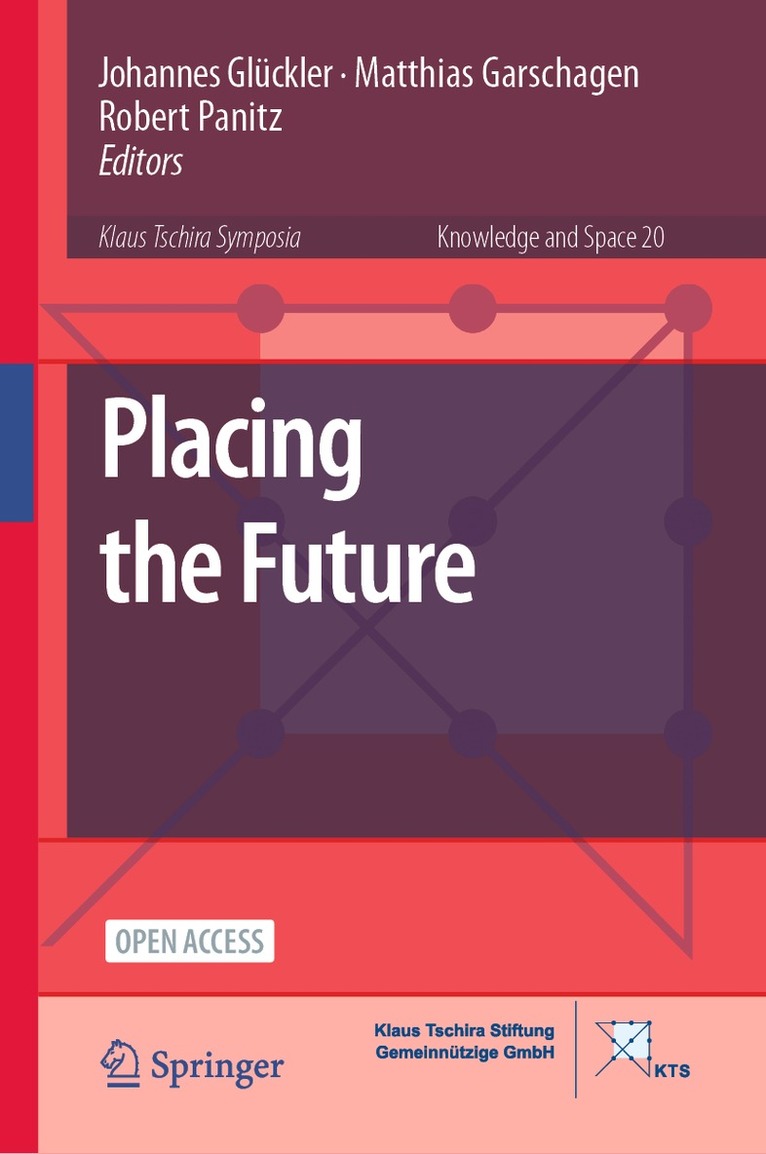
    Placing the Future

    AvJohannes Glückler,Matthias Garschagen

    Inbunden, Engelska, 2025

    Del 20 i serien Knowledge and Space

    1 721 kr

    Beställningsvara. Skickas inom 5-8 vardagar. Fri frakt över 249 kr.

    Beskrivning

    This open access book offers a fresh perspective on the uncertainties of the future that humanity faces. Leading scholars from the fields of future studies, planning, geography, history, sociology, design, and the humanities sensitize for the intricate role of geography in building knowledge to anticipate probable, to imagine alternative, and to enact desirable futures. Part I, knowing the future, explores strategies for anticipating possible futures, such as foresight methods, scenarios, and guiding images. This section underscores the importance of cultivating future consciousness to confront societal denial of looming threats like environmental crises. Part II, envisioning the future, delves into various ways societies imagine their futures, exploring topics like the future of food, post-growth economies, extra-terrestrial futures, and even human self-extinction to reveal how futurist scenarios can inform decision making and proactive planning. Part III, enacting the future, focuses on the performative aspects of futuring. The authors in this section examine practices—such as designing, performing, advising, and governing—that are aimed at transforming desired futures into present realities. As part of a series on the interdisciplinary nexus between knowledge and space, this book is an essential resource for researchers, policy makers, planners, students, and practitioners in the fields of sustainability, future studies, regional development, and governance.

    Produktinformation

    • Utgivningsdatum:2025-05-08
    • Mått:155 x 235 x 24 mm
    • Vikt:755 g
    • Format:Inbunden
    • Språk:Engelska
    • Serie:Knowledge and Space
    • Antal sidor:342
    • Förlag:Springer International Publishing AG
    • ISBN:9783031768408

    Utforska kategorier

    • Sociala och etiska frågor inom Samhälle och politik
    • Sociologi inom Samhälle och politik
    • Geografi inom Naturvetenskap och teknik

    Mer om författaren

    Johannes Glückler is Professor and Chair of Economic Geographies of the Future at LMU Munich, Germany. Previously, he was a professor of economic and social geography at Heidelberg University between 2008 and 2023. In his research he develops a relational perspective of social networks, institutions, and governance in the study of the geography of knowledge, innovation, and regional development. He is a founding board member of the German Society for Social Network Research (DGNet) and co-founder of the M.Sc. Governance of Risk and Resources at the Heidelberg Center for Latin America in Santiago de Chile.Matthias Garschagen is Chair Professor of Human Geography and Human-Environment-Relations at LMU Munich, Germany, and Honorary Professor at RMIT University in Melbourne, Australia, in the School of Global, Urban and Social Studies. His research focuses on risk, vulnerability, adaptation and transformation in the context of environmental hazards and climate change, particularly in cities. He has served as lead author in various reports of the Intergovernmental Panel on Climate Change (IPCC) and was the scientific lead of the World Risk Report by the United Nations University.Robert Panitz is a Junior Professor of Technology and Innovation Management at the University of Koblenz, Germany. Previously, he served as an Interim Professor at the University of Bremen and worked as a Postdoc at Heidelberg University. He is a member of the German Society for Social Network Research (DGNet). His research focuses on the social and organizational structures and processes that foster innovation and technology development, as well as the organizational and social effects of these advancements. Methodologically, he has a particular interest in social network analysis.

    Innehållsförteckning

    • Chapter 1. Placing the Future: Understanding Space in the Making of Tomorrow.- Part I: Knowing the Future.- Chapter 2. Using Judgement to Anticipate the Future.- Chapter 3. A Technique for Guiding Images: Imagining the Future after Capitalism.- Chapter 4. Futures Consciousness as Vaccination against Misplaced Futures.- Chapter 5. Anaesthetic Worlds of Denial: ’Sleepwalking’ through Climate Catastrophe.- Part II: Envisioning the Future.- Chapter 6. Utopias of Extinction.- Chapter 7. Futures all Around: Anthropological Reflections on Where (and How) to Find the Future.- Chapter 8. Envisioning Alternative Economic Futures through the Lens of Food.- Chapter 9. Economic Geographies of Post-Growth.- Chapter 10. Trusted Emplaced Futures.- Chapter 11. Speculating on Future Presents: Sociology, Futures, and Fictions.- Part III: Enacting the Future.- Chapter 12. Design and other Ways of Knowing the Future.- Chapter 13. Techniques of Futuring: How Imagined Futures Become Socially Performative.- Chapter 14. Outsourcing the Future.- Chapter 15. Futures Governance: The Case of Outer Space Technology.- Chapter 16. Was it Worth a Try? A few Lessons for the Future of Conferencing.