
- Nyhet
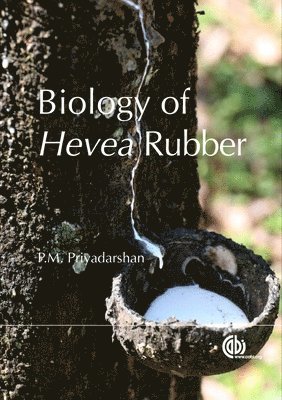
Biology of Hevea Rubber
AvP. M. Priyadarshan,Han Cheng
Inbunden, Engelska, 2026
1 743 kr
Beställningsvara. Skickas inom 11-20 vardagar. Fri frakt över 249 kr.
Fler format och utgåvor
Beskrivning
Natural rubber has been an essential commodity not only for the tyre industry but also for more than 50000 products that holds elasticity as an attribute. The prime source of natural rubber worldwide is Hevea brasiliensis. Ten of its allied species and 7000 other taxa also yield natural rubber. Hevea rubber tree is an excellent example of how a soil-tree-atmosphere system can work in tandem. The retrieval of rubber through ‘injuring’ the tree on alternate days/once in three days/once in seven days, is indeed a unique arrangement followed universally that ensures income to the planter almost throughout the year. Every molecule of rubber is the end result of meticulous biochemical changes. Therefore, the biology of Hevea rubber tree itself is a subject that aggregates science and technology for the realization of an industrial purpose. Significantly revised from the original 2017 edition, “Biology of Hevea Rubber, 2nd edition” provides an in-depth analysis of plant structure and crop physiology, climatic requirements, latex production, genetics and breeding. It also pays particular attention to biotechnology, molecular biology, environmental and biological constraints, ancillary income generation and clean development management. New topics includes artificial intelligence and allied digital technologies and omics studies.
Produktinformation
Utforska kategorier
Mer om författaren
Innehållsförteckning
Hoppa över listan
Mer från samma författare
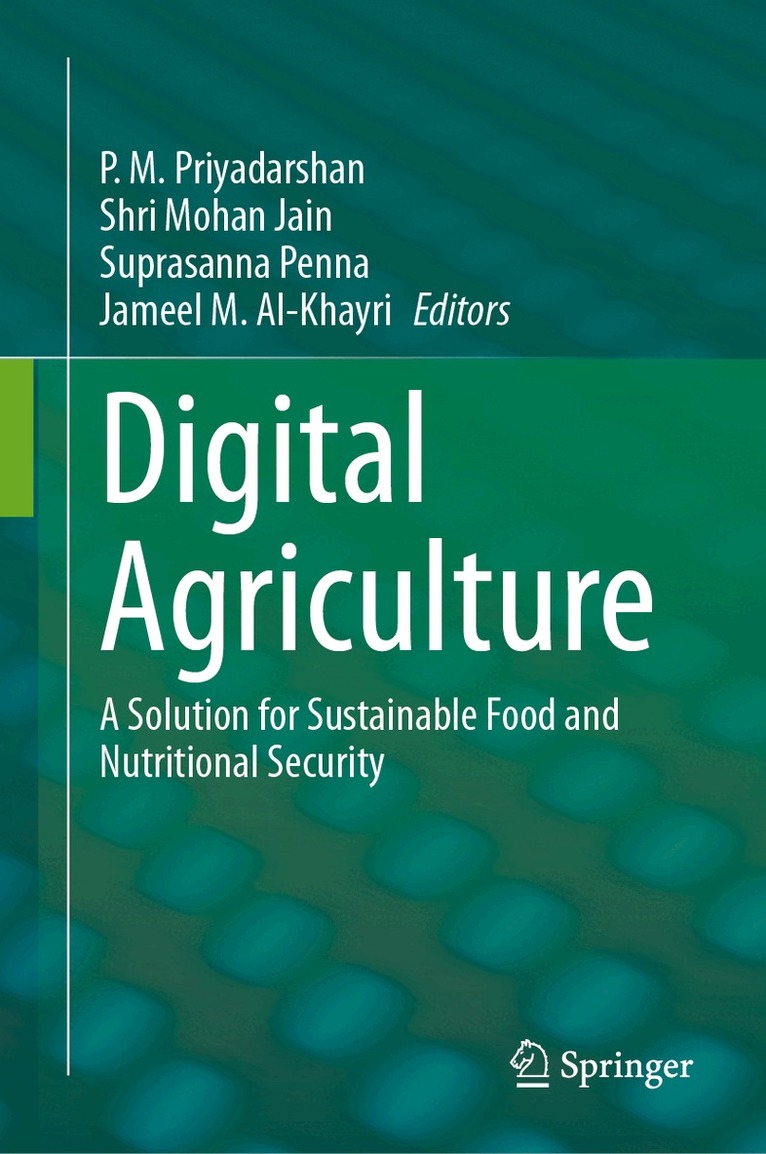
Digital Agriculture
P. M. Priyadarshan, Shri Mohan Jain, Suprasanna Penna, Jameel M. Al-Khayri
Inbunden, 2024
2 525 kr
Digital Agriculture
Jameel M. Al-Khayri, Suprasanna Penna, Shri Mohan Jain, P. M. Priyadarshan
E-bok
20243 181 kr
Digital Agriculture
P. M. Priyadarshan, Shri Mohan Jain, Suprasanna Penna, Jameel M. Al-Khayri
Häftad, 2025
2 525 kr
Hoppa över listan
Du kanske också är intresserad av
- 10% rabatt på allt
Material Geographies of the Belt and Road Initiative
Elia Apostolopoulou, Han Cheng, Jonathan Silver, Alan Wiig
Häftad, 2025
395 kr
Material Geographies of the Belt and Road Initiative
Elia Apostolopoulou, Han Cheng, Jonathan Silver, Alan Wiig
Inbunden, 2026
1 043 kr
Digital Agriculture
P. M. Priyadarshan, Shri Mohan Jain, Suprasanna Penna, Jameel M. Al-Khayri
Inbunden, 2024
2 525 kr
Digital Agriculture
P. M. Priyadarshan, Shri Mohan Jain, Suprasanna Penna, Jameel M. Al-Khayri
Häftad, 2025
2 525 kr