• Fri frakt över 249 kr
  • •
  • Snabba leveranser
  • •
  • Billiga böcker
Kundservice

Du är på sajten för privatpersoner.

Företag, bibliotek eller offentlig verksamhet?

Du handlar på classic.bokus.com, där alla dina funktioner finns intakta.
Till classic.bokus.com
Bokus logotyp. Gå till startsidan.
  • Erbjudanden
  • Student
  • Topplistor
  • Barn & ungdom
  • Bokus Play
  • E-böcker
  • Ljudböcker
  • Pocketböcker
  • Spel och pussel

Pocketfynda! Hundratals böcker för 49 kr/st →

Sidfot

Mina sidor

    Hjälp

    • Kundservice
    • Vanliga frågor och svar
    • Frakt och leverans
    • Retur vid ångerrätt
    • Reklamera vara
    • Betalning
    • Köpvillkor
    • Allmänna villkor
    • Information om webbplatsens tillgänglighet

    Om Bokus

    • Om oss
    • Pressrum
    • För studenter
    • För företag
    • För bibliotek och offentlig verksamhet
    • För leverantörer
    • Hållbarhet

    Populärt

    • Aktuella erbjudanden
    • Presentkort
    • Studentlitteratur
    • Nya böcker
    • Topplistor
    • Signerade böcker
    • Engelska böcker

    Inspiration

    • Boktips
    • BookTok
    • Barnbokskaraktärer
    • Populära författare
    Logotyp för Bokus
    Följ oss på Facebook (extern länk)Följ oss på Instagram (extern länk)Följ oss på YouTube (extern länk)Följ oss på TikTok (extern länk)
    bokus @ CookiesAnpassa cookiesIntegritetspolicyKöpvillkor
    Till Citymail hemsida (extern länk)Till Budbee hemsida (extern länk)Till Postnord hemsida (extern länk)Till Schenker hemsida (extern länk)Till Early Bird hemsida (extern länk)Till Walleys hemsida (extern länk)
    1. Språk och ordböcker
    2. Språkvetenskap och lingvistik

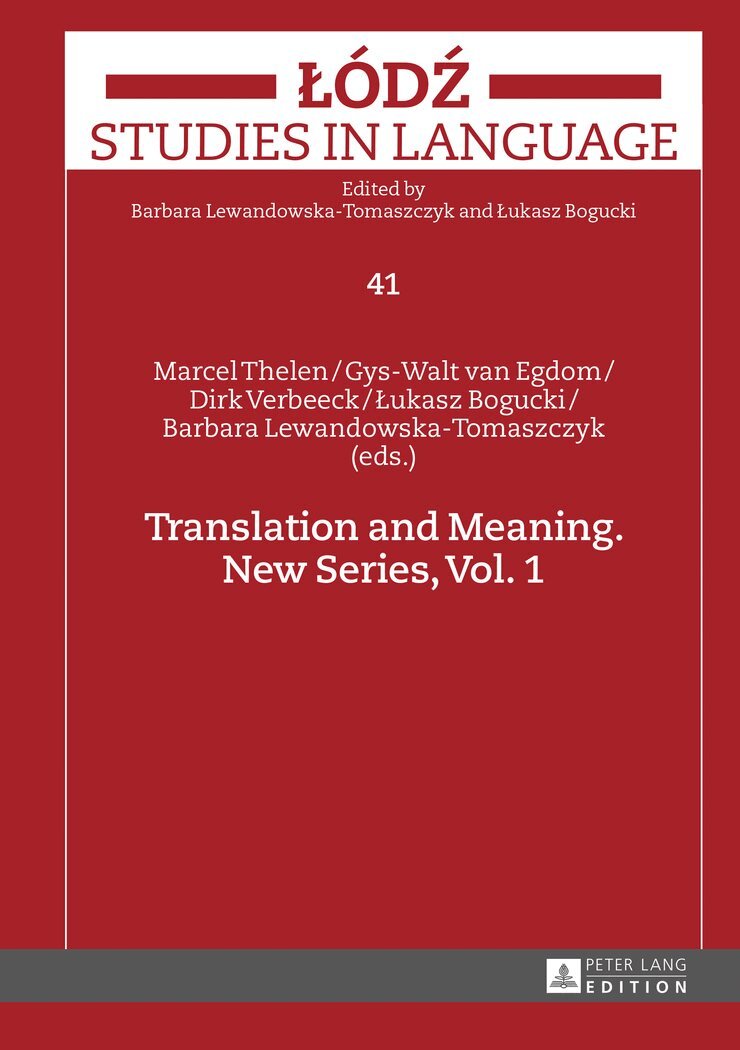
    Translation and Meaning

    New Series, Vol. 1

    AvBarbara Lewandowska-Tomaszczyk,Marcel Thelen

    Inbunden, Engelska, 2016

    Del 41 i serien Lodz Studies in Language

    1 007 kr

    Beställningsvara. Skickas inom 5-8 vardagar. Fri frakt över 249 kr.

    Beskrivning

    This book contains a selection of articles on new developments in translation and interpreting studies. It offers a wealth of new and innovative approaches to the didactics of translation and interpreting that may well change the way in which translators and interpreters are trained. They include such issues of current debate as assessment methods and criteria, assessment of competences, graduate employability, placements, skills labs, the perceived skills gap between training and profession, the teaching of terminology, and curriculum design. The authors are experts in their fields from renowned universities in Europe, Africa and North-America. The book will be an indispensable help for trainers and researchers, but may also be of interest to translators and interpreters.

    Produktinformation

    • Utgivningsdatum:2016-03-29
    • Mått:148 x 210 x 0 mm
    • Vikt:490 g
    • Format:Inbunden
    • Språk:Engelska
    • Serie:Lodz Studies in Language
    • Antal sidor:308
    • Förlag:Peter Lang AG
    • ISBN:9783631663905

    Utforska kategorier

    • Språkvetenskap och lingvistik inom Språk och ordböcker

    Mer om författaren

    Marcel Thelen is senior lecturer of translation and terminology and former head of school at the Maastricht School of Translation and Interpreting of Zuyd University of Applied Sciences.Gys-Walt van Egdom is lecturer and researcher at the Maastricht School of Translation and Interpreting of Zuyd University of Applied Sciences, and is researcher at the Vrije Universiteit Brussel.Dirk Verbeeck is lecturer of translation and head of school at the Maastricht School of Translation and Interpreting of Zuyd University of Applied Sciences.ukasz Bogucki is director of the Institute of English Studies at the University of d and head of the Department of Translation Studies.Barbara Lewandowska-Tomaszczyk is professor of English Language and Linguistics at the State University of Applied Sciences in Konin, where she holds the position of professor ordinarius at the Department of English and Translation.

    Innehållsförteckning

    • Contents: Winibert Segers/Henri Bloemen: Evaluating Literary Translation Competence Elsa Huertas Barros/Juliet Vine: Translator Trainers Perceptions of Assessment: An Empirical Study Iwona Jacewicz: Wissensrevolution, Generation Z und die Translationsdidaktik Armando A. Magaia: Assessing Translation Competence at Eduardo Mondlane University Winibert Segers/Hendrik J. Kockaert: Can Subjectivity be Avoided in Translation Evaluation? Marcel Thelen: Quality and Objectivity of Testing and Assessing in Translator Training: Dilemmas and Suggestions Donata Lisait/Sonia Vandepitte/Bruce Maylath/Birthe Mousten/Susana Valdez/Maria Castel-Branco/Patricia Minacori: Negotiating Meaning at a Distance: Peer Feedback in Electronic Learning Translation Environments Linda Dewolf: Crafting the Training and Testing of Interpreting Students towards Employability Don Kiraly: Beyond the Static Competence Impasse in Translator Education Gys-Walt van Egdom: On General and Specialised Texts in the Translation Training Programme: Conjectures, Assumptions, Refutations and Implications Hildegard Vermeiren: Linterprtation lre des tic Marcos Aranda: The Influence of Machine Translation and Cat Tools on Creativity and Quality ukasz Bogucki: Rendering Otherness in Film - Techniques for Translating Multilingual Audiovisual Material Eleanor Cornelius: Exploring and Developing Legal Translation Competence: Learning from the Old Dogs Montserrat Franquesa Gdia: Katalanische Übersetzungen der griechischen und lateinischen Klassikern unter der Franco-Diktatur Koen Kerremans: Variation in the Translation of Terms: Corpus-Driven Terminology Research Barbara Lewandowska-Tomaszczyk: Principle of Cluster Equivalence and Parallel Corpora Munzhedzi James Mafela: Marking Plural Forms in Tshivena and the Study of Translation and Mass Nouns Lucia Salvato: Functionalism in Literary Translation. The Use of a Functionalist Approach in Translating Contemporary Swiss-German Poetry Rita Temmerman: Researching and Teaching the Translatability of Neologisms Sergiy Tyupa: Cognitive Debriefing of Patient Questionnaires: How to Capture Meaning as Understood by Respondents?