Inbunden, Engelska, 2026
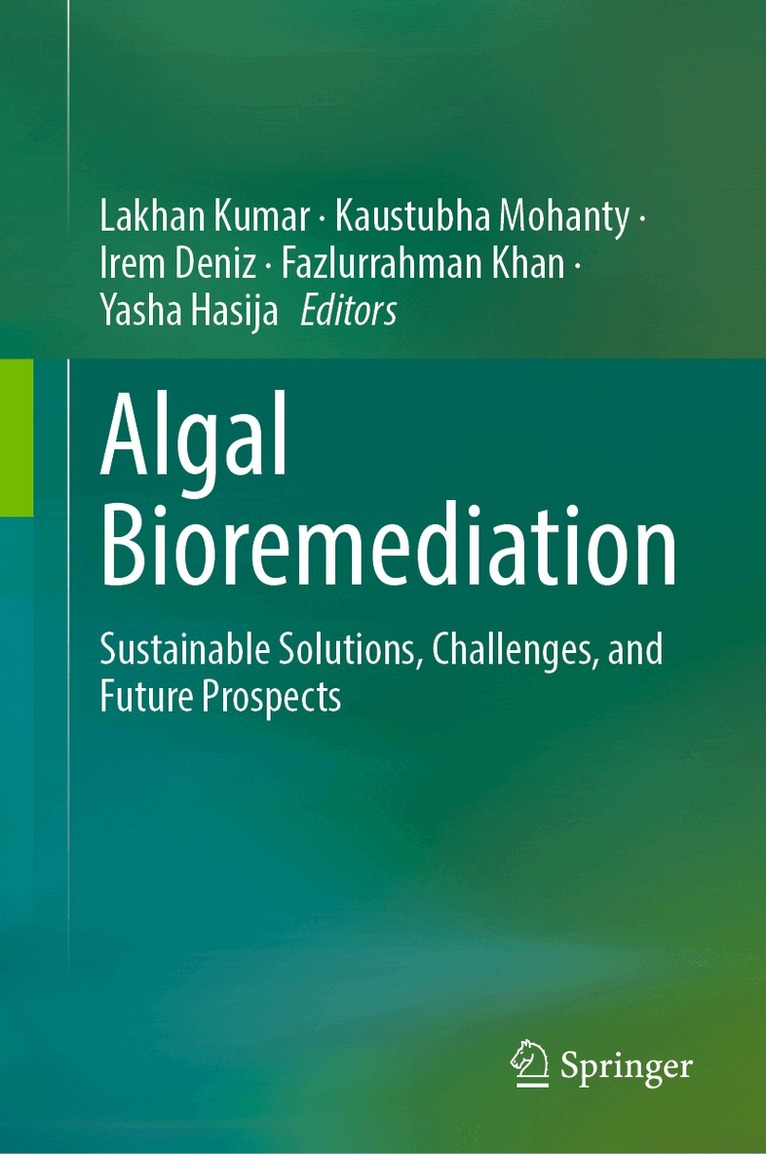
Algal Bioremediation
Av Lakhan Kumar, Kaustubha Mohanty, Irem Deniz, Fazlurrahman Khan, Yasha Hasija
1745 kr
Beställningsvara. Skickas inom 10-15 vardagar. Fri frakt över 249 kr.
Beskrivning
This book explores algal bioremediation as a sustainable solution for tackling environmental pollution. It highlights the latest advancements, challenges, and applications of algae in removing pollutants from air, water, and soil, offering a bridge between fundamental science and real-world applications.The book begins by introducing environmental pollutants and existing remediation strategies, followed by the role of biotechnology in pollution control. It discusses algal bioremediation principles, biosynthetic pathways, and enzymatic mechanisms involved in degrading heavy metals, dyes, hydrocarbons, pharmaceuticals, pesticides, and other emerging contaminants. Special emphasis is given to the fate of pollutants in algal cells and the integration of nanomaterials and biochar for enhanced remediation. Further, the book explores algal applications in wastewater treatment, including microbial fuel cells, algal consortia, and genetically modified algae for improved pollutant removal. It also discusses algae’s role in the circular bioeconomy, focusing on biomass valorization through pyrolysis, HTL, and gasification. The final chapter introduces omics technologies, providing a molecular perspective on algae’s remediation capabilities.It serves as a valuable resource for environmental scientists, biotechnologists, researchers, policymakers, and industry professionals and it is also an excellent study material for graduate and postgraduate students seeking in-depth knowledge of algae-based pollution control.
Produktinformation
- Utgivningsdatum: 2026-07-03
- Mått: 155 x 235 x 29 mm
- Vikt: 746 g
- Format: Inbunden
- Språk: Engelska
- Antal sidor: 405
- Förlag: Springer Verlag, Singapore
- ISBN: 9789819587926
Utforska kategorier
Betyg & recensioner
0 recensioner
Inga recensioner tillgängliga.