Inbunden, Engelska, 2026
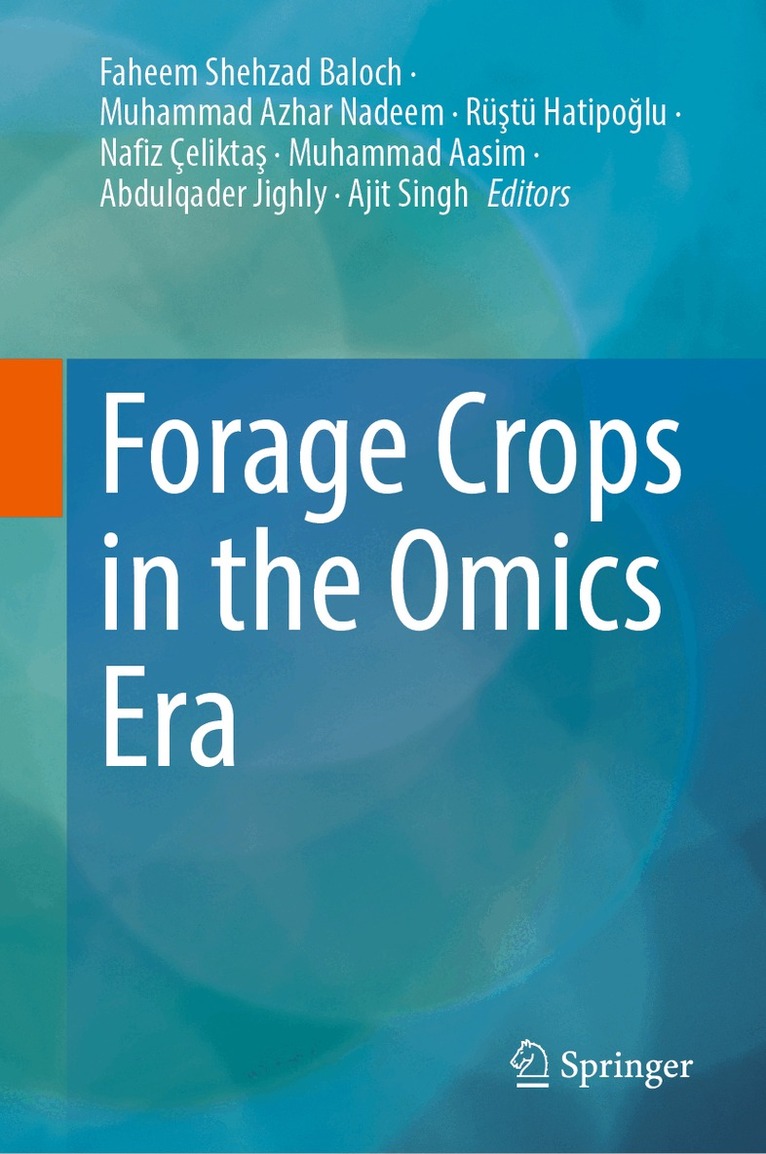
Forage Crops in the Omics Era
Av Faheem Shehzad Baloch, Muhammad Azhar Nadeem, Rüştü Hatipoğlu, Nafiz Çeliktaş, Muhammad Aasim, Abdulqader Jighly, Ajit Singh
2200 kr
Skickas inom 10-15 vardagar
Beskrivning
This contributed book covers forage crops grown in different parts of the world and focuses on the use of biotechnological and genomic techniques for breeding forage crops and their application in these crops.Forage crops are grown specifically to be utilized as feed for livestock and are typically high in nutritional value. They play a crucial role in animal husbandry, providing essential nutrients for the health and productivity of livestock, and are essential for sustainable livestock farming, as they can reduce reliance on purchased feeds and promote efficient nutrient cycling within agricultural systems. They also contribute to soil conservation and can be integrated into crop rotation systems to improve overall farm productivity and resilience. Forage crop research has seen significant advancements in the omics era, which encompasses disciplines such as genomics, transcriptomics, proteomics, metabolomics, and others. These technologies have revolutionized the way we understand, breed, and manage forage crops, leading to improvements in yield, quality, and resilience. This book covers the application of genomics, biotechnology, and the digital revolution in most forage crop species. The application of DNA molecular markers in these groups of plants has been elaborated. Further topics include the use of transgenic technology and genome editing in forage crops. The book also discusses the possibility of artificial intelligence application for precise breeding and production of forage crops.This book will serve as an essential resource for work done in recent years on the use of genomics and biotechnological applications for forage crop improvement strategies. Students, scientists, and breeding communities with an interest in forage crop cultivation, breeding, and the application of novel biotechnological approaches for the development of climate-resilient cultivars will find this book useful.
Produktinformation
- Utgivningsdatum: 2026-07-14
- Mått: 155 x 235 x 26 mm
- Vikt: 733 g
- Format: Inbunden
- Språk: Engelska
- Antal sidor: 362
- Förlag: Springer Verlag, Singapore
- ISBN: 9789819592487
Utforska kategorier
Betyg & recensioner
0 recensioner
Inga recensioner tillgängliga.