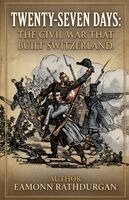
In November 1847, Switzerland fought a civil war. It lasted twenty-seven days. Fewer than one hundred and fifty people died. And from its conclusion emerged, with a speed that astonished Europe, the stable federal republic that has endured to the present day.The Sonderbund War has no equal in the history of civil conflict: a brief, restrained military campaign that dissolved a Catholic conservative alliance, outmanoeuvred the great powers of Metternich's Europe, and produced a constitutional settlement so intelligently constructed that it laid the foundations for one of the world's most durable democracies. At its centre stood a sixty-year-old cartographer named Guillaume Henri Dufour — a man who understood, before the first shot was fired, that the war he was about to fight would be won not on the battlefield but in the political settlement that followed it.Drawing on the full sweep of the crisis — from the monastery closures of 1841 through the founding of the Sonderbund, Palmerston's diplomatic masterstroke, and the drafting of the 1848 Federal Constitution — Eamonn Rathdurgan tells the story of how Switzerland made itself: through twenty-seven days of deliberate, disciplined, and remarkable restraint, and through the constitutional genius of the men who built a republic from the ruins of a failed confederation.