
Adolph L. Reed Jr. - Böcker
Visar alla böcker från författaren Adolph L. Reed Jr.. Handla med fri frakt och snabb leverans.
4 produkter
4 produkter
363 kr
Skickas inom 5-8 vardagar
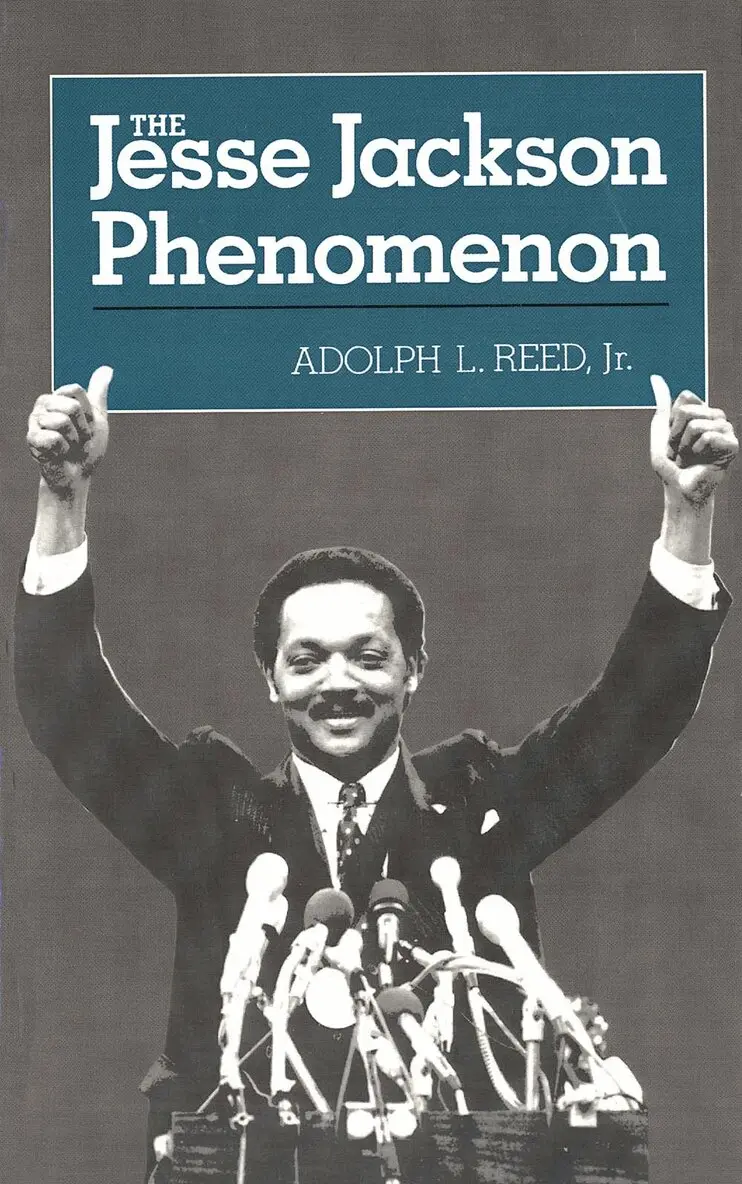
How did Jesse Jackson – who had never run in an election and had only recently registered to vote – become the black candidate for the 1984 Democratic presidential nomination? What does his campaign show about the dynamics that drive Afro-American political activity? In the first book to analyze the Jackson campaign, a black scholar who has worked extensively with local black political organizations argues that the Jackson Candidacy revealed tensions within Afro-American politics and hurt rather than helped the development of a viable black political movement. Reed demonstrates that issues such as the competition for top leadership roles among Afro-Americans, the deepening income and class stratification within the black community, and the disintegration of the Democratic coalition that has in the past supported black aspirations are all problems facing Afro-American politics today. He studies these areas of contention in several ways. First, he explores the rift between black elected politicians and black politicians who, like Jackson, come from the “protest politics” of the 1960s. Since the black church is the source for many of the protest politicians, Reed critically reconstructs the role of the church in black politics and suggests that, contrary to prevailing views, the church in general has not been associated with emancipatory or progressive interests in the black community. Reed then discusses the relationship between Afro-Americans and the other constituents of the Democratic coalition, particularly the labor movement and organized Jewry, and he comments insightfully on the controversies that attended the Jackson campaign’s relationship with each of those groups. He also examines reactions of the mass media and the left to Jackson’s campaign, discovering both to be reluctant to apply the same standards to black political activity that are used to evaluate white political efforts. Reed concludes by proposing strategies for black political action: these include constructing a political counteroffensive to the retrenchment associated with Reaganism and cultivating a more creative discourse about politics within the black community.
163 kr
Skickas inom 5-8 vardagar
186 kr
Skickas inom 7-10 vardagar
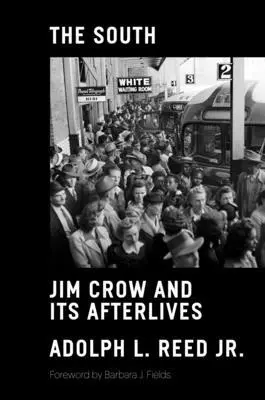
The last generation of Americans with a living memory of Jim Crow will soon disappear. They leave behind a collective memory of segregation shaped increasingly by its horrors and heroic defeat but not a nuanced understanding of everyday life in Jim Crow America. In The South, Adolph L. Reed Jr. - New Orleanian, political scientist, and according to Cornel West, "the greatest democratic theorist of his generation" - takes up the urgent task of recounting the granular realities of life in the last decades of the Jim Crow South.Reed illuminates the multifaceted structures of the segregationist order. Through his personal history and political acumen, we see America's apartheid system from the ground up, not just its legal framework or systems of power, but the way these systems structured the day-to-day interactions, lives, and ambitions of ordinary working people. The South unravels the personal and political dimensions of the Jim Crow order, revealing the sources and objectives of this unstable regime, its contradictions and precarity, and the social order that would replace it. The South is more than a memoir or a history. Filled with analysis and fascinating firsthand accounts of the operation of the system that codified and enshrined racial inequality, this book is required reading for anyone seeking a deeper understanding of America's second peculiar institution the future created in its wake. With a foreword from Barbara Fields, co-author of the acclaimed Racecraft.
162 kr
Skickas inom 7-10 vardagar
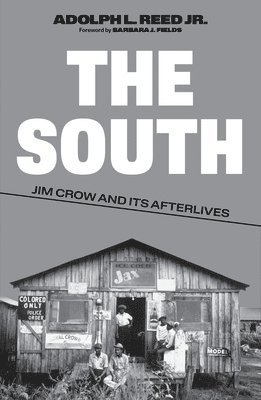
The last generation of Americans with a living memory of Jim Crow will soon disappear. They leave behind a collective memory of segregation shaped increasingly by its horrors and heroic defeat but not a nuanced understanding of everyday life in Jim Crow America. In The South, Adolph L. Reed Jr. - New Orleanian, political scientist, and, according to Cornel West, "the greatest democratic theorist of his generation" - takes up the urgent task of recounting the granular realities of life in the last decades of the Jim Crow South.Reed illuminates the multifaceted structures of the segregationist order. Thanks to his personal history and political acumen, we see America's apartheid system from the ground up, not just its legal framework or systems of power, but the way these systems structured the day-to-day interactions, lives, and ambitions of ordinary working people.The South unravels the personal and political dimensions of the Jim Crow order, revealing the sources and objectives of this unstable regime, its contradictions and weakness, and the social order that would replace it.The South is more than a memoir or a history. Filled with analysis and fascinating firsthand accounts, this book is required reading for anyone seeking a deeper understanding of America's second peculiar institution and the future created in its wake.