
Adrian Clark - Böcker
Visar alla böcker från författaren Adrian Clark. Handla med fri frakt och snabb leverans.
5 produkter
5 produkter
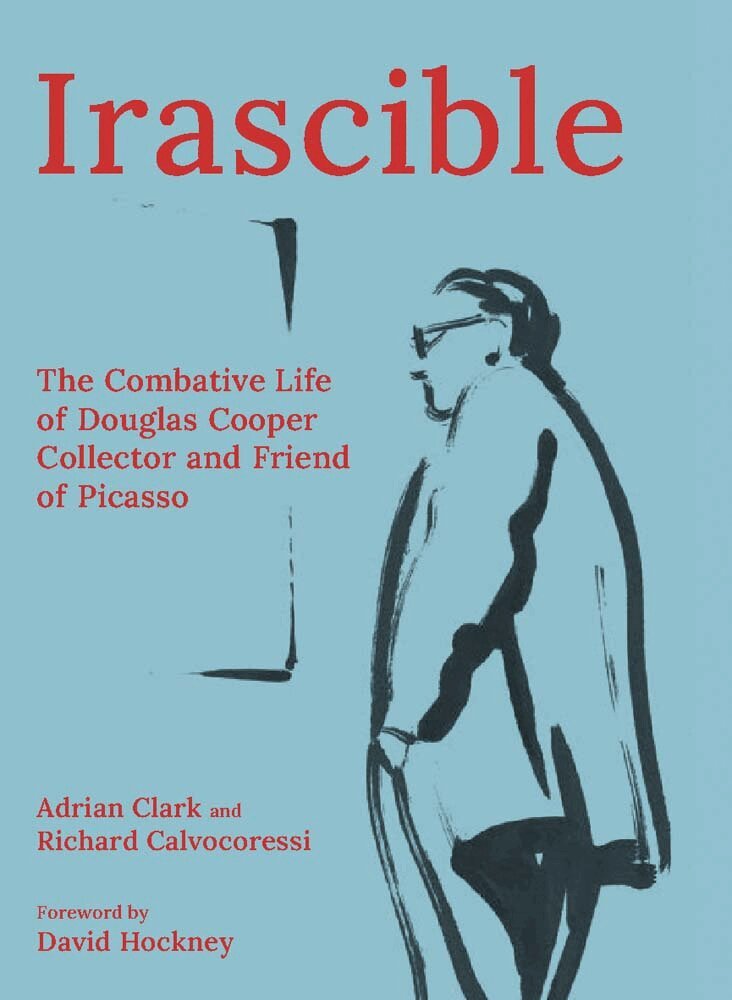
Irascible
The Combative Life of Douglas Cooper, Collector and Friend of Picasso
Inbunden, Engelska, 2025
486 kr
Skickas inom 7-10 vardagar
A pioneering collector of Cubist art, the English art historian and critic Douglas Cooper was one of the most important—and divisive—figures in the international art world of the 20th century Born into a wealthy family whose money was made in the 19th century in Australia, Douglas Cooper (1911–1984) built up much of his collection of works by Picasso, Braque, Gris, and Léger in the 1930s. He also trained himself to become a respected art historian, his reputation as a scholar resting largely on his catalogue of the Courtauld Collection (1954) and his catalogue raisonné of Juan Gris (1977). He also organised exhibitions of Gauguin, Braque, and two major displays of Cubism. The second of these, The Essential Cubism, co-curated with Gary Tinterow and held at the Tate in 1983, was one of the most remarkable accumulations of Cubist painting, sculpture, and drawings ever brought together. Based on extensive research and packed with new material and fresh interpretations, Irascible focuses on Cooper’s colourful life and significant accomplishments: his financing and directorship of the Mayor Gallery in London as a young man in the 1930s, when he became close to artists such as Francis Bacon, Paul Nash, Henry Moore, Paul Klee, Joan Miró, and Max Ernst; his wartime experiences as an ambulance driver in support of the collapsing French army in 1940; his job as a senior Monuments Man in charge of tracking down Nazi-looted art in Switzerland; his move to the south of France in the early 1950s, taking his collection with him; and his legendary feuds with leading figures and institutions in the British art world. This book is also the definitive account of Cooper’s collecting, art dealing, writing, and curating.
456 kr
Kommande
264 kr
Skickas inom 3-6 vardagar
242 kr
Skickas inom 5-8 vardagar
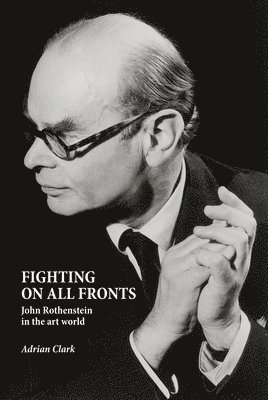
John Rothenstein, son of Sir William Rothenstein, the celebrated portrait painter, was born in 1901, four years after the Tate Gallery had been founded as the national gallery of British art. When Rothenstein took over as its fifth director in 1938, the Tate was in serious trouble: after 1917 when its remit was extended to include the national collection of modern foreign art, the confused dual purpose had placed an intolerable burden on those required to manage an institution still partly controlled by the National Gallery. Furthermore, it had no purchasing budget from the Government and was bound to accept often inappropriate pictures imposed on it by the Royal Academy under the terms of the infamous Chantrey Bequest. 26 years later when Rothenstein retired as Director in 1964, the Tate had acquired a Government grant, escaped the clutches of the National Gallery in 1955, and was firmly established both as the principal collection of modern art in the UK, and the best collection of British art in the world. Yet Rothenstein's career in the art world had never run a smooth course.After a childhood and early professional life dominated by the influence of his father, his curatorial posts in America, Leeds and Sheffield were not without incident, and at times it had looked as if his chosen career would stall. Adrian Clark's thoroughly researched account of the origins and professional life of John Rothenstein, covers his highs and lows and tries to give a balanced view and summary of the achievements of this remarkable human being.
179 kr
Skickas inom 5-8 vardagar