
Alexander Lipton - Böcker
Visar alla böcker från författaren Alexander Lipton. Handla med fri frakt och snabb leverans.
13 produkter
13 produkter
1 932 kr
Skickas inom 5-8 vardagar
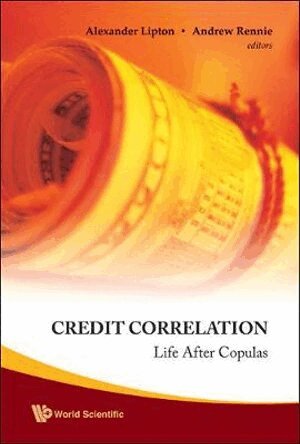
From the late nineties, the spectacular growth of a secondary market for credit through derivatives has been matched by the emergence of mathematical modelling analysing the credit risk embedded in these contracts. This book aims to provide a broad and deep overview of this modelling, covering statistical analysis and techniques, modelling of default of both single and multiple entities, counterparty risk, Gaussian and non-Gaussian modelling, and securitisation. Both reduced-form and firm-value models for the default of single entities are considered in detail, with extensive discussion of both their theoretical underpinnings and practical usage in pricing and risk. For multiple entity modelling, the now notorious Gaussian copula is discussed with analysis of its shortcomings, as well as a wide range of alternative approaches including multivariate extensions to both firm-value and reduced form models, and continuous-time Markov chains. One important case of multiple entities modelling - counterparty risk in credit derivatives - is further explored in two dedicated chapters. Alternative non-Gaussian approaches to modelling are also discussed, including extreme-value theory and saddle-point approximations to deal with tail risk. Finally, the recent growth in securitisation is covered, including house price modelling and pricing models for asset-backed CDOs.The current credit crisis has brought modelling of the previously arcane credit markets into the public arena. Lipton and Rennie with their excellent team of contributors, provide a timely discussion of the mathematical modelling that underpins both credit derivatives and securitisation. Though technical in nature, the pros and cons of various approaches attempt to provide a balanced view of the role that mathematical modelling plays in the modern credit markets. This book will appeal to students and researchers in statistics, economics, and finance, as well as practitioners, credit traders, and quantitative analysts.

633 kr
Skickas inom 5-8 vardagar
From the late 1990s, the spectacular growth of a secondary market for credit through derivatives has been matched by the emergence of mathematical modelling analysing the credit risk embedded in these contracts. This book aims to provide a broad and deep overview of this modelling, covering statistical analysis and techniques, modelling of default of both single and multiple entities, counterparty risk, Gaussian and non-Gaussian modelling, and securitisation. Both reduced-form and firm-value models for the default of single entities are considered in detail, with extensive discussion of both their theoretical underpinnings and practical usage in pricing and risk. For multiple entity modelling, the now notorious Gaussian copula is discussed with analysis of its shortcomings, as well as a wide range of alternative approaches including multivariate extensions to both firm-value and reduced form models, and continuous-time Markov chains. One important case of multiple entities modelling - counterparty risk in credit derivatives - is further explored in two dedicated chapters. Alternative non-Gaussian approaches to modelling are also discussed, including extreme-value theory and saddle-point approximations to deal with tail risk. Finally, the recent growth in securitisation is covered, including house price modelling and pricing models for asset-backed CDOs. The current credit crisis has brought modelling of the previously arcane credit markets into the public arena. Lipton and Rennie with their excellent team of contributors, provide a timely discussion of the mathematical modelling that underpins both credit derivatives and securitisation. Though technical in nature, the pros and cons of various approaches attempt to provide a balanced view of the role that mathematical modelling plays in the modern credit markets. This book will appeal to students and researchers in statistics, economics, and finance, as well as practitioners, credit traders, and quantitative analysts

655 kr
Skickas inom 3-6 vardagar
234 kr
Skickas inom 7-10 vardagar
An intriguing link between a wide range of problems occurring in physics and financial engineering is presented. These problems include the evolution of small perturbations of linear flows in hydrodynamics, the movements of particles in random fields described by the Kolmogorov and Klein-Kramers equations, the Ornstein-Uhlenbeck and Feller processes, and their generalizations. They are reduced to affine differential and pseudo-differential equations and solved in a unified way by using Kelvin waves and developing a comprehensive math framework for calculating transition probabilities and expectations. Kelvin waves are instrumental for studying the well-known Black-Scholes, Heston, and Stein-Stein models and more complex path-dependent volatility models, as well as the pricing of Asian options, volatility and variance swaps, bonds, and bond options. Kelvin waves help to solve several cutting-edge problems, including hedging the impermanent loss of Automated Market Makers for cryptocurrency trading. This title is also available as Open Access on Cambridge Core.
753 kr
Skickas inom 7-10 vardagar
An intriguing link between a wide range of problems occurring in physics and financial engineering is presented. These problems include the evolution of small perturbations of linear flows in hydrodynamics, the movements of particles in random fields described by the Kolmogorov and Klein-Kramers equations, the Ornstein-Uhlenbeck and Feller processes, and their generalizations. They are reduced to affine differential and pseudo-differential equations and solved in a unified way by using Kelvin waves and developing a comprehensive math framework for calculating transition probabilities and expectations. Kelvin waves are instrumental for studying the well-known Black-Scholes, Heston, and Stein-Stein models and more complex path-dependent volatility models, as well as the pricing of Asian options, volatility and variance swaps, bonds, and bond options. Kelvin waves help to solve several cutting-edge problems, including hedging the impermanent loss of Automated Market Makers for cryptocurrency trading. This title is also available as Open Access on Cambridge Core.
1 499 kr
Tillfälligt slut
This comprehensive book presents a systematic and practically oriented approach to mathematical modeling in finance, particularly in the foreign exchange context. It describes all the relevant aspects of financial engineering, including derivative pricing, in detail. The book is self-contained, with the necessary mathematical, economic, and trading background carefully explained. In addition to the lucid treatment of the standard material, it describes many original results.The book can be used both as a text for students of financial engineering, and as a basic reference for risk managers, traders, and academics.

1 255 kr
Skickas inom 5-8 vardagar
This comprehensive book presents a systematic and practically oriented approach to mathematical modeling in finance, particularly in the foreign exchange context. It describes all the relevant aspects of financial engineering, including derivative pricing, in detail. The book is self-contained, with the necessary mathematical, economic, and trading background carefully explained. In addition to the lucid treatment of the standard material, it describes many original results.The book can be used both as a text for students of financial engineering, and as a basic reference for risk managers, traders, and academics.

1 804 kr
Skickas inom 3-6 vardagar
This textbook focuses on distributed ledger technology (DLT) and its potential impact on society at large. It aims to offer a detailed and self-contained introduction to the founding principles behind DLT accessible to a well-educated but not necessarily mathematically oriented audience. DLT allows solving many complicated problems arising in economics, banking, and finance, industry, trade, and other fields. However, to reap the ultimate benefits, one has to overcome some of its inherent limitations and use it judiciously. Not surprisingly, amid increasing applications of DLT, misconceptions are formed over its use. The book thoroughly dispels these misconceptions via an impartial assessment of the arguments rooted in scientific reasoning.Blockchain and Distributed Ledgers: Mathematics, Technology, and Economics offers a detailed and self-contained introduction to DLT, blockchains, and cryptocurrencies and seeks to equip the reader with an ability to participate in the crypto economy meaningfully.

975 kr
Skickas inom 3-6 vardagar
This textbook focuses on distributed ledger technology (DLT) and its potential impact on society at large. It aims to offer a detailed and self-contained introduction to the founding principles behind DLT accessible to a well-educated but not necessarily mathematically oriented audience. DLT allows solving many complicated problems arising in economics, banking, and finance, industry, trade, and other fields. However, to reap the ultimate benefits, one has to overcome some of its inherent limitations and use it judiciously. Not surprisingly, amid increasing applications of DLT, misconceptions are formed over its use. The book thoroughly dispels these misconceptions via an impartial assessment of the arguments rooted in scientific reasoning.Blockchain and Distributed Ledgers: Mathematics, Technology, and Economics offers a detailed and self-contained introduction to DLT, blockchains, and cryptocurrencies and seeks to equip the reader with an ability to participate in the crypto economy meaningfully.

2 179 kr
Skickas inom 3-6 vardagar
This book describes several techniques, first invented in physics for solving problems of heat and mass transfer, and applies them to various problems of mathematical finance defined in domains with moving boundaries. These problems include: (a) semi-closed form pricing of options in the one-factor models with time-dependent barriers (Bachelier, Hull-White, CIR, CEV); (b) analyzing an interconnected banking system in the structural credit risk model with default contagion; (c) finding first hitting time density for a reducible diffusion process; (d) describing the exercise boundary of American options; (e) calculating default boundary for the structured default problem; (f) deriving a semi-closed form solution for optimal mean-reverting trading strategies; to mention but some.The main methods used in this book are generalized integral transforms and heat potentials. To find a semi-closed form solution, we need to solve a linear or nonlinear Volterra equation of the second kind and then represent the option price as a one-dimensional integral. Our analysis shows that these methods are computationally more efficient than the corresponding finite-difference methods for the backward or forward Kolmogorov PDEs (partial differential equations) while providing better accuracy and stability.We extend a large number of known results by either providing solutions on complementary or extended domains where the solution is not known yet or modifying these techniques and applying them to new types of equations, such as the Bessel process. The book contains several novel results broadly applicable in physics, mathematics, and engineering.
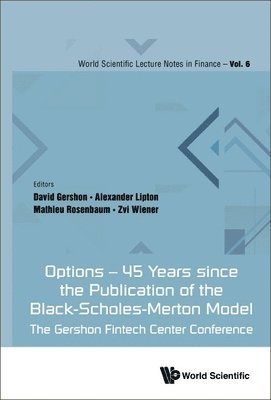
Del 6 - World Scientific Lecture Notes In Finance
Options - 45 Years Since The Publication Of The Black-scholes-merton Model: The Gershon Fintech Center Conference
Inbunden, Engelska, 2023
1 953 kr
Skickas inom 3-6 vardagar
This book contains contributions by the best-known and consequential researchers who, over several decades, shaped the field of financial engineering. It presents a comprehensive and unique perspective on the historical development and the current state of derivatives research. The book covers classical and modern approaches to option pricing, realized and implied volatilities, classical and rough stochastic processes, and contingent claims analysis in corporate finance. The book is invaluable for students, academic researchers, and practitioners working with financial derivatives, market regulation, trading, risk management, and corporate decision-making.
1 701 kr
Skickas inom 5-8 vardagar
The recent growth of credit derivatives has been explosive. The global credit derivatives market grew in notional value from $1 trillion to $20 trillion from 2000 to 2006. However, understanding the true nature of these instruments still poses both theoretical and practical challenges. For a long time now, the framework of Gaussian copulas parameterized by correlation, and more recently base correlation, has provided an adequate, if unintuitive, description of the market. However, the increased liquidity in credit indices and index tranches, as well as the proliferation of exotic instruments such as forward starting tranches, options on tranches, leveraged super senior tranches, and the like, have made it imperative to come up with models that describe market reality better.This book, originally and concurrently published in the International Journal of Theoretical and Applied Finance, Vol. 10, No. 4, 2007, agrees that base correlation has outlived its usefulness; opinions of how to replace it, however, are divided. Both the top-down and bottom-up approaches for describing the dynamics of credit baskets are presented, and pro and contra arguments are put forward. Readers will decide which direction is the most promising one at the moment. However, it is hoped that, in the near future, models that transcend base correlation will be proposed and accepted by the market.

3 173 kr
Skickas inom 3-6 vardagar
"Alex Lipton is an absolutely remarkable person. Having joined the field of quantitative finance after a career where he became a world leader in the field of plasma and fusion physics, he has become rightly famous for his beautiful papers on many topics, from the volatility smile to money supply … He's marvellously practical; one is always introduced to the area with a bit of elegant prose and the papers, though very mathematical, never lose the thread of linguistic narrative which makes each one a story which has to be read to the end … Part 4 covers several topics centred around money supply and circulation, and in some ways this is the best part of the book … it's a lovely book and I really enjoyed reading it."Quantitative FinanceEdited by Alexander Lipton (Quant of the Year, 2000), this volume is a collection of Lipton's important and original papers on financial engineering written over his 20-year career as a preeminent quant working for leading financial institutions in New York, Chicago, and London. The papers cover topics ranging from the volatility smile problem, credit risk, macroeconomics and monetary circuit, and exotic options, summarizing Lipton's fundamental contributions to these areas.In addition to papers published in leading academic and practitioner-oriented journals, this volume contains a detailed introduction and two previously unpublished chapters. Some of the seminal papers in this book cover local-stochastic volatility models, passport options, credit value adjustments for credit default swaps, and asymptotics for exponential Lévy processes and their volatility smile.Alexander Lipton is one of the most respected quants of his generation and the first recipient of the prestigious Quant of the Year award by Risk Magazine.