
Anjan Bandyopadhyay - Böcker
Visar alla böcker från författaren Anjan Bandyopadhyay. Handla med fri frakt och snabb leverans.
3 produkter
3 produkter
1 679 kr
Skickas inom 10-15 vardagar
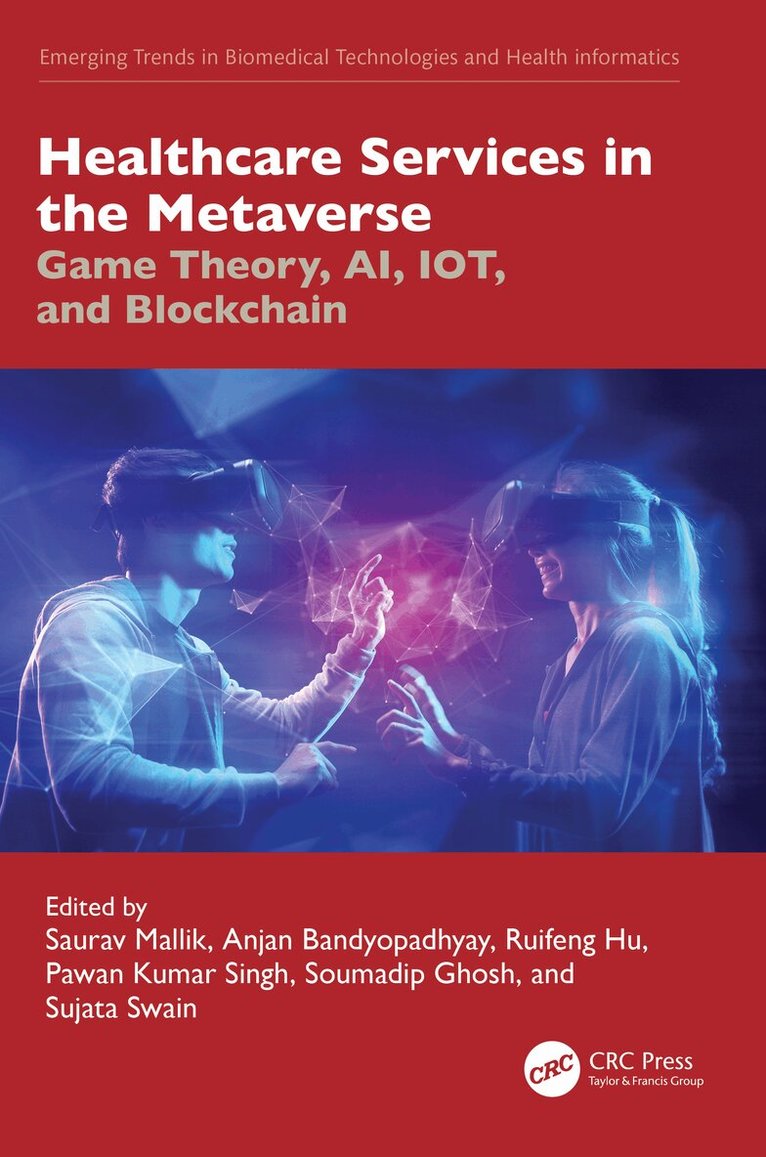
This book focuses on game theory approaches utilized on various domains viz., IoT, blockchain and their applications to biomedical and healthcare services. The book bridges the gap between radiologists and Artificial Intelligence (AI)-driven automated systems by investigating various techniques such as game theoretic approach, blockchain technology basically utilized for security, and IoT applied on metaverse.Healthcare Services in the Metaverse: Game Theory, AI, IoT, and Blockchain, identifies the potential areas where game theory and block chain techniques can be harnessed in the metaverse. The book discusses the integration of virtual reality (VR) with augmented reality to identify the new emerging techniques in healthcare to metaverse, where doctors and/or patients can see any kind of operation in the VR metaverse. The authors use game theoretical and blockchain approaches to understand healthcare issues, with the aim of utilizing different technologies of metaverse platform for health informatics.This book is written to help healthcare practitioners and individuals across academia and research, as well as for those who work in biomedical, Internet of Things (IoT), Artificial Intelligence (AI), metaverse, VR, blockchain, and related technologies.
AI and Data Engineering for Healthcare
Real-World Applications and Case Studies
Inbunden, Engelska, 2025
2 236 kr
Skickas inom 10-15 vardagar
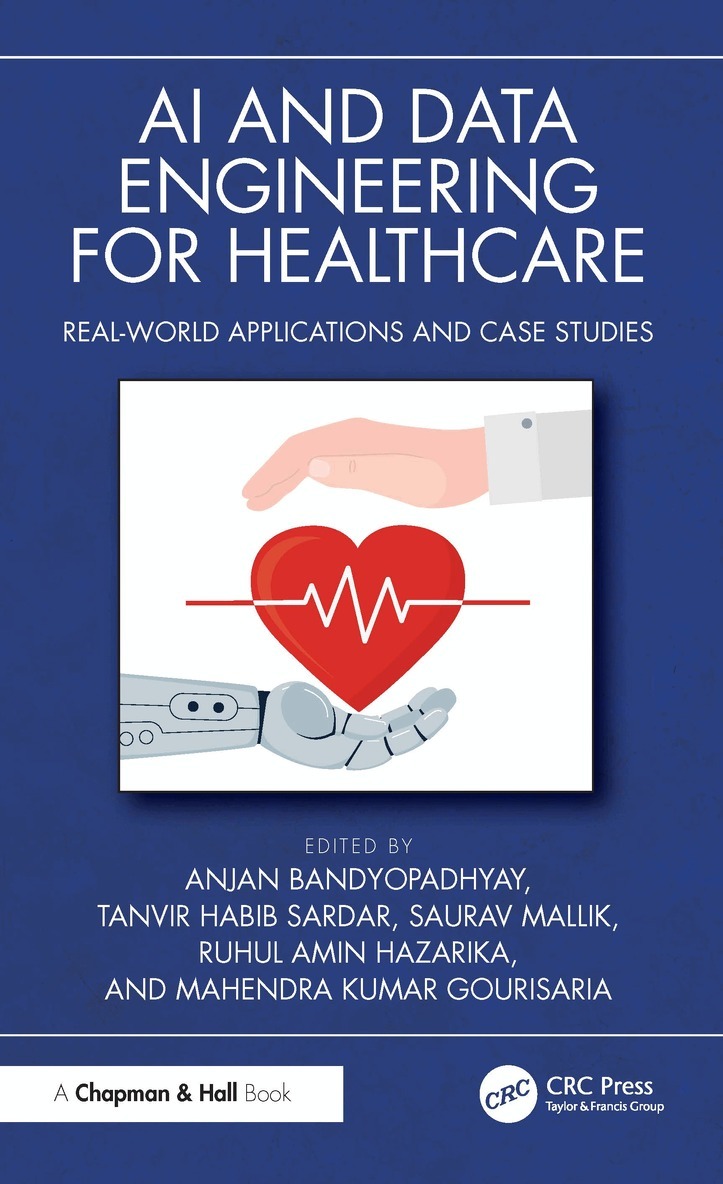
This book examines the transformative role of artificial intelligence (AI) and data engineering in revolutionizing the healthcare landscape. It presents cutting-edge developments ranging from predictive algorithms for disease diagnosis to large-scale data systems that enhance patient outcomes. By emphasizing the synergy between AI and data engineering, the book showcases practical applications in medical imaging, clinical diagnostics, and personalized treatment strategies.It also thoughtfully examines ethical considerations, data privacy, and healthcare equity, particularly in underserved and rural populations.Key Features:Explores state-of-the-art technologies in healthcare, including image segmentation, feature extraction, feature selection, and classificationProvides real-world case studies, practical examples, and hands-on exercises for effective implementation of AI-driven solutionsBridges disciplines across computer science, data engineering, and biomedical sciences to foster cross-domain collaborationHighlights innovative research methodologies and their applications in AI-powered healthcare systemsDiscusses the role of AI in improving healthcare access, delivery, and outcomes across diverse populationsThis book is ideal for professionals, researchers, and policymakers seeking to understand and shape the future of healthcare through the lens of AI and data-driven innovation.
Drug Discovery and Telemedicine
Through Artificial Intelligence, Computer Vision, and IoT
Häftad, Engelska, 2025
1 113 kr
Skickas inom 3-6 vardagar
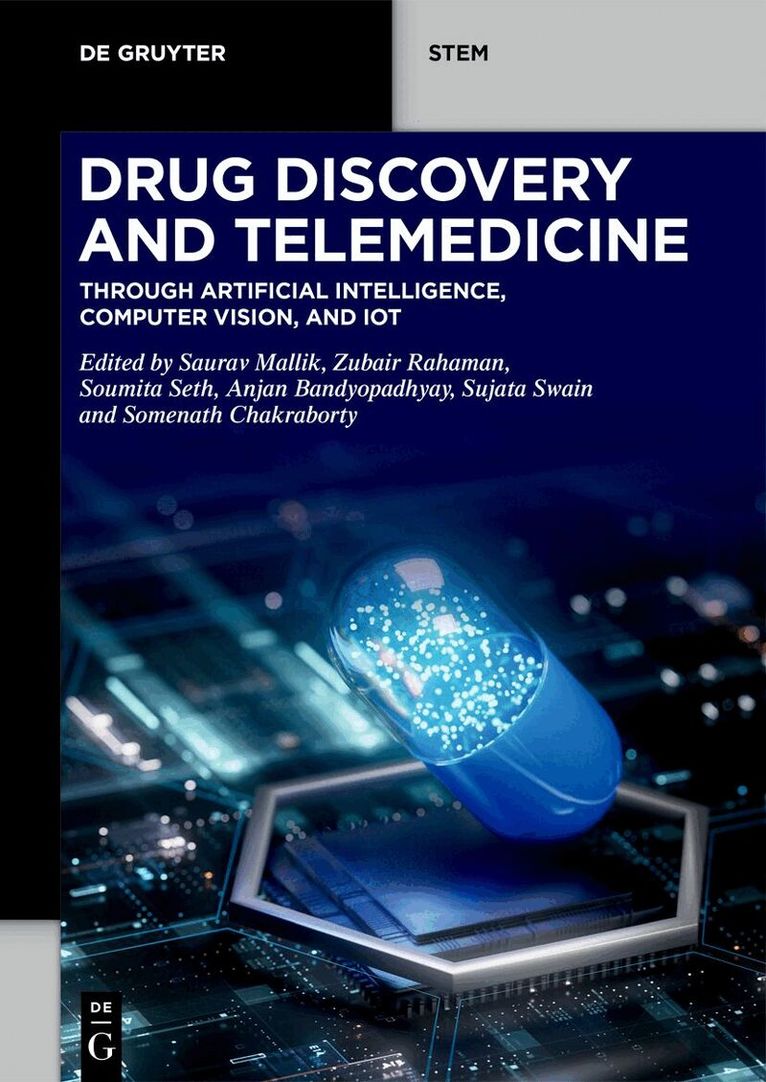
Our proposed book emerges in response to the critical need for an interdisciplinary resource that encapsulates the burgeoning role of artificial intelligence (AI) in reshaping drug discovery and telemedicine. As these sectors witness transformative changes driven by AI technologies, there's a pressing demand for a comprehensive guide that navigates through these advancements, offering insights, methodologies, and practical applications to professionals at the forefront of healthcare and pharmaceutical research. At its core, the book delves into the intricate ways in which AI and machine learning algorithms are being harnessed to streamline the drug development process, from initial discovery through to clinical trials, and how these technologies are concurrently revolutionizing the delivery of healthcare services via telemedicine. Specific focus areas include the application of deep learning in identifying novel drug candidates, AI-driven predictive models for pharmacokinetics and pharmacodynamics, automation in laboratory research, and the integration of AI in diagnostic processes, personalized medicine, and patient monitoring systems. Each chapter not only explores current state-of-the-art methodologies and case studies but also critically examines challenges, such as data privacy, ethical considerations, and the need for robust, interpretable models that can be trusted by healthcare professionals and patients alike. Furthermore, the book places a strong emphasis on the synergistic potential of combining AI with telemedicine, illustrating how these technologies can expand access to healthcare, improve the accuracy of remote diagnoses, and enable continuous, data-driven patient care. By providing a panoramic view of current trends, technological innovations, and future directions, the book aims to serve as a pivotal reference for scientists, researchers, clinicians, and policymakers involved in drug discovery and healthcare delivery. In conclusion, this book stands as an essential compendium for specialists seeking to navigate the complexities and harness the opportunities presented by AI in the pharmaceutical and healthcare industries. It offers a critical, in-depth exploration of the transformative impact of AI technologies, underscoring their relevance and potential to dramatically enhance drug discovery and telemedicine practices. This publication not only equips its target audience with the knowledge to lead innovation in their fields but also engages with the broader ethical, social, and practical implications of AI, making it an invaluable resource for advancing towards more effective, efficient, and accessible healthcare solutions. The book is significant for several reasons: Interdisciplinary Appeal: It serves as a critical resource for professionals and researchers across the fields of computer science, pharmaceutical sciences, and healthcare, facilitating a deeper understanding of AI's potential and fostering interdisciplinary collaborations. Innovation in Drug Discovery: By highlighting novel AI methodologies in drug discovery, the book offers insights into how these technologies can shorten the development timelines, reduce costs, and increase the success rates of new therapies, which is crucial for addressing unmet medical needs. Revolutionizing Telemedicine: The detailed discussion on AI's role in telemedicine illustrates how these advancements can enhance access to healthcare, improve the quality of care, and make healthcare systems more efficient, especially in remote and underserved areas. Ethical and Regulatory Considerations: It likely addresses the ethical, privacy, and regulatory challenges associated with implementing AI in healthcare, offering guidelines for navigating these complexities while maximizing patient benefits. Future Directions: By exploring current trends and future possibilities, the book not only serves as a repository of current knowledge but also as a beacon for future research and development efforts in these rapidly evolving fields.