
Barbara A. Misztal - Böcker
Visar alla böcker från författaren Barbara A. Misztal. Handla med fri frakt och snabb leverans.
4 produkter
4 produkter

1 039 kr
Skickas inom 10-15 vardagar
This edited collection shows how the spread of HIV infection has been followed, represented, and managed in nine countries between 1982 and 1988. The countries cited in this study have been chosen to emphasize contrasts in the social and epidemiological profiles of AIDS, and to suggest the diversity of the problems constituted by HIV/AIDS in different national contexts. The juxtaposition of sequences of national response will raise questions about the range of policy options actually available to political and social policy-makers in a given context, and will invite further examination of the factors determining the acceptance or rejection of specific measures.Following the introduction, which outlines the choices that national governments confront in formulating AIDS policies, the successive chapters cover the reactions to HIV/AIDS in the United States, Brazil, France, Belgium, West Germany, Italy, Poland, Australia, and Africa. The final chapter compares the patterns of national response, identifies their common and divergent features, and points out tensions in policy-making caused by current changes in the spread of infection and in the understanding of the virus. This book makes informative reading for those who want to learn more about international variation in the political, social, and economic aspects of the AIDS epidemic.
837 kr
Skickas inom 7-10 vardagar
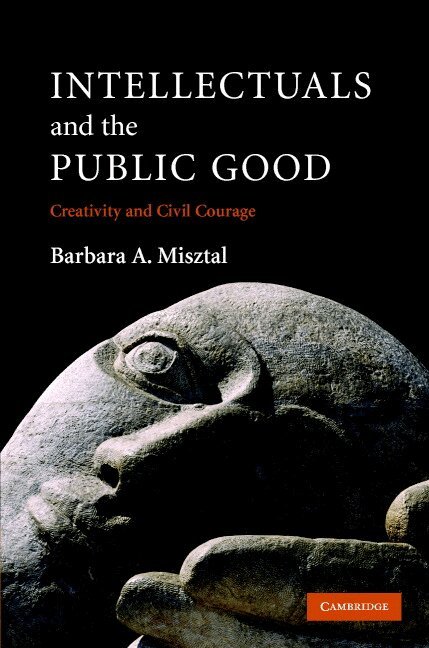
Creativity and civil courage are major dimensions of an intellectual's authority and contribute towards the enrichment of democracy. This book develops a sociological account of civil courage and creative behaviour in order to enhance our understanding of the nature of intellectuals' involvement in society. Barbara A. Misztal employs both theoretical-analytic and empirical components to develop a typology of intellectuals who have shown civil courage and examines the biographies of twelve Nobel Peace Prize laureates, including Elie Wiesel, Andrei Sakharov and Linus C. Pauling, to illustrate acts of courage which have embodied the values of civil society. She advances our understanding of the nature of intellectuals' public involvement and their contribution to social well-being. In the current climate of fear and insecurity, as governments are forced to deal with issues of increasing complexity, this is a pioneering sociological book with a highly original approach.

507 kr
Skickas inom 7-10 vardagar
Creativity and civil courage are major dimensions of an intellectual's authority and contribute towards the enrichment of democracy. This book develops a sociological account of civil courage and creative behaviour in order to enhance our understanding of the nature of intellectuals' involvement in society. Barbara A. Misztal employs both theoretical-analytic and empirical components to develop a typology of intellectuals who have shown civil courage and examines the biographies of twelve Nobel Peace Prize laureates, including Elie Wiesel, Andrei Sakharov and Linus C. Pauling, to illustrate acts of courage which have embodied the values of civil society. She advances our understanding of the nature of intellectuals' public involvement and their contribution to social well-being. In the current climate of fear and insecurity, as governments are forced to deal with issues of increasing complexity, this is a pioneering sociological book with a highly original approach.
692 kr
Skickas inom 5-8 vardagar
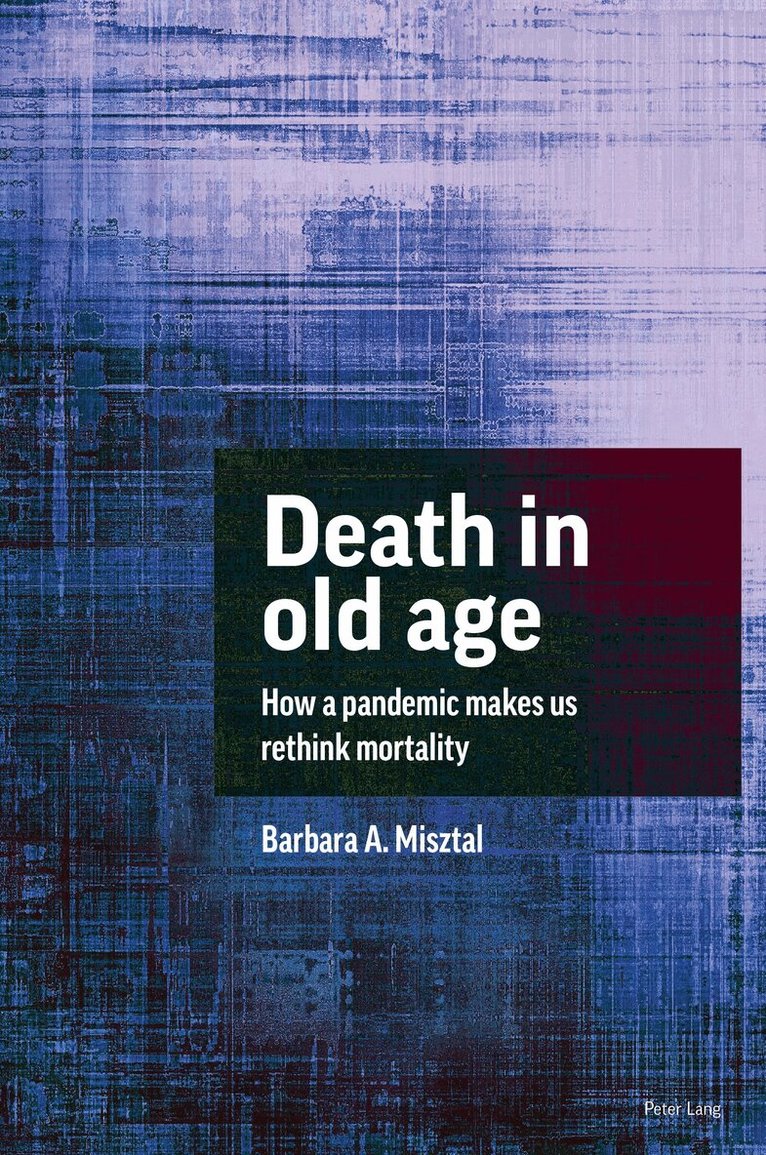
The book examines the issue of old age in death in contemporary Western societies in the pre-Covid-19 period and during the recent pandemic. It aims to prompt rethinking of societal obligations to the aged and to reflect on ways of handling death in old age. By exposing which values and orientations towards death in old age have been reinforced and which have been challenged by the coronavirus pandemic, the book offers a platform to debate society’s responsibility to old people and to reflect on the legacy of the pandemic for the quality of the end of life care. It raises ethical and philosophical implications of the normalization the idea that during health crises some lives need to be prioritised over others. The book, by drawing from an extensive literature, from sociology, psychology, philosophy gerontology to death studies, throws light on the cultural values by which we understand mortality. Whilst the book’s focus is on the UK, its argument, that the marginalization of death in old age impacts on the quality of the end of life care, has enormous implications for other cultures in terms of how old age tends to be ignored and how they were neglected during the pandemic.