
Barbara Mulloy - Böcker
Visar alla böcker från författaren Barbara Mulloy. Handla med fri frakt och snabb leverans.
5 produkter
5 produkter
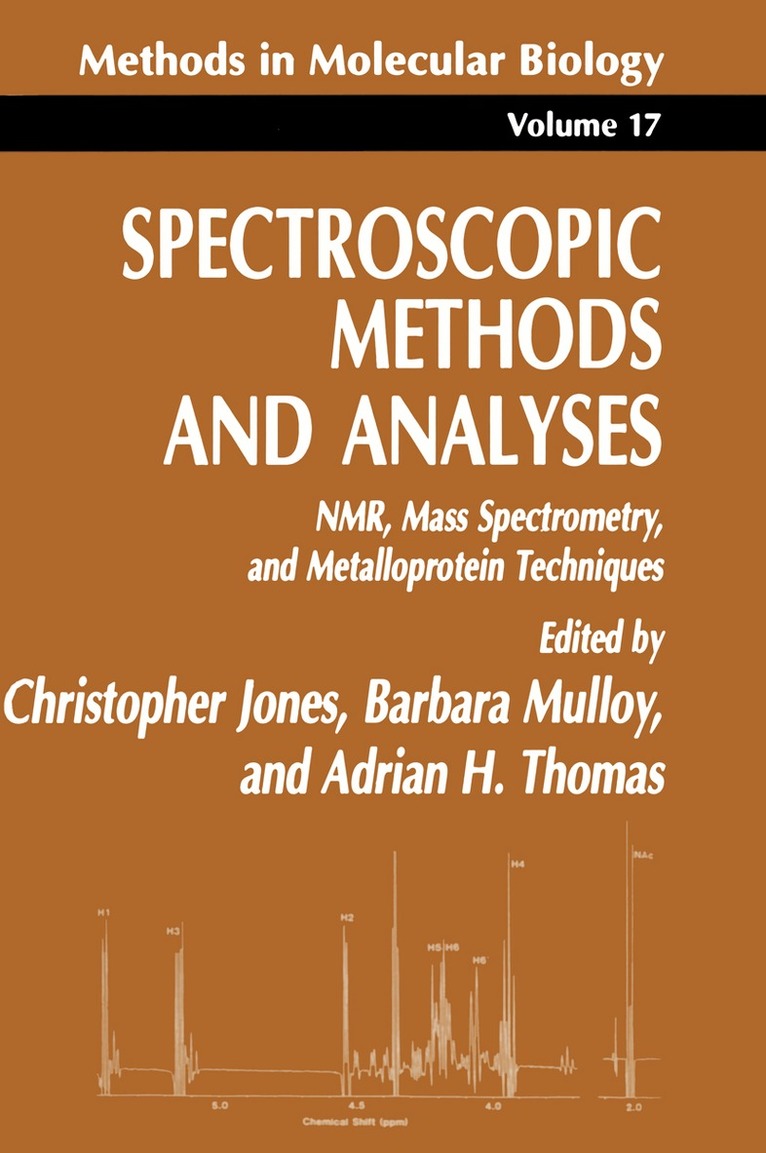
Spectroscopic Methods and Analyses
NMR, Mass Spectrometry, and Metalloprotein Techniques
Häftad, Engelska, 1993
1 067 kr
Skickas inom 10-15 vardagar
Although spectroscopic methods are of great use to biological scientists, many researchers lack a specialist's knowledge of these techniques. Spectroscopic Methods and Analyses provides hands-on information on these valuable research tools, emphasizing practical aspects, such as amounts and purity of required samples, limitations and advantages of the technique, and interpretation of the results, thus enabling every molecular biologist - either independently or with the help of a specialist - to evaluate the usefulness of a technique, to plan an original program, and to gain a realistic idea of the resources needed.An indispensable guide for all biochemists, cell and molecular biologists, pharmacologists, immunologists, pathologists, and neuroscientists.
1 067 kr
Skickas inom 10-15 vardagar
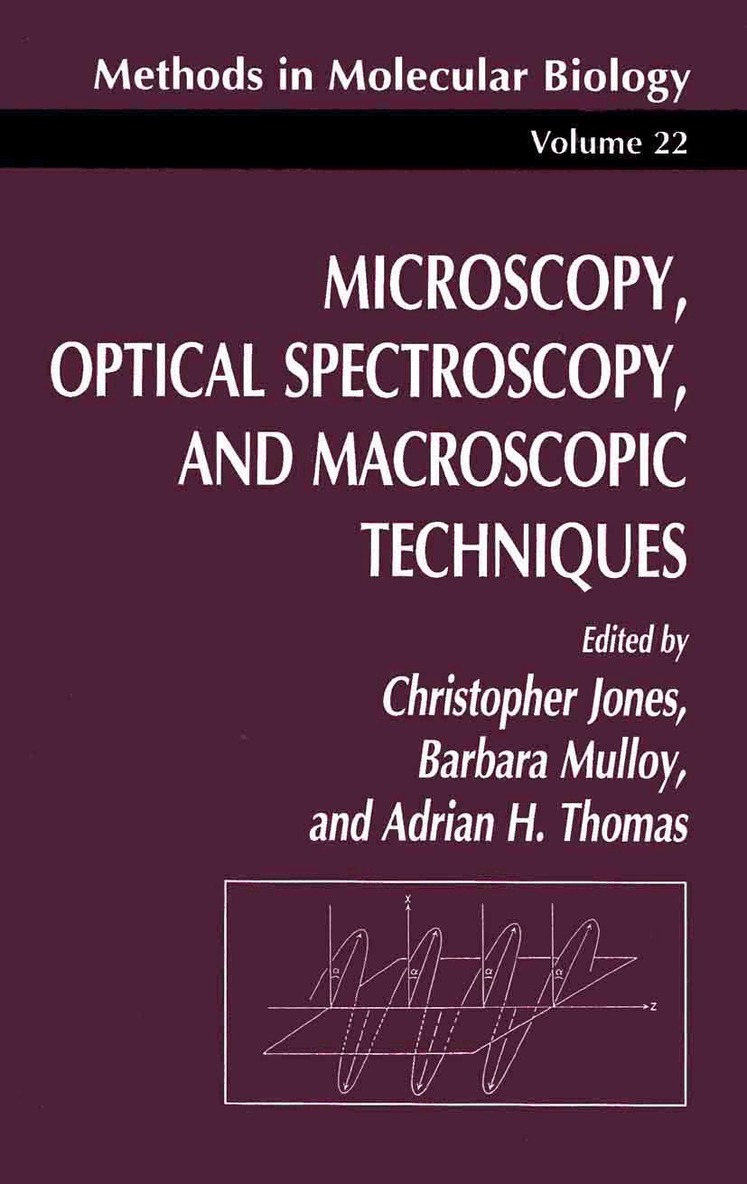
This superb survey of the possible applications of physiochemical techniques to the analysis of biological macromolecules is designed for the practicing biochemist or biologist who wants to use the technique but lacks the experience. The contributors emphasize practical aspects, such as constraints on sample quantity, purity, and presentation; the problems of time and expense involved; the problems a technique is best suited to solve; and how the results may be interpreted. Among the methods examined are optical and infrared spectroscopy, microscopy, ultracentrifugation, calorimetry, X-ray and neutron scattering, and light scattering. This book will enable the reader to confidently collaborate with specialists in applying these techniques.
1 067 kr
Skickas inom 10-15 vardagar
This is the second of three volumes of Methods in Molecular Biology that deal with Physical Methods of Analysis. The first of these, Spectroscopic Methods and Analyses dealt with NMR spec troscopy, mass spectrometry, and metalloprotein techniques, and the third will cover X-ray crystallographic methods. As with the first volume. Microscopy, Optical Spectroscopy, and Macroscopic Techniques is intended to provide a basic understand ing for the biochemist or biologist who needs to collaborate with spe cialists in applying the techniques of modern physical chemistry to biological macromolecules. The methods treated in this book fall into four groups. Part One covers microscopy, which aims to visualize individual molecules or complexes of several molecules. Electron microscopy is the more familiar of these, while scanning tunneling microscopy is a new and rapidly developing tool. Methods for determining the shapes and sizes of molecules in solution are described in Part Two, which includes chapters on X-ray and neutron scattering, light scattering, and ult- centrifugation. Calorimetry, described in Part Three, provides the means to monitor processes involving thermodynamic changes, whether these are intramolecular, such as conformational transition, or the interactions between solutes or between a solute and its sol vent. Part Four is concerned with optical and infrared spectroscopy and describes applications ranging from the measurement of protein concentration by UV absorbance to the analysis of secondary struc ture using circular dichroism and Fourier-transform infrared spec troscopy.

3 252 kr
Skickas inom 10-15 vardagar
Heparins remain amongst the most commonly used drugs in clinical practice. Almost 100 years have passed since the initial discovery of this complex substance and, during this time, understanding of the nature and uses of heparin and related molecules has grown dramatically. The aim of this volume is to summarise the developments that have led to the current status of both heparins as drugs and the field of heparin research, with a focus on the particularly rapid progress that has been made over the past three decades. Individual sections are dedicated to the nature of heparin as a biological molecule, the current approaches and techniques that are used to ensure the safety and reliability of heparin as a medicine, the clinical pharmacology of heparin as an anticoagulant drug, effects and potential applications of heparin aside of those involving haemostasis and, finally, the nature and potential uses of heparin-like materials from both natural and synthetic sources.

3 252 kr
Skickas inom 10-15 vardagar
Heparins remain amongst the most commonly used drugs in clinical practice. Almost 100 years have passed since the initial discovery of this complex substance and, during this time, understanding of the nature and uses of heparin and related molecules has grown dramatically. The aim of this volume is to summarise the developments that have led to the current status of both heparins as drugs and the field of heparin research, with a focus on the particularly rapid progress that has been made over the past three decades. Individual sections are dedicated to the nature of heparin as a biological molecule, the current approaches and techniques that are used to ensure the safety and reliability of heparin as a medicine, the clinical pharmacology of heparin as an anticoagulant drug, effects and potential applications of heparin aside of those involving haemostasis and, finally, the nature and potential uses of heparin-like materials from both natural and synthetic sources.