
Brian Moss - Böcker
Visar alla böcker från författaren Brian Moss. Handla med fri frakt och snabb leverans.
5 produkter
5 produkter
648 kr
Tillfälligt slut
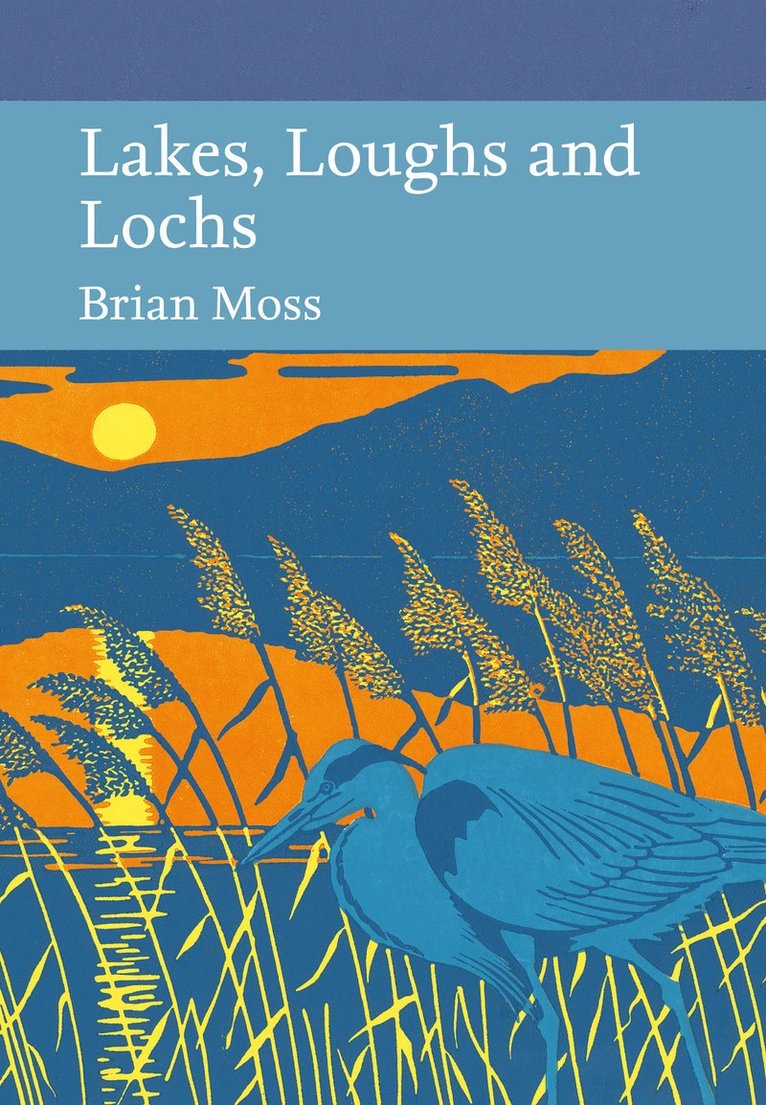
Another volume in the popular New Naturalist series, this book gives a comprehensive account of the natural history of Britain and Ireland’s inland waters, many of which are popular holiday destinations.The study of life in British lakes and rivers has been traditionally neglected in natural history publications, and yet the intricacies of plant and animal ecology as a whole can be readily studied in a pond or lake. Not since Macan and Worthington’s landmark publication in 1951, Life in Lakes and Rivers – volume 15 in the New Naturalist series – has there been a comprehensive overview of British freshwater life. In Brian Moss’s much-anticipated new volume, he gives a passionate account of the natural history of our lakes, loughs and lochs.Our understanding of lakes has changed enormously since the days of Macan and Worthington. From new techniques using stable isotopes and molecular biology to ambitious approaches using whole lakes for experiments; from advances in chemical methods that detect tiny traces of organic substances to the development of new electronic instruments, it is becoming increasingly urgent to make use of these advances to help maintain and conserve some of the most damaged of the Earth’s ecosystems.Freshwaters form the fascinating threads that stitch together the landscapes of our planet with a myriad of exchanges involving an array of organisms, from algae and insects to hippopotami and otters. Healthy lakes and their shores influence our quality of life and they strengthen the economy. They are important ecosystems that can sustain a healthy balance of aquatic life, provide us with much enjoyment, and help support our socio-economic needs. At the same time they suffer the consequences of human abuses of the land – increasing urbanisation, intensive farming, drainage and an increasing invasion of non-native species, to name but a few. Moss explores the richness of their fundamental ecology, emphasizing the need to view these freshwater systems as a whole, and not to manage or assess them in isolation, as well as the importance of ongoing conservation efforts.

2 677 kr
Tillfälligt slut
Del 32 - Naturalists' Handbooks
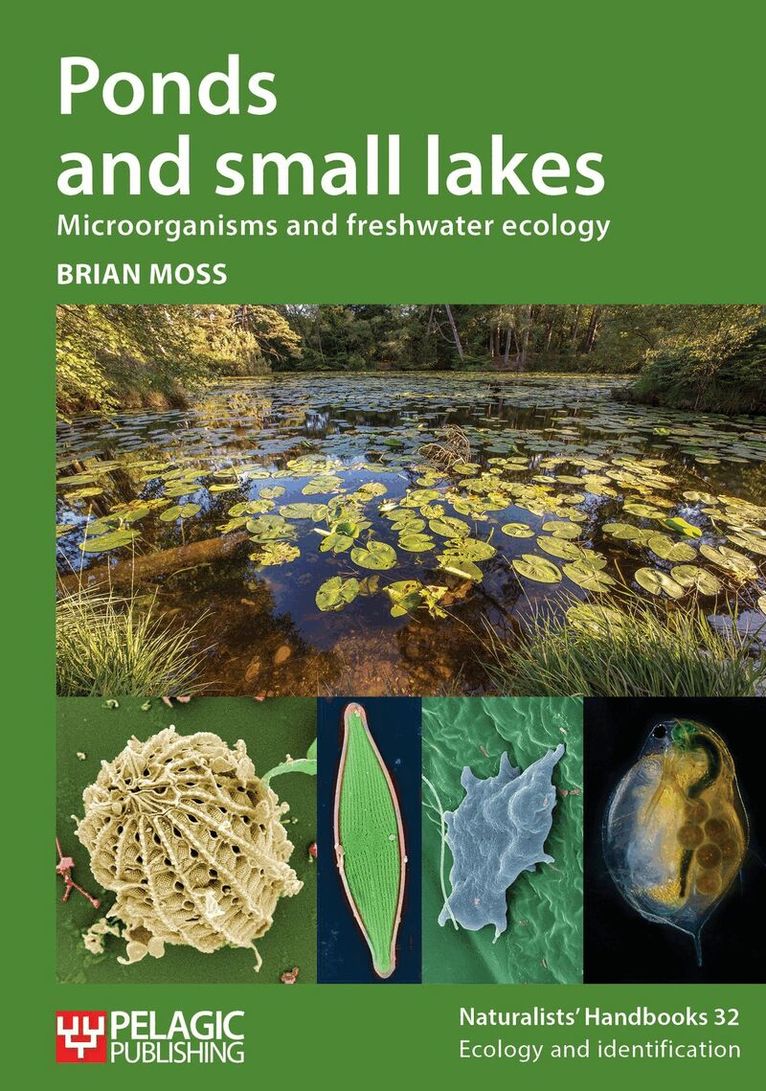
Ponds and small lakes
Microorganisms and freshwater ecology
Häftad, Engelska, 2017
455 kr
Skickas inom 3-6 vardagar
Ponds and small lakes support an extremely rich biodiversity of fascinating organisms. Many people have tried pond-dipping and encountered a few unfamiliar creatures, such as dragonfly nymphs and caddisfly larvae. However, there is a far richer world of microscopic organisms, such as diatoms, desmids and rotifers, which is revealed in this book. Anyone with access to a microscope can open up this hidden dimension. Identification keys are provided so that readers can identify, explore and study this microscopic world. There are also many suggestions of ways in which readers can then make original contributions to our knowledge and understanding of pond ecology.The book not only explores the fascinating world of the creatures within ponds and their interactions, but also explains the many ways in which ponds are important in human affairs. Ponds are being lost around the world, but they are a key part of a system that maintains our climate. In the face of climate change, it has never been more important to understand the ecology of ponds.Includes keys to: A – Traditional key to kingdoms of organisms; B – Contemporary key to kingdoms of organisms; C – Pragmatic key to groups of microorganisms; D – Algae visible, at least en masse, to the naked eye; E – Periphyton, both attached to surfaces and free living; F - Protozoa; G- Freshwater invertebrates and; H – Common phytoplankton genera in ponds.
Structure and Function of World Shallow Lakes
Proceedings from the 6th Shallow Lakes Congress
Inbunden, Engelska, 2010
2 100 kr
Skickas inom 10-15 vardagar
This book focuses on a selection of articles presented during the 6th International Shallow Lakes Congress, held in Punta del Este, Uruguay, in November 2008. Both the congress and the articles included in this volume raise a number of key issues. The expansion of research on shallow lakes around the world poses questions on the general validity of the theoretical framework developed in cool and cold temperate shallow lakes. In particular, comparisons along latitudinal gradients in Europe and America have shown that the functioning of lakes differs with the predominant climate and with their sensitivity to water level changes. This may have profound practical consequences for lake management and rehabilitation strategies. The results of controlled experiments and space-for-time (including latitudinal gradient) studies suggest that eutrophication symptoms likely become worse with an increase in mean temperature caused by climate warming. Consequently, the vulnerability of these ecosystems to external impacts such as changes in water level, arrival or introduction of exotic species, increase in nutrient loading and agrochemicals, will likely increase. It thus seems clear that nutrient inputs should be lowered to a much greater extent than previously thought in order to keep lakes’ diversity and conservation value, as well as to increase the chances of maintaining the still pristine lakes in a clear-water, high-biodiversity state.
Structure and Function of World Shallow Lakes
Proceedings from the 6th Shallow Lakes Congress
Häftad, Engelska, 2012
2 100 kr
Skickas inom 10-15 vardagar
This book focuses on a selection of articles presented during the 6th International Shallow Lakes Congress, held in Punta del Este, Uruguay, in November 2008. Both the congress and the articles included in this volume raise a number of key issues. The expansion of research on shallow lakes around the world poses questions on the general validity of the theoretical framework developed in cool and cold temperate shallow lakes. In particular, comparisons along latitudinal gradients in Europe and America have shown that the functioning of lakes differs with the predominant climate and with their sensitivity to water level changes. This may have profound practical consequences for lake management and rehabilitation strategies. The results of controlled experiments and space-for-time (including latitudinal gradient) studies suggest that eutrophication symptoms likely become worse with an increase in mean temperature caused by climate warming. Consequently, the vulnerability of these ecosystems to external impacts such as changes in water level, arrival or introduction of exotic species, increase in nutrient loading and agrochemicals, will likely increase. It thus seems clear that nutrient inputs should be lowered to a much greater extent than previously thought in order to keep lakes’ diversity and conservation value, as well as to increase the chances of maintaining the still pristine lakes in a clear-water, high-biodiversity state.