
Christian K. Wedemeyer - Böcker
Visar alla böcker från författaren Christian K. Wedemeyer. Handla med fri frakt och snabb leverans.
3 produkter
3 produkter

Hermeneutics, Politics, and the History of Religions
The Contested Legacies of Joachim Wach and Mircea Eliade
Häftad, Engelska, 2010
518 kr
Skickas inom 5-8 vardagar
This volume comprises papers presented at a conference marking the 50th anniversary of Joachim Wach's death, and the centennial of Mircea Eliade's birth. Its purpose is to reconsider both the problematic, separate legacies of these two major twentieth-century historians of religions, and the bearing of these two legacies upon each other. Shortly after Wach's death in 1955, Eliade succeeded him as the premiere historian of religions at the University of Chicago. As a result, the two have been associated with each other in many people's minds as the successive leaders of the so-called "Chicago School" in the history of religions. In fact, as this volume makes clear, there never was a monolithic Chicago School. Although Wach reportedly referred to Eliade as the most astute historian of religions of the day; the two never met, and their approaches to the study of religions differed significantly. Several dominant issues run through the essays collected here: the relationship between the two men's writings and their lives, and in Eliade's case, the relationship between his political commitments and his writings in fiction, history of religions, and autobiography. Both men's contributions to the field continue to provoke controversy and debate, and this volume sheds new light on these controversies and what they reveal about these two `scholars' legacies.
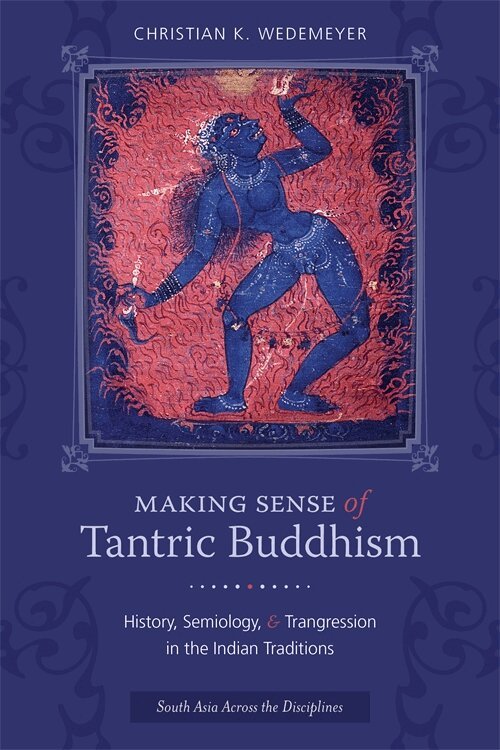
Making Sense of Tantric Buddhism
History, Semiology, and Transgression in the Indian Traditions
Inbunden, Engelska, 2012
1 081 kr
Skickas inom 11-20 vardagar
Making Sense of Tantric Buddhism fundamentally rethinks the nature of the transgressive theories and practices of the Buddhist Tantric traditions, challenging the notion that the Tantras were "marginal" or primitive and situating them instead-both ideologically and institutionally-within larger trends in mainstream Buddhist and Indian culture. Critically surveying prior scholarship, Wedemeyer exposes the fallacies of attributing Tantric transgression to either the passions of lusty monks, primitive tribal rites, or slavish imitation of Saiva traditions. Through comparative analysis of modern historical narratives-that depict Tantrism as a degenerate form of Buddhism, a primal religious undercurrent, or medieval ritualism-he likewise demonstrates these to be stock patterns in the European historical imagination. Through close analysis of primary sources, Wedemeyer reveals the lived world of Tantric Buddhism as largely continuous with the Indian religious mainstream and deploys contemporary methods of semiotic and structural analysis to make sense of its seemingly repellent and immoral injunctions.Innovative, semiological readings of the influential Guhyasamaja Tantra underscore the text's overriding concern with purity, pollution, and transcendent insight-issues shared by all Indic religions-and a large-scale, quantitative study of Tantric literature shows its radical antinomianism to be a highly managed ritual observance restricted to a sacerdotal elite. These insights into Tantric scripture and ritual clarify the continuities between South Asian Tantrism and broader currents in Indian religion, illustrating how thoroughly these "radical" communities were integrated into the intellectual, institutional, and social structures of South Asian Buddhism.
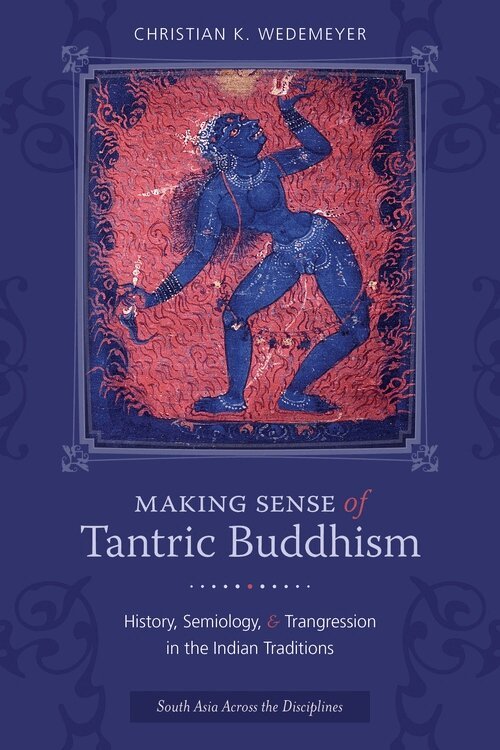
Making Sense of Tantric Buddhism
History, Semiology, and Transgression in the Indian Traditions
Häftad, Engelska, 2014
258 kr
Skickas inom 7-10 vardagar
Making Sense of Tantric Buddhism fundamentally rethinks the nature of the transgressive theories and practices of the Buddhist Tantric traditions, challenging the notion that the Tantras were "marginal" or primitive and situating them instead-both ideologically and institutionally-within larger trends in mainstream Buddhist and Indian culture. Critically surveying prior scholarship, Wedemeyer exposes the fallacies of attributing Tantric transgression to either the passions of lusty monks, primitive tribal rites, or slavish imitation of Saiva traditions. Through comparative analysis of modern historical narratives-that depict Tantrism as a degenerate form of Buddhism, a primal religious undercurrent, or medieval ritualism-he likewise demonstrates these to be stock patterns in the European historical imagination. Through close analysis of primary sources, Wedemeyer reveals the lived world of Tantric Buddhism as largely continuous with the Indian religious mainstream and deploys contemporary methods of semiotic and structural analysis to make sense of its seemingly repellent and immoral injunctions.Innovative, semiological readings of the influential Guhyasamaja Tantra underscore the text's overriding concern with purity, pollution, and transcendent insight-issues shared by all Indic religions-and a large-scale, quantitative study of Tantric literature shows its radical antinomianism to be a highly managed ritual observance restricted to a sacerdotal elite. These insights into Tantric scripture and ritual clarify the continuities between South Asian Tantrism and broader currents in Indian religion, illustrating how thoroughly these "radical" communities were integrated into the intellectual, institutional, and social structures of South Asian Buddhism.