
Dan Plesch - Böcker
Visar alla böcker från författaren Dan Plesch. Handla med fri frakt och snabb leverans.
8 produkter
8 produkter
2 088 kr
Skickas inom 10-15 vardagar
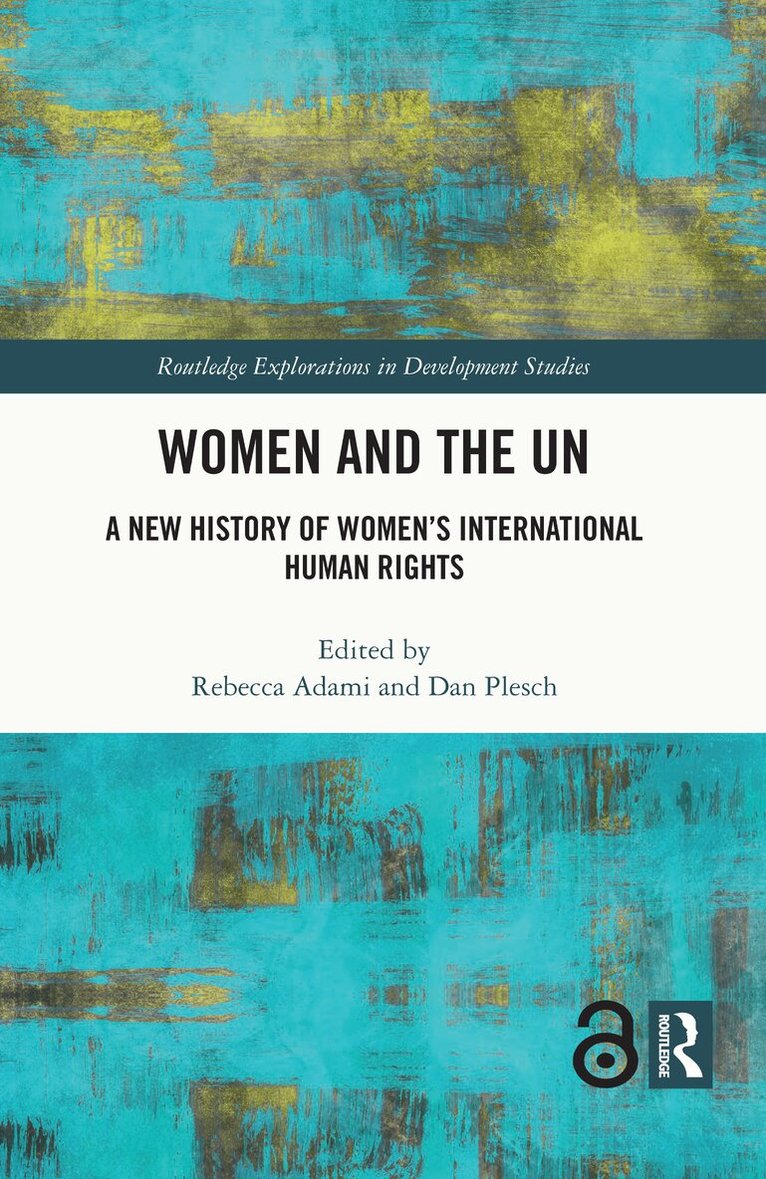
This book provides a critical history of influential women in the United Nations and seeks to inspire empowerment with role models from bygone eras. The women whose voices this book presents helped shape UN conventions, declarations, and policies with relevance to the international human rights of women throughout the world today. From the founding of the UN up until the Latin American feminist movements that pushed for gender equality in the UN Charter, and the Security Council Resolutions on the role of women in peace and conflict, the volume reflects on how women delegates from different parts of the world have negotiated and disagreed on human rights issues related to gender within the UN throughout time. In doing so it sheds new light on how these hidden historical narratives enrich theoretical studies in international relations and global agency today. In view of contemporary feminist and postmodern critiques of the origin of human rights, uncovering women’s history of the United Nations from both Southern and Western perspectives allows us to consider questions of feminism and agency in international relations afresh. With contributions from leading scholars and practitioners of law, diplomacy, history, and development studies, and brought together by a theoretical commentary by the Editors, Women and the UN will appeal to anyone whose research covers human rights, gender equality, international development, or the history of civil society.The Open Access version of this book, available athttp://www.taylorfrancis.com/books/e/9781003036708, has been made available under a Creative Commons Attribution-Non Commercial-No Derivatives 4.0 license.
2 088 kr
Skickas inom 10-15 vardagar
The creation of the UN system during World War II is a largely unknown or forgotten story among contemporary decision makers, international relations specialists, and policy analysts. This book aims to recover the wartime history of the United Nations and explore how the forgotten past can shed light on a possible and more desirable future. To achieve this, each chapter takes three snapshots: "Then," the imaginative and transnational thinking about solutions to post-war problems demonstrated a realization that victory in WW II required an intergovernmental "system" with enough power and competence to work—that is, the UN was not established as a liberal plaything and public relations ploy but rather as a vital necessity for post-war order and prosperity. "Now," which often seems a pale imitation of wartime thinking that nonetheless reflects a growing and widespread recognition of the fundamental disconnect between the nature of trans-boundary problems and current solutions seen as feasible by 193 UN member states. "Next steps," or the collective wisdom about the range of new thinking and new institutions that, in fact, may well have antecedents in wartime thinking and experimentation and could be labelled blue-prints for a "third generation" of intergovernmental organizations.This work will be essential reading for all students and scholars of the United Nations, International Organizations and Global Governance.
698 kr
Skickas inom 10-15 vardagar
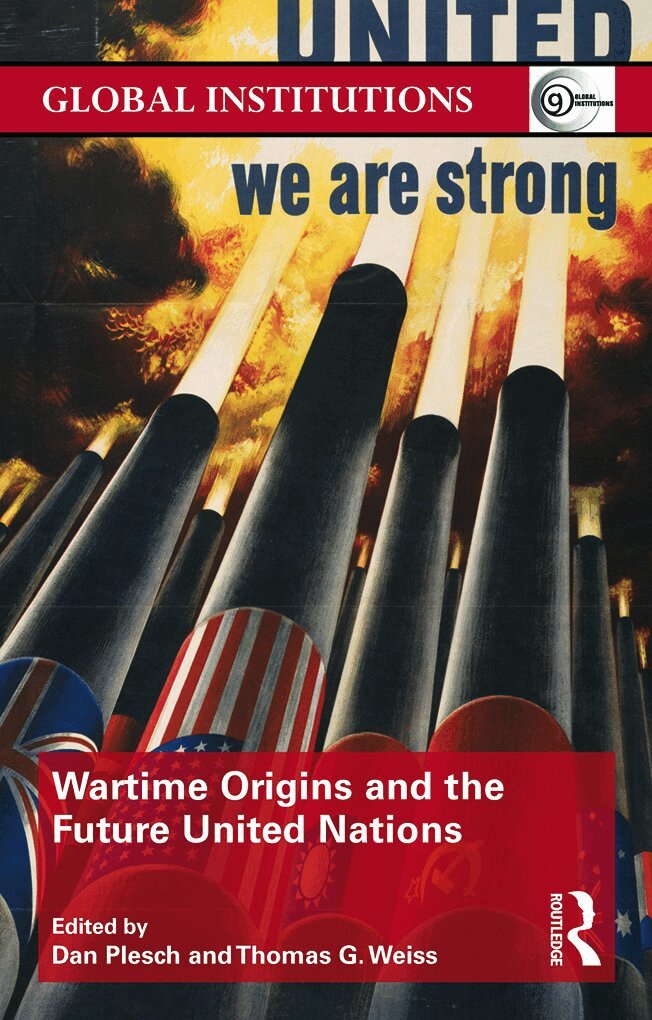
The creation of the UN system during World War II is a largely unknown or forgotten story among contemporary decision makers, international relations specialists, and policy analysts. This book aims to recover the wartime history of the United Nations and explore how the forgotten past can shed light on a possible and more desirable future. To achieve this, each chapter takes three snapshots: "Then," the imaginative and transnational thinking about solutions to post-war problems demonstrated a realization that victory in WW II required an intergovernmental "system" with enough power and competence to work—that is, the UN was not established as a liberal plaything and public relations ploy but rather as a vital necessity for post-war order and prosperity. "Now," which often seems a pale imitation of wartime thinking that nonetheless reflects a growing and widespread recognition of the fundamental disconnect between the nature of trans-boundary problems and current solutions seen as feasible by 193 UN member states. "Next steps," or the collective wisdom about the range of new thinking and new institutions that, in fact, may well have antecedents in wartime thinking and experimentation and could be labelled blue-prints for a "third generation" of intergovernmental organizations.This work will be essential reading for all students and scholars of the United Nations, International Organizations and Global Governance.

97 kr
Tillfälligt slut
533 kr
Skickas inom 10-15 vardagar
This book provides a critical history of influential women in the United Nations and seeks to inspire empowerment with role models from bygone eras. The women whose voices this book presents helped shape UN conventions, declarations, and policies with relevance to the international human rights of women throughout the world today. From the founding of the UN up until the Latin American feminist movements that pushed for gender equality in the UN Charter, and the Security Council Resolutions on the role of women in peace and conflict, the volume reflects on how women delegates from different parts of the world have negotiated and disagreed on human rights issues related to gender within the UN throughout time. In doing so it sheds new light on how these hidden historical narratives enrich theoretical studies in international relations and global agency today. In view of contemporary feminist and postmodern critiques of the origin of human rights, uncovering women’s history of the United Nations from both Southern and Western perspectives allows us to consider questions of feminism and agency in international relations afresh. With contributions from leading scholars and practitioners of law, diplomacy, history, and development studies, and brought together by a theoretical commentary by the Editors, Women and the UN will appeal to anyone whose research covers human rights, gender equality, international development, or the history of civil society.The Open Access version of this book, available athttp://www.taylorfrancis.com/books/e/9781003036708, has been made available under a Creative Commons Attribution-Non Commercial-No Derivatives 4.0 license.

370 kr
Skickas inom 7-10 vardagar
Human Rights after Hitler reveals thousands of forgotten US and Allied war crimes prosecutions against Hitler and other Axis war criminals based on a popular movement for justice that stretched from Poland to the Pacific. These cases provide a great foundation for twenty-first-century human rights and accompany the achievements of the Nuremberg trials and postwar conventions. They include indictments of perpetrators of the Holocaust made while the death camps were still operating, which confounds the conventional wisdom that there was no official Allied response to the Holocaust at the time. This history also brings long overdue credit to the United Nations' War Crimes Commission (UNWCC), which operated during and after World War II. Dan Plesch describes the commission's work and Washington's bureaucratic obstruction to a 1944 proposal to prosecute crimes against humanity before an international criminal court. From the 1940s until a recent lobbying effort by Plesch and colleagues, the UNWCC's files were kept out of public view in the UN archives under pressure from the US government.The book answers why the commission and its files were closed and reveals that the lost precedents set by these cases have enormous practical utility for prosecuting war crimes today. They cover US and Allied prosecutions of torture, including "water treatment," wartime sexual assault, and crimes by foot soldiers who were "just following orders." Plesch's book will fascinate anyone with an interest in the history of the Second World War as well as provide ground-breaking revelations for historians and human rights practitioners alike.

373 kr
Skickas inom 7-10 vardagar
In January 1942, the Declaration by United Nations forged a military alliance based on human rights principles that included over 24 countries, marking the beginning of the UN. But how did the armies of the United Nations co-operate during World War II to halt Nazi expansionism? When did the UN start to tackle the international economic and social challenges of the post-war world? This is the first book to explore how the profound restructuring of the international world order was organized. Drawing on previously unknown archival material, Plesch analyzes the engagement with the UN by all levels of society, from grassroots to the political elites. Plesch has pieced together the full story of how the UN intervened in surprising ways at a pivotal time in world history and argues that the UN s success is as vital today as it was then."
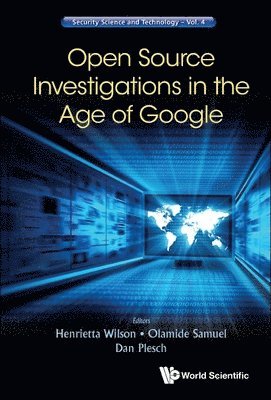
Del 4 - Security Science and Technology
Open Source Investigations In The Age Of Google
Inbunden, Engelska, 2024
1 896 kr
Skickas inom 3-6 vardagar
How did a journalist find out who was responsible for bombing hospitals in Syria from his desk in New York? How can South Sudanese monitors safely track and detail the weapons in their communities and make sure that global audiences take notice? How do researchers in London coordinate worldwide work uncovering global corruption? What are policy-makers, lawyers, and intelligence agencies doing to keep up with and make use of these activities?In the age of Google, threats to human security are being tracked in completely new ways. Human rights abuses, political violence, nuclear weapons, corruption, radicalization, and conflict are all being monitored, analyzed, and documented. Although open source investigations are neither easy to conduct nor straightforward to apply, with diligence and effort, societies, agencies, and individuals have the potential to use them to strengthen security.This interdisciplinary book presents 18 original chapters by prize-winning practitioners, experts, and rising stars, detailing what open source investigations are and how they are carried out, and examining the opportunities and challenges they present to global transparency, accountability and justice. It is essential reading for current and future digital investigators, journalists, and scholars of global governance, international relations and humanitarian law, as well as anyone interested in the possibilities and dangers of this new field.