
Daniel J. Clark – författare
Visar alla böcker från författaren Daniel J. Clark. Handla med fri frakt och snabb leverans.
5 produkter
5 produkter
1 202 kr
Skickas inom 7-10 vardagar
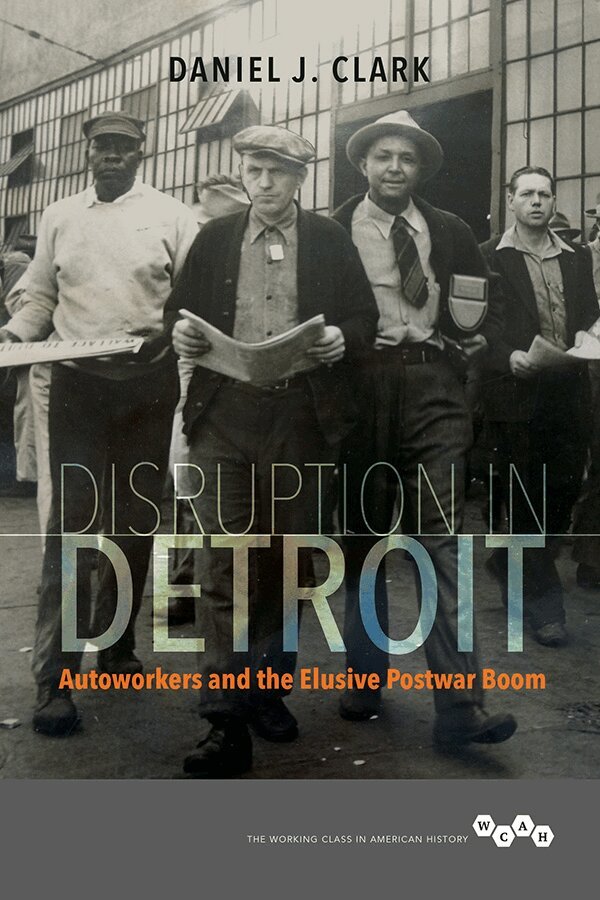
It is a bedrock American belief: the 1950s were a golden age of prosperity for autoworkers. Flush with high wages and enjoying the benefits of generous union contracts, these workers became the backbone of a thriving blue-collar middle class. It is also a myth. Daniel J. Clark began by interviewing dozens of former autoworkers in the Detroit area and found a different story--one of economic insecurity caused by frequent layoffs, unrealized contract provisions, and indispensable second jobs. Disruption in Detroit is a vivid portrait of workers and an industry that experienced anything but stable prosperity. As Clark reveals, the myths--whether of rising incomes or hard-nosed union bargaining success--came later. In the 1950s, ordinary autoworkers, union leaders, and auto company executives recognized that although jobs in their industry paid high wages, they were far from steady and often impossible to find.
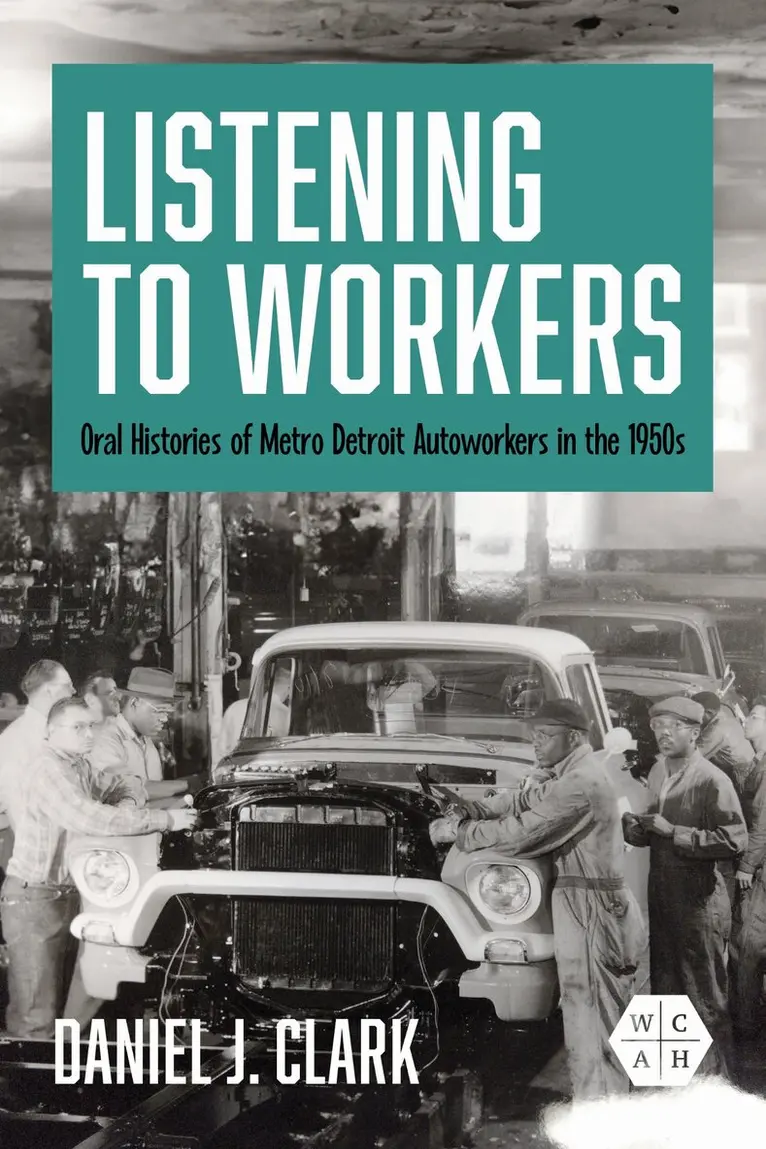
Listening to Workers
Oral Histories of Metro Detroit Autoworkers in the 1950s
Inbunden, Engelska, 2024
1 202 kr
Skickas inom 7-10 vardagar
Historians and readers alike often overlook the everyday experiences of workers. Drawing on years of interviews and archival research, Daniel J. Clark presents the rich, interesting, and sometimes confounding lives of men and women who worked in Detroit-area automotive plants in the 1950s.In their own words, the interviewees frankly discuss personal matters like divorce and poverty alongside recollections of childhood and first jobs, marriage and working women, church and hobbies, and support systems and workplace dangers. Their frequent struggles with unstable jobs and economic insecurity upend notions of the 1950s as a golden age of prosperity while stories of domestic violence and infidelity open a door to intimate aspects of their lives. Taken together, the narratives offer seldom-seen accounts of autoworkers as complex and multidimensional human beings.Compelling and surprising, Listening to Workers foregoes the union-focused strain of labor history to provide ground-level snapshots of a blue-collar world.
292 kr
Skickas inom 7-10 vardagar
It is a bedrock American belief: the 1950s were a golden age of prosperity for autoworkers. Flush with high wages and enjoying the benefits of generous union contracts, these workers became the backbone of a thriving blue-collar middle class. It is also a myth. Daniel J. Clark began by interviewing dozens of former autoworkers in the Detroit area and found a different story--one of economic insecurity caused by frequent layoffs, unrealized contract provisions, and indispensable second jobs. Disruption in Detroit is a vivid portrait of workers and an industry that experienced anything but stable prosperity. As Clark reveals, the myths--whether of rising incomes or hard-nosed union bargaining success--came later. In the 1950s, ordinary autoworkers, union leaders, and auto company executives recognized that although jobs in their industry paid high wages, they were far from steady and often impossible to find.
292 kr
Skickas inom 7-10 vardagar
Historians and readers alike often overlook the everyday experiences of workers. Drawing on years of interviews and archival research, Daniel J. Clark presents the rich, interesting, and sometimes confounding lives of men and women who worked in Detroit-area automotive plants in the 1950s.In their own words, the interviewees frankly discuss personal matters like divorce and poverty alongside recollections of childhood and first jobs, marriage and working women, church and hobbies, and support systems and workplace dangers. Their frequent struggles with unstable jobs and economic insecurity upend notions of the 1950s as a golden age of prosperity while stories of domestic violence and infidelity open a door to intimate aspects of their lives. Taken together, the narratives offer seldom-seen accounts of autoworkers as complex and multidimensional human beings.Compelling and surprising, Listening to Workers foregoes the union-focused strain of labor history to provide ground-level snapshots of a blue-collar world.
462 kr
Skickas inom 10-15 vardagar
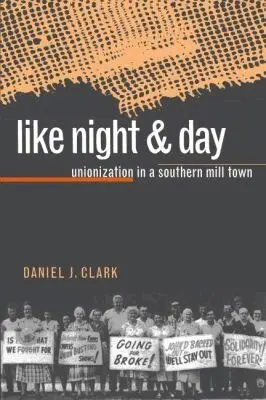
Daniel Clark demonstrates the dramatic impact unionization made on the lives of textile workers in Henderson, North Carolina, in the decade after World War II. Focusing on the Harriet and Henderson Cotton Mills, he shows that workers valued the Textile Workers Union of America for more than the higher wages and improved benefits it secured for them. Specifically, Clark points to the importance members placed on union-instituted grievance and arbitration procedures, which most labor historians have seen as impediments rather than improvements. From the signing of contracts in 1943 until a devastating strike fifteen years later, the union gave local workers the tools they needed to secure at least some measure of workplace autonomy and respect from their employer. Union-instituted grievance procedures were not without flaws, says Clark, but they were the linchpin of these efforts. When arbitration and grievance agreements collapsed in 1958, the result was the strike that ultimately broke the union. Based on complete access to company archives and transcripts of grievance hearings, this case study recasts our understanding of labor-management relations in the postwar South. |Clark demonstrates the dramatic impact unionization made on the lives of textile workers in Henderson, N.C., in the decade after World War II. Focusing on the Harriet and Henderson Cotton Mills, he shows that workers valued the Textile Workers Union of America for more than the higher wages and improved benefits it secured for them. Members also placed great importance on union-instituted grievance and arbitration procedures, which most labor historians have seen as impediments rather than improvements. Based on complete access to company archives and transcripts of grievance hearings, this case study recasts our understanding of labor-management relations in the postwar South.