
Daniel L. Schacter - Böcker
Visar alla böcker från författaren Daniel L. Schacter. Handla med fri frakt och snabb leverans.
10 produkter
10 produkter
1 110 kr
Skickas inom 5-8 vardagar
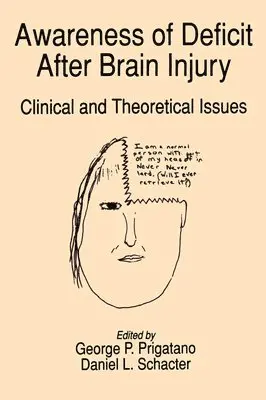
This volume provides, for the first time, multidisciplinary perspectives on the problem of awareness of deficits following brain injury. Such deficits may involve perception, attention, memory, language, or motor functions, and they can seriously disrupt an individual's ability to function. However, some brain-damaged patients are entirely unaware of the existence of their deficits, even when they are severe and easily noticed by others. In addressing these topics, contributors cover the entire range of neuropsychological syndromes in which problems with awareness of deficit are observed: hemiplegia and hemianopia, amnesia, aphasia, traumatic head injury, dementia, and others. On the clinical side, leading researchers delineate the implications of awareness of deficits for rehabilitation and patient management, and the role of defence mechanisms such as denial. Theoretical discussions focus on the importance of awareness disturbances for better understanding such cognitive processes as attention, consciousness, and monitoring.
243 kr
Skickas inom 3-6 vardagar
336 kr
Skickas inom 5-8 vardagar
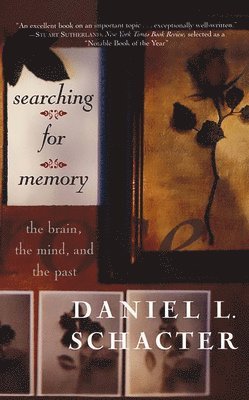
Memory. There may be nothing more important to human beings than our ability to enshrine experience and recall it. While philosophers and poets have elevated memory to an almost mystical level, psychologists have struggled to demystify it. Now, according to Daniel Schacter, one of the most distinguished memory researchers, the mysteries of memory are finally yielding to dramatic, even revolutionary, scientific breakthroughs. Schacter explains how and why it may change our understanding of everything from false memory to Alzheimer's disease, from recovered memory to amnesia with fascinating firsthand accounts of patients with striking,and sometimes bizarre,amnesias resulting from brain injury or psychological trauma.
373 kr
Skickas inom 10-15 vardagar
The scientific research literature on memory is enormous. Yet until now no single book has focused on the complex interrelationships of memory and belief. This book brings together eminent scholars from neuroscience, cognitive psychology, literature, and medicine to discuss such provocative issues as “false memories,” in which people can develop vivid recollections of events that never happened; retrospective biases, in which memories of past experiences are influenced by one’s current beliefs; and implicit memory, or the way in which nonconscious influences of past experience shape current beliefs.Ranging from cognitive, neurological, and pathological perspectives on memory and belief, to relations between conscious and nonconscious mental processes, to memory and belief in autobiographical narratives, this book will be uniquely stimulating to scholars in several academic disciplines.
481 kr
Skickas inom 10-15 vardagar
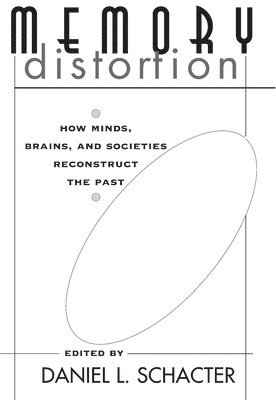
Hypnosis, confabulation, source amnesia, flashbulb memories, repression--these and numerous additional topics are explored in this timely collection of essays by eminent scholars in a range of disciplines. This is the first book on memory distortion to unite contributions from cognitive psychology, psychopathology, psychiatry, neurobiology, sociology, history, and religious studies. It brings the most relevant group of perspectives to bear on some key contemporary issues, including the value of eyewitness testimony and the accuracy of recovered memories of sexual abuse.The distinguished contributors to this volume explore the full range of biological phenomena and social ideas relevant to understanding memory distortion, including the reliability of children's recollections, the effects of hypnosis on memory, and confabulation in brain-injured patients. They also look into the activity and role of brain systems, cellular bases of memory distortion, and the effects of emotion and trauma on the accuracy of memory. In a section devoted to the social aspects of memory distortion, additional essays analyze the media's part in distorting social memory, factors influencing historical reconstruction of the collective past, and memory distortion in religion and other cultural constructs. Daniel Schacter launches the collection with a history of psychological memory distortions. Subsequent highlights include new empirical findings on memory retrieval by a pioneer in the field, some of the foremost research on computational models, studies of the relationship between emotion and memory, new findings on amnesia by a premier neuroscientist, and reflections on the power of collective amnesia in U.S. history, the Nazi Holocaust, and ancient Egypt.
Cognitive Psychology of False Memories
A Special Issue of Cognitive Neuropsychology
Inbunden, Engelska, 1999
769 kr
Tillfälligt slut
People sometimes remember events that never happened. These illusory or false memories have important practical implications in various aspects of everyday life, and also have significant theoretical implications for cognitive and neuropsychological models of memory. Cognitive psychologists and neuropsychologists have long been aware of false recognition, confabulation, and related kinds of memory distortions, but during the past several years research on these topics has increased rapidly.In recognition of this emerging domain of interest, this special issue of Cognitive Neuropsychology is devoted to the cognitive neuropsychology of false memories. Edited by Daniel L. Schacter, the special issue features experimental and theoretical contributions from leading cognitive psychologists, neuropsychologists, and neurologists that explore such issues as false recognition after frontal lobe damage, the nature of confabulation, amnesia and false memories, physiological correlates of memory illusions, memory distortions in normal and abnormal aging, and computational models of true and false memories.
2 032 kr
Skickas inom 10-15 vardagar
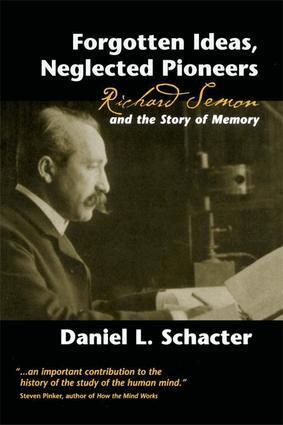
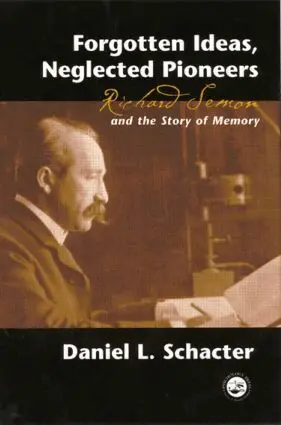
Richard Semon was a German evolutionary biologist who wrote, during the first decade of the twentieth century, two fascinating analyses of the workings of human memory which were ahead of their time. Although these have been virtually unknown to modern researchers, Semon's work has been rediscovered during the past two decades and has begun to have an influence on the field. This book not only examines Semon's contribution to memory research, but also tells the story of an extraordinary life set against the background of a turbulent period in European history and major developments in science and evolutionary theory. The resulting book is an engaging blend of biographical, historical and psychological material.
Cognitive Psychology of False Memories
A Special Issue of Cognitive Neuropsychology
Häftad, Engelska, 2019
630 kr
Skickas inom 10-15 vardagar
People sometimes remember events that never happened. These illusory or false memories have important practical implications in various aspects of everyday life, and also have significant theoretical implications for cognitive and neuropsychological models of memory. Cognitive psychologists and neuropsychologists have long been aware of false recognition, confabulation, and related kinds of memory distortions, but during the past several years research on these topics has increased rapidly.In recognition of this emerging domain of interest, this special issue of Cognitive Neuropsychology is devoted to the cognitive neuropsychology of false memories. Edited by Daniel L. Schacter, the special issue features experimental and theoretical contributions from leading cognitive psychologists, neuropsychologists, and neurologists that explore such issues as false recognition after frontal lobe damage, the nature of confabulation, amnesia and false memories, physiological correlates of memory illusions, memory distortions in normal and abnormal aging, and computational models of true and false memories.

2 920 kr
Kommande
872 kr
Skickas inom 10-15 vardagar
Richard Semon was a German evolutionary biologist who wrote, during the first decade of the twentieth century, two fascinating analyses of the workings of human memory which were ahead of their time. Although these have been virtually unknown to modern researchers, Semon's work has been rediscovered during the past two decades and has begun to have an influence on the field. This book not only examines Semon's contribution to memory research, but also tells the story of an extraordinary life set against the background of a turbulent period in European history and major developments in science and evolutionary theory. The resulting book is an engaging blend of biographical, historical and psychological material.