
Daniel Riches - Böcker
Visar alla böcker från författaren Daniel Riches. Handla med fri frakt och snabb leverans.
2 produkter
2 produkter
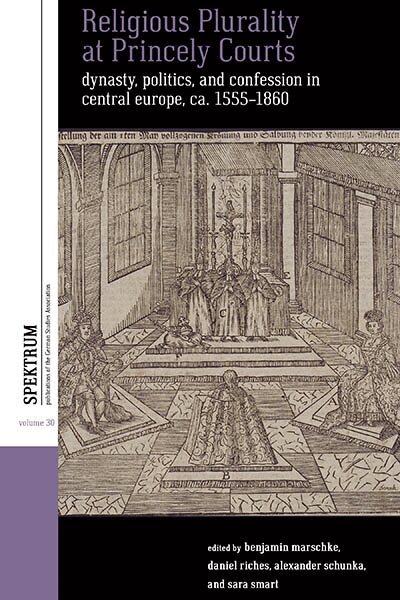
Religious Plurality at Princely Courts
Dynasty, Politics, and Confession in Central Europe, ca. 1555-1860
Inbunden, Engelska, 2024
1 956 kr
Skickas inom 3-6 vardagar
Early modern European monarchies legitimized their rule through dynasty and religion, and ideally the divine right of the ruler corresponded with the confession of the territory. It has thus been assumed that at princely courts only a single confession was present. However, the reality of the confessional circumstances at court commonly involved more than one faith. Religious Plurality at Princely Courts explores the reverberations of biconfessional or multiconfessional intra-Christian situations at courts on dynastic, symbolic, diplomatic, artistic, and theological levels, exploring interreligious dialogue, religious change, and confessional blending. Incorporating perspectives across European studies such as domestic and international politics, dynastic strategies, the history of ideas, women’s and gender history, as well as visual and material culture, the contributions to this volume highlight the dynamics and implications of religious plurality at court.
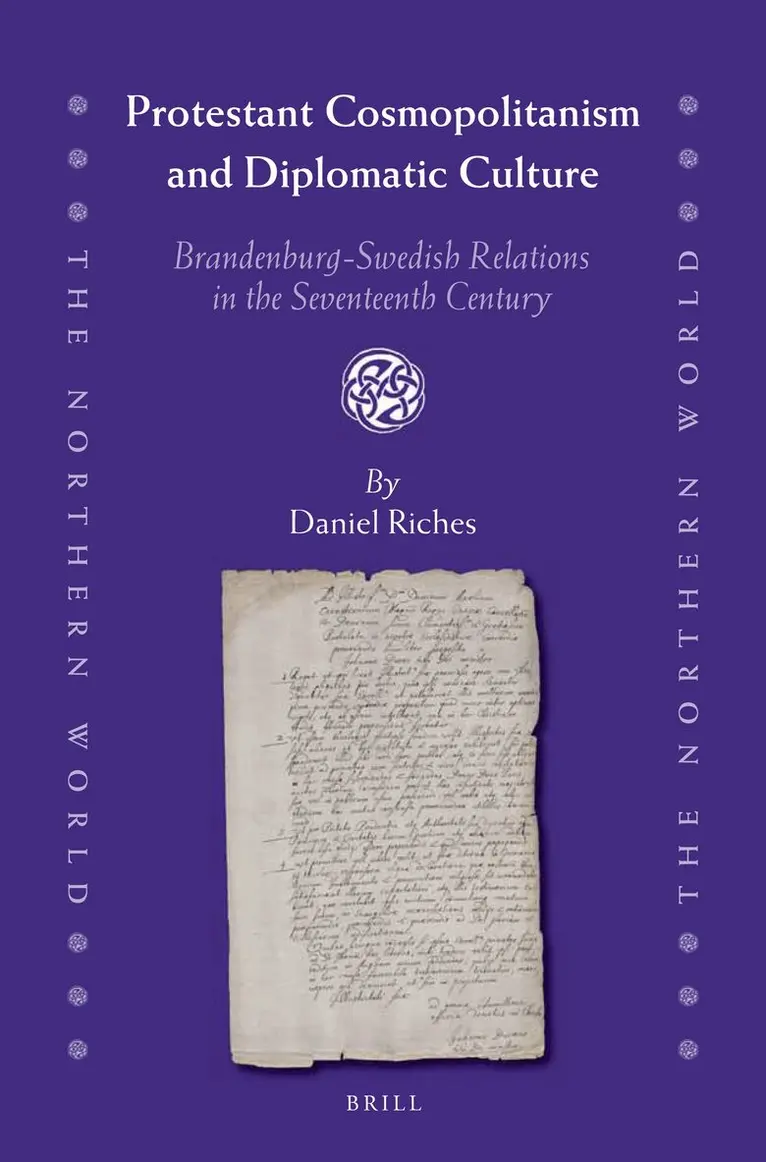
Del 59 - Northern World
Protestant Cosmopolitanism and Diplomatic Culture
Brandenburg-Swedish Relations in the Seventeenth Century
Inbunden, Engelska, 2012
2 927 kr
Skickas inom 5-8 vardagar
In Protestant Cosmopolitanism and Diplomatic Culture, Daniel Riches investigates seventeenth-century Brandenburg-Swedish relations to present an image of early modern diplomacy driven by complex networks of individuals whose activities were informed by their educational backgrounds, intellectual and cultural interests, religious convictions, and personal connections. The Brandenburg-Swedish relationship was crafted not only by formally-credentialed diplomats, but also by an array of officers, bureaucrats, clergymen, merchants and scholars who conversed in the symbolic language of a common diplomatic culture and a worldview of Protestant cooperation across lines of political and denominational difference. The image of diplomacy that emerges is not one of bilateral contact between states, but rather zigging and zagging across multiple intersecting networks and ever-shifting constellations of religion, politics and culture.