
Debby Banham - Böcker
Visar alla böcker från författaren Debby Banham. Handla med fri frakt och snabb leverans.
3 produkter
3 produkter
753 kr
Skickas
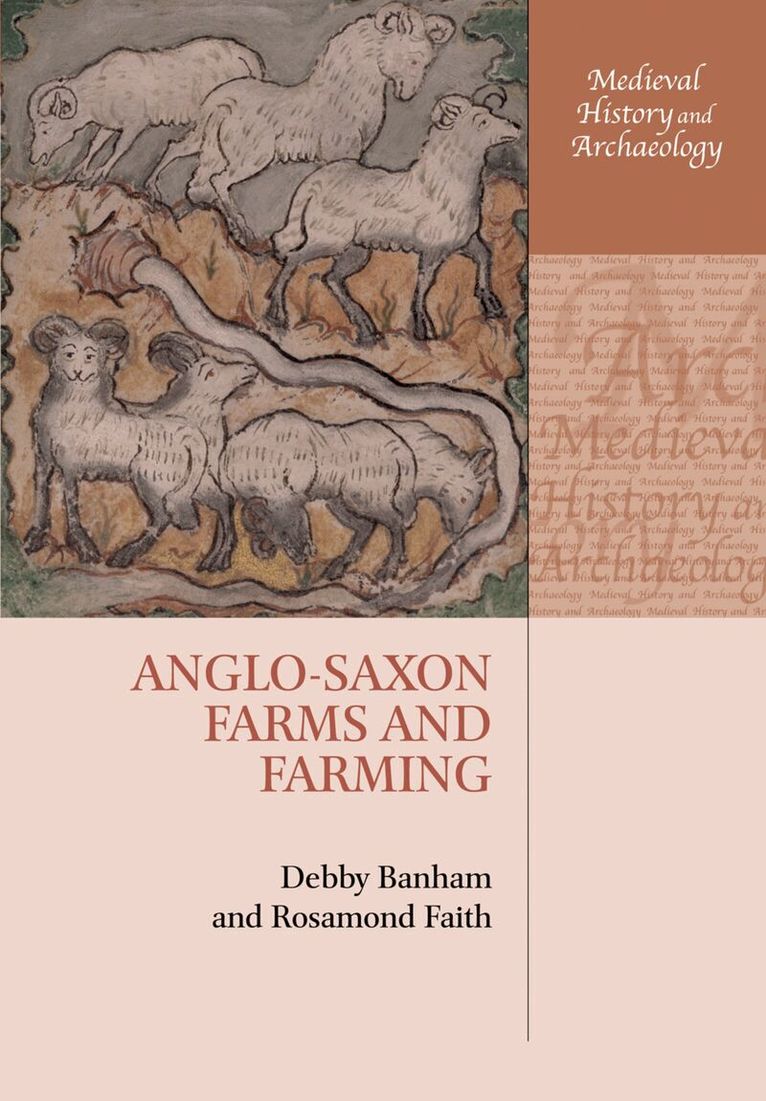
Anglo-Saxon farming made England so wealthy by the eleventh century that it attracted two full-scale invasions. In Anglo-Saxon Farms and Farming, Debby Banham and Rosamond Faith explore how Anglo-Saxon farmers produced the food and other crops and animal products that sustained England's economy, society, and culture before the Norman Conquest.The volume is made up of two complementary sections: the first examines written and pictorial sources, archaeological evidence, place-names, and the history of the English language to discover what kind of crops and livestock people raised, and what tools and techniques they used in producing them. The second part assembles a series of local landscape studies to explore how these techniques were combined into working agricultural regimes in different environments. These perspectives allow the authors to take new approaches to the chronology and development of open-field farming, to the changing relationship between livestock husbandry and arable cultivation, and to the values and social relationships which under-pinned rural life. The elite are not ignored, but peasant famers are represented as agents, making decisions about the way they managed their resources and working lives.A picture emerges of an agriculture that changed from an essentially prehistoric state in the sub-Roman period to what was, by the time of the Conquest, recognizably the beginning of a tradition that only ended in the modern period. Anglo-Saxon farming was not only sustainable, but infinitely adaptable to different soils and geology, and to a climate changing as unpredictably as it is today.
2 348 kr
Skickas inom 5-8 vardagar
Farming was the basis of the wealth that made England worth invading, twice, in the eleventh century, while trade and manufacturing were insignificant by modern standards. In Anglo-Saxon Farms and Farming, the authors employ a wide range of evidence to investigate how Anglo-Saxon farmers produced the food and other agricultural products that sustained English economy, society, and culture before the Norman Conquest. The first part of the volume draws on written and pictorial sources, archaeology, place-names, and the history of the English language to discover what crops and livestock people raised, and what tools and techniques were used to produce them. In part two, using a series of landscape studies - place-names, maps, and the landscape itself, the authors explore how these techniques might have been combined into working agricultural regimes in different parts of the country. A picture emerges of an agriculture that changed from an essentially prehistoric state in the sub-Roman period to what was recognisably the beginning of a tradition that only ended with the Second World War. Anglo-Saxon farming was not only sustainable, but infinitely adaptable to different soils and geology, and to a climate changing as unpredictably as it is today.
Del 9 - Health and Healing in the Middle Ages
Early Medieval Medicine in Context
Transmission, Translation and Transformation
Inbunden, Engelska, 2025
1 195 kr
Skickas inom 7-10 vardagar
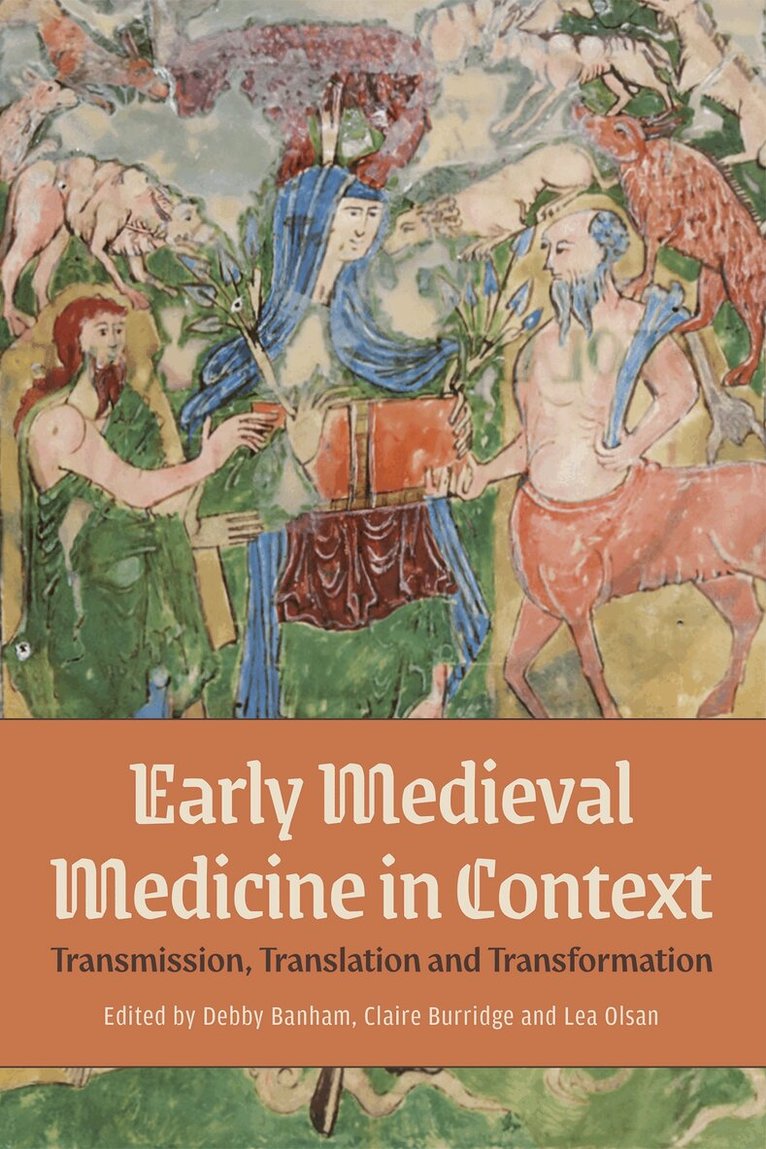
Fresh perspectives on how medical texts, broadly construed, were recorded, perceived and utilised.The past few decades have witnessed significant shifts in the scholarly investigation of early medieval medicine and its texts, moving far beyond outdated stereotypes of stagnation and superstition, not least via close study of the manuscript evidence, which has enabled a better appreciation of the processes involved in the recording and transfer of medical knowledge and healing practices. This book builds on these recent developments. With a particular focus on transmission, translation and transformation, the essays collected here offer detailed explorations of sources, contexts, producers and uses, examining material ranging from Bald's Leechbook and continental Latin recipe collections to Old Norse sagas and a Byzantine Greek treatise on venomous animals (Book V of Paul of Aegina's Pragmateia). Several contributors explore Old English's multifarious connections with the Latin tradition, discussing charms, obstetric and gynaecological texts, as well as the Peri didaxeon. The volume concludes with an afterword by Peregrine Horden on future directions of study, inviting further research into this vibrant and growing field. Chapter 3 is available as Open Access under the Creative Commons licence CC BY-NC-ND. The article received funding from the European Research Council (ERC) under the European Union's Horizon 2020 research and innovation programme (grant agreement no. 101018645).