
Dirk Hermans - Böcker
Visar alla böcker från författaren Dirk Hermans. Handla med fri frakt och snabb leverans.
5 produkter
5 produkter
784 kr
Skickas inom 10-15 vardagar
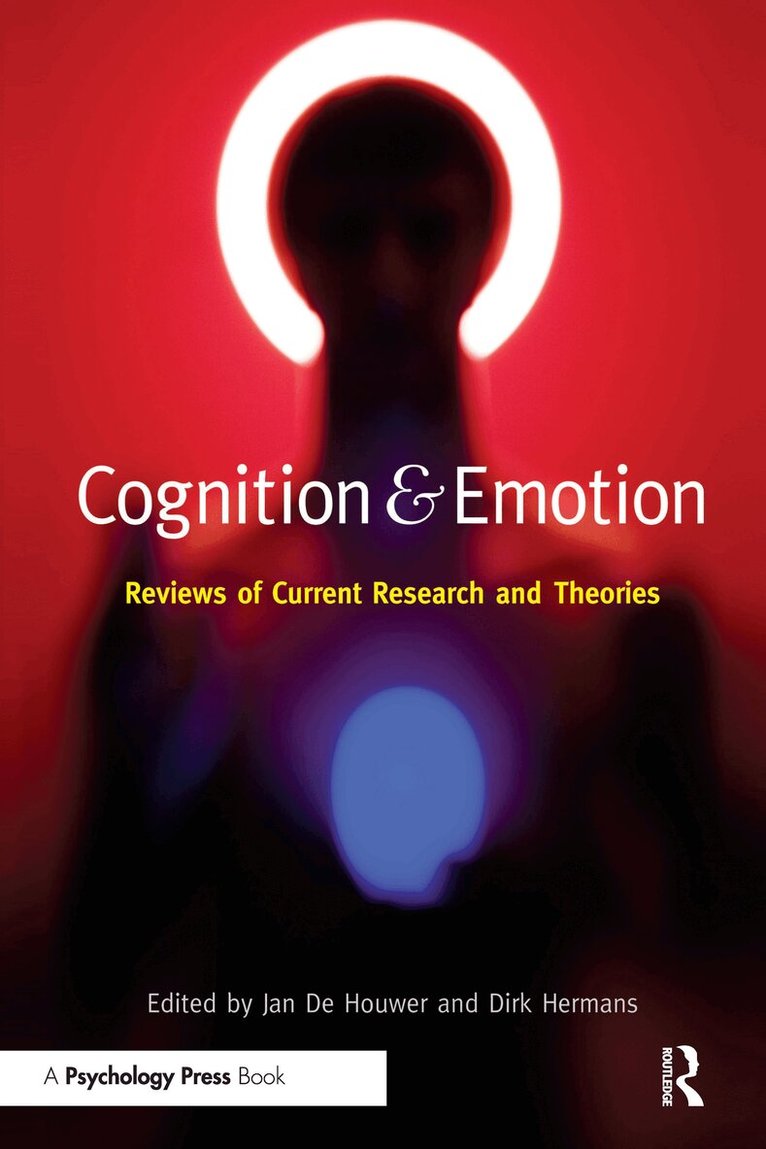
Emotions are complex and multifaceted phenomena. Although they have been examined from a variety of perspectives, the study of the interaction between cognition and emotion has always occupied a unique position within emotion research. Many philosophers and psychologists have been fascinated by the relationship between thinking and feeling.During the past 30 years, research on the relationship between cognition and emotion has boomed and so many studies on this topic have been published that it is difficult to keep track of the evidence. This book fulfils the need for a review of the existing evidence on particular aspects of the interplay between cognition and emotion. The book assembles a collection of state-of-the-art reviews of the most important topics in cognition and emotion research: emotion theories, feeling and thinking, the perception of emotion, the expression of emotion, emotion regulation, emotion and memory, and emotion and attention. By bringing these reviews together, this book presents a unique overview of the knowledge that has been generated in the past decades about the many and complex ways in which cognition and emotion interact. As such, it provides a useful tool for both students and researchers alike, in the fields of social, clinical and cognitive psychology.
417 kr
Skickas inom 10-15 vardagar
The concepts 'affect', 'valence' and 'attitude' are all fundamentally linked to the basic psychological dimension of good vs bad, positive vs negative, approach vs avoid. Affective processing refers to the act of determining the location of a stimulus on the affective dimension. Over the past few decades, scholars of emotion theory, social psychology, and learning psychology have put forward the hypothesis that affective processing does not depend on controlled cognitive processing. That is, they propose that organisms are able to determine whether a stimulus is good or bad without engaging in intentional, goal-directed, conscious, or capacity-demanding processing of the (evaluative attributes of the) stimulus. Rather, affective processing could occur automatically. Such automatic affective processing was believed to have an important impact on subsequent cognitive processing and behaviour.These proposals led to a multitude of research. New paradigms were developed that allow one to study the conditions under which stimulus valence can be processed and efforts were directed at understanding how such affective processing influences subsequent cognitive processing and behaviour. The aim of this special issue is to provide an overview of some of (a) the paradigms that are available to study automatic affective processing, (b) the knowledge about affective processing that has been gained over the last years, and (c) the issues and questions that are currently being addressed and that will most likely dominate the research in years to come.
1 645 kr
Skickas inom 10-15 vardagar
Emotions are complex and multifaceted phenomena. Although they have been examined from a variety of perspectives, the study of the interaction between cognition and emotion has always occupied a unique position within emotion research. Many philosophers and psychologists have been fascinated by the relationship between thinking and feeling.During the past 30 years, research on the relationship between cognition and emotion has boomed and so many studies on this topic have been published that it is difficult to keep track of the evidence. This book fulfils the need for a review of the existing evidence on particular aspects of the interplay between cognition and emotion. The book assembles a collection of state-of-the-art reviews of the most important topics in cognition and emotion research: emotion theories, feeling and thinking, the perception of emotion, the expression of emotion, emotion regulation, emotion and memory, and emotion and attention. By bringing these reviews together, this book presents a unique overview of the knowledge that has been generated in the past decades about the many and complex ways in which cognition and emotion interact. As such, it provides a useful tool for both students and researchers alike, in the fields of social, clinical and cognitive psychology.
2 104 kr
Skickas inom 10-15 vardagar
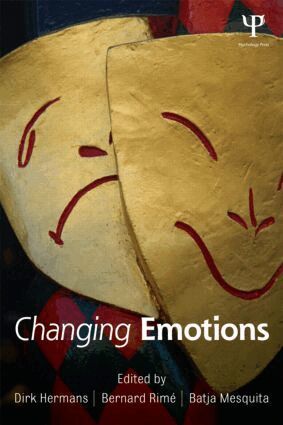
The question ‘how far can emotions be changed?’ lies at the heart of innumerable psychological interventions. Although often viewed as static, changes in the intensity, quality, and complexity of emotion can occur from moment to moment, and also over longer periods of time, often as a result of developmental, social or cultural factors. Changing Emotions highlights several recent developments in this intriguing domain, and provides a comprehensive guide for understanding how and why emotions change. The chapters are organized into five parts: • Lifespan Perspective• Learning Perspective• Social-Cultural Perspective• Emotional-Dynamics Perspective• Intervention Perspective.In each chapter an internationally renowned scholar presents a concise review of key findings from their own research perspective. The book will be of great interest to researchers in the area of emotion and emotion regulation as well as related fields such as developmental psychology, educational psychology, social, clinical psychology and psychotherapy. It may also be of interest to sociologists, philosophers, and economists interested in learning more about emotions.
880 kr
Skickas inom 10-15 vardagar
The question ‘how far can emotions be changed?’ lies at the heart of innumerable psychological interventions. Although often viewed as static, changes in the intensity, quality, and complexity of emotion can occur from moment to moment, and also over longer periods of time, often as a result of developmental, social or cultural factors. Changing Emotions highlights several recent developments in this intriguing domain, and provides a comprehensive guide for understanding how and why emotions change. The chapters are organized into five parts: • Lifespan Perspective• Learning Perspective• Social-Cultural Perspective• Emotional-Dynamics Perspective• Intervention Perspective.In each chapter an internationally renowned scholar presents a concise review of key findings from their own research perspective. The book will be of great interest to researchers in the area of emotion and emotion regulation as well as related fields such as developmental psychology, educational psychology, social, clinical psychology and psychotherapy. It may also be of interest to sociologists, philosophers, and economists interested in learning more about emotions.