
Donald Kennedy - Böcker
Visar alla böcker från författaren Donald Kennedy. Handla med fri frakt och snabb leverans.
9 produkter
9 produkter

266 kr
Skickas inom 5-8 vardagar
The Cold and the Dark is the record of the Conference on the Long-Term Worldwide Biological Consequences of Nuclear War, held in Washington, D.C., on October 31 to November 1, 1983. The conference involved over 200 scientists from many nations and drew together the best available scientific information. Its central finding was the phenomenon of nuclear winter: a much more profound and long-lasting devastation of the earth and atmosphere than had been believed possible before. In the two principal papers, Carl Sagan presents the atmospheric and climatic consequences of nuclear war and Paul Ehrlich summarizes its biological implications. Also included is the text of the “Moscow Link” —a dialogue between Soviet and American scientists on nuclear winter—and the technical papers providing the scientific evidence for the book’s conclusions.
341 kr
Skickas inom 10-15 vardagar
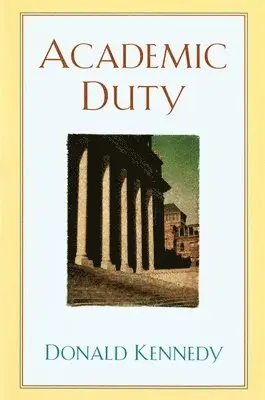
The university today is under attack from all sides. Parents and students resent the escalating costs of education and wonder where the money is being spent. Aspiring scholars feel betrayed by an institution that prepares them for nonexistent jobs. Critics on the right condemn the teachers who neglect "the canon" while critics on the left condemn the creeping corporatism on campus. Politicians seek greater control over the conduct of research and add new conditions to the use of government funds. Worst of all, the academics are increasingly uneasy in an environment that fosters competition, discourages cooperation, and has made "publish or perish" a condition of survival.Donald Kennedy, the former president of Stanford University and currently a member of its faculty, has been at the front lines of the issues confounding the academy today. In this important new book, he brings his experience and concern to bear on the present state of the university. He examines teaching, graduate training, research, and their ethical context in the research university. Aware of the numerous pressures that academics face, from the pursuit of open inquiry in the midst of culture wars, to confusion and controversy over the ownership of ideas, to the scramble for declining research funds and facilities, he explores the whys and wherefores of academic misconduct, be it scholarly, financial, or personal.Kennedy suggests that meaningful reform cannot take place until more rigorous standards of academic responsibility--to students, the university, and the public--are embraced by both faculty and the administration. With vision and compassion, he offers an important antidote to recent attacks from without that decry the university and the professoriate, and calls upon the college community to counter those attacks by looking within and fulfilling its duties.
451 kr
Skickas inom 11-20 vardagar
This thought-provoking study examines the ethical, legal, and social problems that arise with cutting-edge medical technology. Using as examples four powerful and largely unregulated technologies-off-label use of drugs, innovative surgery, assisted reproduction, and neuroimaging-Margaret L. Eaton and Donald Kennedy illustrate the difficult challenges faced by clinicians, researchers, and policy makers who seek to advance the frontiers of medicine safely and responsibly. Supported by medical history and case studies and drawing on reports from dozens of experts, the authors address important practical, ethical, and policy issues. They consider topics such as the responsible introduction of new medical products and services, the importance of patient consent, the extent of the duty to mitigate harm, and the responsibility to facilitate access to new medical therapies. This work's insights into the nature and consequences of medical innovation contribute to the national debate on how best to protect patients while fostering innovation and securing benefits.

1 518 kr
Skickas inom 10-15 vardagar
More than any other labor victory of the 1930s, the emergence of the Steel Workers' Organizing Committee symbolized the rise of organized labor to a position of power in the United States. Yet, as the contributors to this volume demonstrate, the unionization of the steel industry, and most notably the role of SWOC and Philip Murray in that process, has received far less attention than it deserves.Beginning with a discussion of why the unionization of steel has been relatively neglected by labor historians, the contributors to this volume analyze early organizing efforts in steel, the major transformations wrought and felt by the union, and the character of the union members and leaders. Critical throughout is discussion of the role of Philip Murray in shaping the United Steelworkers of America into one of the premier economic, social, and political institution of the war years and beyond.Contributors: David Brody, Malvyn Dubovsky, Ronald L. Filippelli, Mark McColloch, Ronald W. Schatz

305 kr
Skickas inom 10-15 vardagar
More than any other labor victory of the 1930s, the emergence of the Steel Workers' Organizing Committee symbolized the rise of organized labor to a position of power in the United States. Yet, as the contributors to this volume demonstrate, the unionization of the steel industry, and most notably the role of SWOC and Philip Murray in that process, has received far less attention than it deserves.Beginning with a discussion of why the unionization of steel has been relatively neglected by labor historians, the contributors to this volume analyze early organizing efforts in steel, the major transformations wrought and felt by the union, and the character of the union members and leaders. Critical throughout is discussion of the role of Philip Murray in shaping the United Steelworkers of America into one of the premier economic, social, and political institution of the war years and beyond.Contributors: David Brody, Malvyn Dubovsky, Ronald L. Filippelli, Mark McColloch, Ronald W. Schatz
314 kr
Skickas inom 7-10 vardagar
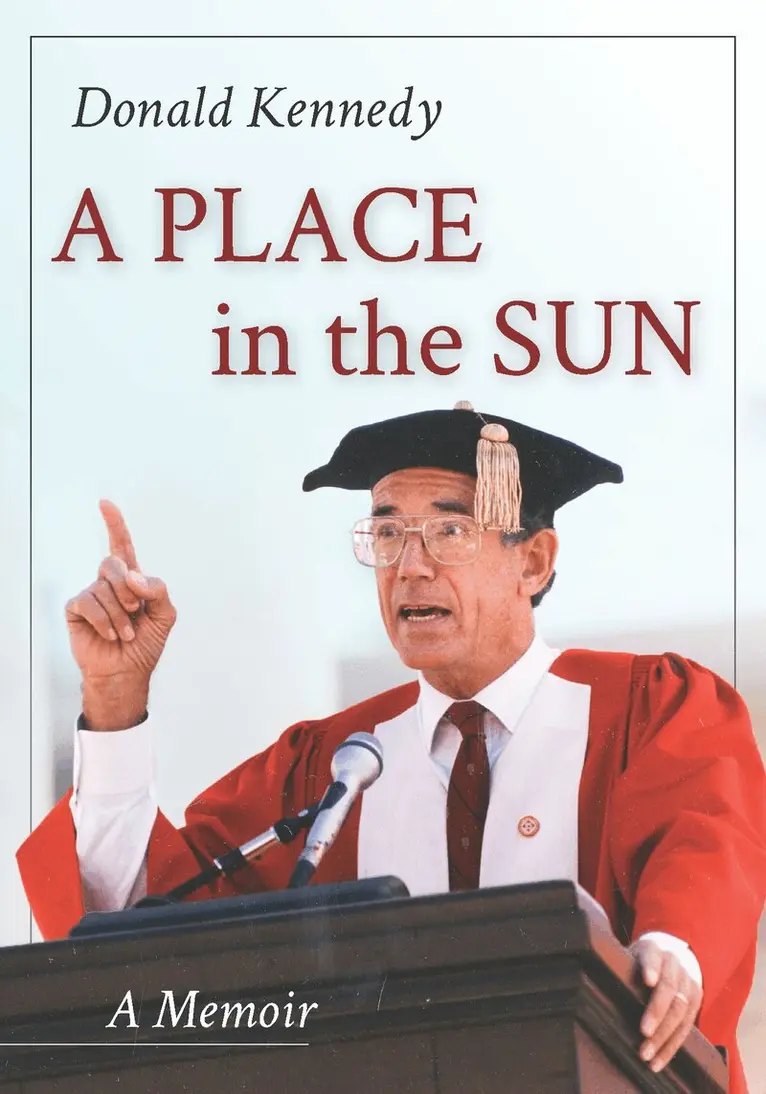
More than personal memoir, Donald Kennedy's story is not only a chronicle of watershed years in the history of Stanford University, but also a reflection on academia's perennial concerns. The story builds from his childhood and family in New England through mentors at Harvard to reflections on his early years at Stanford. What is the scope of a teacher's responsibilities? What is the proper balance between research and teaching? How far can a professor of literature stretch activism and free speech before losing tenure? How can the University look so rich and feel so poor? While biology department head, Kennedy founded Human Biology, Stanford's first interdisciplinary program. As president, issues of ethnic diversity, student activism, multicultural curricula, patent rights, divestment in South Africa, a student hostage crisis, and a major earthquake colored his pivotal years at Stanford.At the heart of Kennedy's journey has been the belief that one must give back to society as mentor, inspiring his students; as commissioner of the FDA, wrestling with issues of freedom and regulation; as editor of Science, confronting the clash of science and politics. Throughout the book, sidebar recollections from students, friends, and colleagues reflect on his caring encouragement and core humanity, his love of teaching, and a life profoundly committed to science and public service.

350 kr
Skickas inom 5-8 vardagar

196 kr
Skickas inom 5-8 vardagar
308 kr
Skickas inom 11-20 vardagar
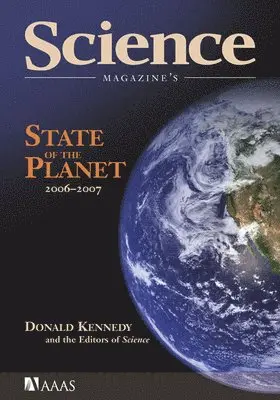
How often in today's environmental debates have you read that "the science is in dispute" - even when there is overwhelming consensus among scientists? Too often, the voice of science is diminished or diluted for the sake of politics, and the public is misled. Now, the most authoritative voice in U.S. science, Science magazine, brings you current scientific knowledge on today's most pressing environmental challenges, from population growth to climate change to biodiversity loss. "Science Magazine's State of the Planet 2006-2007" is a unique contribution that brings together leading environmental scientists and researchers to give readers a comprehensive yet accessible overview of current issues. Included are explanatory essays from "Science" magazine editor-in-chief Donald Kennedy that tie together the issues and explore the relationships among them. Each of the book's 18 chapters is written by the world's leading experts, such as: Joel Cohen on population; Peter Gleick on water; Daniel Pauly on fisheries; Thomas Karl on climate change science; Paul Portney on energy and development; and Elinor Ostrom and Thomas Dietz on commons management.Interspersed throughout are "Science" news pieces that highlight particular issues and cases relevant to the main scientific findings. An added feature is the inclusion of definitions of key terms and concepts that help students and nonspecialists understand the issues. Published biennially, "State of the Planet" is a clear, accessible guide for readers of all levels - from students to professionals.