
Frank Vibert - Böcker
Visar alla böcker från författaren Frank Vibert. Handla med fri frakt och snabb leverans.
10 produkter
10 produkter

428 kr
Skickas inom 7-10 vardagar
Unelected bodies, such as independent central banks, economic regulators, risk managers and auditors have become a worldwide phenomenon. Democracies are increasingly turning to them to demarcate boundaries between the market and the state, to resolve conflicts of interest and to allocate resources, even in sensitive ethical areas such as those involving privacy or biotechnology. This book examines the challenge that unelected bodies present to democracy and argues that, taken together, such bodies should be viewed as a new branch of government with their own sources of legitimacy and held to account through a new separation of powers. Vibert suggests that such bodies help promote a more informed citizenry because they provide a more trustworthy and reliable source of information for decisions. This book will be of interest to specialists and general readers with an interest in modern democracy as well as policy makers, think tanks and journalists.

1 192 kr
Skickas inom 7-10 vardagar
Unelected bodies, such as independent central banks, economic regulators, risk managers and auditors have become a worldwide phenomenon. Democracies are increasingly turning to them to demarcate boundaries between the market and the state, to resolve conflicts of interest and to allocate resources, even in sensitive ethical areas such as those involving privacy or biotechnology. This book examines the challenge that unelected bodies present to democracy and argues that, taken together, such bodies should be viewed as a new branch of government with their own sources of legitimacy and held to account through a new separation of powers. Vibert suggests that such bodies help promote a more informed citizenry because they provide a more trustworthy and reliable source of information for decisions. This book will be of interest to specialists and general readers with an interest in modern democracy as well as policy makers, think tanks and journalists.

786 kr
Skickas inom 7-10 vardagar
A fundamental debate on the 'Future of Europe' is now underway across Europe with an official Convention headed by former French President Valerie Giscard d'Estaing considering wide ranging reforms to the existing Union. In an original and challenging contribution to this debate, Europe Simple, Europe Strong urges a radical rethink of the framework for the continent-wide political union now possible and desirable in Europe. It argues that the key to a successful system of government is the way in which it connects two systems of choice - market choice and political choice - and that Europe's present approach is likely to lead to a situation where neither system works well. The book examines the ways in which the two systems of choice have been impacted by globalisation and the information revolution and assesses how, in this new setting, European governance can be reformed to get the best out of both systems of choice. It concludes in favour of a new and simpler democratic structure. In looking at how systems of market choice and political choice relate to each other in today's setting, the book brings together contemporary thinking on the regulatory functions of government, the role of rights-based politics in relation to vote-based politics and the relevance of models of business organisation to the organisation of government. It places special emphasis on how constitutions can be designed to promote tolerance in pluralist societies.Europe Simple, Europe Strong makes an original and challenging contribution to the European debate. It will be vital reading for a variety of academics and policy makers and for all those interested in the future of political union in Europe.

244 kr
Skickas inom 7-10 vardagar
A fundamental debate on the 'Future of Europe' is now underway across Europe with an official Convention headed by former French President Valerie Giscard d'Estaing considering wide ranging reforms to the existing Union. In an original and challenging contribution to this debate, Europe Simple, Europe Strong urges a radical rethink of the framework for the continent-wide political union now possible and desirable in Europe. It argues that the key to a successful system of government is the way in which it connects two systems of choice - market choice and political choice - and that Europe's present approach is likely to lead to a situation where neither system works well. The book examines the ways in which the two systems of choice have been impacted by globalisation and the information revolution and assesses how, in this new setting, European governance can be reformed to get the best out of both systems of choice. It concludes in favour of a new and simpler democratic structure. In looking at how systems of market choice and political choice relate to each other in today's setting, the book brings together contemporary thinking on the regulatory functions of government, the role of rights-based politics in relation to vote-based politics and the relevance of models of business organisation to the organisation of government. It places special emphasis on how constitutions can be designed to promote tolerance in pluralist societies.Europe Simple, Europe Strong makes an original and challenging contribution to the European debate. It will be vital reading for a variety of academics and policy makers and for all those interested in the future of political union in Europe.
1 466 kr
Skickas inom 7-10 vardagar
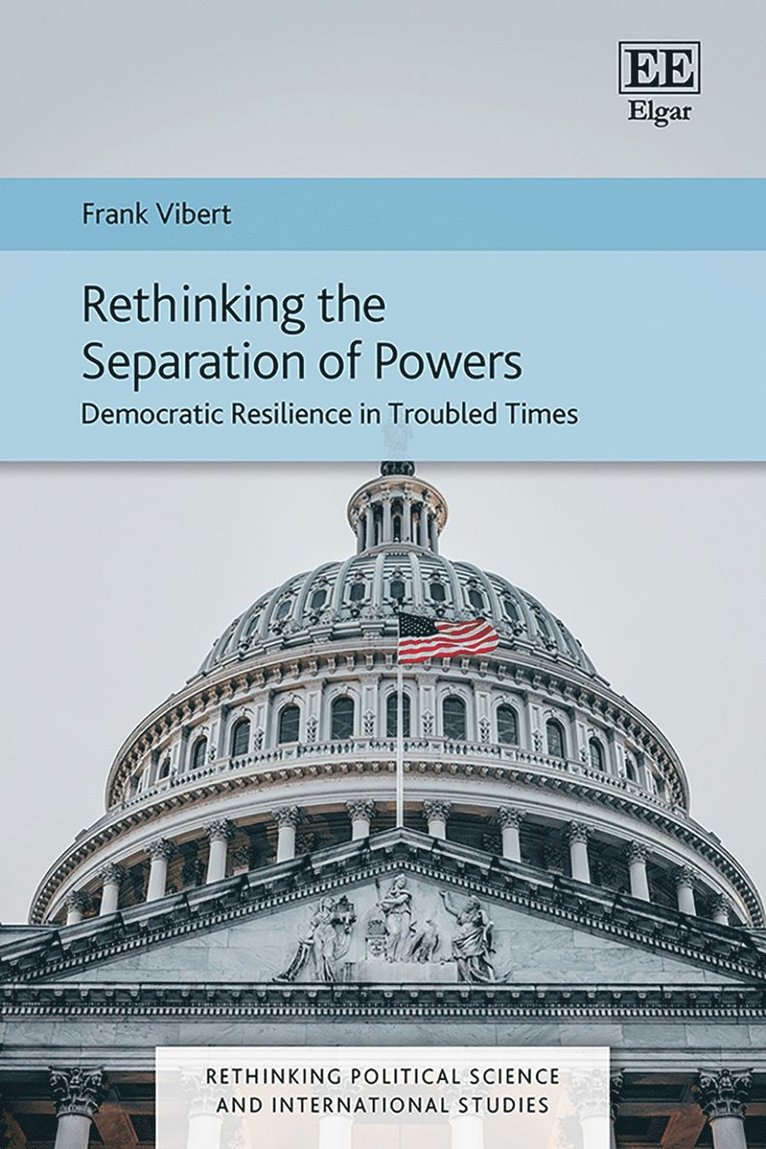
Exploring the evolution and resilience of systems for the separation of powers, this prescient book rethinks how different architectures can defend democracies against adverse shocks and help them adapt to change. Frank Vibert cuts across many fields of study to address the central problem in modern government of how to balance the reasoning of experts with that of electoral politics.Beginning from the original separation of powers between the legislative, executive and judicial branches of government, Vibert explores modern alternatives to this system. In particular, he discusses consociationalism, based on the need for political consensus for major decisions, as well as rights-based approaches. Looking to the future, he identifies important areas for improvement in these systems, such as better defences against corruption and stronger representation for the marginalised as well as the need to address income and wealth differences. Ultimately, he shows that the separation of powers is a learning system that can adapt to the tasks of modern government, especially by combining the reasoning of experts with political strategy without reverting to technocracy.Rethinking the Separation of Powers is an essential read for students and scholars of political science, law, behavioural science, social psychology and philosophy. Addressing central problems in modern government, it will also be vital for researchers interested in strategies for effective policy-making.
1 690 kr
Skickas inom 7-10 vardagar
This groundbreaking book analyzes changing patterns of governance in modern democratic societies. Frank Vibert discusses how far we should be concerned about such changes and what we should be concerned about. Crucially, Vibert clarifies the status of regulation, revealing how regulation should be viewed, not only as a technique offering specific responses to particular policy problems, but also in its new role as the key mechanism for making adjustments between the different systems of coordination used in contemporary governance.There are three main aims of the book: first, to clarify the status and role of regulation itself in modern systems of social coordination; second, to identify the key challenges to the integrity of the different systems and how far they can be attributed to the growth of regulation and third to identify what to do to protect the integrity of the different domains against challenge. This work innovates in the use of the concept of the 'regulatory space' to analyze relationships across systems of governance as well as in the utilization of 'social framing' as methods of inquiry into why we regulate. It also breaks new ground in discussing 'accountability' in terms of being able to monitor the changing patterns.The New Regulatory Space is an interdisciplinary discussion and will appeal to scholars and researchers as well as advanced undergraduate and graduate students of public administration and regulation, political economy, law and society and law and regulation. Regulatory practitioners will also find an invaluable overview of theory and practice.

1 978 kr
Skickas inom 7-10 vardagar
Democratic governments are increasingly under pressure from populists, and distrust of governmental authority is on the rise. Economic causes are often blamed. Making a 21st Century Constitution proposes instead that constitutions no longer provide the kind of support that democracies need in today's conditions, and outlines ways in which reformers can rectify this.Frank Vibert addresses key sources of constitutional obsolescence, identifies the main challenges for constitutional updating and sets out the ways in which constitutions may be made suitable for the the 21st century. The book highlights the need for reformers to address the deep diversity of values in today's urbanized societies, the blind spots and content-lite nature of democratic politics, and the dispersion of authority among new chains of intermediaries.This book will be invaluable for students of political science, public administration and policy, law and constitutional economics. Its analysis of how constitutions can be made fit for purpose again will appeal to all concerned with governance, practitioners and reformers alike.
1 168 kr
Skickas inom 7-10 vardagar
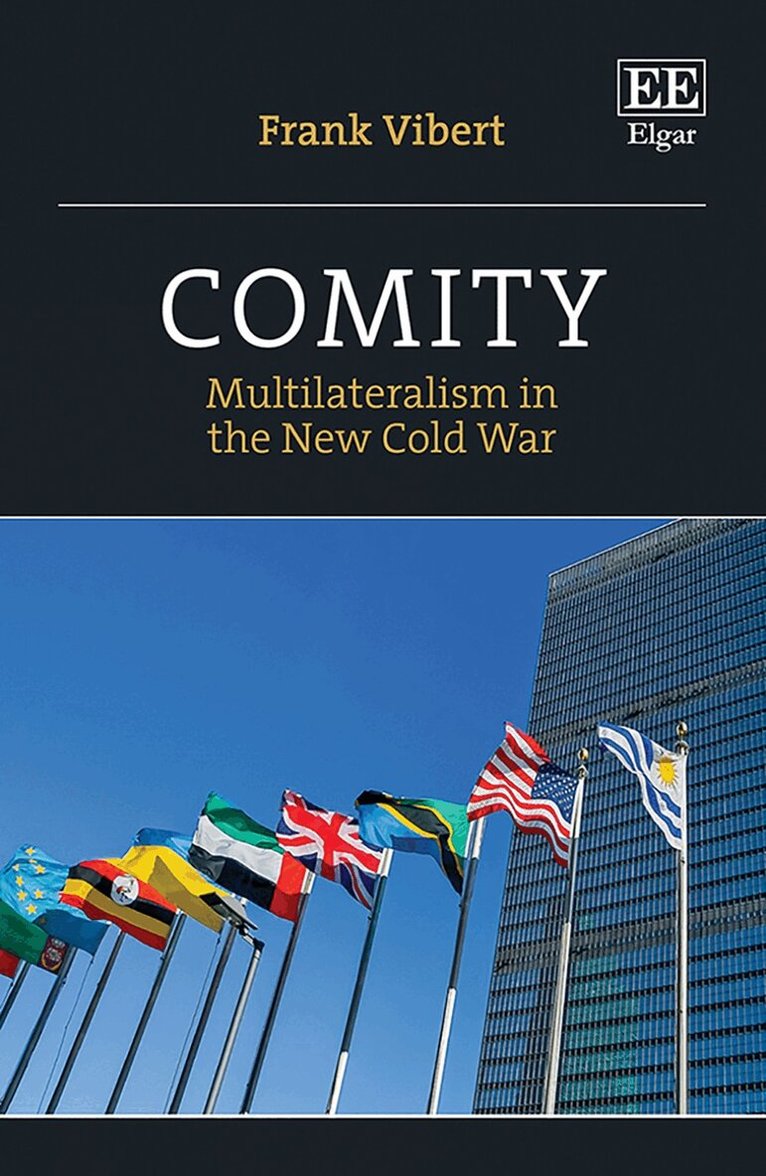
This timely book explores a critical new juncture where globalisation is in retreat and global norms of behaviour are not converging. Frank Vibert provides an expert analysis on how this situation has arisen from a combination of changes in the relative power and position of nations and the different values behind the organisation of domestic government in democracies and authoritarian states.Vibert challenges the assumption that differences in the way countries organise their domestic form of government can be kept separate from rulemaking at the international level. The book examines how democracies can defend their own values relative to others, the methods of influence, and the ways of managing conflict between contending values. Comity maps a path away from impasse to where democracies cooperate to make rules for themselves that can then be extended to others. It also discusses the legitimacy of this form of international rulemaking. Vibert concludes with the need for democracies to address their own democratic backsliding and to refresh their alliances with other democracies.This book steps back from conventional claims that we are heading towards an ever more globalised world and sets out the importance of norms in shaping institutions, relationships and the techniques of rulemaking. The book will be critical reading for scholars of international relations, constitutional and administrative law, regulation, and international politics. It will also be useful for practitioners in international organisations, governments and administrative bodies.

1 754 kr
Skickas inom 7-10 vardagar
Frank Vibert examines the fundamental issues involved in attempts to rethink international institutions and their rule making procedures. He analyses the basic problems with the existing system and the main approaches to its reform. The book repudiates the idea that there are any simple institutional `fixes' for current problems, such as relying on the G20 to coordinate global rule making, and also rejects more ambitious attempts to prescribe new general organising principles for world governance. It calls instead for specific remedies for specific problems. The author recommends new procedures for all international rule making, so that both expert groups and governments are subject to much stronger external checks on what they do. Democracy and Dissent will be essential reading for both academics and postgraduate students of risk management and regulation in economics, international relations, international business, political science and international law for the discussion of the strengths and weaknesses of expert rulemaking groups and their procedures. Practitioners in international organisations, NGOs and domestic regulatory bodies will also find this timely resource invaluable. The book opens up new areas for empirical investigation and in the discussion of theory.

445 kr
Skickas inom 7-10 vardagar
Frank Vibert examines the fundamental issues involved in attempts to rethink international institutions and their rule making procedures. He analyses the basic problems with the existing system and the main approaches to its reform. The book repudiates the idea that there are any simple institutional `fixes' for current problems, such as relying on the G20 to coordinate global rule making, and also rejects more ambitious attempts to prescribe new general organising principles for world governance. It calls instead for specific remedies for specific problems. The author recommends new procedures for all international rule making, so that both expert groups and governments are subject to much stronger external checks on what they do. Democracy and Dissent will be essential reading for both academics and postgraduate students of risk management and regulation in economics, international relations, international business, political science and international law for the discussion of the strengths and weaknesses of expert rulemaking groups and their procedures. Practitioners in international organisations, NGOs and domestic regulatory bodies will also find this timely resource invaluable. The book opens up new areas for empirical investigation and in the discussion of theory.