
Gavin Van Horn - Böcker
Visar alla böcker från författaren Gavin Van Horn. Handla med fri frakt och snabb leverans.
9 produkter
9 produkter
261 kr
Skickas inom 7-10 vardagar
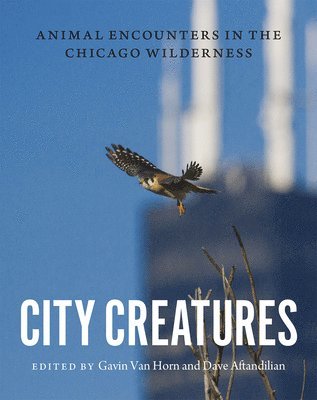
We usually think of cities as the domain of humans-but we are just one of thousands of species that call the urban landscape home. Chicago residents knowingly move among familiar creatures like squirrels, pigeons, and dogs, but might be surprised to learn about all the leafhoppers and water bears, black-crowned night herons and bison, beavers and massasauga rattlesnakes that are living alongside them. City Creatures introduces readers to an astonishing diversity of urban wildlife with a unique and accessible mix of essays, poetry, paintings, and photographs. The contributors bring a story-based approach to this urban safari, taking readers on birding expeditions to the Magic Hedge at Montrose Harbor on the North Side, canoe trips down the South Fork of the Chicago River (better known as Bubbly Creek), and insect-collecting forays or restoration work days in the suburban forest preserves. The book is organized into six sections, each highlighting one type of place in which people might encounter animals in the city and suburbs.For example, schoolyard chickens and warrior wasps populate "Backyard Diversity," live giraffes loom at the zoo and taxidermy-in-progress pheasants fascinate museum-goers in "Animals on Display," and a chorus of deep-freeze frogs awaits in "Water Worlds." Although the book is rooted in Chicago's landscape, nature lovers from cities around the globe will find a wealth of urban animal encounters that will open their senses to a new world that has been there all along. Its powerful combination of insightful narratives, numinous poetry, and full-color art throughout will help readers see the city-and the creatures who share it with us-in an entirely new light.
221 kr
Skickas inom 7-10 vardagar
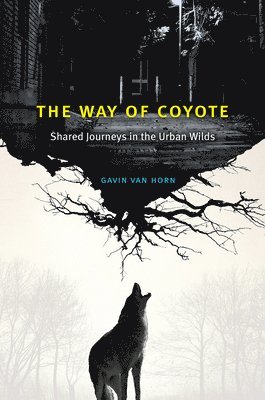
A hiking trail through majestic mountains. A raw, unpeopled wilderness stretching as far as the eye can see. These are the settings we associate with our most famous books about nature. But Gavin Van Horn isn't most nature writers. He lives and works not in some perfectly remote cabin in the woods but in a city-a big city. And that city has offered him something even more valuable than solitude: a window onto the surprising attractiveness of cities to animals. What was once in his mind essentially a nature-free blank slate turns out to actually be a bustling place where millions of wild things roam. He came to realize that our own paths are crisscrossed by the tracks and flyways of endangered black-crowned night herons, Cooper's hawks, brown bats, coyotes, opossums, white-tailed deer, and many others who thread their lives ably through our own. With The Way of Coyote, Gavin Van Horn reveals the stupendous diversity of species that can flourish in urban landscapes like Chicago. That isn't to say city living is without its challenges. Chicago has been altered dramatically over a relatively short timespan-its soils covered by concrete, its wetlands drained and refilled, its river diverted and made to flow in the opposite direction. The stories in The Way of Coyote occasionally lament lost abundance, but they also point toward incredible adaptability and resilience, such as that displayed by beavers plying the waters of human-constructed canals or peregrine falcons raising their young atop towering skyscrapers. Van Horn populates his stories with a remarkable range of urban wildlife and probes the philosophical and religious dimensions of what it means to coexist, drawing frequently from the wisdom of three unconventional guides-wildlife ecologist Aldo Leopold, Taoist philosopher Lao Tzu, and the North American trickster figure Coyote. Ultimately, Van Horn sees vast potential for a more vibrant collective of ecological citizens as we take our cues from landscapes past and present.Part urban nature travelogue, part philosophical reflection on the role wildlife can play in waking us to a shared sense of place and fate, The Way of Coyote is a deeply personal journey that questions how we might best reconcile our own needs with the needs of other creatures in our shared urban habitats.
261 kr
Skickas inom 7-10 vardagar
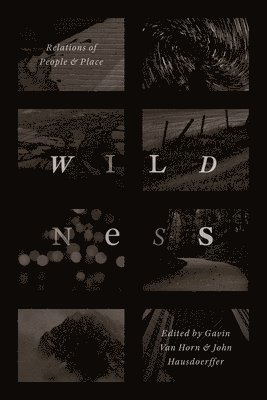
Whether referring to a place, a nonhuman animal or plant, or a state of mind, wild indicates autonomy and agency, a will to be, a unique expression of life. Yet two contrasting ideas about wild nature permeate contemporary discussions: either that nature is most wild in the absence of a defiling human presence, or that nature is completely humanized and nothing is truly wild. This book charts a different path. Exploring how people can become attuned to the wild community of life and also contribute to the well-being of the wild places in which we live, work, and play, Wildness brings together esteemed authors from a variety of landscapes, cultures, and backgrounds to share their stories about the interdependence of everyday human lifeways and wildness. As they show, far from being an all or nothing proposition, wildness exists in variations and degrees that range from cultivated soils to multigenerational forests to sunflowers pushing through cracks in a city alley. Spanning diverse geographies, these essays celebrate the continuum of wildness, revealing the many ways in which human communities can nurture, adapt to, and thrive alongside their wild nonhuman kin.From the contoured lands of Wisconsin's Driftless region to remote Alaska, from the amazing adaptations of animals and plants living in the concrete jungle to indigenous lands and harvest ceremonies, from backyards to reclaimed urban industrial sites, from microcosms to bioregions and atmospheres, manifestations of wildness are everywhere. With this book, we gain insight into what wildness is and could be, as well as how it might be recovered in our lives and with it, how we might unearth a more profound, wilder understanding of what it means to be human.
186 kr
Skickas inom 7-10 vardagar
Blending travelogue and philosophical reflection, Van Horn embarks on a quest for a new urban land ethic that reveals how urban animals can expand how we care for and understand place.A hiking trail through majestic mountains. A raw, unpeopled wilderness stretching as far as the eye can see. These are the settings we associate with our most famous books about nature. But Gavin Van Horn isn’t most nature writers. He lives and works not in some perfectly remote cabin in the woods but in a city—a big city. And that city has offered him something even more valuable than solitude: a window onto the surprising attractiveness of cities to animals. What was once in his mind essentially a nature-free blank slate turns out to actually be a bustling place where millions of wild things roam. He came to realize that our own paths are crisscrossed by the tracks and flyways of endangered black-crowned night herons, Cooper’s hawks, brown bats, coyotes, opossums, white-tailed deer, and many others who thread their lives ably through our own. With The Way of Coyote, Gavin Van Horn reveals the stupendous diversity of species that can flourish in urban landscapes like Chicago. That isn’t to say city living is without its challenges. Chicago has been altered dramatically over a relatively short timespan—its soils covered by concrete, its wetlands drained and refilled, its river diverted and made to flow in the opposite direction. The stories in The Way of Coyote occasionally lament lost abundance, but they also point toward incredible adaptability and resilience, such as that displayed by beavers plying the waters of human-constructed canals or peregrine falcons raising their young atop towering skyscrapers. Van Horn populates his stories with a remarkable range of urban wildlife and probes the philosophical and religious dimensions of what it means to coexist, drawing frequently from the wisdom of three unconventional guides—wildlife ecologist Aldo Leopold, Taoist philosopher Lao Tzu, and the North American trickster figure Coyote. Ultimately, Van Horn sees vast potential for a more vibrant collective of ecological citizens as we take our cues from landscapes past and present. Part urban nature travelogue, part philosophical reflection on the role wildlife can play in waking us to a shared sense of place and fate, The Way of Coyote is a deeply personal journey that questions how we might best reconcile our own needs with the needs of other creatures in our shared urban habitats.
240 kr
Tillfälligt slut
*Part of the 5-Volume Set 2022 Nautilus Book Award Gold Medal Winner: Ecology & Environment and Special Honors as Best of AnthologyVolume 2 of the Kinship series revolves around the question of place-based relations: To what extent does crafting a deeper connection with the Earth’s bioregions reinvigorate a sense of kinship with the place-based beings, systems, and communities that mutually shape one another? We live in an astounding world of relations. We share these ties that bind with our fellow humans—and we share these relations with nonhuman beings as well. From the bacterium swimming in your belly to the trees exhaling the breath you breathe, this community of life is our kin—and, for many cultures around the world, being human is based upon this extended sense of kinship.Kinship: Belonging in a World of Relations is a lively series that explores our deep interconnections with the living world. The five Kinship volumes—Planet, Place, Partners, Persons, Practice—offer essays, interviews, poetry, and stories of solidarity, highlighting the interdependence that exists between humans and nonhuman beings. More than 70 contributors—including Robin Wall Kimmerer, Richard Powers, David Abram, J. Drew Lanham, and Sharon Blackie—invite readers into cosmologies, narratives, and everyday interactions that embrace a more-than-human world as worthy of our response and responsibility.Given the place-based circumstances of human evolution and culture, global consciousness may be too broad a scale of care. “Place,” Volume 2 of the Kinship series, addresses the bioregional, multispecies communities and landscapes within which we dwell. The essayists and poets in this volume take us around the world to a variety of distinctive places—from ethnobiologist Gary Paul Nabhan’s beloved and beleaguered sacred U.S.-Mexico borderlands, to Pacific islander and poet Craig Santos Perez’s ancestral shores, to writer Lisa María Madera’s “vibrant flow of kinship” in the equatorial Andes expressed in Pacha Mama’s constitutional rights in Ecuador. As Chippewa scholar-activist Melissa Nelson observes about kinning with place in her conversation with John Hausdoerffer: “Whether a desert mesa, a forested mountain, a windswept plain, or a crowded city—those places also participate in this serious play with raven cries, northern winds, car traffic, or coyote howls.” This volume reveals the ways in which playing in, tending to, and caring for place wraps us into a world of kinship.Proceeds from sales of Kinship benefit the nonprofit, non-partisan Center for Humans and Nature, which partners with some of the brightest minds to explore human responsibilities to each other and the more-than-human world. The Center brings together philosophers, ecologists, artists, political scientists, anthropologists, poets and economists, among others, to think creatively about a resilient future for the whole community of life.
208 kr
Skickas inom 7-10 vardagar
*Part of the 5-Volume Set 2022 Nautilus Book Award Gold Medal Winner: Ecology & Environment and Special Honors as Best of AnthologyVolume 4 of the Kinship series revolves around the question of interpersonal relations: Which experiences expand our understanding of being human in relation to other-than-human beings?We live in an astounding world of relations. We share these ties that bind with our fellow humans—and we share these relations with nonhuman beings as well. From the bacterium swimming in your belly to the trees exhaling the breath you breathe, this community of life is our kin—and, for many cultures around the world, being human is based upon this extended sense of kinship.Kinship: Belonging in a World of Relations is a lively series that explores our deep interconnections with the living world. The five Kinship volumes—Planet, Place, Partners, Persons, Practice—offer essays, interviews, poetry, and stories of solidarity, highlighting the interdependence that exists between humans and nonhuman beings. More than 70 contributors—including Robin Wall Kimmerer, Richard Powers, David Abram, J. Drew Lanham, and Sharon Blackie—invite readers into cosmologies, narratives, and everyday interactions that embrace a more-than-human world as worthy of our response and responsibility. Kinship spans the cosmos, but it is perhaps most life changing when experienced directly and personally. “Persons,” Volume 4 of the Kinship series, attends to the personal—our unique experiences with particular creatures and landscapes. This includes nonhuman kin that become our allies, familiars, and teachers as we navigate a “world as full of persons, human and otherwise, all more-or-less close kin, all deserving respect,” as religious studies scholar Graham Harvey puts it. The essayists and poets in the volume share a wide variety of kinship-based experiences—from Australian ecophilosopher Freya Mathews’s perspective on climate-related devastation on her country’s koalas, to English professor and forest therapy guide Kimberly Ruffin’s reclamation of her “inner animal,” to German biologist and philosopher Andreas Weber’s absorption with and by lichen. Our kinships are interpersonal, and being “pried open with curiosity,” as poet and hip-hop emcee Manon Voice notes in this volume, “Stir the first of many magicks.”Proceeds from sales of Kinship benefit the nonprofit, non-partisan Center for Humans and Nature, which partners with some of the brightest minds to explore human responsibilities to each other and the more-than-human world. The Center brings together philosophers, ecologists, artists, political scientists, anthropologists, poets and economists, among others, to think creatively about a resilient future for the whole community of life.
233 kr
Skickas
*Part of the 5-Volume Set 2022 Nautilus Book Award Gold Medal Winner: Ecology & Environment and Special Honors as Best of AnthologyVolume 5 of the Kinship series revolves around the question of practice: What are the practical, everyday, and lifelong ways we become kin?We live in an astounding world of relations. We share these ties that bind with our fellow humans—and we share these relations with nonhuman beings as well. From the bacterium swimming in your belly to the trees exhaling the breath you breathe, this community of life is our kin—and, for many cultures around the world, being human is based upon this extended sense of kinship.Kinship: Belonging in a World of Relations is a lively series that explores our deep interconnections with the living world. These five Kinship volumes—Planet, Place, Partners, Persons, Practice—offer essays, interviews, poetry, and stories of solidarity, highlighting the interdependence that exists between humans and nonhuman beings. More than 70 contributors—including Robin Wall Kimmerer, Richard Powers, David Abram, J. Drew Lanham, and Sharon Blackie—invite readers into cosmologies, narratives, and everyday interactions that embrace a more-than-human world as worthy of our response and responsibility. These diverse voices render a wide range of possibilities for becoming better kin.From the perspective of kinship as a recognition of nonhuman personhood, of kincentric ethics, and of kinship as a verb involving active and ongoing participation, how are we to live? “Practice,” Volume 5 of the Kinship series, turns to the relations that we nurture and cultivate as part of our lived ethics. The essayists and poets in this volume explore how we make kin and strengthen kin relationships through respectful participation—from creative writer and dance teacher Maya Ward’s weave of landscape, story, song, and body, to Lakota peace activist Tiokasin Ghosthorse’s reflections on language as a key way of knowing and practicing kinship, to cultural geographer Amba Sepie’s wrestling with how to become kin when ancestral connections have frayed. The volume concludes with an amazing and spirited conversation between John Hausdoerffer, Robin Wall Kimmerer, Sharon Blackie, Enrique Salmon, Orrin Williams, and Maria Isabel Morales on the breadth and qualities of kinship practices.Proceeds from sales of Kinship benefit the nonprofit, non-partisan Center for Humans and Nature, which partners with some of the brightest minds to explore human responsibilities to each other and the more-than-human world. The Center brings together philosophers, ecologists, artists, political scientists, anthropologists, poets and economists, among others, to think creatively about a resilient future for the whole community of life.

990 kr
Skickas
*2022 Nautilus Book Award Gold Medal Winner: Ecology & Environment*2022 Nautilus Book Award Special Honors as Best of AnthologyFor readers of Braiding Sweetgrass and The OverstoryFrom The Center for Humans and Nature, a collection in five volumes: essays, interviews, poetry, and stories of solidarity that highlight the interdependence that exists between humans and nonhuman beingsWe live in an astounding world of relations. We share these ties that bind with our fellow humans—and we share these relations with nonhuman beings as well. From the bacterium swimming in your belly to the trees exhaling the breath you breathe, this community of life is our kin—and, for many cultures around the world, being human is based upon this extended sense of kinship.Kinship: Belonging in a World of Relations is a lively series that explores our deep interconnections with the living world. More than 70 contributors—including Robin Wall Kimmerer, Richard Powers, David Abram, J. Drew Lanham, and Sharon Blackie—invite readers into cosmologies, narratives, and everyday interactions that embrace a more-than-human world as worthy of our response and responsibility. These diverse voices render a wide range of possibilities for becoming better kin.Contents:Planet: What are the sources of our deepest evolutionary and planetary connections, and of our profound longing for kinship?Place: To what extent does crafting a deeper connection with the Earth’s bioregions reinvigorate a sense of kinship with the place-based beings, systems, and communities that mutually shape one another?Partners: How do relations between and among different species foster a sense of responsibility and belonging in us?Persons: Which experiences expand our understanding of being human in relation to other-than-human beings?Practice: What are the practical, everyday, and lifelong ways we become kin? From the recognition of nonhumans as persons to the care of our kinfolk through language and action, Kinship: Belonging in a World of Relations is a guide and companion into the ways we can deepen our care and respect for the family of plants, rivers, mountains, animals, and others who live with us in this exuberant, life-generating, planetary tangle of relations.Proceeds from sales of Kinship benefit the nonprofit, non-partisan Center for Humans and Nature, which partners with some of the brightest minds to explore human responsibilities to each other and the more-than-human world. The Center brings together philosophers, ecologists, artists, political scientists, anthropologists, poets and economists, among others, to think creatively about a resilient future for the whole community of life.

1 068 kr
Skickas inom 7-10 vardagar
“This collection feels medicinal and miraculous all at once. . . This is not just ‘nature writing.’ This is cosmic writing.”—Robert Moor, bestselling author of On Trails: An ExplorationFor readers of Sand Talk, Braiding Sweetgrass, and Sounds Wild and BrokenFrom the Center for Humans and Nature, publisher of the award-winning anthology series Kinship, comes a new anthology series on the Elementals, a five-volume collection of essays, poetry, and stories that illuminate the dynamic relationships between people and place, human and nonhuman life, mind and the material world, and the living energies that make all life possible.For millennia, humans have sought to identify and understand the most essential aspects of nature. Of enduring fascination are the four material elements: Earth, Air, Water, and Fire. All living beings owe their own existence and well-being to these everlasting movements of matter and flows of energy. Inspired by these powerful categories, the Elementals series asks: What can the vital forces of Earth, Air, Water, and Fire teach us about being human in a more-than-human world?Elementals explores how people from various cultures across the planet have worked with these powerful forces of change and regeneration to shape landscapes and deepen personal and place-based relationships. More than 90 contributors―including Tyson Yunkaporta, Lyanda Fern Lynn Haupt, Sean Hill, David George Haskell, and Robin Wall Kimmerer―invite readers to consider the ways the elementals flow through our relations with a more-than-human world.Contents:Earth, Vol. 1: Earth is living matter, place, and planet; soil, ground, and home. This volume offers earthy perspectives and elemental paths toward an ethic of interdependence, connection, and care for planet, place, and relations.Air, Vol. 2: Infinite and always in motion, constituent of everything, air is unutterably old, and its spirit carries with it the story of everything. This volume, in its creative exploration of this most ethereal yet indispensable of elements, provides breathing room for the imagination to thrive.Water, Vol. 3: As a living presence, the circulation and flow of healthy waters make life on Earth possible and defines our very existence. This volume invites us to ponder the traditions, perspectives, and aspirations linked to this vital element.Fire, Vol. 4: Fire remains wild, increasingly so today, but its domestication changed the course of human evolution. This volume asks what the many manifestations of fire might be imparting to us now, and how fire may be beckoning us to keep and tend to our elemental relations with care.An Elemental Life, Vol. 5: If the elements are kin to one other, then what does it mean to live in kinship with the elements? This volume brings the elements into confluence with one another, exploring diverse practices of what it means to live elementally.With compelling stories and insightful reflections, Elementals reveals how people are working with, adapting to, and cocreating relational depth and ecological diversity by respectfully attending to the forces that shape our everyday worlds: Earth, Air, Water, Fire.Proceeds from sales of Elementals benefit the nonprofit organization Center for Humans & Nature, home to a press and farm that explore in-depth and diverse perspectives about what it means to be human in an interconnected world. Humans & Nature Press shares ideas that build community and inspire action. Humans & Nature Farm is a place where ideas take root. The Center is a place to experience human connection with nature and consider our responsibilities to the whole community of life.