
Geoff Nichols - Böcker
Visar alla böcker från författaren Geoff Nichols. Handla med fri frakt och snabb leverans.
5 produkter
5 produkter

2 570 kr
Skickas inom 10-15 vardagar
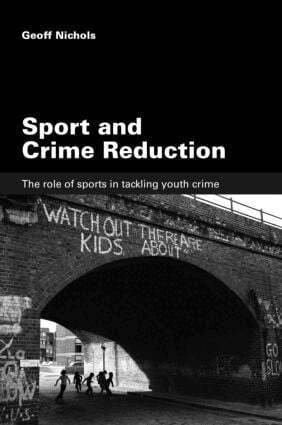
The use of sports-based activity programmes as a means of tackling crime has been explored in a number of countries worldwide, particularly in relation to the prevention of re-offending in the ten to eighteen age bracket. However, until now there has been no definitive and rigorous analysis of the rationale behind these programmes, and evidence of their successes and failures has been piecemeal, uncritical and without standardization. This book addresses this gap in the literature, bringing together empirical research from programmes in the UK, US and Australia with an explanation and evaluation of the results of these initiatives. Subjects covered include:assessment of programmes in a range of contextsthe first evidence base of crime reduction sport programmesinternational comparisons and case studiesconclusions for best practiceadvice for monitoring the effectiveness of programmessynergies with sport development and promotion of facility use.Examining a variety of realworld case studies set up with the aim of reducing levels of crime in the community, Sport and Crime Reduction should be read by students and professionals in local government, sports development, youth and community work, criminology, the youth justice system and leisure policy.
756 kr
Skickas inom 10-15 vardagar
The use of sports-based activity programmes as a means of tackling crime has been explored in a number of countries worldwide, particularly in relation to the prevention of re-offending in the ten to eighteen age bracket. However, until now there has been no definitive and rigorous analysis of the rationale behind these programmes, and evidence of their successes and failures has been piecemeal, uncritical and without standardization. This book addresses this gap in the literature, bringing together empirical research from programmes in the UK, US and Australia with an explanation and evaluation of the results of these initiatives. Subjects covered include:assessment of programmes in a range of contextsthe first evidence base of crime reduction sport programmesinternational comparisons and case studiesconclusions for best practiceadvice for monitoring the effectiveness of programmessynergies with sport development and promotion of facility use.Examining a variety of realworld case studies set up with the aim of reducing levels of crime in the community, Sport and Crime Reduction should be read by students and professionals in local government, sports development, youth and community work, criminology, the youth justice system and leisure policy.
2 160 kr
Skickas inom 10-15 vardagar
Volunteers are central to providing opportunities to play sport, whether helping to run sports clubs, helping in school sport or at sports events. This volume focuses on the volunteers who support clubs. Approximately 150,000 sports clubs in the UK are supported by volunteers in roles such as coaches, treasurers, membership secretaries and other formal roles, as well as a myriad of other volunteers who help on a more informal basis. This structure of clubs run by volunteers is common to other countries; such as Germany, Canada, Finland and Australia. It is a valuable community resource; not only for the opportunities it provides for sports participation but also the more general contribution to the quality of communities.This club structure has been central to government policy to increase sports participation and has developed from the second half of the 19th century. Yet its maintenance relies on a nucleus of core volunteers in each club who take the major roles. Recruiting new volunteers – especially for these core roles – is always difficult. Despite central government in the UK having a commitment to developing volunteering, clubs are having to adjust to new relationships with local government as funding and subsidy of facility use is reduced. Trends in sports participation are away from the traditional team sports and towards more individual participation. Club members may demand an experience benchmarked against private or local government providers; regarding the club as providing a service as much as an organisation they contribute to.The chapters in this book contribute an international perspective to understanding these issues. It will be of great value to community sport leaders and scholars of sport sociology and leisure studies.This book was published as a special issue of the International Journal of Sport Policy and Politics.
774 kr
Skickas inom 10-15 vardagar
Volunteers are central to providing opportunities to play sport, whether helping to run sports clubs, helping in school sport or at sports events. This volume focuses on the volunteers who support clubs. Approximately 150,000 sports clubs in the UK are supported by volunteers in roles such as coaches, treasurers, membership secretaries and other formal roles, as well as a myriad of other volunteers who help on a more informal basis. This structure of clubs run by volunteers is common to other countries; such as Germany, Canada, Finland and Australia. It is a valuable community resource; not only for the opportunities it provides for sports participation but also the more general contribution to the quality of communities.This club structure has been central to government policy to increase sports participation and has developed from the second half of the 19th century. Yet its maintenance relies on a nucleus of core volunteers in each club who take the major roles. Recruiting new volunteers – especially for these core roles – is always difficult. Despite central government in the UK having a commitment to developing volunteering, clubs are having to adjust to new relationships with local government as funding and subsidy of facility use is reduced. Trends in sports participation are away from the traditional team sports and towards more individual participation. Club members may demand an experience benchmarked against private or local government providers; regarding the club as providing a service as much as an organisation they contribute to.The chapters in this book contribute an international perspective to understanding these issues. It will be of great value to community sport leaders and scholars of sport sociology and leisure studies.This book was published as a special issue of the International Journal of Sport Policy and Politics.
413 kr
Skickas
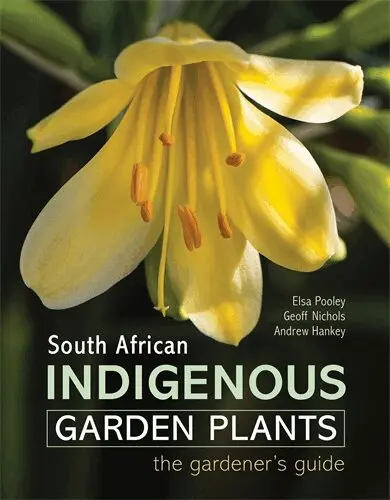
This beautifully illustrated large-format book showcases some 2,400 South African indigenous plants, making it a comprehensive guide to the range of local plants available to gardeners to transform their outdoor spaces. An Introduction lays the groundwork, covering climate, various garden styles, spatial planning and garden maintenance, as well as giving suggestions for attracting wildlife to the garden. The encyclopaedic Plant Catalogue forms the bulk of the book. Plants are grouped by growth form into 13 chapters, from bulbs, orchids and aloes through to shrubs, grasses, trees and fynbos. The introduction to each group provides essential information on the selection, planting and feeding of the species, and gives tips on growing and maintaining them in the garden or in containers. Following each introduction is an extensive catalogue of species, pairing full-colour photographs with brief descriptions that cover size, shape, flowering times and best growing conditions. The book concludes with a handy Plant Selector, which helps gardeners to choose the most appropriate plants for specific areas or functions in their garden or home. Compiled and edited over several years by an expert team, this easy-to-use reference introduces a host of new and exciting possibilities for gardens and gardeners, both locally and across the globe. Destined to become a standard reference for gardeners, horticulturists, nurserymen, landscapers and plant lovers. Sales points: First comprehensive gardening guide to South Africa’s indigenous plants. Lavish design, with some 3,300 full-colour photographs. Shows the use of indigenous plants in a variety of garden styles. Written by an expert team.