
Gerard Clarke - Böcker
Visar alla böcker från författaren Gerard Clarke. Handla med fri frakt och snabb leverans.
4 produkter
4 produkter

1 238 kr
Skickas inom 7-10 vardagar
Microbiota Brain Axis: A Neuroscience Primer provides neuroscience researchers with a comprehensive guide on how to conduct effective microbiota-brain research, understand the appropriate methodologies, and collect and analyze microbiota data. The book begins with an introduction to the importance of the microbiota-brain communication in development and how microbiota impact neurodevelopmental disorders, mental health and neurodegeneration. In addition, the book discusses advances in microbiota analysis tools and techniques for neuroscience related research.Reviews the many approaches to manipulating the microbiota in animal studies - including the use of germ-free animals, antibiotics and diet - and covers the strengths and limitations of eachOutlines available microbiota research tools, such as 16S sequencing and shot-gun metagenomicsProvides a comprehensive guide to analyzing microbiota-related data and the many choices for bioinformatics
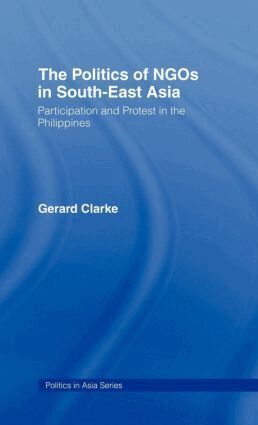
Politics of NGOs in Southeast Asia
Participation and Protest in the Philippines
Inbunden, Engelska, 1998
2 155 kr
Skickas inom 10-15 vardagar
The Politics of NGOs in Southeast Asia traces the history of the emergence of NGOs in the Philippines and southeast Asia and the political factors which encouraged this. The main focus is on the period from the mid-1990s when NGOs first became a notable force in the region. It documents the complex relations between NGOs and other political actors including the state, organised religion, foreign donors, the business sector and underground insurgent groups and their impact on NGO strategy.
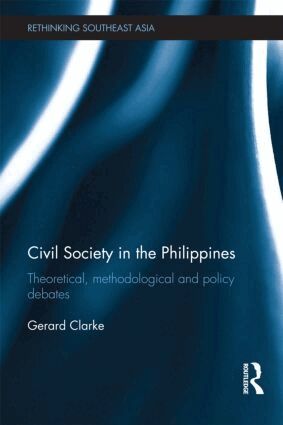
Civil Society in the Philippines
Theoretical, Methodological and Policy Debates
Inbunden, Engelska, 2012
2 155 kr
Skickas inom 10-15 vardagar
Drawing on qualitative and quantitative research, this book provides a path-breaking account of civil society in the Philippines. It challenges the widespread belief in political science and development studies literature that civil society in developing countries is an institutional arena in which the poor can challenge and reverse their social, economic and political marginalization. The book goes on to argue that Philippine civil society is a captive of organised elite interests and anti-developmental in its impacts, helping elites to oppose the initiatives of reform-minded governments and to protect their interests.In contrast to literature suggesting that the character of civil society is a function of regime type and hence evolves in a path-dependent manner, the book explores the history of Philippine civil society between 1571 and 2010, and suggests that civil society is primarily a function of the evolving political economy of a country and the resulting social structure. It argues that civil society in nascent democracies such as the Philippines develops in a distinctly non-linear manner, largely independently of regime type or regime development. As a result, it argues, democratization in low income countries does not lead inevitably to broader participation and empowerment through civil society expansion, as many academics, activists and donor representatives suggest.The book is of interest to students and scholars of Southeast Asian history and politics, as well as those interested in the study of Non-Governmental Organizations (NGOs) and social movements, and in the statistical capture of civil society.
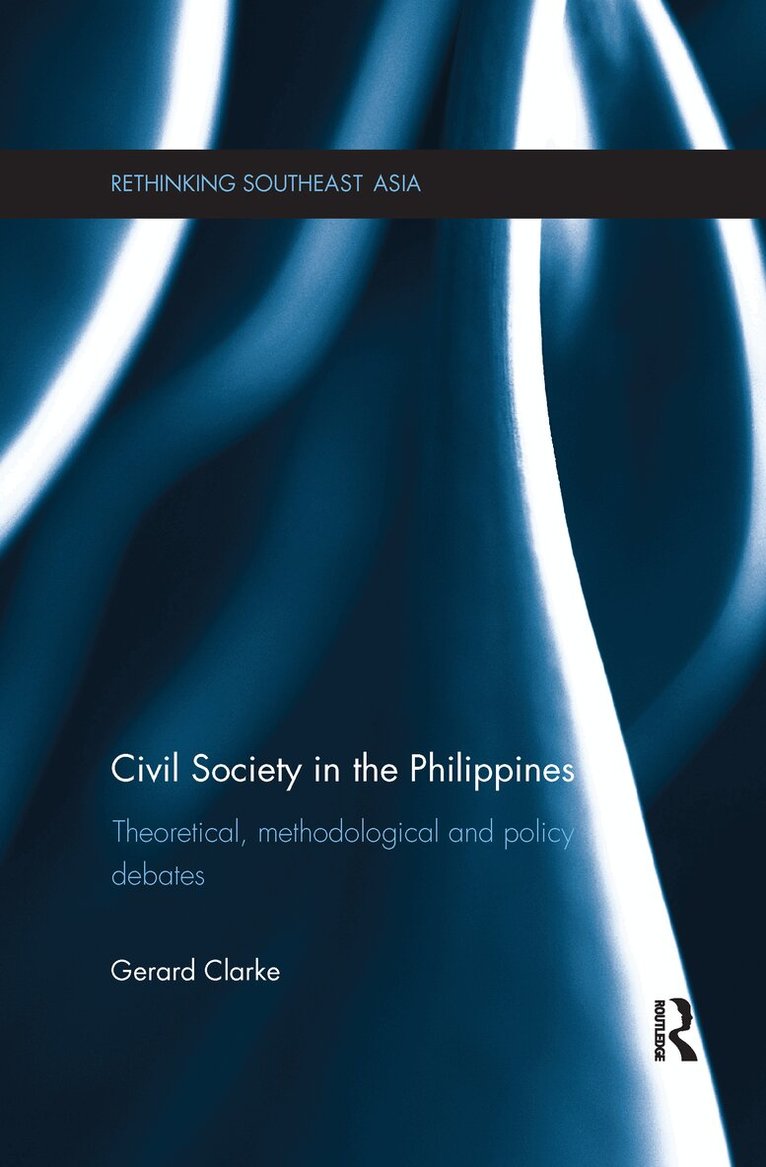
Civil Society in the Philippines
Theoretical, Methodological and Policy Debates
Häftad, Engelska, 2017
752 kr
Skickas inom 10-15 vardagar
Drawing on qualitative and quantitative research, this book provides a path-breaking account of civil society in the Philippines. It challenges the widespread belief in political science and development studies literature that civil society in developing countries is an institutional arena in which the poor can challenge and reverse their social, economic and political marginalization. The book goes on to argue that Philippine civil society is a captive of organised elite interests and anti-developmental in its impacts, helping elites to oppose the initiatives of reform-minded governments and to protect their interests.In contrast to literature suggesting that the character of civil society is a function of regime type and hence evolves in a path-dependent manner, the book explores the history of Philippine civil society between 1571 and 2010, and suggests that civil society is primarily a function of the evolving political economy of a country and the resulting social structure. It argues that civil society in nascent democracies such as the Philippines develops in a distinctly non-linear manner, largely independently of regime type or regime development. As a result, it argues, democratization in low income countries does not lead inevitably to broader participation and empowerment through civil society expansion, as many academics, activists and donor representatives suggest.The book is of interest to students and scholars of Southeast Asian history and politics, as well as those interested in the study of Non-Governmental Organizations (NGOs) and social movements, and in the statistical capture of civil society.