
Gunaratna Rohan - Böcker
Visar alla böcker från författaren Gunaratna Rohan. Handla med fri frakt och snabb leverans.
3 produkter
3 produkter
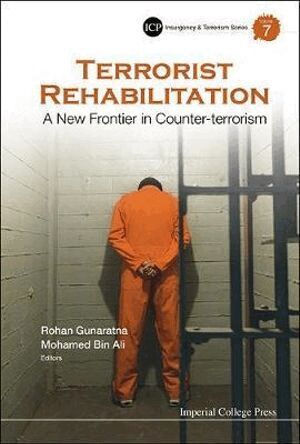
Del 7 - Insurgency And Terrorism Series
Terrorist Rehabilitation: A New Frontier In Counter-terrorism
Inbunden, Engelska, 2015
1 486 kr
Skickas inom 5-8 vardagar
With the rise of religiously motivated violence and terrorism, governments around the world need to develop their religious and ideological capabilities in parallel with strengthening their law enforcement, military and intelligence capabilities. Terrorist Rehabilitation: A New Frontier in Counter-terrorism aims to provide an understanding of the importance of the approach and strategy of terrorist rehabilitation in countering this threat.Comprising of nine chapters, this book provides case study assessments of terrorist rehabilitation practices set against the backdrop of their unique operational and geopolitical milieu in countries such as Saudi Arabia, Singapore, Indonesia and Sri Lanka. This will help the reader to form a foundational understanding of the concept of terrorist rehabilitation by combining the insights, successes and experience of senior government officials and counter-terrorism experts. In addition, the contributors provide discussions on religious concepts that have been manipulated by violent Islamists as a background to understanding religiously or ideologically motivated terrorism and the avenues open for countering it.
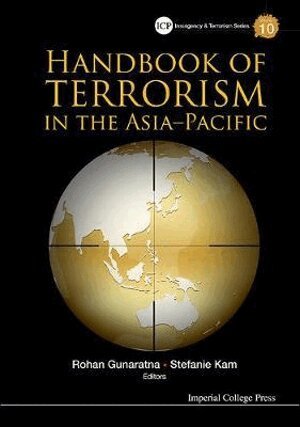
Del 10 - Insurgency And Terrorism Series
Handbook Of Terrorism In The Asia-pacific
Inbunden, Engelska, 2016
2 168 kr
Skickas inom 5-8 vardagar
The Handbook of Terrorism in the Asia-Pacific provides a historical overview of terrorism in the Asia-Pacific, the evolution of threat, and the present threat faced by countries with the rise of the Islamic State (IS). This is a concise and readable handbook which examines the origins of the current wave of terrorism across countries in Southeast Asia, South Asia, Northeast Asia and the Pacific, and identifies emerging trends and new forms of terror that have altered the landscape and rendered the region increasingly vulnerable to asymmetric attacks. Comprising of more than 20 chapters, this handbook will be a useful source of reference for undergraduate and graduate students focused on understanding the causes of terrorism and insurgency in the Asia-Pacific.
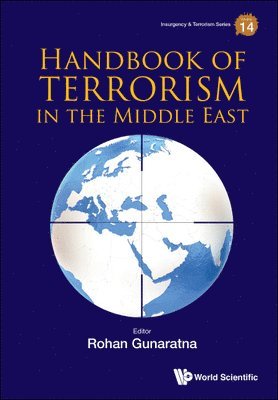
Del 14 - Insurgency And Terrorism Series
Handbook Of Terrorism In The Middle East
Inbunden, Engelska, 2022
1 554 kr
Skickas inom 3-6 vardagar
In the Middle East, the world's deadliest organizations, the Islamic State and al Qaeda have firmly established their presence in the Levant and the Gulf. In parallel, state- sponsored Shia threat networks, groups and cells, notably the Lebanese Hezbollah and Houthis operate throughout the Middle East and beyond. Exploiting the conflict zones and their cascading ideologies, both the Sunni and Shia threat entities compete to advance their own interests. Their parent and affiliate entities recruit and radicalise both territorial and diaspora Muslims to fight each other. Unless governments work together to mitigate the threat at the core and the edge, the Middle East and its peripheral territories in Asia and Africa will suffer from terrorism and political violence in the foreseeable future.The response to extremism and its vicious by-product terrorism requires both preventive intelligence-led and pre-emptive community-based security approaches. While developing tactical counter-terrorism capabilities, governments should build strategic capabilities to erode their support bases. The new frontiers in counter-terrorism and extremism — community engagement and rehabilitation — should be integrated into government planning. Unless governments take the lead and work with community leaders, societies will be threatened by the existing and emerging wave of ideologically-motivated violence. Government and community leaders should develop whole-of-government and whole-of-nation approaches to dismantle transnational threats. To contain, isolate and eliminate the evolving threat, the Middle Eastern states should shift from security cooperation to collaboration and partnership.